





 Portuguese
  English
  Spanish
  6 min of reading
  8 comments


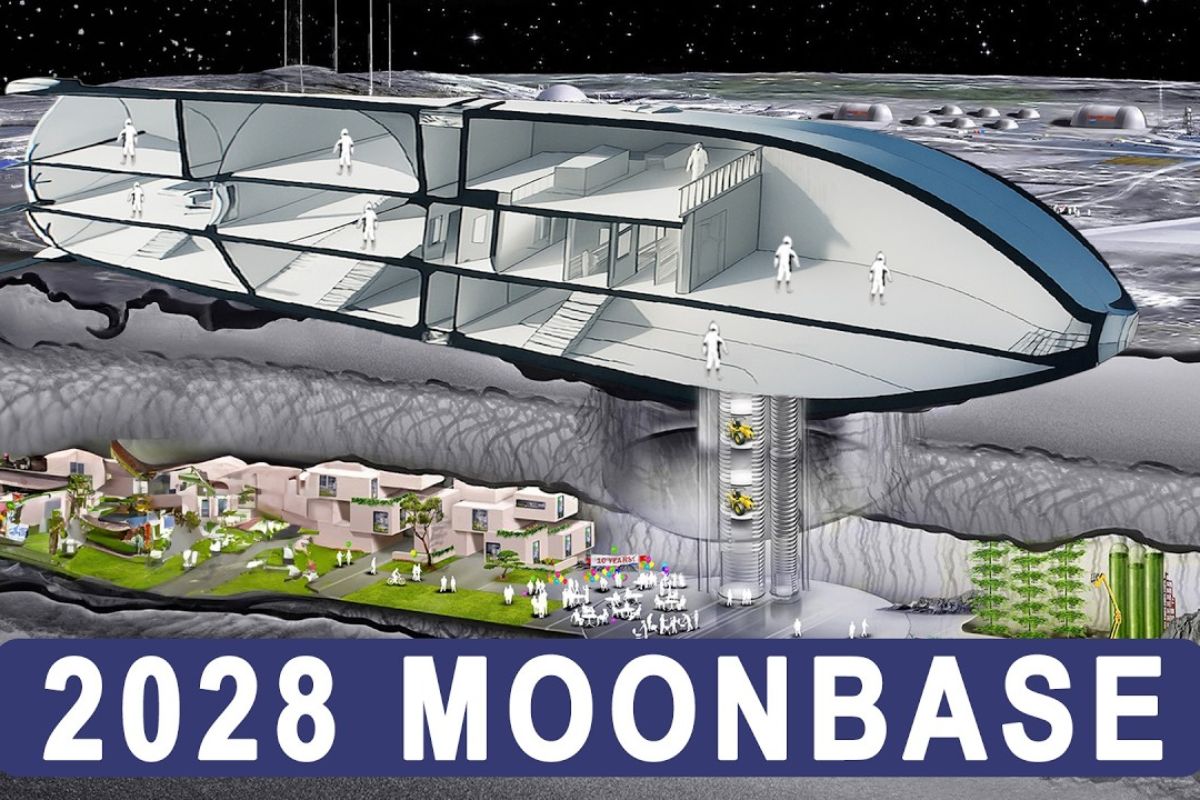


Elon Musk Claims That SpaceX Wants to Begin Cargo Flights to the Lunar Surface in 2028 and Turn Starship Spaceships into Permanent Habitats with Integrated Life Support, Almost Continuous Solar Power at the Shackleton Crater’s Edge, Use of Ice as Fuel and Expansion through 3D Printing of Additional Modules.
Elon Musk describes 2028 as the milestone for the start of an operational phase on the Moon, with the Lunar Alpha Base using the Starship as a permanent habitat and focusing on a specific point of terrain: the edge of the Shackleton Crater, where sunlight “almost never goes out” and ice can turn into fuel.
Musk’s proposal tries to swap the logic of building a traditional base for a sequence of conversions and additions to the vehicle itself, combining continuous solar power, use of local resources, and expansion through 3D printing to sustain permanence, work, and research off Earth.
What Elon Musk Calls Lunar Alpha Base and Why 2028 Became the Target

Elon Musk positions the Lunar Alpha Base as the first real step towards human presence beyond the planet, with missions starting in 2028 and the Starship assuming the role of “home” and infrastructure at the same time.
-
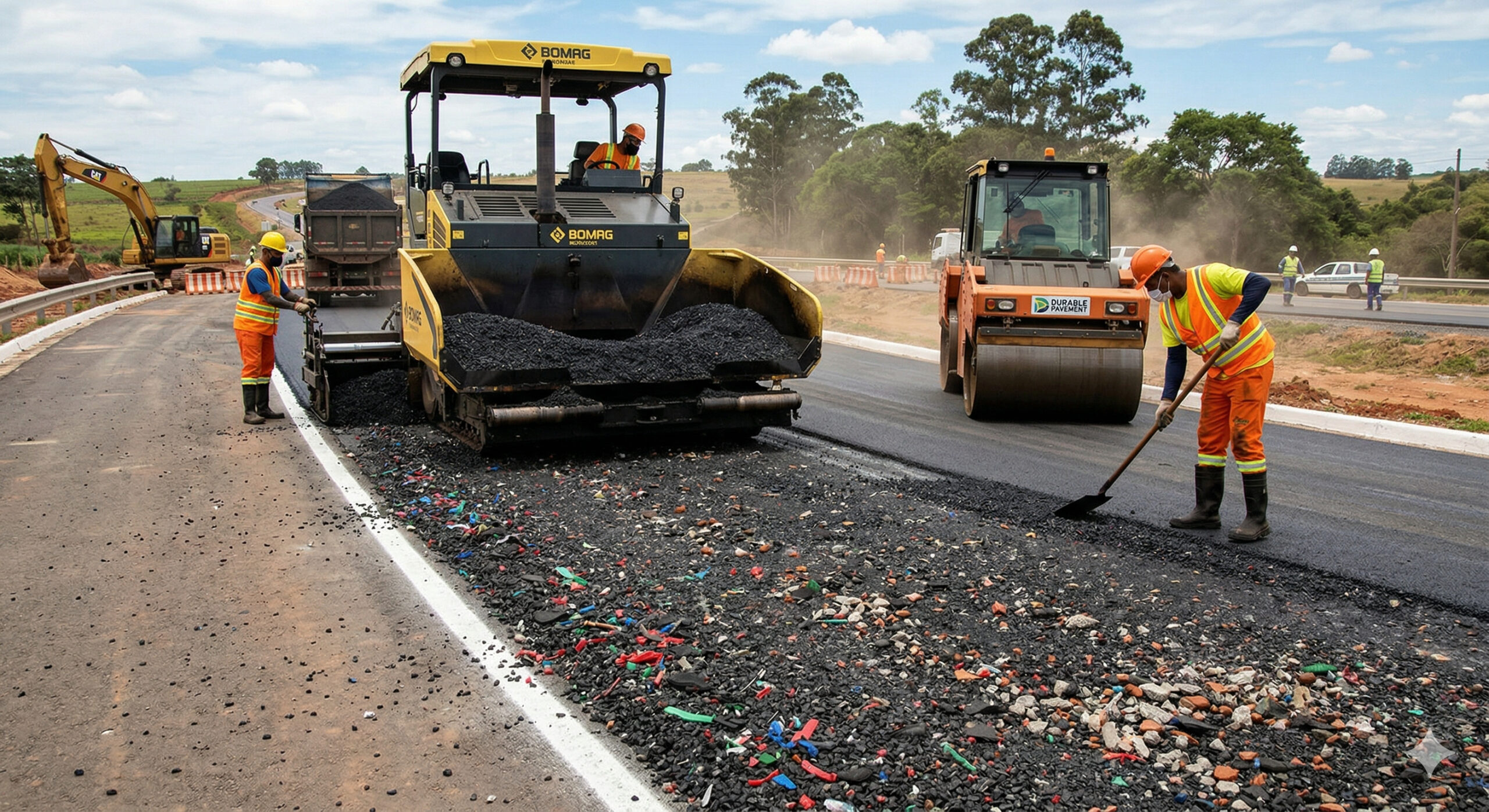
Roads made with recycled plastic, crushed tires, and construction waste are already being applied in several countries, reducing tons of waste in landfills and increasing the durability of the pavement by replacing traditional materials.
-
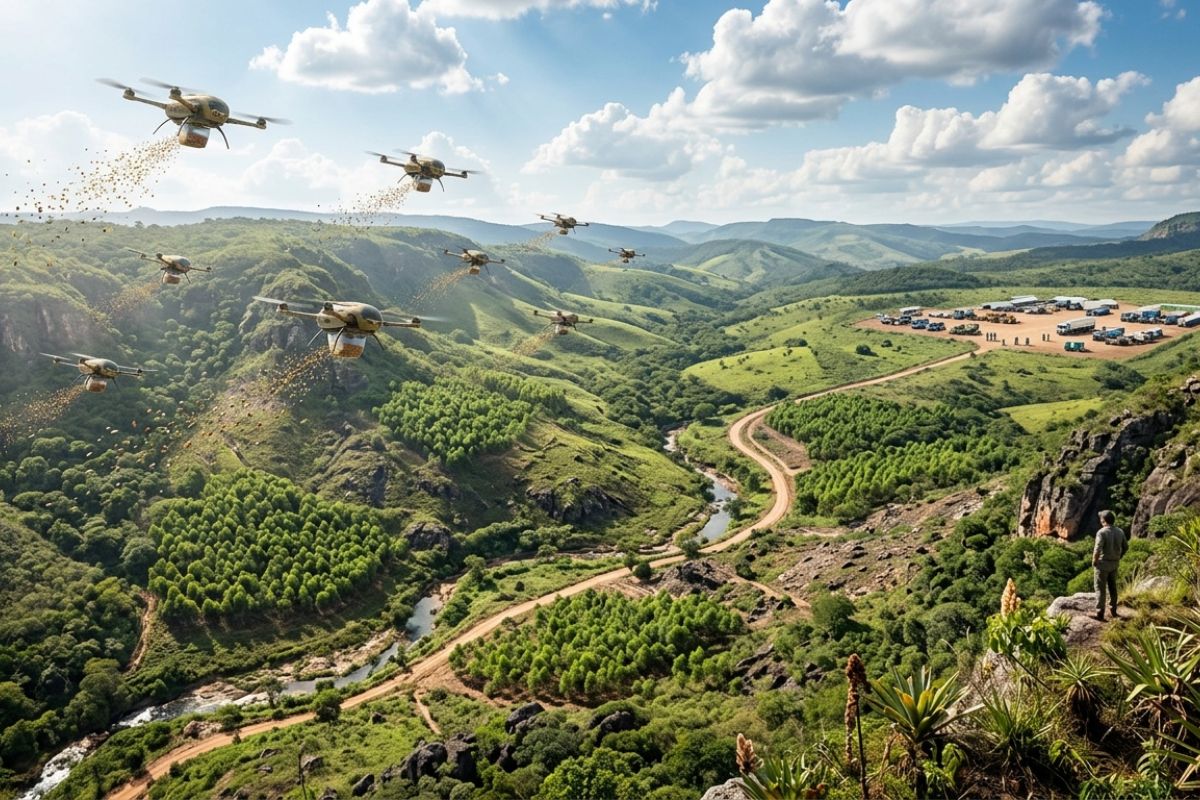
Drones have become “insects” and spread native seeds to recover inaccessible areas; the Bacias & Florestas program, for 15 years, has planted 3 million trees and restored 15 thousand hectares, despite costs of up to R$ 25 thousand/ha.
-
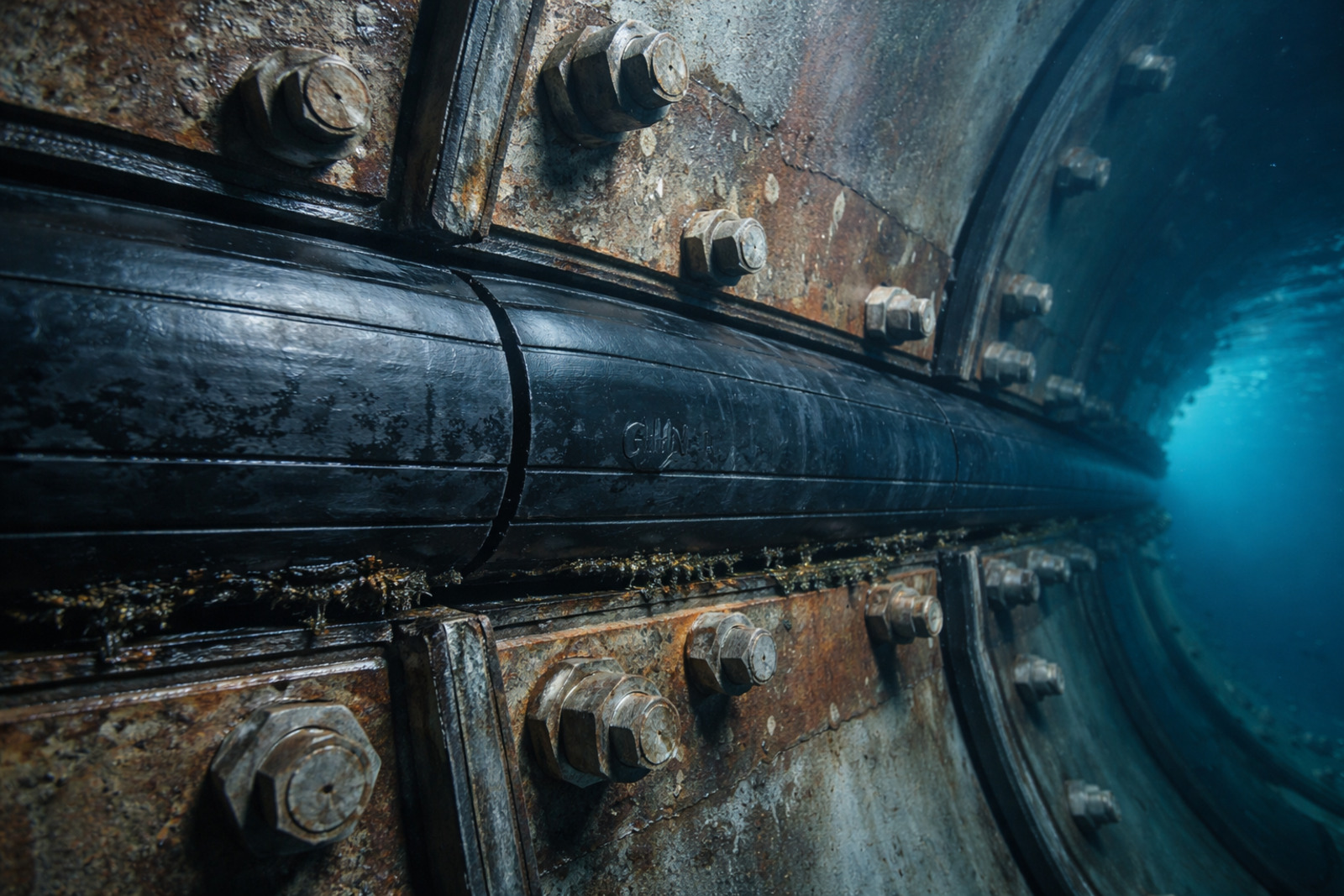
Alert in the underwater tunnels: the rubber sealing the entrance of the sea in a structure in China is deteriorating from the inside faster than expected.
-
A cyclone with unprecedented behavior will form in the Atlantic in the coming hours and will move from the sea to the continent instead of following the normal path, with gusts of up to 90 km/h and a risk of hail and waterspouts in southern Brazil.


In the plan, the base also gets an internal nickname: AA City, defined as a mix of “Audacity” and “Lunar City.”
The location, according to the presented description, is not generic.
Elon Musk points to the edge of the Shackleton Crater as a strategic area for two operational reasons: almost continuous sunlight to sustain energy generation and frozen water that can be converted into fuel.
Starship as Base Without Base and the Attempt to Cut Costs through Reuse
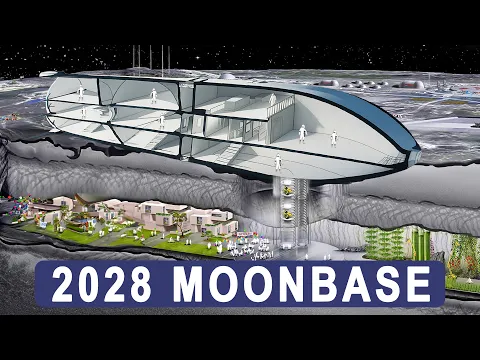

Elon Musk structures the concept as a “base without base”: instead of sending parts to assemble a separate habitat, the lunar Starship would arrive with accommodations, workspaces, and life support systems integrated.
The bet is that this reduces logistical steps and costs.
In the comparison used in the report, Elon Musk contrasts the cost scale of the International Space Station, mentioned as about US$ 150 billion, with the logic of Skylab, which reused part of a Saturn V stage for a fraction of the cost.
The parallel serves to justify the central idea: reuse existing structures as habitat and expand afterwards.
The Interior That Elon Musk Wants to Transform into Housing: Pressurized Volume and Converted Tanks
Elon Musk describes the Starship as a platform with a large internal volume by spacecraft standards.
The plan starts with about 1,000 m³ of pressurized space.
After landing, the proposal is to convert part of the fuel tanks into additional habitable area, adding more 1,400 m³, which more than doubles the available space.
The cited lunar Starship appears as white, with no wings and no heat shield, because the presented logic is that it would not return to Earth, remaining on or around the Moon.
Elon Musk puts this permanence as a way to prevent the vehicle from becoming junk and, at the same time, to become infrastructure.
The operational timeline also goes into details: to transform tanks into useful space, the mentioned estimate is about 165 days of work, with approximately 60 days dedicated to modifying the tanks themselves.
Elon Musk associates this effort with a hostile environment, limited tools, and constant risk of leaks.
Tipping a Starship on the Moon: the Maneuver That Elon Musk Treats as Key to Access the Whole Hull
Elon Musk describes a stage that changes the geometry of the vehicle’s use: laying the Starship down.
The logic presented is simple and physical: standing, a large part of the interior is volume of empty tanks and only the upper third is more “habitable”; laid down, the hull becomes a long corridor with continuous access.
The plan cites the dimensions of the vehicle’s body as practical references: 50 meters long and 9 meters wide.
The scale of the challenge also appears: “a spacecraft of 100 tons,” which would be inclined with high-strength cables attached to the nose, pulled by lunar vehicles or by an anchored winch system.
Elon Musk includes lunar environment factors to support viability: lower gravity, about 1/6 of Earth’s, helps, but the dusty terrain can be slippery.
Therefore, before the maneuver, the plan predicts compacting the ground with bursts of engine power to create a more stable base.
Almost Continuous Energy: What Elon Musk Puts in the Shackleton Solar Equation
Elon Musk ties the viability of Lunar Alpha Base to energy.
The edge of Shackleton appears as a solution to a classic problem: in many areas of the Moon, there are long cycles of light and darkness, but there, sunlight would be almost permanent, allowing continuous operation.
The plan describes panels on the crater’s edge and includes reference numbers: the Sun provides about 1,361 watts per square meter in space, and on the Moon, without atmosphere blocking, good panels could deliver 300 to 400 watts per square meter, indicated as 20% to 25% more than on Earth.
Elon Musk connects this energy to the capability of keeping 3D printers, vehicles, and life support systems running continuously.
Even with the advantage of the location, Elon Musk mentions redundancy.
The idea of reinforcement includes the company Star Catcher, described as working on sending super strong sunlight through special lenses, with the potential to increase power by up to 10 times when panels need a boost, with the care of not putting people at risk.
3D Printing and Shielding with Regolith: the Expansion That Elon Musk Describes Beyond the Hull
Elon Musk also inserts modular growth.
The plan foresees 3D printing with regolith, the dust of the lunar soil, to create additional modules like laboratories, storage areas, and accommodations next to the main habitat, forming a hybrid base that grows over time.
Protection enters as a physical requirement, not as detail. Elon Musk lists two dominant threats: micrometeorites and radiation.
The proposed solution is to cover the habitat with about 5 meters of lunar regolith, forming a shielding layer.
To apply this, the plan points to the use of mechanical equipment, like a lunar telescopic crane adapted with a shovel or bucket to dump layers over the hull.
Ice, Oxygen, and Local Resources: Elon Musk’s Bet to Reduce Dependence on Earth
Elon Musk treats lunar ice as an energy and logistical piece: frozen water converted into rocket fuel.
On the same axis, the concept of using in-situ resources comes into play, using what already exists instead of sending everything from Earth.
The plan describes regolith as rich in oxygen trapped in rocks.
Heating and applying electricity would allow obtaining oxygen for breathing or fuel.
Elon Musk links this to liquid oxygen fuel for the Starship to return home or go deeper into space, reducing costs and increasing autonomy.
What Elon Musk Tries to Change Regarding the Apollo Standard and Short Stays
Elon Musk contrasts the goal with the historical standard.
The report reminds that no one has returned to the Moon since 1972 and that Apollo 17 still holds the record for human permanence, with only 3 days. For Elon Musk, repeating short visits does not solve the critical step: learning to live off Earth full-time.
The plan sets challenges that require permanence and infrastructure: sharp lunar dust, long periods without light in other regions, and radiation at levels that make protection a central factor.
Therefore, the Lunar Alpha Base appears as a training ground for endurance and engineering, with Elon Musk pointing out that if the Moon is mastered, the path to other goals becomes more realistic.
In the short term, what can be monitored is whether Musk’s 2028 timeline holds and if the conversion of Starship into habitat, with energy and shielding, can transition from design to a repeatable procedure.
If you want to see this topic evolve with facts and milestones, it is worth monitoring the next announced steps and comparing each promise to concrete deliveries.
Do you believe that Elon Musk’s strategy to transform Starship into permanent housing on the Moon is a genius shortcut or too big a risk to become routine?





Would Indian Russian and Chinese technology be included in the solution
The money and effort put into power and domination should have long ago been diverted to the expansion of our Civilization to what has been given us instead of trying to control the population by wars and starvation. Our destination has always been to explore and inhabit the beauty of Our Solar System and Beyond, the innovation, discovery and inventions will be a progression of our accomplishments, one works with the other. This requires Vision, the vision of every one on Earth should become a part of this Adventure.
Opinion 1777.
Que mente impresionante tiene este hombre,el proyecto es fantástico y viable.La inclinación de la nave no es consistente,opino,quizás desarrollen otro método.Quizas propulsión inversa en la nariz más cables para direccionar.Disculpas a mi tambien me gusta soñar.