





 Portuguese
  English
  Spanish
  4 min of reading
  0 comments



Dispute for internet via satellite enters a new chapter with Amazon’s commercial launch expected in 2026, combining its own constellation, integration with cloud computing, and a global strategy to compete with the already established leadership of Starlink in the sector.
Amazon has begun to work with a more defined public goal to enter the global satellite internet dispute.
In a letter to shareholders released on April 10, 2026, CEO Andy Jassy stated that Amazon Leo is officially scheduled to begin its commercial operation in mid-2026.
This promise positions the company more clearly in confrontation with Starlink, from SpaceX, in a market that has rapidly scaled and become a strategic piece for consumers, businesses, and governments.
-
What this solid-state nuclear battery does seems like something out of fiction: generating energy for over 100 years in ultra-low consumption devices, without recharging and without replacement, for critical missions in remote and demanding areas.

-
After 80 years at the bottom of the ocean, a Japanese airplane with a 2,000 hp engine and preserved wings is retrieved from the seabed.

-
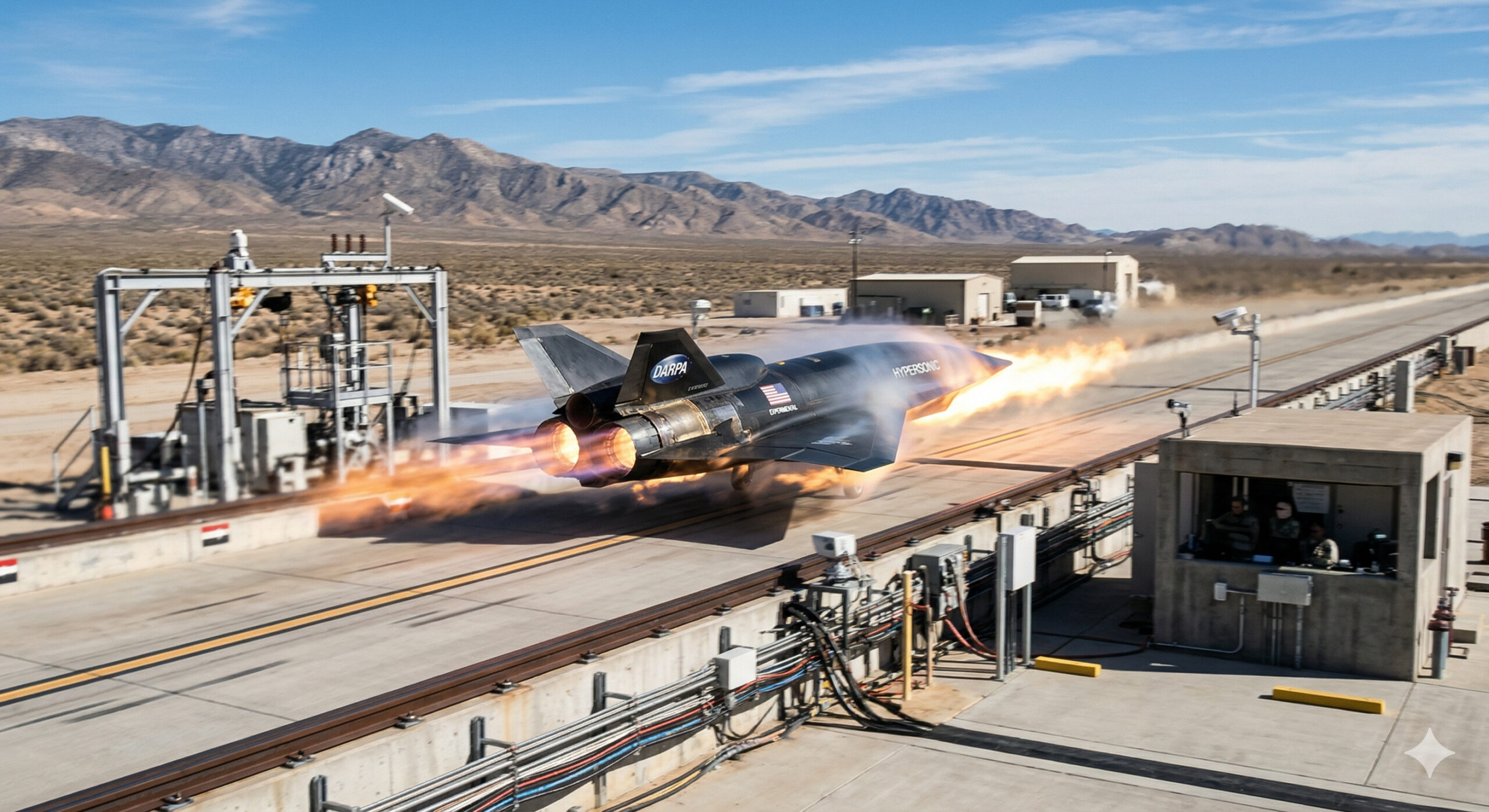
DARPA surprises by launching a program to create an engine capable of taking off and accelerating to hypersonic speeds above 5,300 km/h (Mach 5), combining turbine and ramjet/scramjet in a unique architecture to finally make reusable flight viable.
-
Scientists identify a unique cell that appears only during pregnancy and plays a role in the connection between the placenta and blood flow, revealing an essential mechanism for fetal development and possible causes of gestational complications.

Amazon Leo timeline and satellite launch goal
The change, however, does not eliminate the obstacles that still impose themselves on the timeline.
Although Amazon has authorization for a constellation of 3,236 satellites in low orbit, the pace of deployment remains far from what is required to meet the first major regulatory deadline in the United States.
According to the conditions set by the FCC, the company needs to put into operation half of that total, or 1,618 satellites, by July 30, 2026.
With delays accumulated since the first launch forecasts, the company has already requested more time from the regulatory body.
This mismatch helps explain why Amazon’s project continues to be observed with caution, despite the size of the company and its investment capacity.
The operational kickoff only came in April 2025, when the company launched the first 27 production satellites.
At that time, the debut was already happening with more than a year of delay compared to the initial plan.
Since then, the company has been trying to accelerate production and the placement of new units into orbit to bring the commercial timeline closer to regulatory reality.
Dependence on launches and role of the New Glenn rocket
Unlike SpaceX, which operates its own launch structure and integrates the space business end-to-end, Amazon still relies on a diverse network of suppliers to take its constellation into space.
Amazon Leo began its large-scale deployment with over 80 missions contracted with Arianespace, Blue Origin, SpaceX, and United Launch Alliance.
This arrangement reduces dependence on a single partner but also exposes the project to scheduling bottlenecks, rocket availability, and logistical delays outside the company’s direct control.
In this scenario, New Glenn appears as a central component to change the pace of execution.
The large rocket from Blue Origin reached orbit on January 16, 2025.
The flight paved the way for the vehicle to compete in the commercial launch market and support a significant portion of Amazon’s future missions.
Integration with AWS and promise of higher performance
Amazon’s bet is not limited to orbital infrastructure.
Jassy argues that the service’s differential will be in the combination of performance, price, and integration with the company’s cloud computing division.
According to the executive, Amazon Leo is expected to deliver six to eight times more uplink capacity and double the downlink, in addition to operating at a lower cost than competing alternatives.
He also stated that the service will be seamlessly integrated with AWS.
This will allow businesses and governments to move data between the satellite network and storage, analytics, and artificial intelligence services.
This direct connection with AWS helps explain why the company presents the project not only as internet for remote areas but as a connectivity platform with corporate and institutional ambition.
The network will be connected by high-speed optical links and a global structure of ground stations, fiber, and internet connection points.
In practice, this expands the project’s reach for mission-critical applications, business connectivity, transportation, aviation, and government operations.
Strategic customers and advancement in the corporate market
Commercial signals have already begun to appear, even before the official market launch.
Amazon Leo already has significant revenue commitments with companies and governments.
Among the mentioned partners are Delta Air Lines, JetBlue, AT&T, Vodafone, DIRECTV Latin America, Australia’s National Broadband Network, and NASA.
In the case of Delta, the forecast is to start adopting the solution for in-flight Wi-Fi on 500 planes starting in 2028.
This move indicates that the company is trying to position itself early in high-value niches.
Dispute with Starlink and global scale challenge
Still, the competitive challenge remains evident. Starlink arrived first, gained scale, and consolidated international presence while Amazon was still structuring its first operational phase.
At the same time, the company tries to sell the idea that there is room for more than one major operator in the sector.
The weight of AWS, Amazon’s industrial capacity, and the prospect of a greater cadence of launches explain why the project continues to be treated as a long-term strategic move.
The expected commercial debut in mid-2026 should serve as the first real test of Amazon’s ability to turn technological promise into a scalable service.







Seja o primeiro a reagir!