





 Portuguese
  English
  Spanish
  10 min of reading
  1 comment


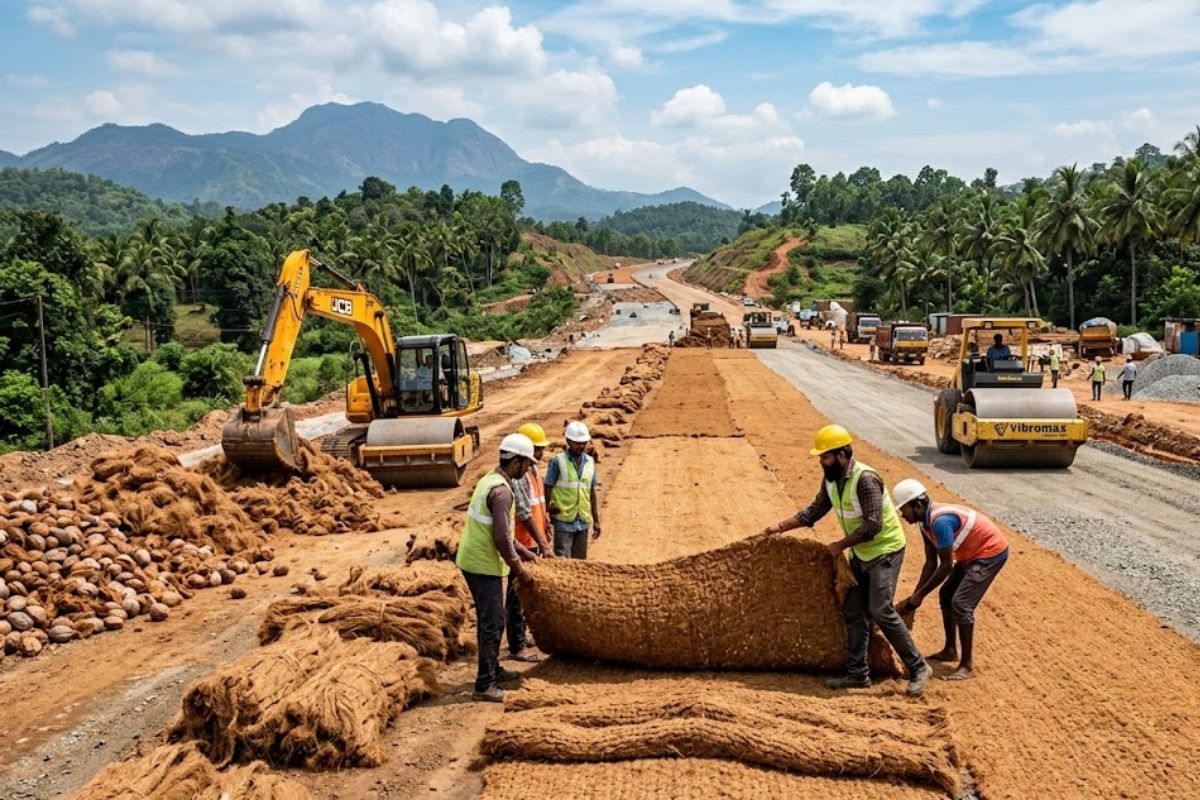


In India, coconut fiber has stopped being just harvest waste to become a geotextile base in highways, helping to separate layers, control water, distribute loads, and reduce structural damage, in a process that connects agriculture, industry, and civil engineering in a technically efficient and sustainable way on a large local scale.
Coconut fiber has taken on an unlikely role in Indian road engineering: instead of appearing as waste without a noble function, it is incorporated into the foundation of roads as a technical layer placed between the fragile subgrade and the upper structures. This application changes the most common logic of heavy infrastructure, as it replaces part of the reliance on steel, plastic, and industrial polymers with a biomaterial extracted directly from the fruit’s husk.
What seems simple at first glance actually involves a long, precise, and highly functional chain. From the correct point of maturity of the coconut to drying, extraction, spinning, weaving, and installation on the construction site, each step must preserve the mechanical resistance of the fiber so that it can stabilize the soil, withstand continuous pressure, and work silently under tons of heavy traffic.
How Coconut Fiber Came to Support the Base of Giant Roads
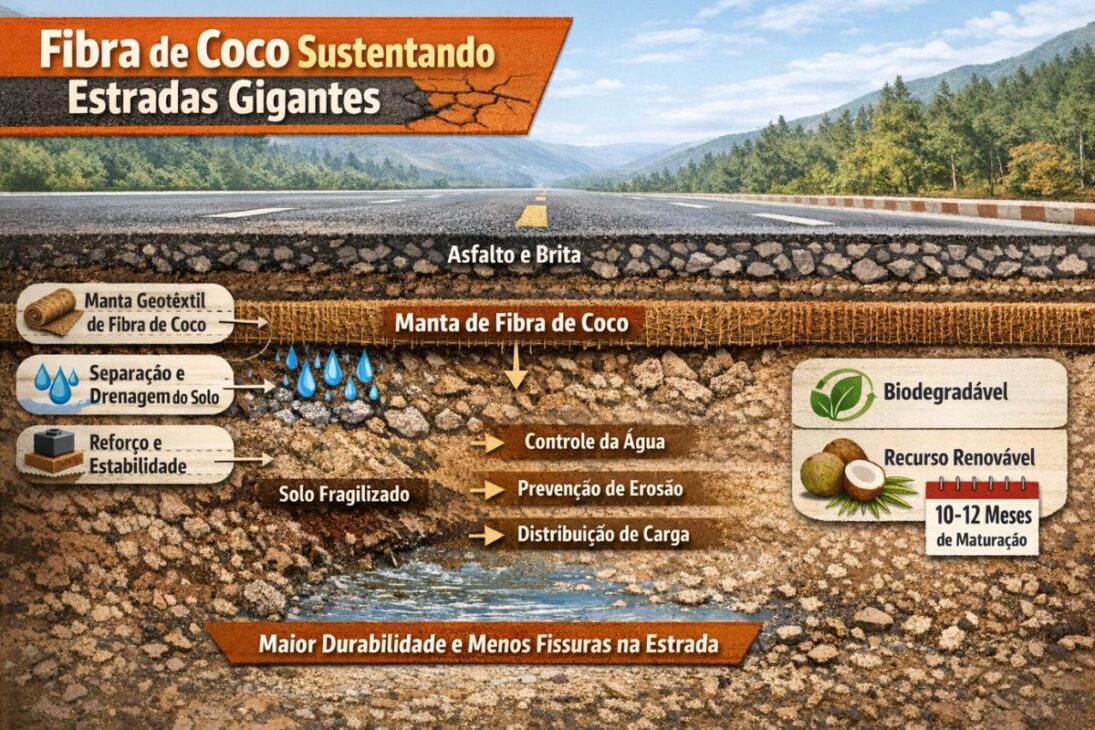
In highway construction, the visible part, such as asphalt, gravel, and concrete, usually attracts all the attention. However, the durability of the roadway does not depend solely on the top layer. The integrity of the road starts further down, where the soil needs to remain separated, drained, stable, and able to distribute weight without critical deformations. It is exactly at this point that coconut fiber enters as a structural solution. Transformed into a geotextile mat, it acts as a separation and reinforcement layer between the weakened ground and the materials that will come on top.
-
Attracting around 250,000 people a year, a lighthouse 200 meters from the sea, on a 60-meter high cliff, on the North Sea coast in Denmark, becomes one of the most impressive examples of how nature can threaten historical buildings.

-
The narrowest house in the world is only 63 centimeters wide, but inside it can accommodate a bathroom, kitchen, bedroom, office, and even two staircases.

-
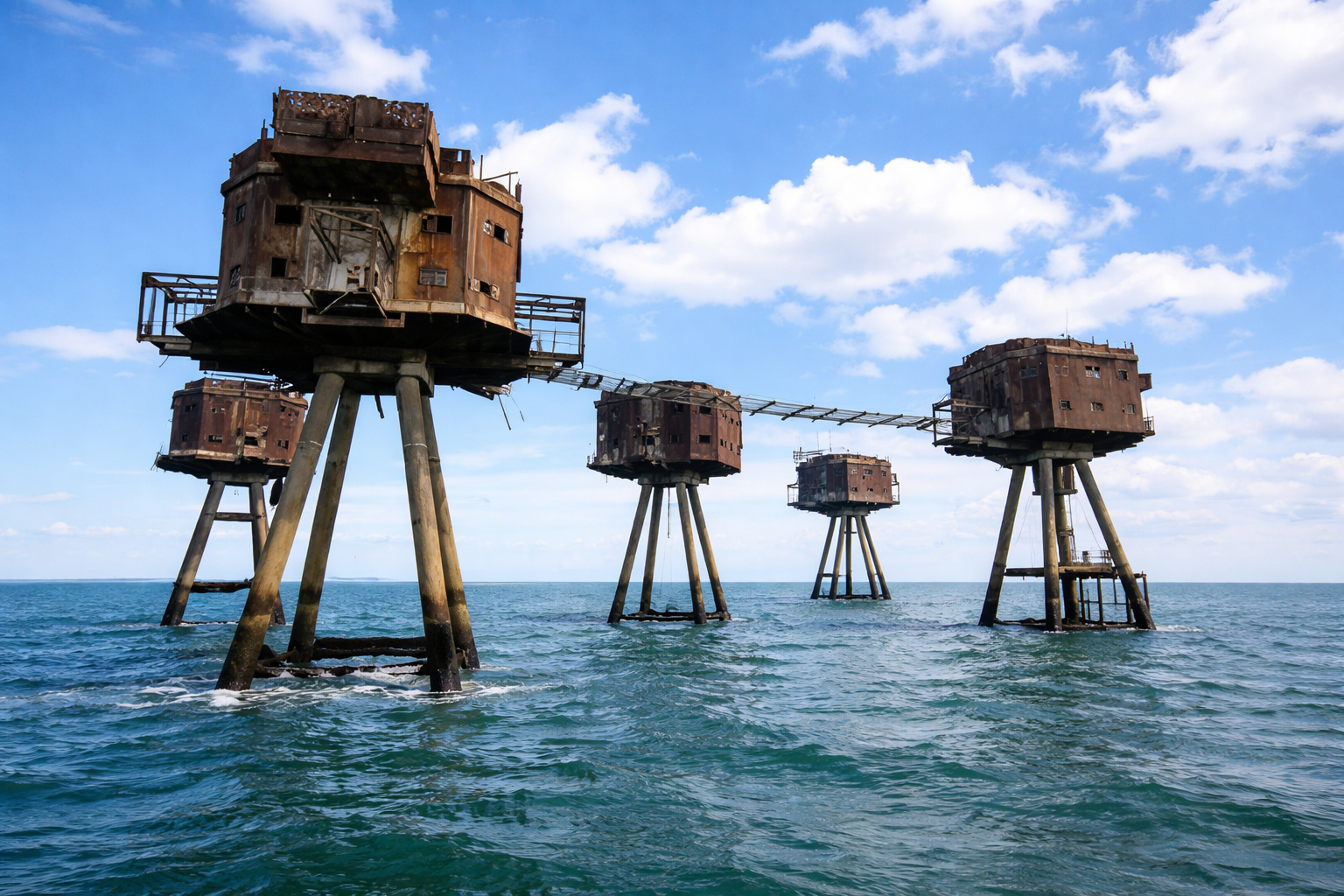
In the middle of the sea, these enormous concrete and steel structures, built by the British Navy to protect strategic maritime routes, look like they came straight out of a Star Wars movie.
-
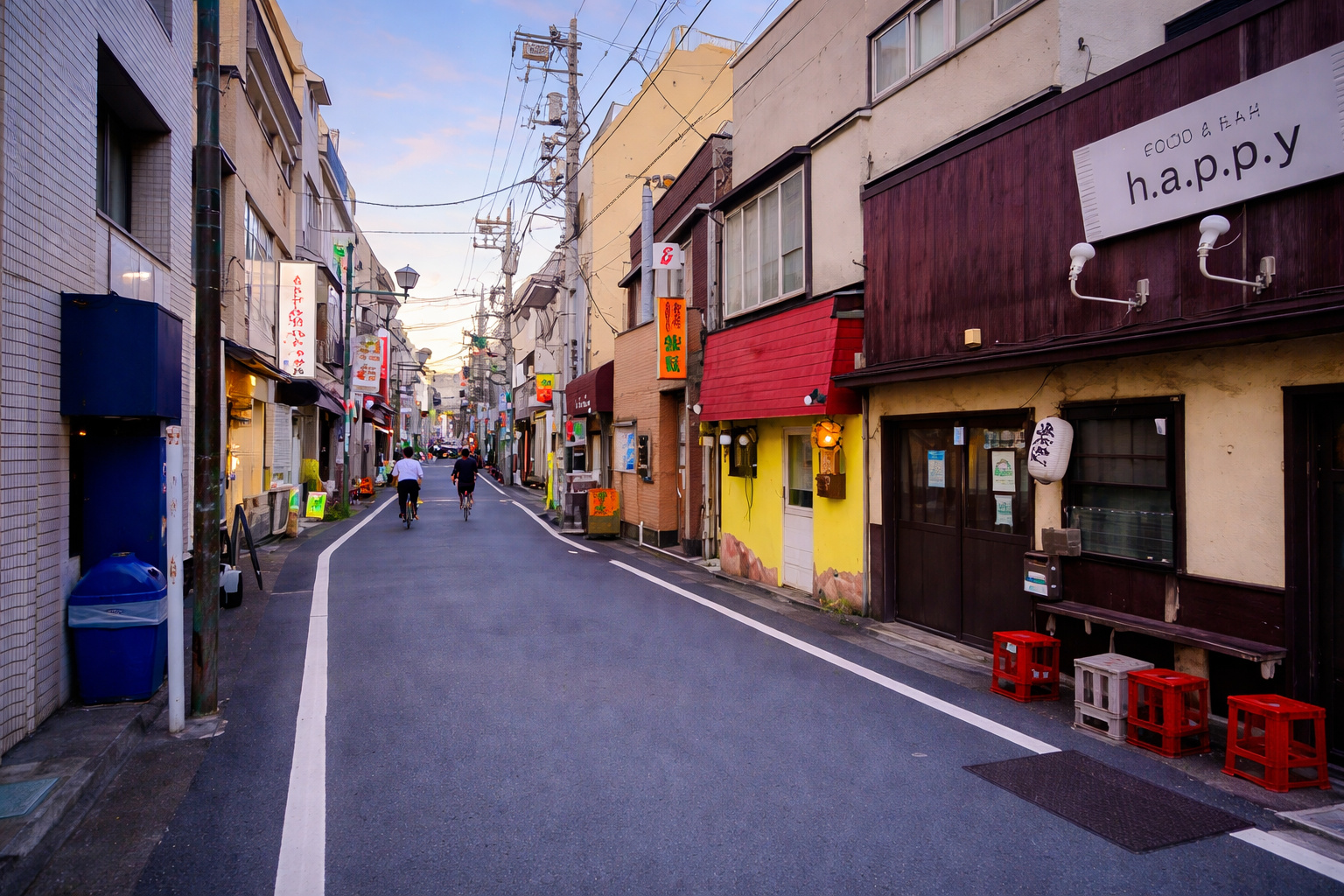
For years, no one could cross a neighborhood in Tokyo because of the tracks, but an impressive solution changed mobility and completely transformed the local routine.

This use serves no decorative or marginal function. The mat made with coconut fiber helps control water flow, reduces erosive processes, distributes loads, and limits the loss of stability of the subgrade, which decreases the chance of cracks and premature failures over time. Instead of relying exclusively on synthetic inputs derived from petroleum, Indian engineers take advantage of a renewable, biodegradable resource already available in large scales within their own territory, making the choice both technical and logistical at the same time.
The strength of the fiber does not appear by chance. The coconut reaches the most suitable point for this type of use between 10 and 12 months of maturity, a phase in which the fibers of the husk develop the most useful mechanical properties for heavy applications. This means that the base of the road is not being built with just any waste, but with a raw material chosen at the moment when its natural structure offers the best performance.
This characteristic helps explain why an organic compound, which may seem fragile outside the technical context, can perform below highways subjected to the continuous weight of trucks, machinery, and intense traffic flows. The strength does not come from a rigid appearance like steel, but from the combination of lignin, traction, and controlled processing, which transforms the coconut husk into a mesh capable of efficiently reinforcing the soil.
From Plantation to Industry: The Path of the Husk to the Geotextile Mat
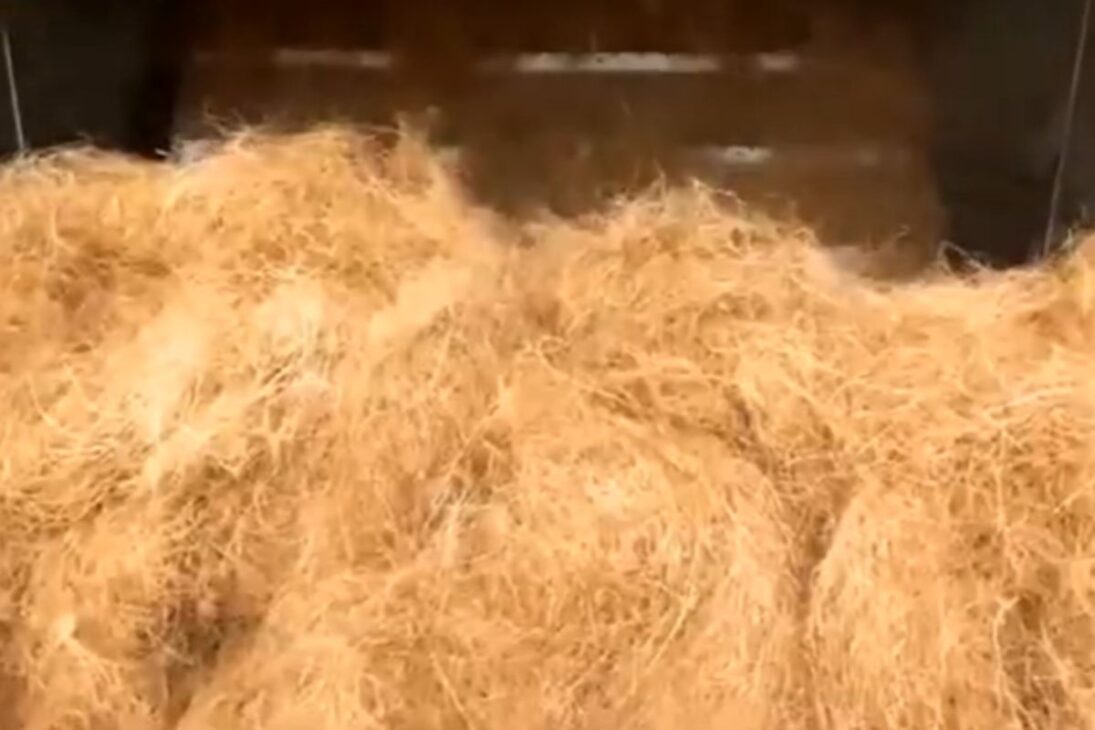
The scale of production helps to understand why India has found coconut fiber to be a viable response for part of its road network. Approximately 60% of the country’s coconut production is concentrated in the southern regions, and the annual harvest exceeds 19 billion fruits. Under ideal conditions, a single mature tree produces an average of 50 to 80 coconuts per year, with continuous harvesting cycles occurring every 30 to 45 days. This creates a constant flow of raw material, essential for supplying processing units without prolonged interruptions.
The harvest, however, is far from automatic or simple. In many cases, workers climb coconut palms that are between 8 and 15 meters tall to cut entire bunches, while in areas of greater difficulty, long cutting poles, about 8 to 10 meters, are used. After harvesting, the fruits are taken to collection points in the plantations or near the roads, where the separation begins between the parts used for consumption and the husk intended for the fiber industry.
It is precisely in the husk that the structural key lies. It accounts for about 35% to 45% of the total weight of a mature coconut and contains a dense network of fibers bound by natural lignin. This combination gives the raw material significant resistance against degradation and physical pressure. However, the freshly separated husk cannot yet be applied in engineering. It leaves the fruit heavy, rough, and with very high moisture content, often above 60%, which makes direct use in extraction machinery unfeasible.
Therefore, the process begins with controlled drying. The husks are spread out in open yards and exposed to the sun for a period ranging from two to four weeks, until the moisture content drops to around 15%. This control is crucial, as the gradual reduction of water facilitates the separation of fibers without destroying their internal structure. After the first drying, rotating shafts, metal rollers, and mechanical systems tear the husk, isolating the long fibers from the core and impurities.
Even so, the work is not finished. After primary extraction, the fiber needs to go through a further dehydration step, usually for an additional 3 to 7 days, until the moisture content falls below 5%. This second drying prevents fungal proliferation, reduces weight, and stabilizes the physical behavior of the fiber during storage, transport, and weaving. Only then does the material move on to spinning, where the filaments are straightened and twisted into uniform threads, ready to form the mesh that will be applied under the road.
Why India Chose Coconut Fiber Instead of Synthetic Solutions
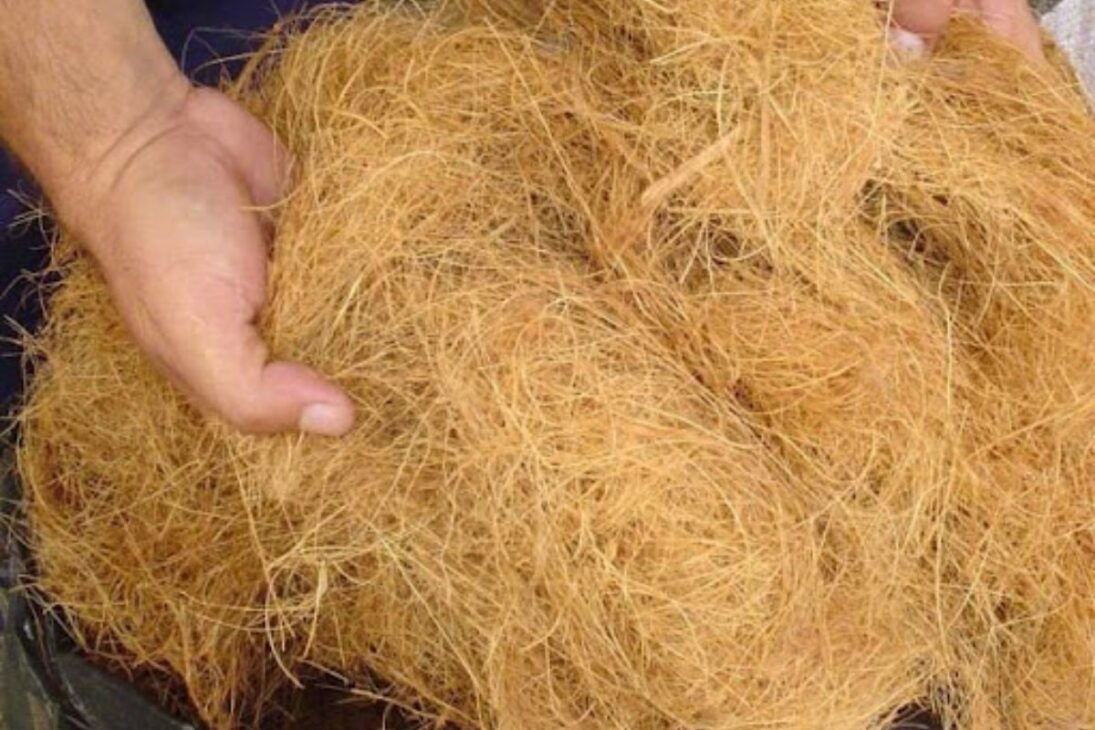
The answer lies in the combination of geography, economy, and infrastructure needs. In large rural areas of India, soils exhibit instability and require reinforcement to support durable roads.
At the same time, the country deals with a tropical climate and intense seasonal rains, which increases the importance of layers capable of draining water, containing erosion, and preserving the base of the roadways. In this scenario, coconut fiber ceases to be an alternative experiment and begins to function as an option aligned with the real demands of the terrain.
There is also a very clear productive reason. Instead of relying solely on synthetic polymers or more expensive industrial inputs, local engineering can turn to a resource found abundantly in the territory itself. This shortens part of the logistics chain, expands the use of an agricultural byproduct, and creates a direct integration between the countryside and heavy infrastructure. What once could be discarded at the edges of plantations is now reincorporated into a high-value technical activity.
This model also redistributes importance within the coconut supply chain itself. The fruit serves not only for water, pulp, or oil. The outer husk, often seen as a secondary part of the process, begins to sustain a specific industry of natural geotextiles. While the pulp goes for oil extraction and other uses, and the water remains in consumption and export circuits, the fiber enters its own industrial pathway, aimed at looms, spools, and construction sites.
The logic behind this is broad: each fraction of the coconut gains a distinct economic function, without the use of the husk needing to compete with the fruit’s food use. On the contrary, the chains complement each other. Civil engineering benefits from the natural strength of the fiber, while agro-industry enhances the added value of a previously underestimated item. This arrangement helps explain why the solution makes sense in India in such a practical and scalable way.
How the Coconut Fiber Mat is Made and Gains Strength for the Road
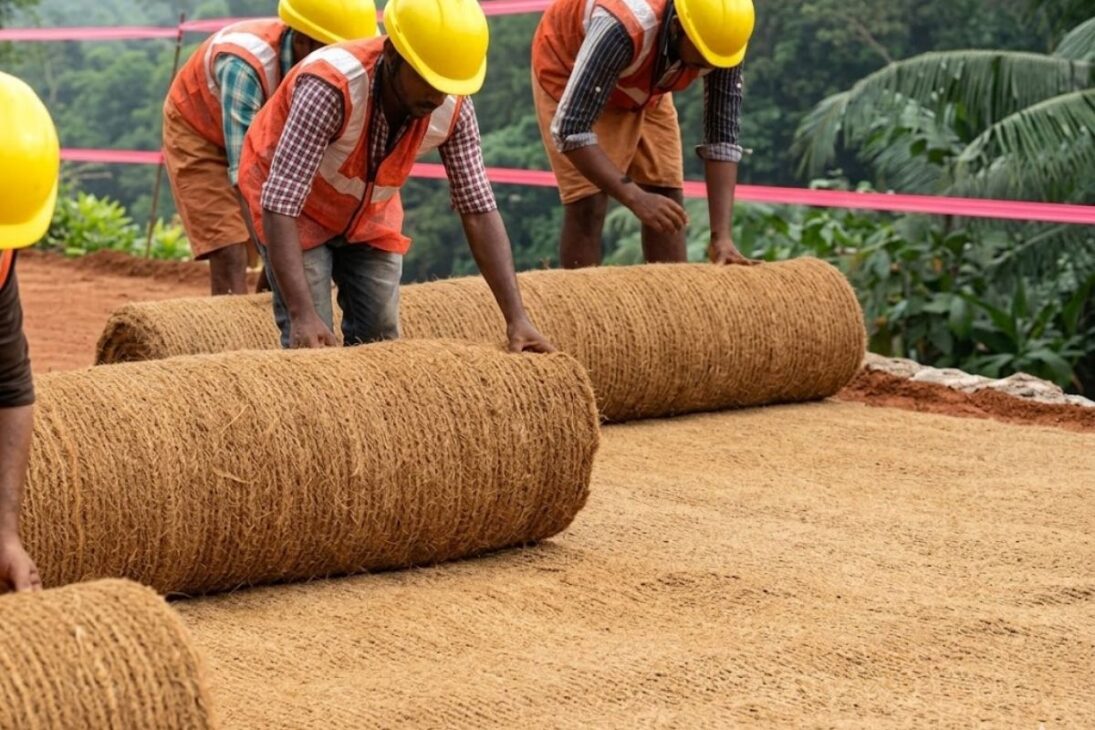
After drying and separation, the fibers enter the continuous spinning stage. The twist applied to the filaments not only serves to organize the shape of the threads. It defines the tensile strength and the ability to withstand stress during use. Poorly formed threads or those with excessive residual moisture break more easily, lose uniformity, and compromise the final performance of the mat. Therefore, the quality of the geotextile begins to be determined well before the construction, still inside the factory.
In the next stage, the threads are taken to the looms, where they are interwoven into technical meshes. On automated lines, production can reach 200 to 300 meters of fabric per hour. The warp threads are extended in parallel to form the main structural base, while the weft threads follow in sequence to compose the network. The result is a mat with a calculated density to keep the soil stable while allowing water to pass through.
The details of this mesh are not random. In some configurations, the maximum opening area reaches 125 square millimeters, with spacings varying between 10 and 25 millimeters. This sizing allows rainwater to pass through the structure without turning the base of the road into a disorganized mass. The mesh does not block the natural behavior of the terrain, but prevents it from losing cohesion easily, which is crucial in areas of intense moisture and varying loads.
In terms of yield, 100 kilograms of fiber can produce approximately 250 to 300 meters of fabric with a width of 1 meter. In some rural areas, part of this production still survives in simplified looms and manual labor, yielding less but with greater adaptation to specific demands. This shows that the supply chain is not entirely uniform: there are both mechanized industrial lines and artisan methods that remain relevant to local contexts.
Before leaving for the construction site, the rolls undergo inspection and are wound for transport. In some operations, these rolls can cover average widths of up to 15 meters on site. From this point, coconut fiber ceases to be just an industrial product and becomes a direct component of the road foundation, ready to disappear underneath layers of gravel, selected soil, crushed stone, and then pavement.
What Happens on Site When Coconut Fiber Enters Beneath the Asphalt
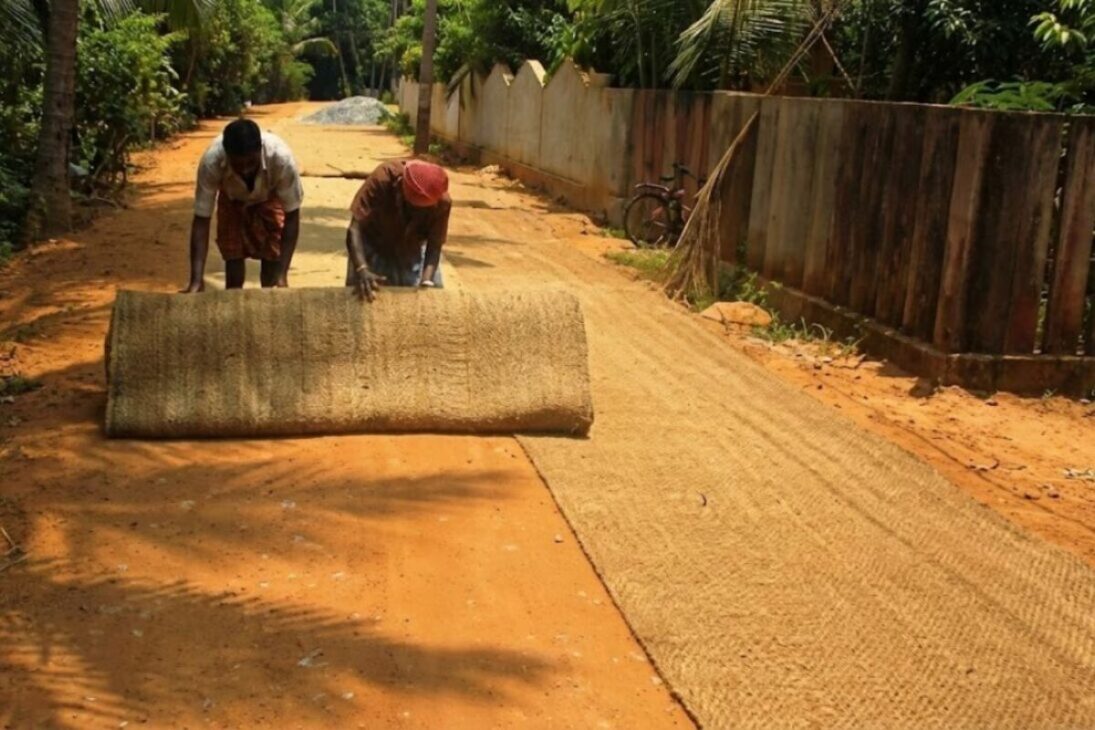
Applying the fiber to the ground requires precision. Before any unrolling of the mat, the subgrade needs to be leveled and compacted carefully to eliminate sharp stones, irregularities, and rigid objects that might pierce the fibers. This preparation is crucial, as the geotextile does not correct poorly arranged soil on its own. It performs better when it is supported by a well-regularized base, capable of receiving the mat without folds, air pockets, or undue tensions.
With the ground prepared, the rolls are positioned at the exact starting point and unrolled along the road line. The installation must be uniform, and the joints between the strips cannot be loose. Therefore, the edges are lightly overlapped to create structural continuity. Next, workers use stakes or metal pins for temporary fixation, keeping the mat stable until the next layers are laid over it.
After this installation, the upper layers come in. Gravel, selected soil, and crushed stone are distributed over the surface and compacted with heavy machinery. It is at this stage that the silent role of the fiber becomes apparent. Even under the impact of compaction and the pressure that will come with future traffic, the mat continues to operate as a separation and reinforcement barrier. It helps prevent the base from losing performance due to improper mixing between layers, excess water, and progressive soil deformations.
The expected gain is a more stable structure with a lower tendency toward cracking. This does not mean that coconut fiber alone replaces all other road components, but that it improves the foundation on which the rest will be built. In road engineering, this hidden detail can determine if the pavement ages faster or maintains integrity longer, even in scenarios of severe weather and intense traffic.
What This Choice Reveals About the Future of Heavy Engineering
The case of coconut fiber shows that innovation does not always mean turning to a more artificial or superficially sophisticated input. In some contexts, the answer lies in better understanding the physical properties of a biological resource already available and transforming it with industrial rigor. The advancement is less about the exoticism of the raw material and more about the ability to standardize it, process it, and apply it with performance criteria.
This also changes the perception of agricultural waste. When the coconut husk is treated as just a leftover, it seems to have little value outside of composting or disposal.
But when it undergoes drying, extraction, spinning, weaving, and quality control, it becomes part of a chain that deals with durability, logistics, drainage, stability, and infrastructure cost. The change, therefore, is not only on the construction site but in the way the industry begins to see what was previously marginalized.
Another important point is that this solution does not arise from a simplistic opposition between natural and industrial. In practice, coconut fiber only achieves road use because it undergoes demanding processing, with machines, drying times, moisture parameters, mesh density, and operational control. Nature provides the physical base; engineering transforms this base into measurable performance. It is this junction that makes the application convincing.
At the same time, the use of a biomaterial in such a demanding structural function broadens the debate on how large works can reduce dependence on fossil derivatives without abandoning technical criteria.
The road remains a heavy structure, subject to extreme pressure, but part of its foundation starts to be supported by a renewable resource. This does not eliminate all infrastructure challenges, but points to a direction where reuse, productive scale, and efficiency cease to be separate concepts.
The adoption of coconut fiber in Indian roads shows that an agricultural waste can leave its status as discard and take on a strategic role in one of the most demanding areas of civil engineering. Between the harvest of the fruit, the transformation of the husk into threads, the manufacture of mats, and their application under the asphalt, a chain is formed in which agriculture, industry, and infrastructure operate in a connected, technical, and functional manner.
In the end, the strength of this solution lies precisely in what almost no one sees: a discreet layer, installed beneath the surface, but crucial for stabilizing the ground, controlling water, and helping the road withstand heavy loads for a longer time.
It is a silent change, but with enormous practical impact. Do you believe that other agricultural waste could also gain a structural function in heavy works, or should this type of application remain restricted to very specific cases?







Exemplo de sustentabilidade ecológica que no Brasil jamais veremos diante da corrupção das empreiteiras e políticos… 2026EleiçõesNelesJá