





 Portuguese
  English
  Spanish
  5 min of reading
  0 comments


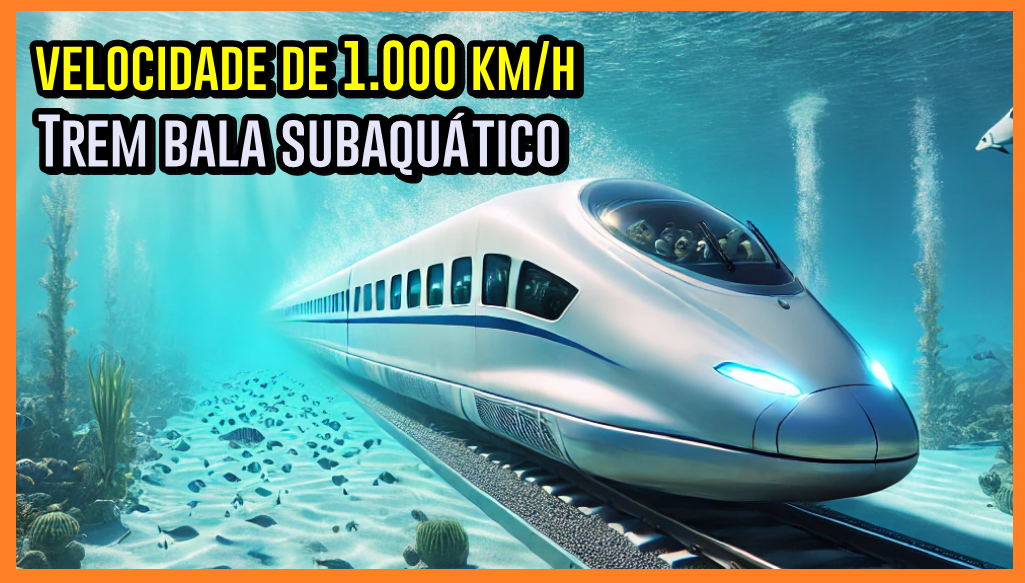
UAE Announces Project for Record-Breaking Underwater Bullet Train of 1,931 Km and 1,000 Km/h
As the years have gone by since the initial announcement of the project for an underwater bullet train between Dubai and Mumbai, advancements and discussions continue to keep alive the possibility of one of the most ambitious undertakings in modern engineering.
Originally presented at the India-UAE Conclave in 2018 in Abu Dhabi, the plan involves an underwater railway of approximately 1,930 kilometers, promising to connect the United Arab Emirates to India via a route beneath the waters of the Indian Ocean.
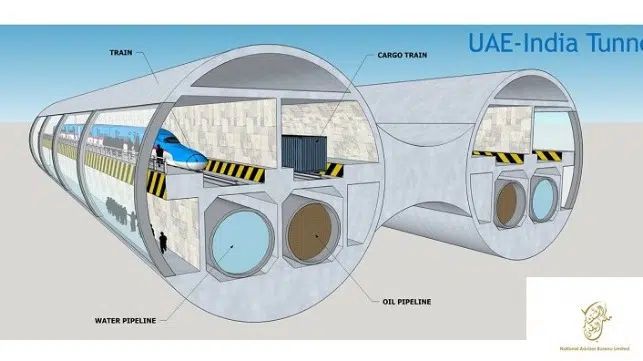
In an era where speed and sustainability are increasingly valued, this train could reach speeds between 600 and 1,000 km/h, allowing the journey between Dubai and Mumbai, currently done in several hours of flight, to be completed in just a few hours.
-
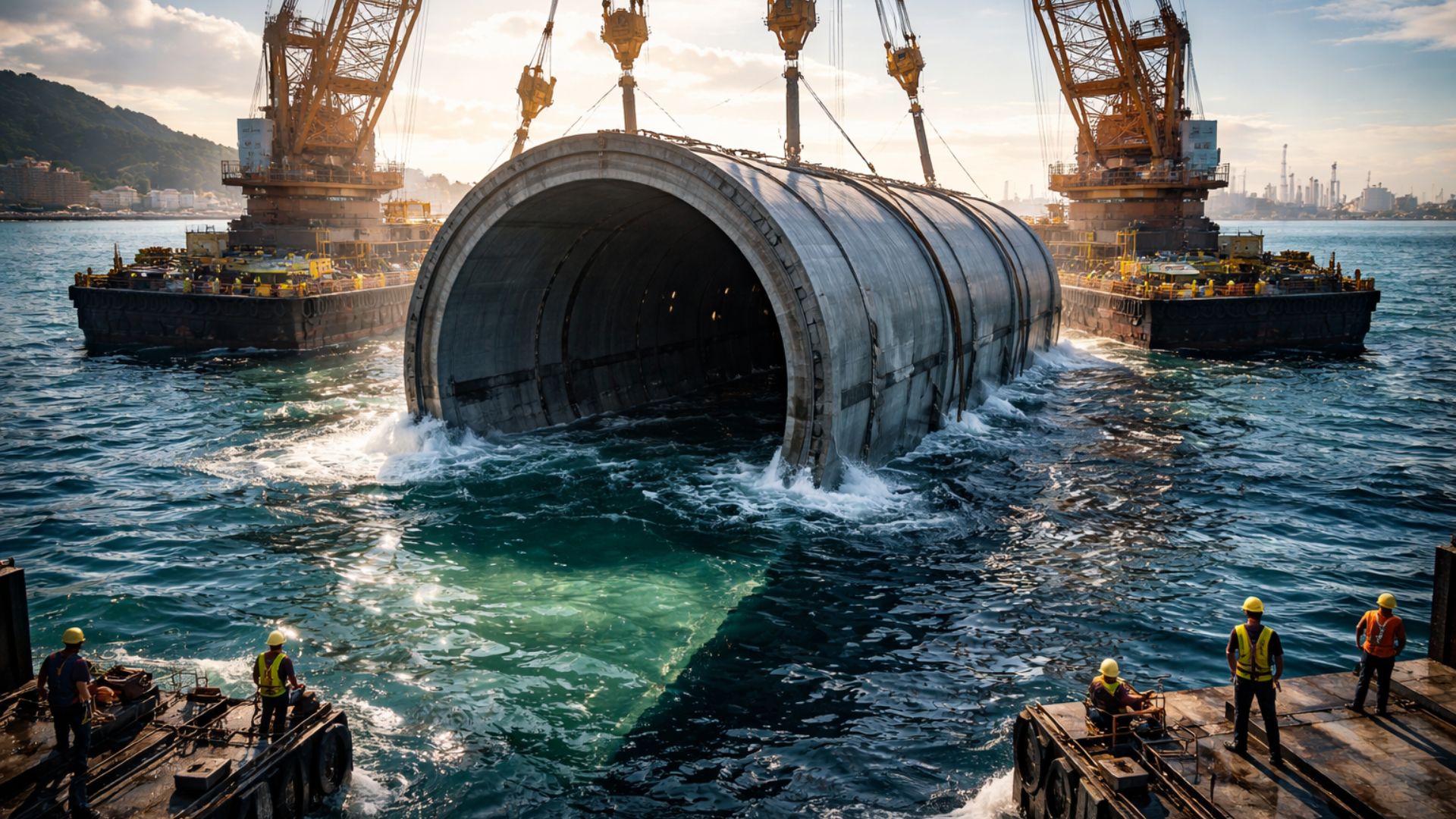
The government opens the vault and deposits R$ 2.6 billion for the construction of Brazil’s first underwater tunnel, with a length of 1.5 km, 870 m under the sea, a total project cost of R$ 6.8 billion, and a 30-year concession.
-
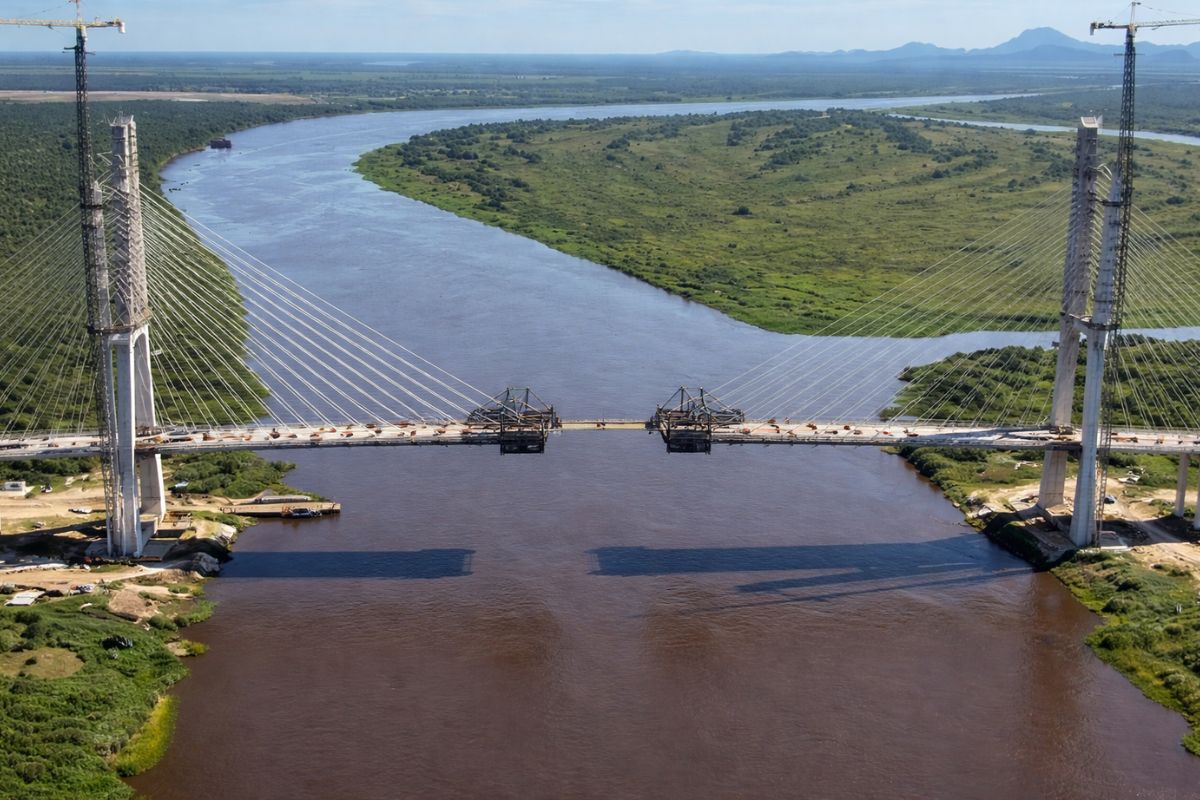
Only 46 meters remain for Brazil and Paraguay to connect via the Bioceanic Route bridge, the project that will link the Atlantic to the Pacific by land and change the logistical map of four countries in South America.
-
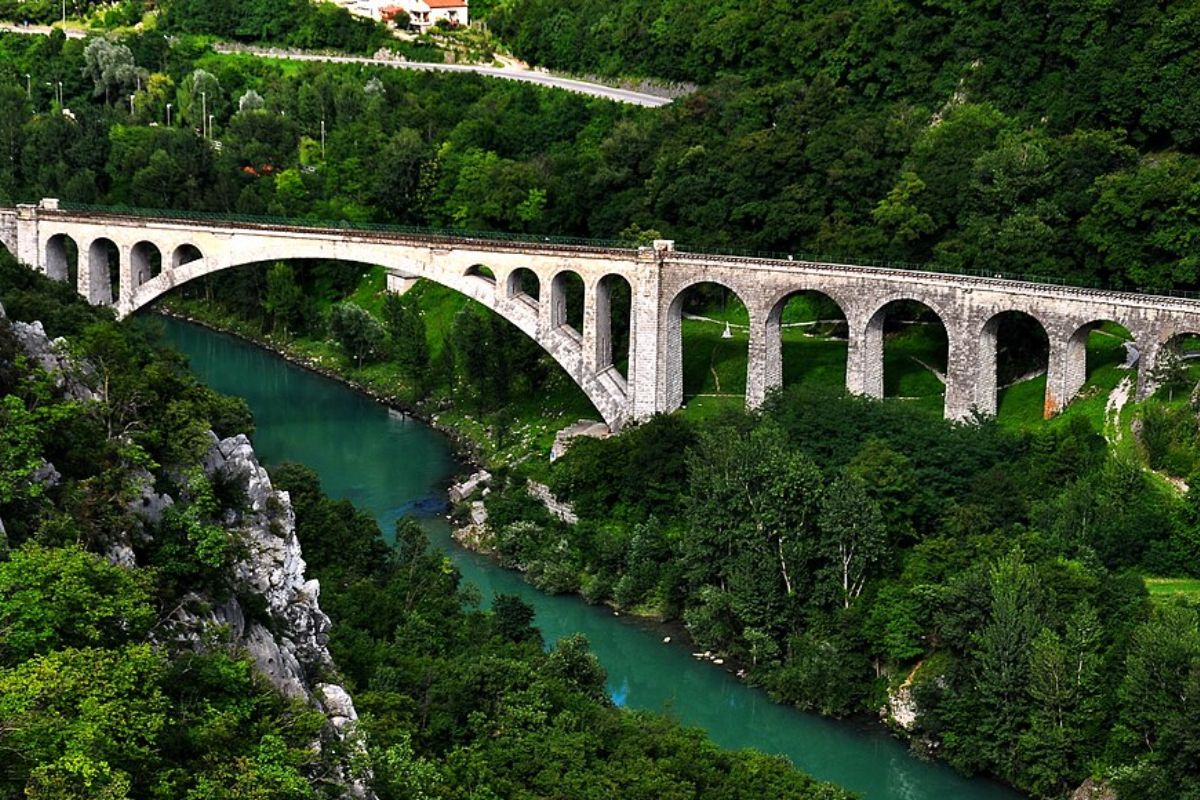
The bridge that holds the largest stone railway arch in the world: built over 100 years ago, destroyed in the war, and rebuilt to continue operating to this day, it still carries trains over the Soča River in Slovenia.
-
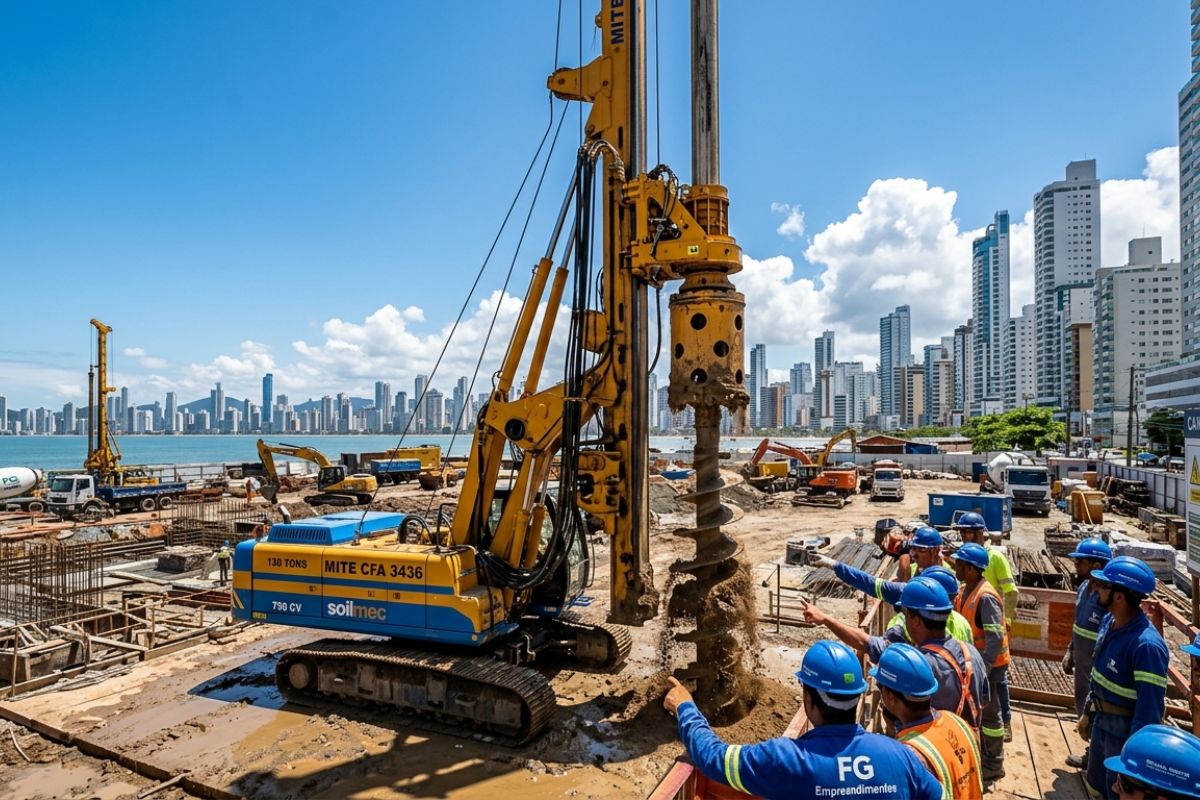
Italian giant of 130 tons arrives at the Senna Tower construction site and accelerates foundations: Mite CFA 3436 drills up to 50 m, 750 hp engine, investment of R$ 20 million, unique in Latin America.

The project is not limited to efficiency; it proposes a unique visual experience, with panoramic windows designed for passengers to contemplate marine life on a futuristic and sensory underwater journey.
Economic and Tourist Impacts of the Bullet Train
The underwater railway between Dubai and Mumbai represents more than a milestone in engineering; it has the potential to significantly boost the economies of both regions.
The United Arab Emirates and India maintain a robust and mutually beneficial trade relationship, with bilateral trade exceeding US$ 100 billion in recent years.
This project has the potential to further strengthen these ties, facilitating not only the transportation of people but also of goods, which would contribute to a more agile and cost-effective logistics chain between the two countries.
For tourism, the impact could also be significant. The idea of a train that offers underwater views could become an attraction in itself, drawing tourists from various parts of the world.
Transportation would cease to be just a means to reach a destination, becoming a standout experience.
Unlike commercial flights, which offer a limited view of the landscape and sky, this journey promises an immersive and enchanting experience of the ocean depths.
Technical and Financial Challenges
Like any underwater mega-structure, the Dubai-Mumbai train faces a number of technical and financial challenges. The pressure of the waters of the Indian Ocean is one of the main obstacles, requiring extremely durable materials and state-of-the-art safety systems.
The safety of passengers is an undisputed priority, and engineers are being challenged to develop technologies that ensure the structural integrity of the tunnel and the comfort of the passengers.
It is estimated that the project costs could exceed billions of dollars, considering both the infrastructure and future maintenance of the system. Financing is a crucial issue, and the financial viability of such an undertaking is being carefully studied, involving public and private investors from both countries.
In addition to the technical and financial challenges, there are also psychological obstacles, as passengers suffering from claustrophobia or thalassophobia may feel discomfort in a closed and submerged environment.
Updates on the Project
Since the initial announcement, updates on the construction progress of the underwater train Dubai-Mumbai have been limited. Although the project is technically in the conceptual phase, it continues to attract global attention as a model of future transportation.
A structure of this magnitude requires innovative engineering solutions and advancements in underwater technologies, in addition to considerable financial effort.
The economic and structural feasibility of the project is still under analysis, and so far, no start dates for construction or concrete deadlines for completion have been announced.
With the rapid technological advancements in recent years, there is hope that innovative solutions may make the project feasible in the near future.
Comparison with the Longest Bullet Train Routes in the World
The Dubai-Mumbai project stands out not only for its underwater concept but also for the length of the route. Compared to some of the longest bullet train routes in the world, the proposed line ranks among the most ambitious, especially due to the underwater challenge. Some of the main bullet train routes in the world include:
- Beijing to Kunming, China: 2,653 km
- Beijing to Guangzhou, China: 2,298 km
- Shanghai to Kunming, China: 2,066 km
- Beijing to Shanghai, China: 1,318 km
- Hangzhou to Shenzhen, China: 1,495 km
The comparison with these routes highlights the advancement of railway technology and transportation efficiency, especially in China, where the development of bullet train infrastructure is regarded as one of the most advanced in the world. These examples show that long-distance high-speed travel is feasible, although the underwater element adds an additional complexity to the Dubai-Mumbai project.
The Seikan Tunnel: An Inspiring Example
Currently, the Seikan Tunnel in Japan is the longest underwater railway tunnel in the world, measuring 53.85 km in length, of which 23.3 km are submerged. Connecting the islands of Honshu and Hokkaido, the Seikan Tunnel serves as inspiration for the Dubai-Mumbai project.
However, the proposed route between Dubai and Mumbai would be significantly longer, setting a new global standard in underwater railway transportation.
The Seikan Tunnel has demonstrated that it is possible to overcome the challenges of a submerged structure, paving the way for even more ambitious projects. However, a route as extensive as Dubai-Mumbai would require even more advanced innovations to ensure the safety and comfort of passengers traveling at an even greater depth than in the Seikan Tunnel.
Future Perspectives
The Dubai-Mumbai project, if realized, could redefine global transportation, offering a fast and scenic alternative for international travel.
The construction of an underwater train of this magnitude requires a joint commitment from the governments of the United Arab Emirates and India, along with the involvement of private investors.
The success of this project could trigger a new era of underwater transportation in other regions of the world.
If successfully implemented, the Dubai-Mumbai train would not only reduce the distances between the two cities but also open new possibilities for tourism and trade, solidifying the UAE’s position as leaders in infrastructure innovations.
The idea of traveling beneath the ocean at high speed, immersed in the beauty of the marine world, represents a futuristic advancement and an engineering dream that, while still distant, continues to inspire the world.
With a blend of investment, technological advancements, and long-term vision, the project could become a reality in the coming decades, transforming the way we perceive intercontinental transportation and connect to different cultures and countries.








Seja o primeiro a reagir!