





 Portuguese
  English
  Spanish
  3 min of reading
  4 comments


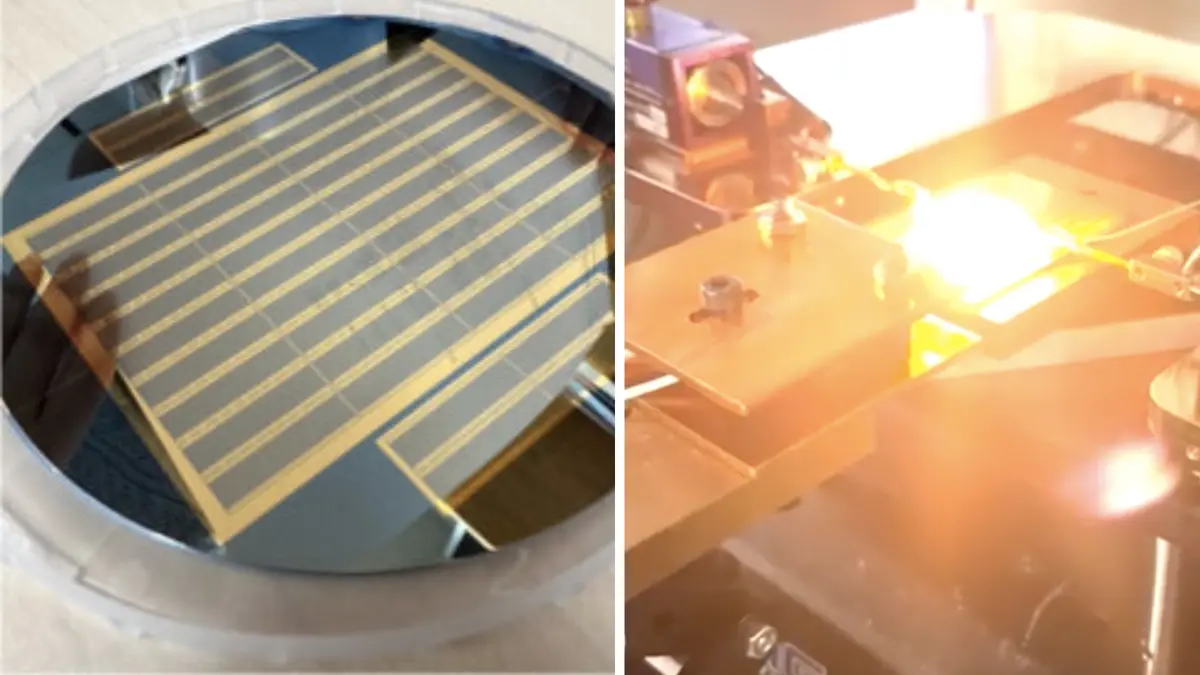


A Company from the United States Developed an Innovative Technology That Converts Heat into Electricity, Promising a More Accessible and Efficient Energy Source
The search for efficient and sustainable energy solutions has been a global priority. Recently, a promising innovation gained attention: the technology thermophotovoltaics (TPV), which converts stored heat into electricity.
The company Heat2Power (H2P), based in California, is at the forefront of this advancement and promises to provide energy at reduced costs for the industrial sector.
With the increasing demand for electricity and the need for cleaner solutions, this technology could be a game-changer for industries that consume large amounts of energy and generate significant thermal waste.
-
For the first time in history, the Brazilian Air Force conducted a highly complex inspection on the C-99 jet independently, without relying on foreign companies, marking a new level of logistical autonomy and operational sovereignty.

-
Beet greens that end up in the trash in many kitchens contain a high concentration of antioxidants, and a 2025 study shows that extracts may have even more potent activity when transformed into microparticles.

-
Something was orbiting Earth before any human launched a satellite into space: scientists have found thousands of unexplained flashes in old photos of the sky, and a NASA researcher says the evidence points to non-human intelligence.

-
There is a gap of hundreds of kilometers between weather observation points in the United States, and now drones flying at 6,000 meters altitude in strong winds are filling this gap to predict tornadoes before they kill.


How Thermophotovoltaic (TPV) Technology Works, Converting Heat into Electricity

TPV devices are similar to traditional solar cells, but instead of converting sunlight into electricity, they use heat as a power source.
The co-founder of Heat2Power, Stephen Forrest, explains: “Thermophotovoltaic devices are very similar to solar cells, except that they convert heat, rather than sunlight, into electricity.”
The technology can be integrated with thermal energy storage (TES) systems, allowing excess heat generated by industrial plants to be reused.
This not only reduces energy waste but also improves the efficiency and sustainability of renewable sources such as solar and wind.
The Impact on the Industrial Sector
Energy waste in the industry is a chronic problem. It is estimated that about 20% to 50% of the energy consumed is dissipated as heat.
To put this into perspective, in California alone, the wasted solar energy could power approximately 300,000 households.
With the implementation of Heat2Power’s TPV devices, this situation could change dramatically. The company claims that its technology has a heat-to-electricity conversion efficiency exceeding 44%, with potential to surpass 50%.
This conversion rate is much higher than other technologies currently available on the market.
Viability and Scalability
Another factor that makes this solution attractive is its compatibility with existing manufacturing processes.
Companies operating in the field of energy storage and waste heat recovery are already showing great interest in the technology.
“We have more clients for this than we can currently serve,” revealed Forrest. The device was developed at the Lurie Nanofabrication Facility at the University of Michigan and promises to be a scalable solution for various industries, reducing operational costs and improving sustainability.
Heat2Power bets that its technology will have a significant impact on the global energy transition.
With a market increasingly focused on reducing carbon emissions and optimizing the use of energy resources, solutions like TPV devices could play a crucial role.
Advancements in the efficiency of heat-to-electricity conversion could encourage investments in thermal energy storage systems, creating a more efficient ecosystem for the generation and use of renewable energy.









Sou fanático por novas tecnologias…pena algumas pessoas a usarem para o mal uso!
Essa nova tecnologia vem à calhar com a nova bateria de areia criada para armazenar calor em grande escala.
Existe uma tecnologia antiga que é capaz de fazer o mesmo, mas foi desenvolvida para refrigeração, chama pastilha Peltier, tem alguma relação com esse novo método?