





 Portuguese
  English
  Spanish
  4 min of reading
  0 comments


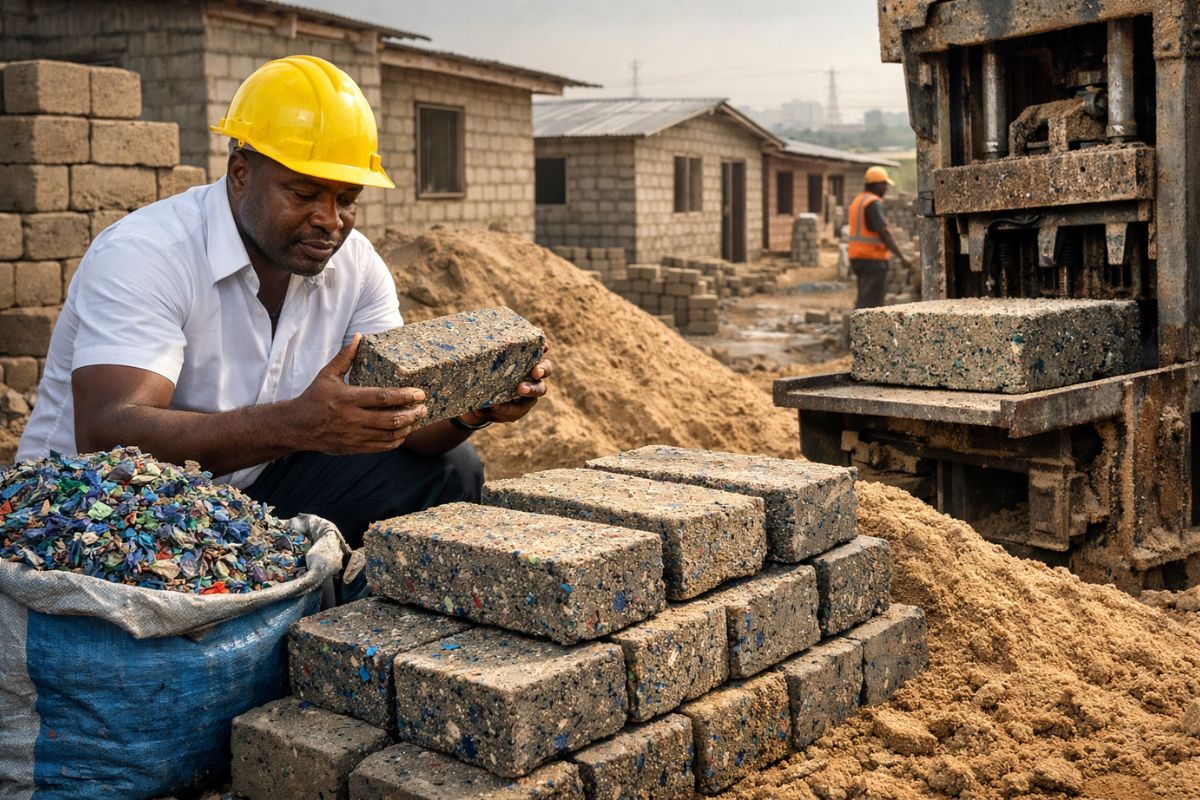
In Ghana, Nelplast Eco Ghana Produces Blocks with 70% Sand and 30% Recycled Plastic, An Alternative to Cement for Walls with Concrete Base and Columns. The House Costs US$ 11,000. The Goal is to Reduce a Shortage of 2 Million and Divert Part of 1 Million Tons of Annual Waste.
Recycled plastic entered the construction debate in Ghana with a straightforward argument: instead of treating urban waste as an inevitable discard, a local company decided to turn it into raw material for wall blocks, combining 70% sand and 30% recycled plastic into a moldable paste.
Nelplast Eco Ghana presented the product as an alternative to cement in sealing, maintaining concrete base and columns as support, according to a report released on June 11, 2021, referencing Xinhua Hello Africa. The promise is to tackle two problems at once: housing costs and the volume of plastic waste.
What Exactly is Being Done with 70% Sand and 30% Recycled Plastic

The described composition is a paste with 70% sand and 30% recycled plastic, molded into construction blocks.
-
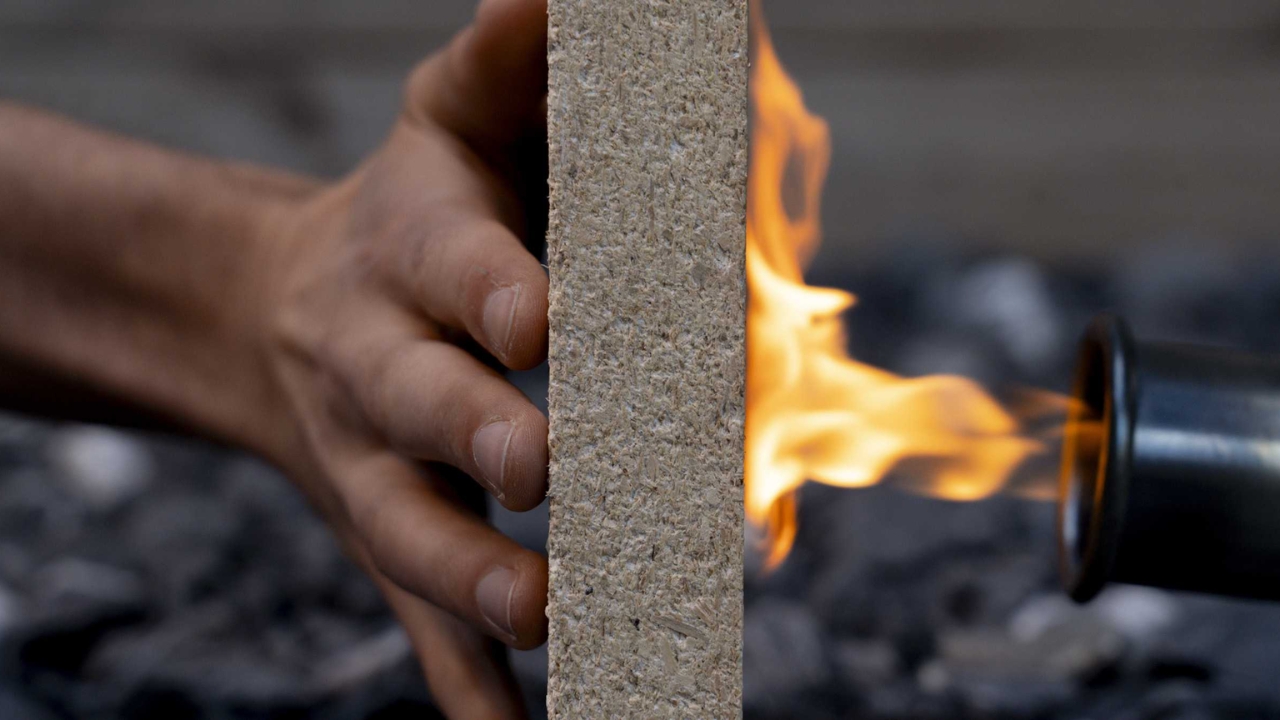
Scientists transform sawdust into fire-resistant panels, stabilize the compound with an enzyme extracted from watermelon seeds, and turn waste into promising material for construction.
-
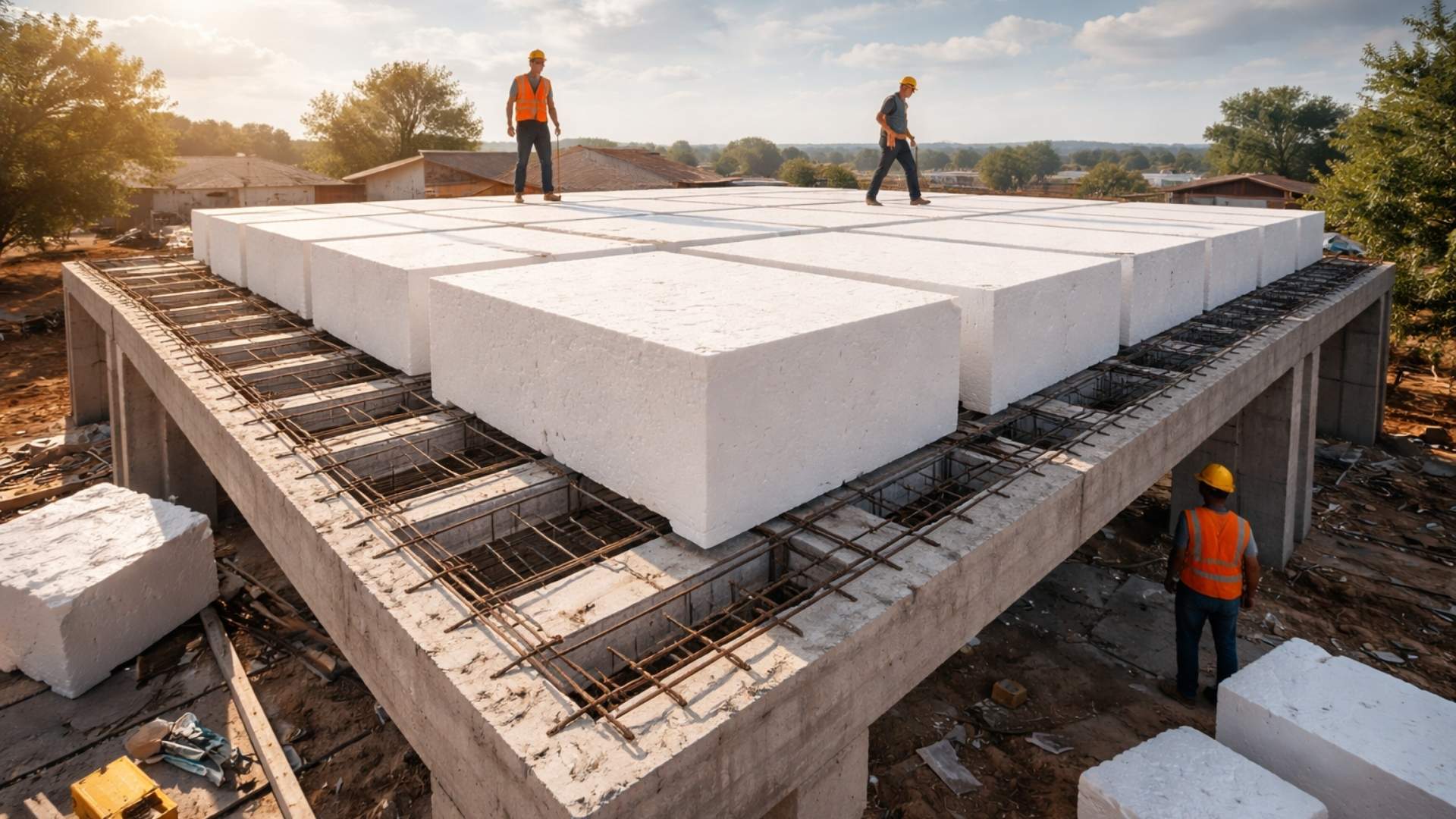
Forget concrete: architects are replacing tons of concrete with giant blocks of expanded polystyrene to build the roofs of houses and reduce structural weight by up to 50%, cut costs, improve thermal insulation, and speed up construction.
-
The Brazilian state enters the center of the global race for critical minerals by starting the construction of the largest underground nickel mine in Latin America, a mineral essential for electric car batteries that the entire world is competing for at this moment.
-
New CCR concrete paving technology promises roads up to 3x more durable, less maintenance, and cost reduction in Brazil.


The central point is that recycled plastic does not appear as a “garnish” of the material, but as a relevant part of the mixture, which changes density, behavior, and, mainly, the logic of urban waste consumption.
At the same time, the proposed use does not eliminate concrete: the blocks serve as walls, while base and columns remain in concrete.
This suggests a hybrid solution design, where recycled plastic occupies the sealing function and part of the construction volume, without claiming to replace the entire structure.
How Much Does a House Cost and Where Does This Price Fit into the Conversation

The reported value for a house built with the system is US$ 11,000.
The number stands out because it puts cost at the center of the discussion: it is not enough to have a recycled plastic block; it must have a real impact on a housing budget.
This price also helps to understand the “who is this project for.”
The company relates the initiative to a housing deficit of 2 million units in Ghana, which points to an audience pressured by lack of supply.
When the bottleneck is scale, price and speed become as important as the material itself.
Urban Waste as Raw Material and the Size of the Plastic Waste Problem
The company associates the product with the challenge of plastic waste in Ghana: about 1 million tons per year, described as more than 95% of the national total, with part going to landfills.
In this scenario, putting recycled plastic into blocks is an attempt to create ongoing demand for a material that, without a market, tends to return to the disposal route.
However, the scale calculation is tough.
The cited production capacity is 1,100 tons per year, with plans for expansion in the near future.
Even without promising to “solve everything,” the project positions itself as a pressure relief valve, with the idea of diverting at least a portion of the annual flow to a productive chain.
What to Measure to Know if the “Solution” Leaves Discourse and Enters the City
If the proposal is to alleviate housing shortages and reduce disposal, practical verification goes through objective points: actual production capacity, predictability of recycled plastic supply, product standardization, and adoption in projects that maintain concrete base and columns as recommended.
Another point is the social effect of sorting what becomes raw material.
If recycled plastic enters as construction raw material, it ceases to be just “waste” and starts to have value.
This can affect the collection, separation, and destination of urban waste, as long as the promised expansion is sustained and does not depend on sporadic demand spikes.
The idea of molding blocks with 70% sand and 30% recycled plastic, maintaining concrete in the base and columns, puts Ghana on the map of solutions that try to connect cheaper housing to waste management.
The numbers are clear: US$ 11,000 per house, a deficit of 2 million units, and a country that generates around 1 million tons of plastic waste annually.
If you had to choose, what would truly convince you about a building with recycled plastic: the final price, the perceived durability, or the chance to reduce landfill disposal? And, looking at your city, where could urban waste become construction material without turning into an empty promise?








-

-

-

-

11 pessoas reagiram a isso.