





 Portuguese
  English
  Spanish
  4 min of reading
  113 comments


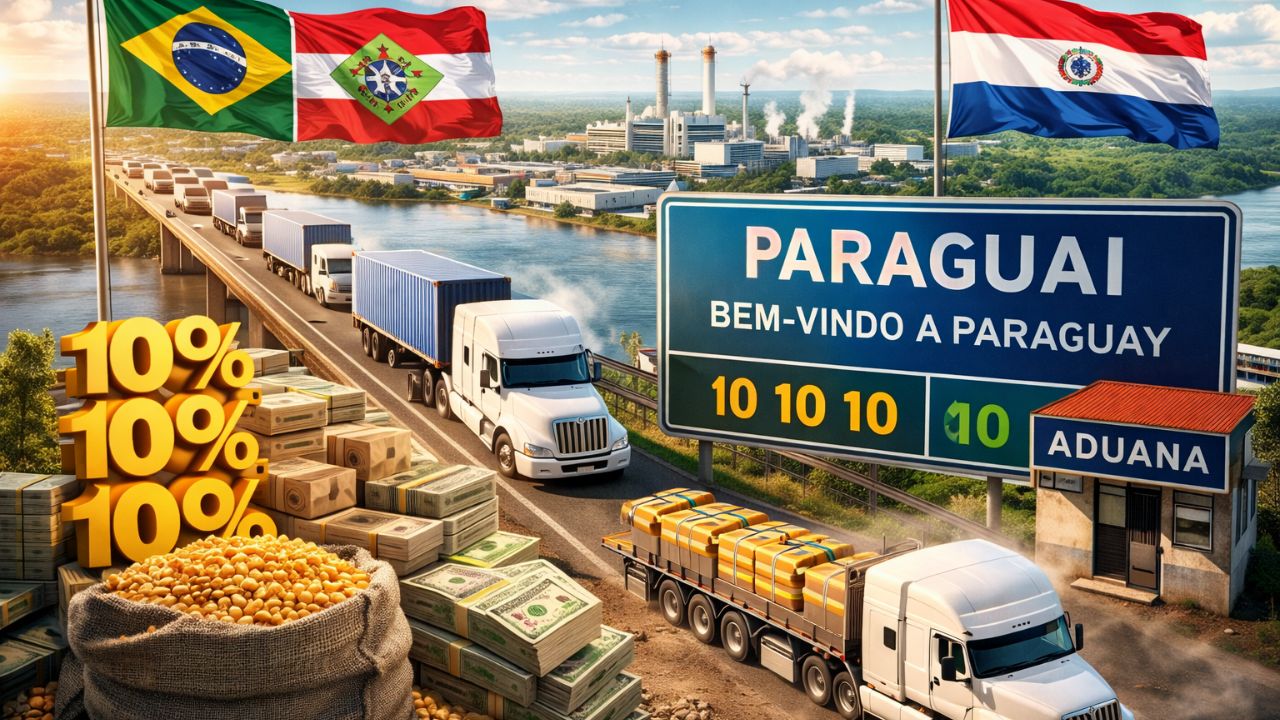


Companies from Santa Catarina Look to Paraguay for Lower Taxes, Maquila Law, and Cheaper Production with a Simple Tax Model and More Competitive Factory Today
The companies from Santa Catarina are speeding up visits and movements towards Paraguay in recent weeks, and the reason is not a rumor. At least 30 companies from Santa Catarina have been in the country recently, with records attributed to official data from the Paraguayan Ministry of Industry and Commerce.
What draws companies from Santa Catarina out of Brazil is an objective combination: a more predictable tax burden, direct incentives, and a production cost that can be up to 30% cheaper compared to manufacturing here, according to the data used.
What Is Pushing Companies from Santa Catarina Out of Brazil
The movement is described as a response to what entrepreneurs see as a loss of competitiveness caused, primarily, by the tax burden. The logic is simple: if the product is more expensive to produce, competition with foreign markets becomes more difficult.
-
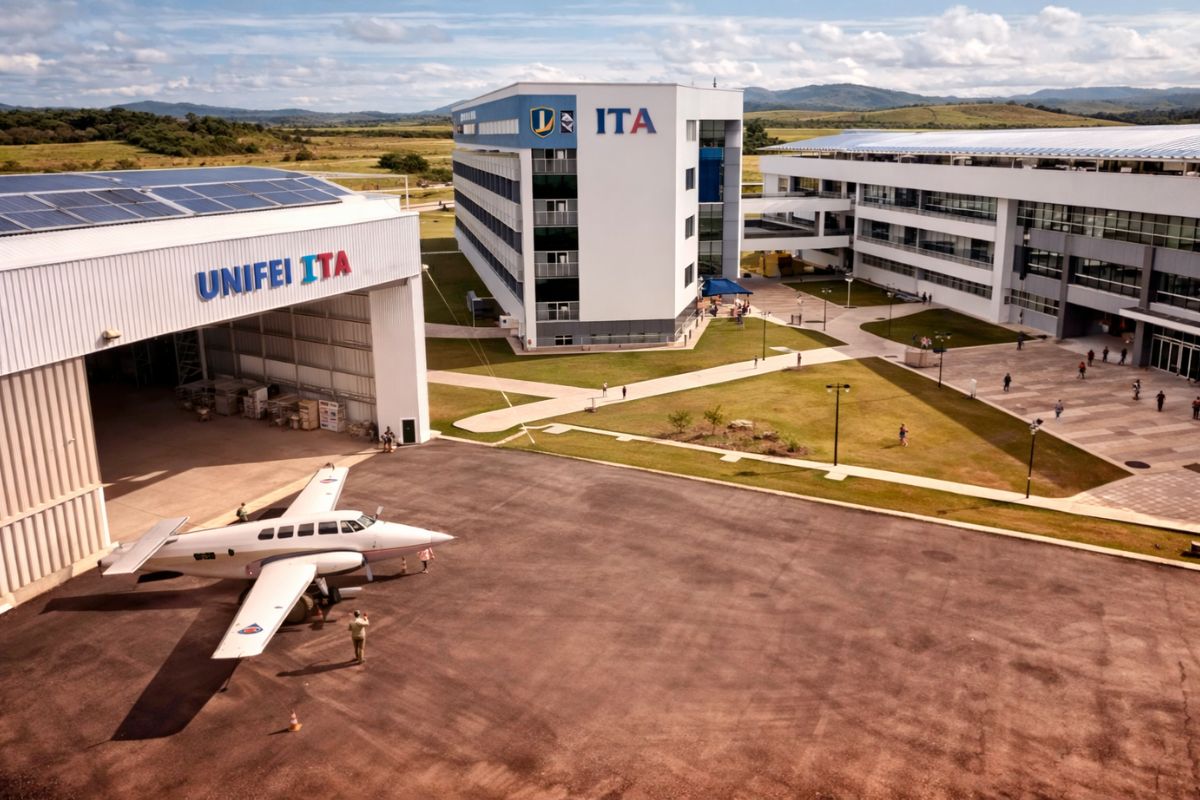
The institute that trained the greatest aerospace engineers in Brazil has just opened its first campus outside São Paulo after 75 years: ITA Ceará will have R$ 445 million, new courses in energy and systems, and classes are expected to start in 2027.
-
Luciano Hang, owner of Havan, goes to Juiz de Fora after the tragedy in February, brings R$ 1 million, hands out R$ 2,000 cards, and donates up to R$ 15,000 to victims in the region.

-
The Brazilian passport allows legal residence in dozens of countries without the need for a prior visa, and most Brazilians are unaware that they can apply for residency directly upon arriving in nations in South America, Africa, and even Europe.

-
Petrobras sends a message to Brazilian truck drivers after fuel collapse and reveals plan to have 100% domestic diesel.


In this context, companies from Santa Catarina begin to consider alternatives where the final cost is lower and the business environment is more predictable, especially for industry and processing operations.
Tax 10 10 10 and the Difference That Changes the Calculation
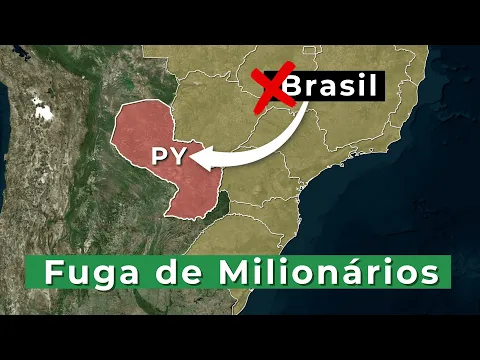

Paraguay adopts a model presented as 10 10 10: 10% corporate tax, 10% income tax, and 10% value-added tax. One detail mentioned is that the charge is on profit, not on revenue, with the possibility of deducting costs before the calculation.
In the comparison made in the data, Brazil shows personal income tax of up to 27.5%, corporate income tax with social contribution on net profit reaching 34%, and a VAT that, including direct and indirect taxes, can exceed 40%. It is in this difference that competitiveness “explodes”, according to the argument presented.
Maquila Law and the Incentive That Attracts Industry
In addition to the 10 10 10 model, the data highlights the maquila law as a game changer for manufacturers. The description is that, under this regime, it is possible to import inputs and machinery with total tax suspension and, upon exporting, pay only 1% on the product’s value added.
For companies from Santa Catarina, this works as an open road to establish industrial operations with lower fiscal costs and greater predictability, especially when the strategy involves production aimed at export.
Labor and the Race for Jobs: the Signal That the Country Wants to Produce
Another highlighted point is labor: it is described as not fully qualified, but trainable. The data reports that the Paraguayan government provides incentives for entrepreneurs to create jobs within the country’s territory.
As an example of an opportunity climate, the data mentions an announcement for 50 jobs made by a Santa Catarina company that already produces in Paraguay, with lines that wrapped around the block. The reading is that there is a need for jobs and an appetite for growth, which accelerates the attraction of new projects.
Paraguay Becoming a Showcase for Brazilian Retail Outside of Brazil
The data also points to signs of expansion in retail and industry linked to Brazilian brands. One cited example is the construction of a new Shopping China, described as gigantic, with 20,000 m² of stores and the presence of Brazilian brands such as Ering, Hering, Alpargatas, Hope, and Ferracini.
This scenario reinforces the idea that Paraguay is positioning itself as a hub for the production and consumption of Brazilian products, with part of the industrial and commercial operation taking place outside national territory.
What This Movement Could Mean for Santa Catarina
The central alert presented is that this shift could turn into a flight of capital, intellect, and people willing to undertake, with potential impact on future generations. For companies from Santa Catarina, the decision appears pragmatic: reduce costs, gain predictability, and compete again.
At the same time, the debate remains open: if the rules of the game do not change, the flow is likely to continue, because the incentive is structural and does not depend on a single sector.
Do you think that companies from Santa Catarina are right to seek Paraguay, or should Brazil react quickly to keep this production here?









As empresas estão certíssimas procurar um país que da condições de produzir .Quando se tem um governo que só pensa em errecadar, sem retorno nenhum para a população, em escolas, estradas, segurança, é pior **** , quando desvia os impostos para si próprio.
Acho que vão quebrar a cara. O Capitalista sempre procura tirar vantagem, aqui estamos a pleno emprego,onde empresário para segurar trabalhador vai ter que aumentar salário, lá como se viu, fila dobrando esquina, o salário será uma ninharia. Como estão indo pra lá, vão levar os mesmos problemas daqui, que fazem carga tributária sempre aumentar: corrupção, altos salários para máquina pública. Não existe milagre.
Os empresários estão certos se continuarem aqui é falência na certa vamos deixar só os políticos produzir a riqueza do país