






 Portuguese


PVC interlocking panels can be installed over the existing surface, transforming the environment, but the wall must be stable, dry, and free of leaks.
Renovating a laundry room typically brings to mind days of demolition, tiles being ripped off, dust spreading throughout the house, and bags of debris. However, an alternative allows you to refresh the look of the walls without necessarily going through all that hassle: PVC panels with an interlocking system installed over the existing surface.
This solution was presented in a report published by O Antagonista on September 6, 2026. According to the publication, the panels can cover old ceramics, painted walls, and other solid surfaces, creating a new layer of finish. In addition to hiding visually outdated coverings, the method reduces the need for demolition and, consequently, the amount of waste generated during the renovation.
However, there is a fundamental condition: it is futile to use PVC simply to conceal existing problems. The wall must be dry, firm, and stable before installation. Leaks, moisture, mold, and loose tiles must be addressed first.
-
New Program Aims to Create 8,000 Homes in Balneário Camboriú for Workers Who Currently Live in Other Cities Due to High Housing Costs, with First 2,000 Units Expected by 2027 and 2028

-
Brazil’s Most Expensive Mansion Demolished for Nearly R$ 360 Million Project by Mozak in Leblon
-
New Overpass Opens Southern Access to Formosa on BR-020, but Construction Continues at Three Intersections Along 12 Kilometers of the Highway
-
DNIT Closes 500 Meters of BR-230 Marginal in Cabedelo on September 8, Planning to Restore Four and a Half Kilometers with Detours through Municipal Streets


Old tiles can remain hidden behind the new finish
One of the main attractions of this technique is precisely the possibility of keeping part of the existing finish. When the tiles are stable and the surface is suitable, it is not always necessary to remove all the tiles just because they are old or no longer match the decor.

The panels form a second layer on the wall. Each panel features edges designed to connect with the next, creating a continuous surface. According to the report, depending on the chosen system and the wall conditions, some products allow for direct attachment with compatible adhesive. When irregularities or uneven surfaces exist, it may be necessary to first create a supporting structure with profiles or treated battens to keep the base aligned.
The first panel can determine the outcome of the entire wall
Despite the apparent simplicity of the interlocking system, there is a detail that deserves attention during installation. The first piece must be carefully positioned, as it will serve as a reference for the others. If it starts off crooked, the misalignment may become increasingly noticeable as new panels are added.
After the first piece, the following panels are interlocked and secured successively. Specific profiles can be used at corners, edges, and junctions with other walls to conceal cuts and provide a more uniform finish.
Vertical or horizontal? The position even changes how the space is perceived
The arrangement of the panels can also serve as a visual tool. Vertical installation tends to draw the eye upward and can enhance the feeling of height. Meanwhile, horizontally placed panels can visually increase the perceived width of the laundry room.
The choice will depend on the environment’s layout, the dimensions of the panels, and the specific recommendations from the manufacturer. In a small laundry room, this detail can make a difference in the outcome, especially when combined with light cabinets, good lighting, and organized appliances.
PVC Does Not Solve Hidden Water Infiltration
This is likely the most crucial consideration before choosing the technique. The fact that PVC has characteristics suitable for areas that require cleaning and splashes does not mean it can be used to cover any wall with moisture.
If there is a leak behind the tiles, for example, installing the panels may only temporarily conceal the signs of the problem while water continues to cause damage behind the new finish. The same applies to mold, external water infiltration, or loose tiles.
The report recommends checking for hollow or cracked tiles, leaks near the sink and washing machine, signs of moisture on the floor, ceiling, and pipes, as well as any wall unevenness. These problems should be resolved before installation.
Outlets, Valves, and Faucets Require Attention
A laundry room contains several elements that differentiate its installation from that of a purely decorative wall. There are outlets, valves, faucets, a sink, plumbing, washing machine connections, and, in some homes, heaters and dryers. Therefore, the cuts must be planned so that the covering does not impede the operation or maintenance of these components.

Valves and plumbing connections need to remain accessible. At points subject to splashes, the junctions should receive sealing compatible with the system used. Natural ventilation in the laundry room also needs to be preserved.
Not All PVC Panels Can Be Placed on the Wall
There is also an important distinction among the various products sold as panels or PVC slats. A material designed exclusively to function as a ceiling should not be automatically used as vertical cladding. Before purchasing, it is necessary to verify if the manufacturer allows that application and to follow the product’s installation recommendations.
Another point of caution is the presence of heat sources. When there is a dryer, heater, or other equipment that produces high temperatures near the cladding, it is essential to check the limits set by the manufacturer.
Less Demolition Can Make Small Renovations Simpler
The primary advantage of this solution lies in the ability to completely change the appearance of a laundry room without necessarily starting with the demolition of the existing finish. When the base is in good condition, the panels conceal the old finish and create a new, washable surface. Reducing demolition also means less debris and can simplify the execution of a predominantly aesthetic renovation.
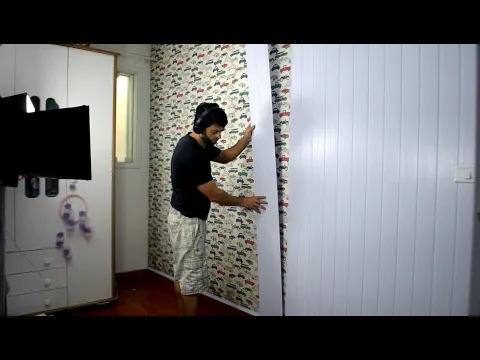

This can be especially interesting when the laundry issue is not structural but merely aesthetic: outdated tiles, colors that no longer please, or walls marked by years of use.
Why This Alternative Is Gaining Attention
Solutions that avoid major demolitions have gained traction precisely because they allow for the renewal of certain environments without turning the entire home into a construction site. In the case of PVC panels, the ability to keep the old tiles hidden behind the new coating is the main advantage.
However, ease of use does not eliminate the need for technical care. The transformation works when the existing structure is in good condition, the product is suitable for walls, and the installation respects outlets, valves, piping, ventilation, and potential heat sources.
When these conditions are met, a visually aged laundry room can gain a completely different look without needing to start the renovation by removing all the tiles from the wall.


