





 Portuguese
  English
  Spanish
  3 min of reading


Reduction of Water Reservoir Levels Led to the Activation of Thermoelectric Plants, Increasing Electricity Bills.
The arrival of the drought further reduced the level of the country’s water reservoirs and increased the costs of electricity production, raising the electricity bills for Brazilians. For the month of May, Aneel (National Electric Energy Agency) activated the red tariff flag level 1, which charges R$ 4.169 for every 100 kWh consumed. With no expectations of lowering production costs, consumers are alert to the possibility of using complementary sources to mitigate the impacts on their wallets.
According to Aneel, the hydrological balance for 2020-2021 recorded the worst historical result for the National Interconnected System (SIN), measured since 1931. With the onset of the dry season and the reduction of reservoirs, the situation became even more unfavorable for electricity production by hydroelectric plants, making the activation of the thermoelectric park necessary, which increased costs.
Already informed about the impacts on their electricity bills, consumers are concerned about how long the situation will last. A projection made by MegaWhat Consulting states that the red flag level 1 will likely be activated in July, August, September, and October. In the remaining months of the year, the forecast is for the yellow flag, which charges R$ 1.343 for every 100 kWh consumed.
-
Renewable energy advances over protected areas in Brazil, and a survey by the Energy Transition Observatory reveals silent impacts that challenge environmental conservation and pressure sensitive traditional territories.

-
Rio Grande do Sul accelerates energy transition: State invests in renewable technologies and consolidates decarbonization strategies and pathways to attract billions in new industrial investments.

-
With 160,000 m² of collectors, an area larger than 20 football fields, Silkeborg, in Denmark, hosts a solar thermal plant that heats 19,500 homes and could become the largest solar heating plant in the world.

-
A study reveals the expansion of renewable energy procurement in Brazil and shows how companies are taking advantage of opportunities to reduce expenses, ensure energy efficiency, and strengthen strategic environmental commitments.


Energy Crisis Discarded
The National Electric System Operator (ONS) guarantees that Brazil is not at risk of facing an energy supply crisis but confirms that higher costs are expected to persist until the end of the year.
As a preventive measure, the Electric Sector Monitoring Committee (CMSE) approved additional measures to meet demand, such as increased activation of thermoelectric plants and even the import of energy from other South American countries, such as Uruguay and Argentina.
Wind and Solar Energies Gain Prominence
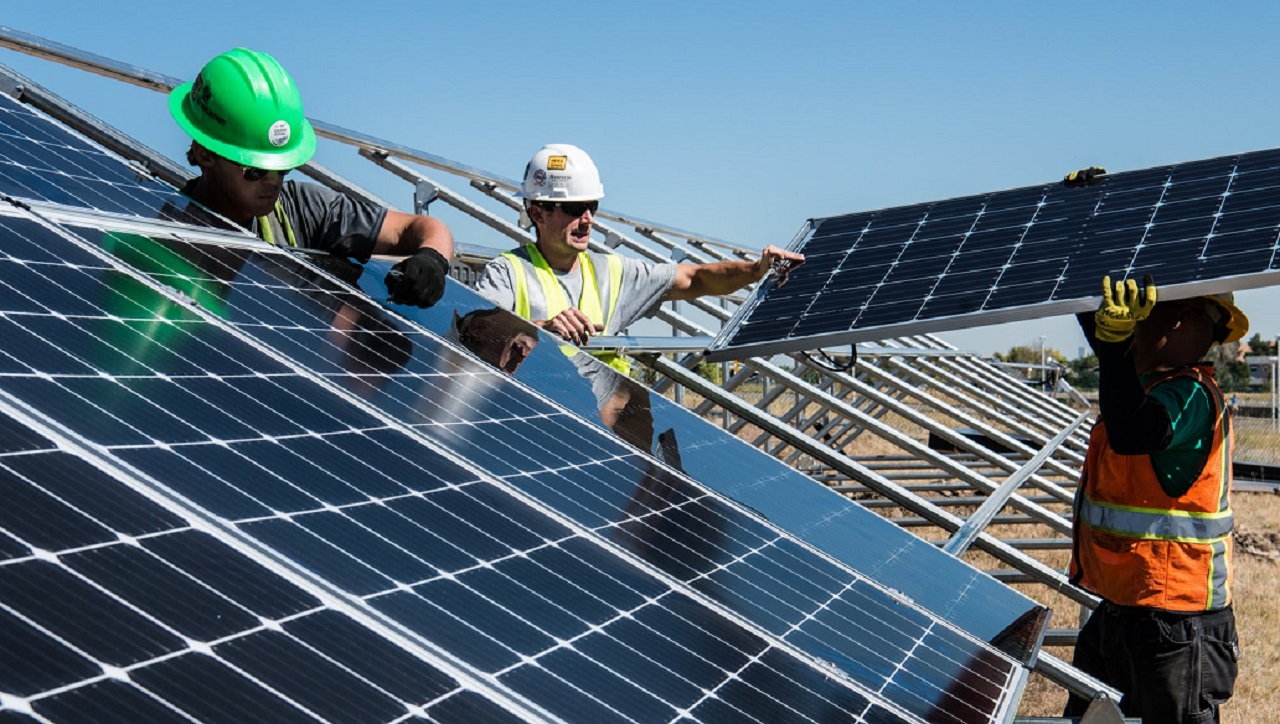
The challenging scenario opens the door for alternative energy sources to gain more prominence in the country, such as wind and solar. Consumer interest has been growing in recent years and can contribute to the consolidation of the use of these alternatives in the medium term.
Wind energy reached 18 GW of installed capacity, according to the Brazilian Wind Energy Association (ABEEólica). The photovoltaic industry, on the other hand, registered a 70% increase in solar panel installations last year compared to 2019, according to information from the Brazilian Association of Photovoltaic Solar Energy (ABSOLAR). The expansion corresponds to a power of 7.5 GW, roughly half of the capacity of the Itaipu hydroelectric plant.
Generator Rentals
In the short term, the water crisis faced by the country is likely to lead to an increase in the use of temporary energy. To mitigate risks and save on electricity bills, consumers are expected to demand the rental of generators.
For companies and industries, these devices are often used as part of energy cost planning. Generators are also commonly requested by rural properties, especially the more remote ones, for the implementation of self-production systems.









Seja o primeiro a reagir!