





 Portuguese
  English
  Spanish
  7 min of reading
  0 comments


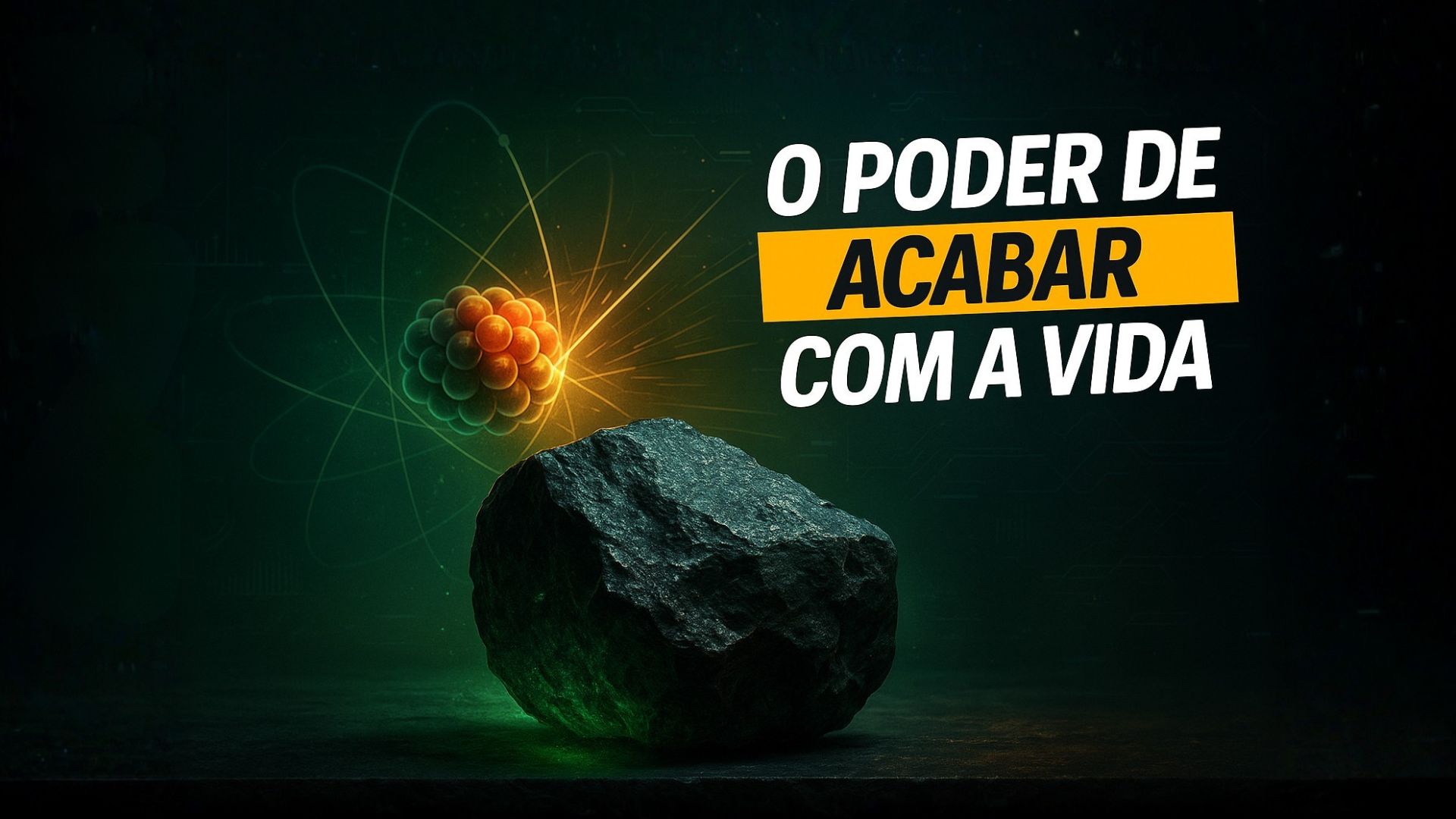
The Trajectory Of Uranium, From Little-Known Mineral In European Mines To Central Piece Of Reactors, Weapons And Medical Applications, Reveals How A Dark Stone Helped Redefine Our Notion Of Energy, Technological Risk And Scientific Power.
Long before it appeared in debates about power plants, bombs, and climate change, a discreet metal was already present in colored glasses, ornamental ceramics, and laboratory curiosities.
No one said its name out loud in major political decisions, but it quietly fueled some of the most significant scientific transformations of the last two centuries.
This invisible character in history is uranium, an element that emerges from the depths of the Earth to power one of the most intense forms of energy ever known to humanity.
-
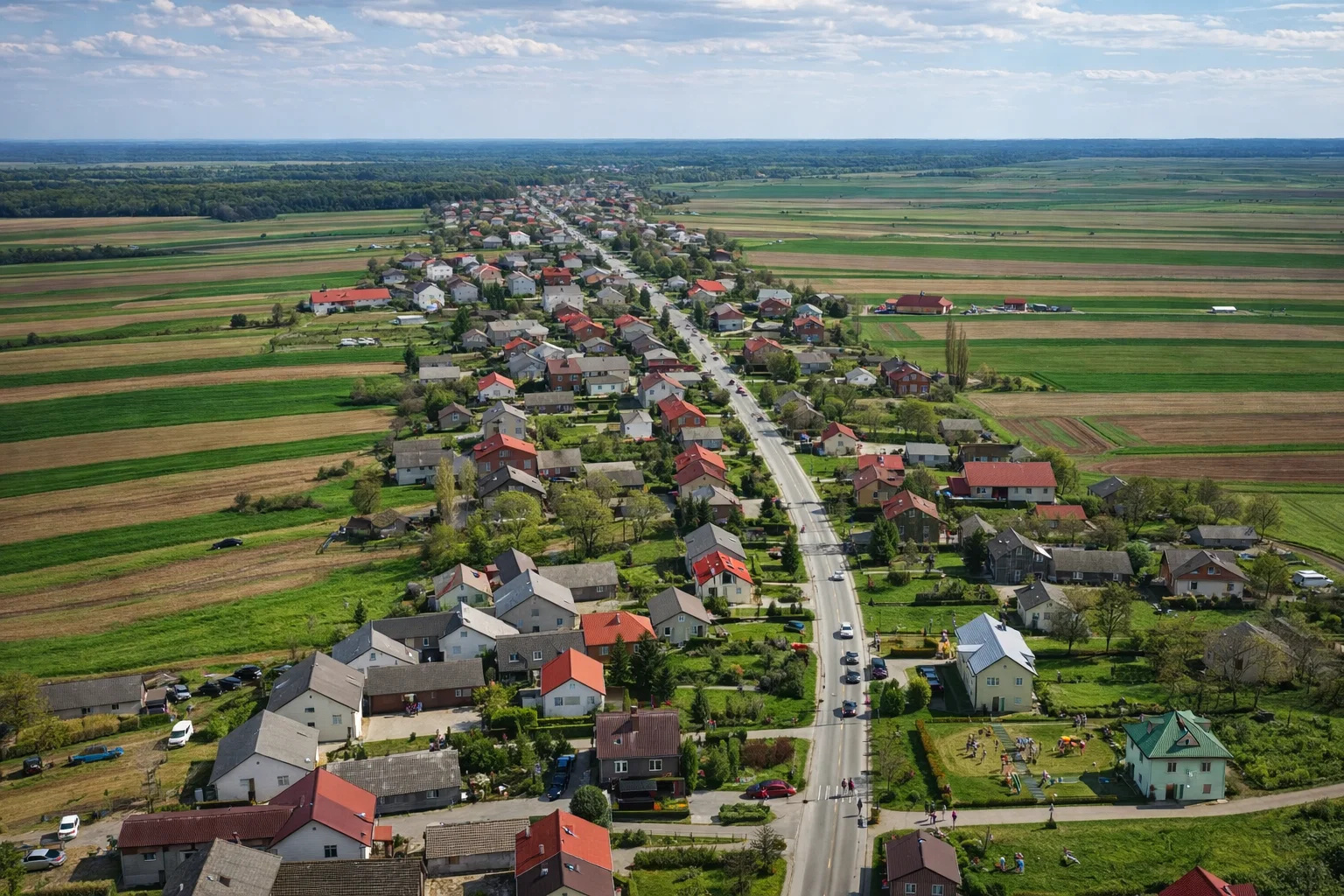
With around 6,000 residents on a single 9 km street, a village in Poland maintains a strong sense of community, cultivates strawberries and potatoes, and becomes the target of a false image created by artificial intelligence.
-
Sleeping at different times each day can be a bomb for your heart and even double your risk of having a heart attack.

-
Without help and without heavy machinery, a woman builds a house from scratch with stone, wood, and cement, erects a chimney, creates a complete leisure area, and transforms an empty lot into her dream home.

-
Couple transforms abandoned house after years of being closed; residence was overgrown with weeds, had a green pool, and a deteriorated structure in the interior of Rio de Janeiro.

Today, radioactivity seems like a familiar concept in movies, news, and physics classes.
However, the journey to understand that a simple stone taken from the mine could emit energy on its own involved decades of observations, experiments, and even happy accidents in the laboratory.
The story begins with a dark mineral, pitchblende, and unfolds into discoveries that changed the way science views matter, energy, and the concept of technological risk itself.
At the end of the 18th century, in 1789, the German chemist Martin Heinrich Klaproth analyzed that seemingly common ore and isolated, for the first time, a new metal.
He named it uranium, in reference to the planet Uranus.
At the time, pitchblende was mainly used to color glasses and ceramics, but the discovery of the new element still did not reveal the true potential of this material.
The link between the dark mineral and an unprecedented source of energy would only be recognized much later.
First Clues: Light, Fluorescence And Radioactive Materials

From the first half of the 19th century onwards, the relationship between light and matter began to generate even more interest.
In 1852, the physicist and mathematician Gabriel Stokes was investigating how different substances reacted to light.
Upon observing colored glasses with compounds derived from pitchblende, he noticed a peculiar glow: a strong fluorescence.
The effect was not yet fully understood, but it indicated that there was something special about the way that material interacted with radiation.
It was a hint that this mineral held phenomena beyond what was previously known.
The next step came at the end of the 19th century, this time by the French physicist Henri Becquerel.
In 1896, he compared the effects of uranium salts with the newly discovered X-rays.
In a sequence of experiments, Becquerel left uranium compounds stored next to light-protected photographic paper.
When the material was developed, clear marks appeared on the paper.
Even though it was in the dark, uranium had emitted a form of radiation capable of impressing the plate.
This is how radioactivity was identified, an unknown phenomenon at the time, showing that certain elements emitted energy spontaneously.
Marie And Pierre Curie And The Advancement Of Radioactivity Studies
Becquerel’s discovery opened up a new line of research.
Years later, Marie Curie made radiation the central theme of her doctoral thesis.
Alongside her husband, Pierre Curie, she analyzed in detail the emission of energy from radioactive materials and succeeded in isolating two new elements, polonium and radium, both much more active than uranium.

In the couple’s investigations, it became clear that uranium not only emitted radiation continuously, but also transformed into other elements over time.
What for centuries seemed stable and indivisible now showed a dynamic and mutable aspect.
As the work of the Curies gained prominence, other physicists began to explore the consequences of these discoveries.
Ernest Rutherford studied the different types of radiation, described alpha and beta particles, and proposed models for the atom.
It was in this line of research that the idea consolidated that uranium could release energy quantities far superior to those of common chemical reactions upon undergoing transformations within its internal structure.
The classical notion of an indivisible atom, inherited from antiquity, was definitively losing ground.
The Idea Of Nuclear Chain Reaction
By the early 20th century, radioactivity ceased to be merely a laboratory curiosity to become a central piece in understanding modern physics.
The next step would be to imagine how to control and amplify this process.
In 1933, walking down a street in London after hearing a speech by Ernest Rutherford, physicist Leo Szilard had an insight.
He began to consider the possibility of triggering chain reactions from neutrons: one neutron would hit an atomic nucleus, releasing energy and new neutrons, which would hit other nuclei, repeating the cycle.
Szilard recorded the idea that if this process occurred in a sustained manner in certain materials, it would be possible to extract enormous amounts of energy from the nuclei of atoms.
However, it was still necessary to demonstrate this concept in practice.

In the following years, he approached Enrico Fermi, a physicist already investigating the effect of neutrons on different elements.
Together, they began testing how uranium and other materials reacted to this bombardment.
The confirmation came when it was found that uranium could undergo nuclear fission: its nucleus divided into smaller parts, releasing energy and more neutrons capable of initiating new fissions.
In 1942, a group led by Fermi conducted the first controlled nuclear chain reaction in Chicago.
This milestone officially inaugurates the era of nuclear energy, which would definitively associate uranium with an unprecedented source of power for human technology.
From The Laboratory To The Battlefield And Nuclear Plants
From then on, the element that once colored glasses and ceramics became the center of strategic projects on a global scale.
The same physics that enabled the construction of the first reactors also made possible the development of atomic bombs, used in World War II.
Uranium, until then almost anonymous outside scientific circles, became a symbol of power and an object of geopolitical contention.
With the end of the conflict, nuclear energy began to be presented in various countries as a promise of abundant electricity, capable of reducing dependence on fossil fuels.
Reactors emerged in different regions around the world, and part of the electricity consumed today is produced from controlled fission of uranium nuclei.
At the same time, the nuclear arsenal expanded the reach of possible destruction, leading governments to create treaties and agreements on nuclear non-proliferation.
Nuclear Accidents And Safety Debate

The accidents at power plants demonstrated, on the other hand, the more delicate side of using this technology.
The Chernobyl disaster in 1986 and the Fukushima accident in 2011 showed that technical failures, poor decisions, or extreme natural events can have lasting consequences for the environment and entire populations.
Following these events, the debate regarding security and transparency in nuclear facilities gained even more momentum.
Medical Applications Of Radiation And Health Benefits
Alongside energy generation and military use, radioactivity found space in areas directly linked to health.
In medicine, radiation began to be used to treat diseases and support diagnoses.
Radiotherapy became an important tool in the fight against cancer, directing calculated doses of radiation to destroy tumor cells.
Advanced imaging techniques, such as positron emission tomography (PET), utilize radioactive substances in small amounts to accurately map the functioning of organs and tissues.
The Future Of Nuclear Energy And Challenges Of Using Uranium


Today, the debate surrounding uranium involves both risks and opportunities.
Ongoing research seeks to make nuclear reactors safer, reduce waste generation, and develop new types of nuclear fuels.
At the same time, nuclear fusion projects are attempting to achieve a form of energy that is even cleaner and more abundant, although this technology is not yet available on a commercial scale.
In many countries, the discussion about the role of nuclear energy in the transition to a low-carbon matrix remains open.
From the dark ore taken from mines to the cores of reactors and medical equipment, uranium has traveled a path that crosses science, technology, politics, and society.
An apparently ordinary stone, hidden underground, ended up linked to some of the most complex decisions of the contemporary world.
Given this history, how do you think we can balance the potential of nuclear energy with the risks associated with the use of uranium?







-

-

-

-

-

-

38 pessoas reagiram a isso.