





 Portuguese
  English
  Spanish
  9 min of reading
  0 comments


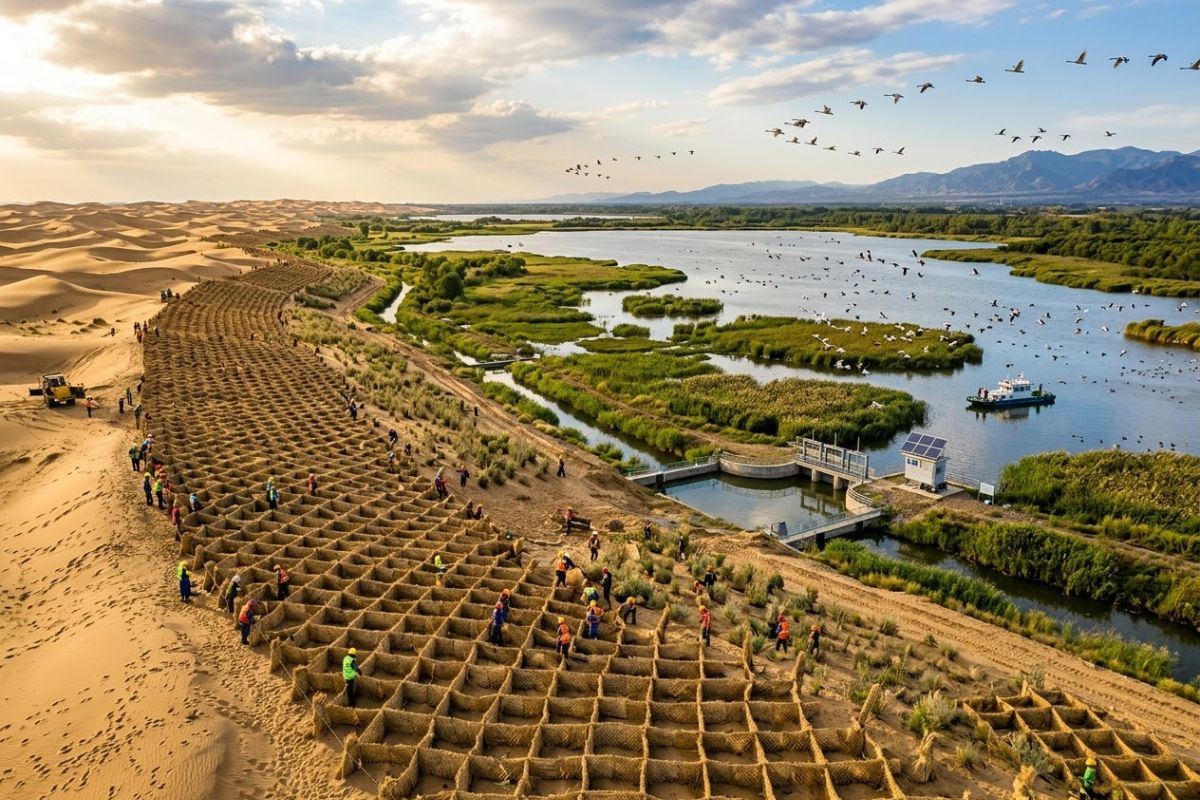
China Passed To Face The Degradation Of Lake Wuliangsuhai Looking Beyond The Darkened Water And Recurring Pollution, Leading Engineering To The Desert Of Ulan Buh With Straw Grids, Sediment Retention And Integrated Environmental Infrastructure To Stop Sand, Recover Water Quality And Protect Migratory Birds.
The China Realized That Restoring Lake Wuliangsuhai Required More Than Just Combating Visible Signs Of Pollution. The Problem Was Not Restricted To The Dark Water, Algal Blooms, And Gradual Loss Of Life On The Surface. What Reached The Lake, Transported Along The Basin, Continued To Fuel A Cycle Of Degradation That Nullified Some Of The Measures Taken On The Banks.
By Shifting Focus To The Desert Of Ulan Buh And The Streams Feeding The System, The Intervention Gained Another Scale. Instead Of Only Dealing With The Consequence, The Strategy Began To Target The Source Of The Imbalance. Straw Grids, Machinery, Sediment Interception Works, And An Integrated View Of The Landscape Formed The Basis Of A Response Combining Engineering, Territorial Control, And Ecological Restoration.
When The Lake Stopped Being Seen As An Isolated Problem
During The First Moment, The Recovery Of Wuliangsuhai Followed The Most Expected Path In Situations Of Water Degradation: To Disconnect Pollution Sources In The Surrounding Area And Divert Water To Dilute Contamination.
-
The narrowest house in the world is only 63 centimeters wide, but inside it can accommodate a bathroom, kitchen, bedroom, office, and even two staircases.

-
In the middle of the sea, these enormous concrete and steel structures, built by the British Navy to protect strategic maritime routes, look like they came straight out of a Star Wars movie.

-
For years, no one could cross a neighborhood in Tokyo because of the tracks, but an impressive solution changed mobility and completely transformed the local routine.

-
With 15 floors, an unusual building in Curitiba uses concrete, pilasters, and exposed roofs to create the effect of stacked houses.


These Measures Sought To Alleviate The Most Obvious Effects Of The Problem, Especially The Darkened Water And The Weakening Of The Environment That Serves As A Stopover For Migratory Birds. Even So, The Pollution Came Back. The Lake Improved, But Could Not Stabilize.
This Repetition Led Engineers To Review The Logic Of The Diagnosis. Wuliangsuhai Was Not A Body Of Water Separate From The Rest Of The Landscape, But Part Of A System Shaped By Deserts, Rivers, Mountains, And Grasslands.
With Each New Cycle, Sand And Material Carried Along The Tributaries Reached The Lake, Saturated The Bed, Increased Turbidity, And Reduced The Natural Self-Purification Capacity. In Other Words, The Visible Deterioration Of The Water Was Just The Final Part Of A Much Larger Process.
This Shift In Perspective Explains Why The Project Gained Strategic Importance. It Was Not Just About Cleaning A Lake, But About Reorganizing The Relationship Between The Watershed And The Desert Area Upstream. Engineering Entered The Scene To Correct The Physical Flows That Were Pushing The Ecosystem Into A Continuous State Of Instability. When The Analysis Moved Away From The Banks And Reached The Entire Landscape, The Source Of The Problem Became Clearer.
What The Desert Of Ulan Buh Had To Do With The Turbid Water
In The Upstream Region Of The Tributaries That Feed The Lake, The Desert Of Ulan Buh Became A Decisive Element In Understanding The Deterioration Of The System. Year After Year, Wind And Sand Advanced Over The Basin, And Part Of This Material Was Carried By The Watercourses To Wuliangsuhai. This Process Not Only Made The Water Turbid But Also Gradually Altered The Lake Bed, Favoring The Accumulation Of Sediments And Weakening The Ecological Balance.
When The Bed Receives Excess Sediments, The Functioning Of The Lake Changes. Water Circulation May Lose Efficiency, Transparency Decreases, And The Environment Becomes More Vulnerable To Recurring Episodes Of Degradation. The Water Did Not Darken By Chance; It Responded To A Continuous Physical Pressure Coming From Outside. That Is Why Containing Desertification And Reducing The Transport Of Sand Became A Central Step In Recovery.
This Point Helps To Naturally Answer Why The Operation Moved From The Edge Of The Lake And Advanced Over The Desert. The Goal Was Not Just To Hold Dunes For Aesthetic Reasons. It Was To Interrupt A Chain Of Impacts That Began With Wind And Sand Mobility, Passed Through The Tributaries, And Ended Inside Wuliangsuhai. By Facing The Desert, China Was Practically Attempting To Clean The Water From The Source Of The Problem.
How Straw Grids Became An Engineering Solution
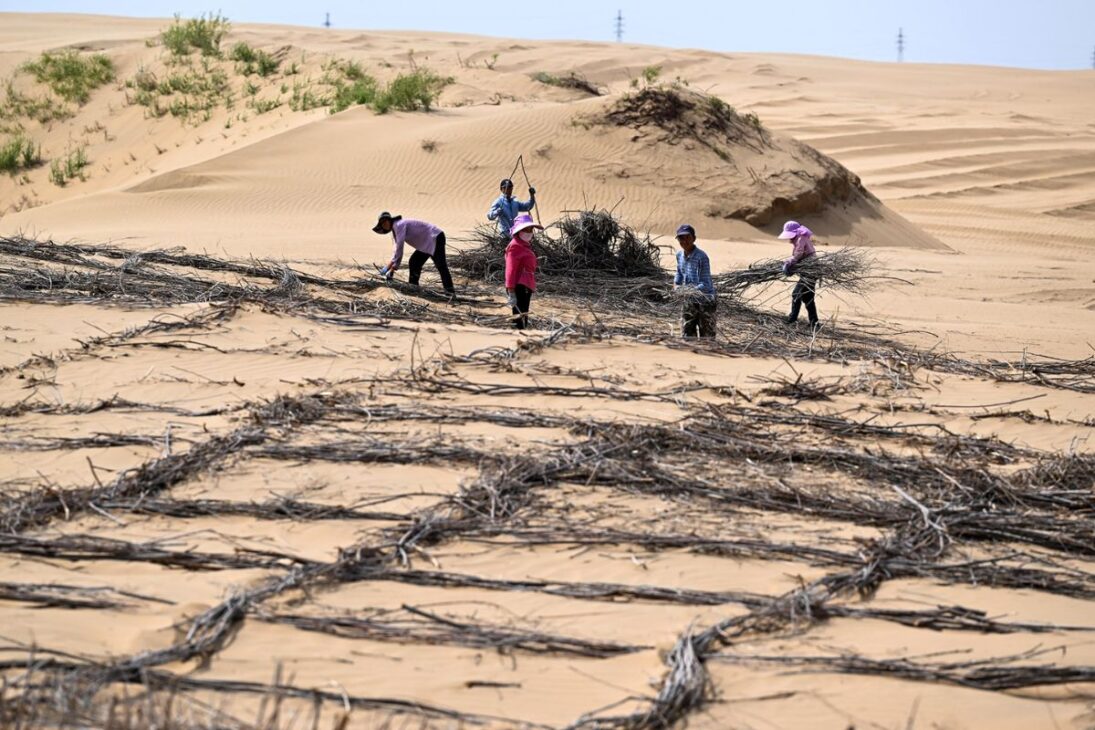
The Solution Adopted By The Team Seemed Simple At First Glance: Boards Or Straw Grids Organized In A Checkerboard Pattern Over The Sand. But This Simplicity Hides An Important Technical Logic. By Creating Small Barriers On The Surface, These Structures Reduce Wind Speed At The Ground Level, Stabilize Loose Sand, And Help Retain Moisture. This Changes The Behavior Of The Terrain And Hinders The Continuous Movement Of Material That Would Otherwise Travel Through The Landscape.
The Value Of This Technique Lies In The Ability To Create More Stable Microconditions In A Naturally Fragile Area. Instead Of A Single Large Barrier, A Mesh Of Containment Is Installed, Capable Of Slowing The Mobility Of The Sandy Surface At Several Points Simultaneously. It Is Not A Monumental Work In Appearance, But It Has Structural Effects On The Dynamics Of The Desert. When Repeated On A Large Scale, The Straw Grid Ceases To Be A Point Resource And Begins To Function As Environmental Infrastructure.
The Choice Also Reveals An Important Aspect Of The Chinese Strategy: Combining Elementary Solutions With Massive Execution. The Physical Principle Behind The Technique Is Straightforward, But Its Effectiveness Depends On The Extent, Repetition, And Continuity Of The Work. Therefore, Sand Control Stopped Being Just A Dispersed Manual Task And Became Part Of A Broader Territorial Intervention System. Straw, Organized As A Pattern And Implemented Methodically, Became An Engineering Tool Against Desertification.
Why Human Effort Alone Has Stopped Being Sufficient

As The Scale Of The Intervention Grew To Tens Of Thousands Of Areas Agitated By The Advance Of Sand, Isolated Manual Work Began To Encounter Operational Limits. Installing Straw Grids At Point Locations Is One Thing; Transforming This Method Into Territorial Containment Policy Is A Completely Different Matter. The Need To Cover Large Areas, Maintain Regularity In Installation, And Ensure Continuity In The Advancement Of Control Fronts Required A New Level Of Organization.
It Was At This Point That Machines Entered The Desert. Mechanization Did Not Only Replace People; It Made It Possible To Standardize Processes, Accelerate Deployment, And Sustain Continuous Operations. In An Environment Where Wind, Sand, And Scale Work Against Any Fragmented Effort, The Ability To Repeat The Same Method Accurately Makes A Difference. What Previously Depended On Dispersed Human Energy Now Operates As An Industrial Restoration System.
This Leap Explains Why The Initiative Can Be Described As More Than An Environmental Action. It Brings Together Engineering, Logistics, And Systematic Governance. To Contain A Process That Repeats Year After Year, It Is Not Enough To Act Symbolically. It Is Necessary To Maintain Presence, Rhythm, And Coordination. In The Desert, The Difference Between Intention And Result Is Often Measured By The Ability To Execute On A Large Scale. And It Was Exactly This Capacity That Redefined The Response To The Problem.
The Infrastructure That Intercepts Sediments Before They Reach The Lake
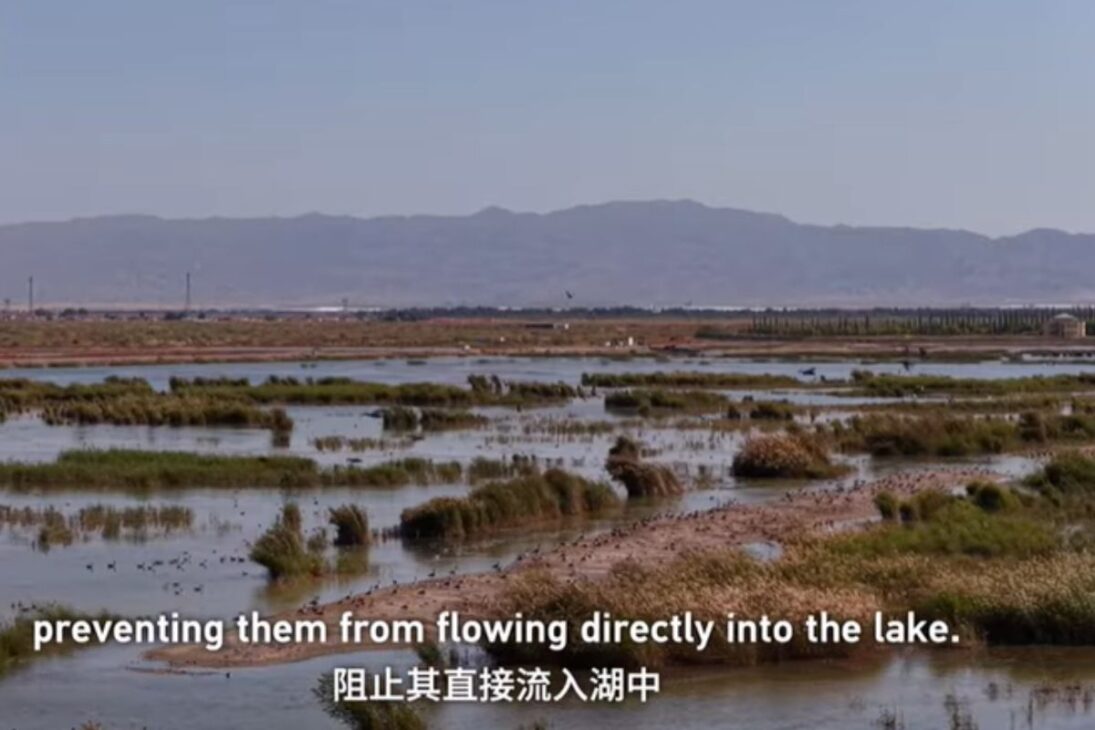
While Sand Control Advanced In The Desert, Other Projects Were Conducted In Parallel In Areas Connected To The Upper Course And Banks Of The System. Among Them, Embankment And Containment Structures Began To Intercept Sediments And Pollutants Carried By Surface Runoff. The Logic Behind These Works Is To Prevent The Transported Material From Directly Reaching The Lake, Reducing The Load Accumulating In The Bed And Affecting Water Quality.
This Type Of Infrastructure Plays A Silent Yet Decisive Role. It Acts Between The Source And The Final Impact, Filtering Out Part Of What Would Be Transported By The Natural Dynamics Of The Basin. When The Deposition Of Sediments Decreases, The Lake Gains More Favorable Conditions To Recover Clarity And Ecological Stability. This Is Not An Instantaneous Effect, But A Process Of Progressive Relief On A System That Has Been Continuously Pressured.
The Gradual Improvement Of The Water, As The Sedimentary Pressure Decreases, Helps To Explain The Slow Return Of Life To The Surface. Degraded Aquatic Environments Rarely Recompose Through A Single Gesture. They React To The Accumulated Reduction Of The Pressures That Unbalance Them. That Is Why The Physical Containment Of Sediments Is Just As Important As Combating The More Visible Pollution. Restoring A Lake Requires Preventing It From Being Continuously Fed By Everything That Ails It.
What Is At Stake For Migratory Birds And For The Local Ecosystem
Wuliangsuhai Is Not Only Relevant For Being A Large Freshwater Lake In Northern China. It Also Functions As An Important Point For Migratory Birds, Which Increases The Ecological Weight Of Its Recovery. When The Water Loses Quality, The Impact Is Not Limited To The Landscape Or Visual Aspect. The Ecological Chain Associated With The Lake Weakens, And The Function Of The Site As A Refuge And Rest Area For Wildlife Becomes More Vulnerable.
Protecting This Environment Means Preserving A Sensitive Link Within A Larger Territory. A Degraded Lake Does Not Only Threaten Its Own Water; It Compromises Routes, Habitats, And Life Cycles That Depend On Environmental Balance. That Is Why Recovering Water Quality And Reducing Siltation Gain Greater Ecological Dimensions Than That Of A Localized Project. The Objective Is Not Just To Contain Damage, But To Restore Conditions For Species That Use The Lake As Support.
There Is Also A Broader Significance In This Attempt To Rebalance The System. When The Foundational Text States That A Thriving Ecosystem Sustains A Thriving Civilization, The Central Idea Is That Infrastructure And Nature Do Not Need To Operate As Opposing Forces. In This Case, Engineering Was Summoned To Preserve The Physical Base That Maintains Life And Environmental Functionality In The Region. The Work Does Not Replace Nature; It Attempts To Give It A Chance To Function Without The Constant Burden Of Degradation.
A Restoration That Treats The Basin As A Whole
In Recent Years, The Approach Described For The Wuliangsuhai Region Shows An Integrated View Of Ecological Restoration. Instead Of Attacking Separate Symptoms, The Strategy Considers The Watershed And The Surrounding Territory As A Whole. This Systemic Reading Is Fundamental Because Deserts, Rivers, Runoff Surfaces, Banks, And Wetlands Do Not Operate Independently. Each Element Influences The Other, And The Lake Receives The Final Result Of These Interactions.
This Change In Scale Also Alters The Way Engineering Itself Is Thought About. Instead Of Being Limited To Cities, Roads, Or Direct Use Works, It Begins To Act On Environmental Processes. Infrastructure Ceases To Be Merely Construction And Becomes An Instrument Of Ecological Reorganization. Straw Grids, Containment, Sediment Interception, And Territorial Control Together Form A Mesh Of Intervention Aimed At Stabilizing The Landscape Before Damage Concentrates Again In The Lake.
In The Case Of China, The Recovery Of Wuliangsuhai Appears As A Practical Demonstration Of This Logic. The Focus Did Not Stay Stuck At The Point Where The Problem Was Most Visible, But Advanced To Where It Was Generated And Transported. This Helps To Explain Why The Operation Brings Together Such Different Elements Within The Same Effort. When Degradation Arises From A Chain Of Causes, Restoration Must Also Operate In A Chain.
The Action Of China In The Desert Of Ulan Buh Shows That The Recovery Of Lake Wuliangsuhai Depended On A Decisive Change In Vision: To Move From Combating Symptoms In The Water To Facing, At The Same Time, The Moving Sand, The Transport Of Sediments, And The Fragility Of The Basin As A Whole.
Straw Grids, Mechanization, And Containment Infrastructure Do Not Appear As Isolated Solutions, But As Parts Of A Coordinated Response To Reduce The Load That Reached The Lake And Restore Stability To An Environment Vital For Migratory Birds.
More Than Just Cleaning A Lake, The Operation Aims To Prevent It From Falling Ill Again Due To The Same Causes. And This Makes The Case Particularly Revealing: Engineering Was Not Used Just To Build, But To Reorder Natural Processes That Were Disrupting The Balance Of The Landscape.
In Your View, Is This Type Of Large-Scale Intervention An Efficient Example Of Ecological Restoration Or Does It Show How Far A Country Needs To Go When It Lets Degradation Advance For Too Long?






-

-

-

30 pessoas reagiram a isso.