





 English
  Francês
  Alemão
  Italiano
  Japonês
  Norueguês
  Portuguese
  Spanish
  4 min of reading


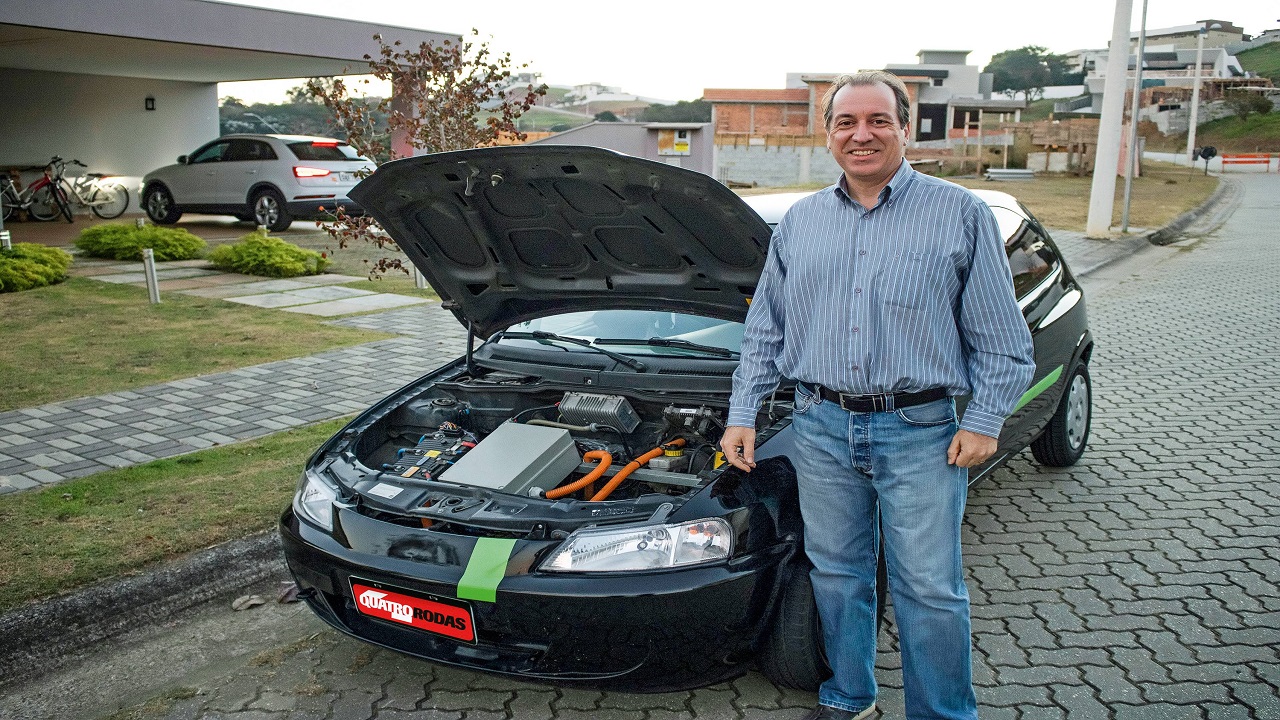
Have You Ever Imagined an Electric Version of the 2005 Chevrolet Celta? Engineer Juan Antonio Cuenda Managed to Transform the Classic Model into an Electric Vehicle.
After watching several videos online of people converting combustion vehicles into electric ones, aerospace engineer Juan Antonio Cuenda, a Spaniard who grew up in São José dos Campos (SP), decided to take matters into his own hands and create a project to transform his 2005 Chevrolet Celta into an electric vehicle. The engineer’s work began four years ago, in 2017.
Read Other Related News
The Chevrolet Celta Received a New 24-Cylinder Engine
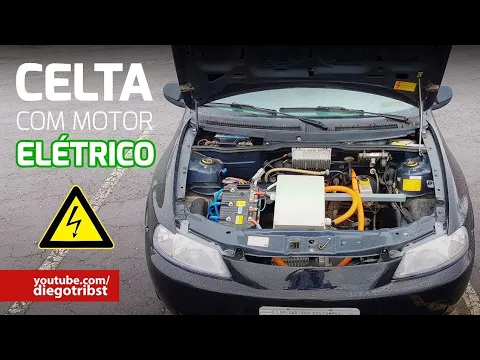

The first step was purchasing the 2005 two-door Celta Super. Soon after, the aerospace engineer bought the necessary parts to carry out the project, and with the help of a mechanic, he began the conversion of the vehicle, starting with the removal of the 1.0 70 horsepower combustion engine and the installation of the new powertrain.
The new engine of the Chevrolet Celta is not very powerful, but its 24 cylinders do not impact the performance of the electric vehicle, which benefits from the use of the factory manual transmission. The engineer himself designed the part that secures the clutch to the engine flywheel and notes that it was also necessary to create a new flange to connect the gearbox to the new engine.
-
Abandoned house for 15 years disappears in the woods, shocks owner with unrecognizable scenery and is reborn in an intense transformation after almost 90 hours of work in just 10 days.
-
In just three hours, a natural stone floor transforms the entrance of the house with an organic effect, immediate drainage, and a sophisticated non-slip finish that doesn’t puddle water, dries quickly, and impresses with the final result.
-
‘Interlocking brick’ made of earth arrives in the construction industry with cost reductions of up to 40% on the project.

-
Espírito Santo will receive the largest engineering project in its history with the duplication of BR 262, which will have 50 viaducts, 28 bridges, and 2-kilometer tunnels cutting through the most challenging mountainous region of the entire state.


The manufacture of the parts was handled by an external company. According to the engineer, the function of the gearbox is to control the rotation of the electric motor. Cuenda also monitors the parameters through a cell phone mounted on the dashboard and jokes about starting in fifth gear without any problems.
The 2005 Chevrolet Celta Has Up to 100 Km of Range
The lithium-ion batteries of the model are grouped into three sets, with 500 cells each. The sets are connected in parallel and installed in the trunk, weighing up to 60 kg and ensuring a range of up to 100 km, according to the engineer.
The cooling is done through three small fans, similar to coolers sold in computer stores. The Chevrolet Celta’s system even includes a current inverter and regenerative braking. The charging is done at home, using a 220 V outlet, powered with the help of solar panels, making the project even more sustainable.
With the modifications made by the aerospace engineer, the dynamics of the vehicle have also changed. Lighter, the Celta needed changes in the length of the springs. According to Antônio, the model became too high, so it was necessary to lower the suspension, which is now very low, and he will need to adjust this again since the electric vehicle is still not finished.
The weight distribution has also improved, making the Chevrolet Celta more stable and allowing it to behave like a conventional electric car, with a center of gravity closer to the ground.
Aerospace Engineer Claims to Have Invested R$ 50 Thousand
With almost immediate responses, the model faces steep hills without fear and goes unnoticed on the streets until someone notices that the Celta moves without making any noise.
In updated figures, the engineer claims to have invested about R$ 50 thousand in the project, which is much less than the R$ 61,590 of an Onix Joy. Since the process took place almost four years ago, the real amount is somewhat higher than that. However, according to Cuenda, the cost-effectiveness was so great that he is already planning the next project, this time alongside a friend.
The models will not be for sale, but the engineer is already planning to offer consulting to others who wish for the same type of modification, sharing the same advice: It cannot be a very old car or one with few parts, and a large trunk will be very useful.
This article was produced based on the news published on the Quatro Rodas portal by Eduardo Passos and João Vitor Ferreira.







Seja o primeiro a reagir!