





 Portuguese
  English
  Spanish
  7 min of reading
  0 comments


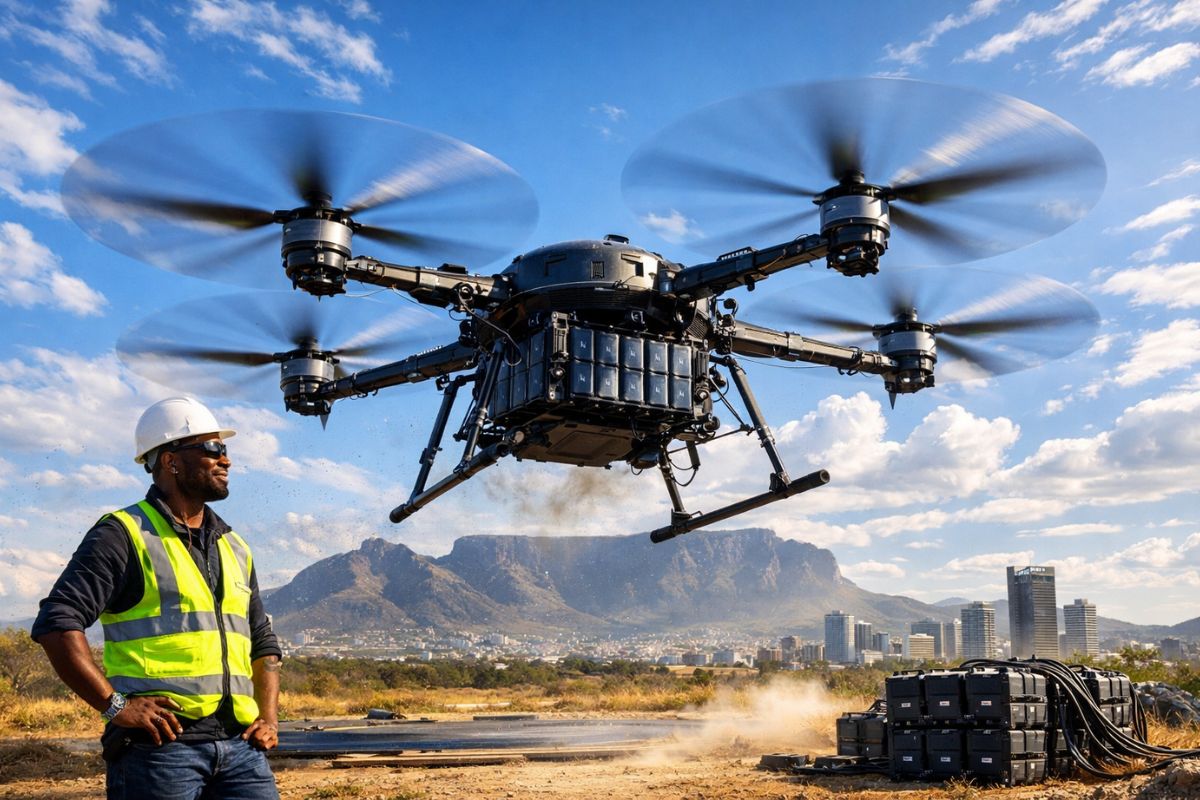
Luke Maximo Bell Combines Giant 40-Inch Propellers, Semi-Solid NMC Batteries, and Obsessive Engineering Design to Keep a Drone in the Air for 3h31min06s in a Single Hover Flight
The South African engineer and YouTuber Luke Maximo Bell decided to take on a challenge that seemed almost impossible: to build a multirotor drone capable of flying for more than three hours on a single battery charge. No acrobatics, speed, or radical maneuvers. The goal was different. The idea was simple yet brutally difficult: to keep a drone in the air for as long as possible, pushing the limits of efficiency in every component.
After months of testing, calculations, reworked parts, and plenty of practice flights, the result emerged. The drone created by Bell achieved 3 hours, 31 minutes, and 6 seconds of continuous multirotor flight on a single charge, surpassing the old mark of 3h12min set by Sci-Fly’s Q12 model. It is not an official record yet, but it is already an impressive technical feat that shows how far a well-thought-out project can reach.
A Drone Created to Break Records, Not to Perform Acrobatics
The starting point was an extremely clear objective: to break the 3h12min drone multirotor flight record. To achieve this, Luke set aside everything that usually attracts attention in a commercial drone, such as speed, agility, or high payload capacity.
-
Scientists have finally discovered where the plastic that disappeared from the oceans went, and the answer is frightening: it fragmented into such tiny particles that they became invisible and now there are 27 million tons of nanoplastic just in the North Atlantic.

-
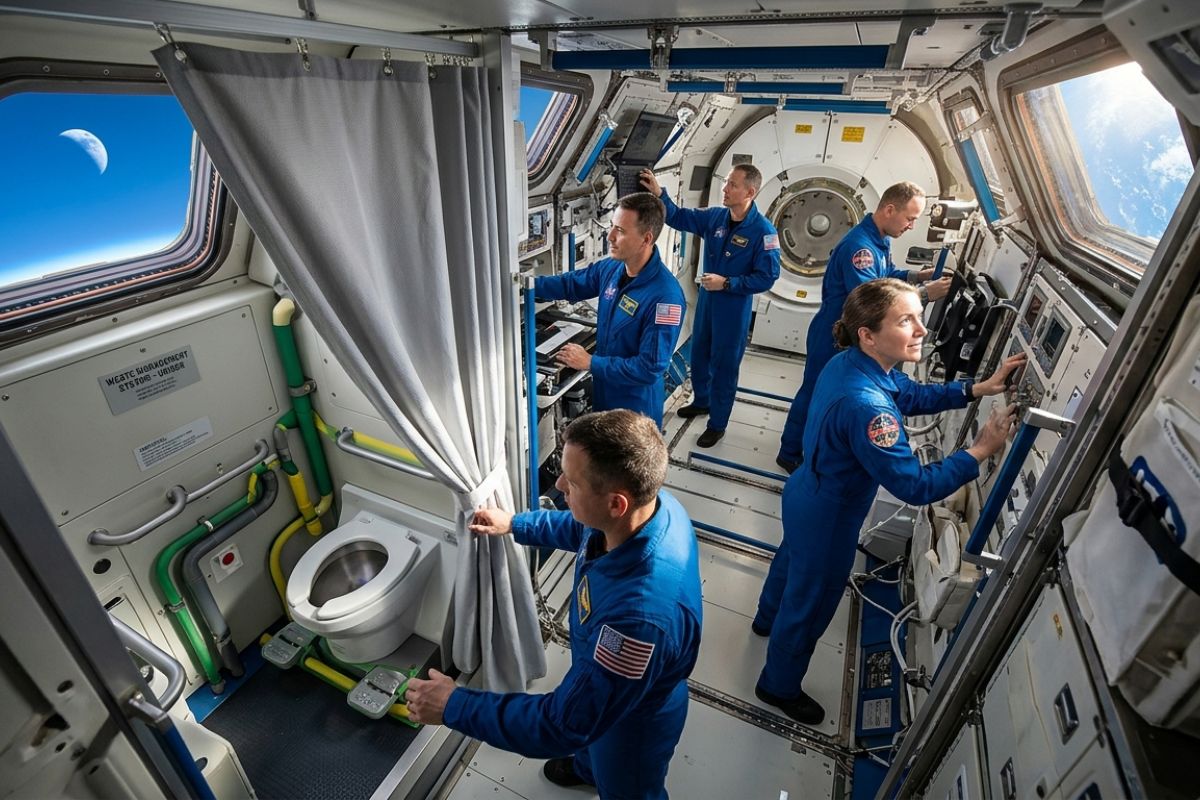
The Artemis II mission will take the Orion capsule back to the vicinity of the Moon with four astronauts, a private bathroom with a curtain, a system adapted for men and women, and a level of comfort that highlights how the Apollo era operated at the rawest limits of space exploration.
-
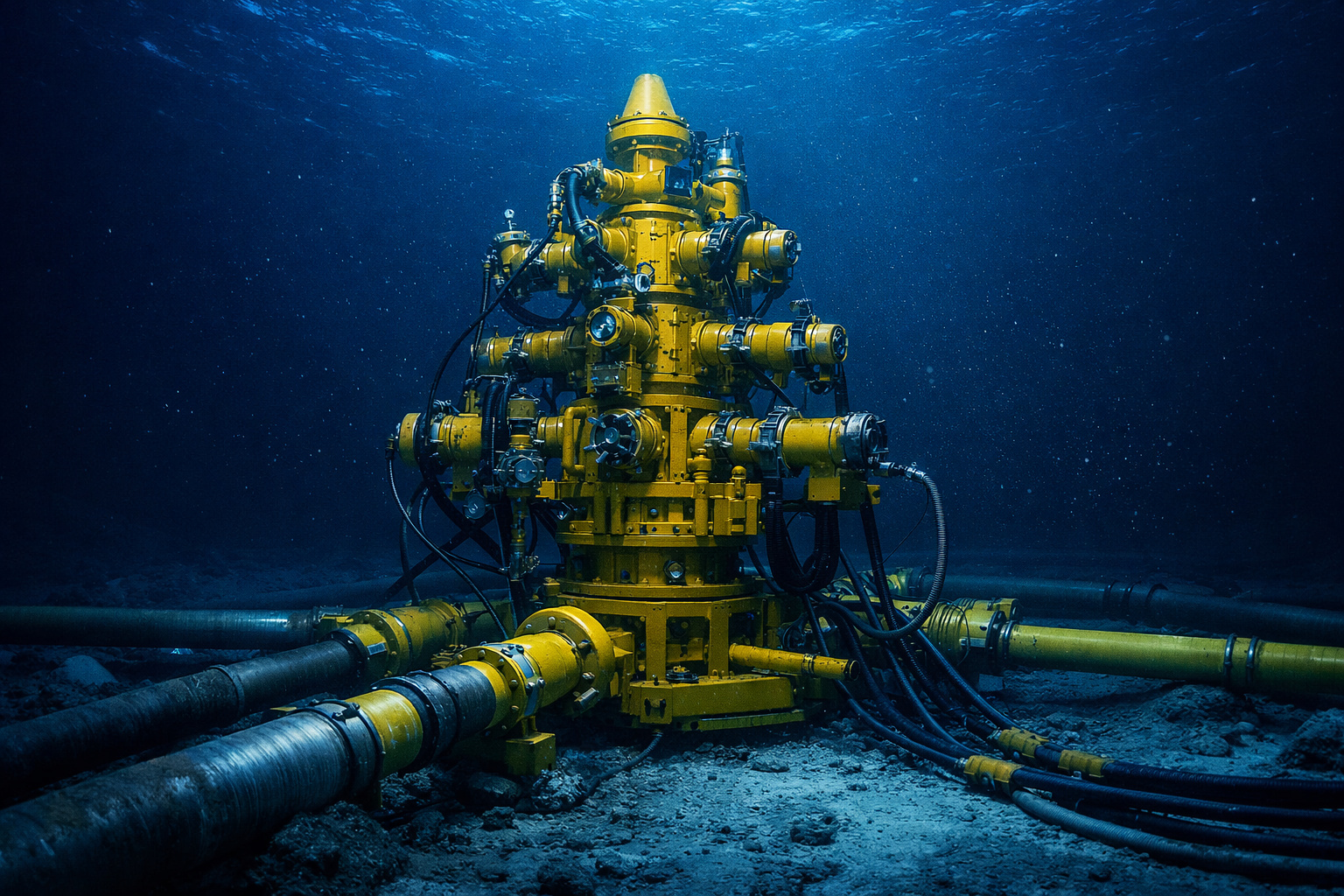
Giant structures on the seabed precisely control oil and reveal how high-tech underwater valves work.
-
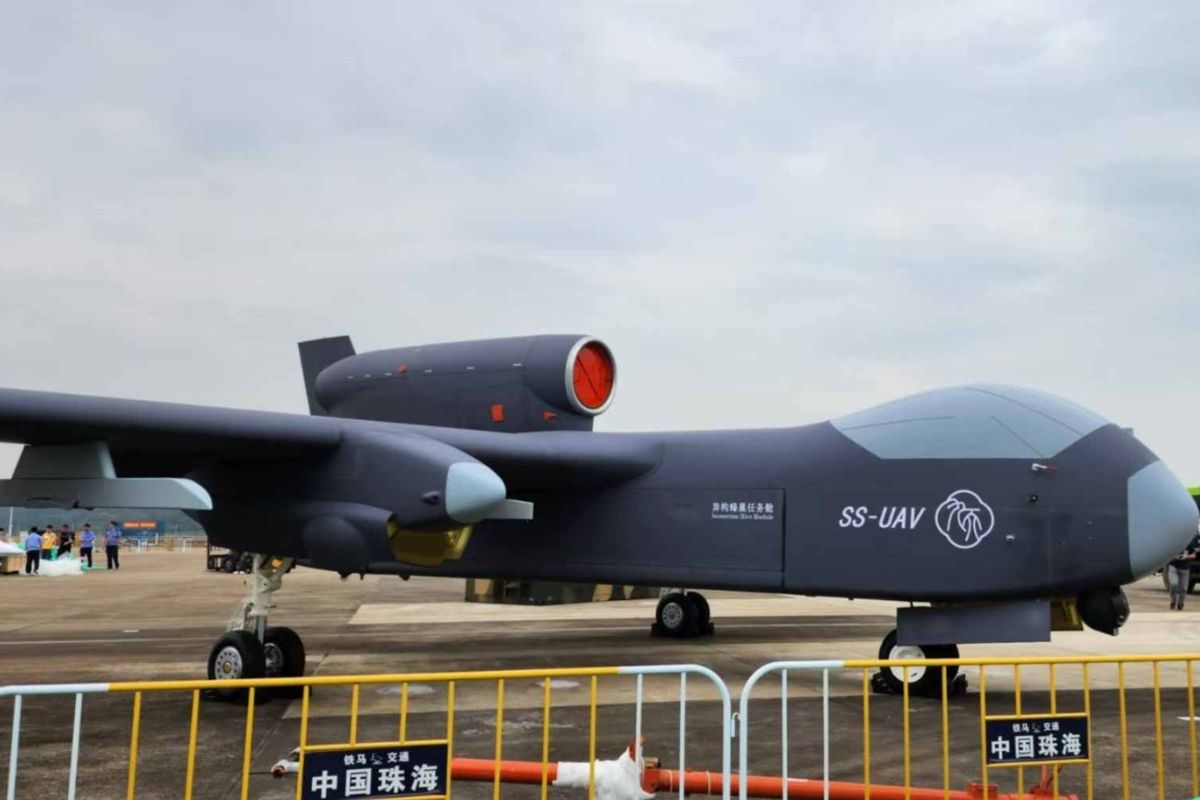
China has just tested a giant drone the size of a fighter jet with a wingspan of 25 meters that carries 6 tons, flies for 12 hours, and the most frightening part: it can launch entire swarms of smaller drones directly from the air.
Here, the focus was different. Every design decision for the drone was guided by efficiency. Instead of relying on generic tables or assumptions, the engineer adopted a radically methodical approach: measuring everything from thrust to voltage drop in the wires, along with aerodynamic simulations and even the amount of material in each motor mount.
Throughout the process, the drone transformed into a flying laboratory. What came out of the paper was not a beautiful product for showrooms, but a machine optimized to stay in the air for as long as possible.
Giant Propellers and Low-Rotation Motors

One of the most surprising decisions was the choice of propellers. Instead of traditional small blades spinning at high speed, Luke opted for T-Motor G40 carbon fiber propellers with 40 inches, nearly a meter in diameter. The result is a visually disproportionate drone, with a propeller set that looks enormous next to common models.
The logic behind this, however, is impeccable. Such large propellers can generate the necessary thrust by spinning at very low rotations, which increases efficiency and reduces energy consumption. With less turbulence and fewer losses, the drone requires less power to stay in the air.
To support this concept, the engineer chose lightweight motors optimized for torque at low RPM, such as the T-Motor Antigravity MN105 V2 with 90 KV.
Instead of seeking raw power, he sought the perfect balance between weight, torque, and efficiency in a rotation regime that is little explored even by specialized manufacturers.
None of this was done haphazardly. Luke built a thrust test rig specific for the project, directly measuring how much energy was consumed for each gram of thrust generated. Thus, efficiency stopped being an abstract idea and became a concrete number: thrust per watt, curve by curve.
Aerodynamics in Multirotor Taken Seriously
Multirotors are often seen as “brute” flying machines, lacking significant aerodynamic sophistication compared to airplanes or gliders. In this drone, it was the opposite. Aerodynamics became a central piece of the design.
Luke used CFD simulations (Computational Fluid Dynamics) to understand how the airflow from the propellers interacted with the chassis, arms, and the drone’s own structure.
The position of the propellers, the length of the arms, and even the spacing between components were refined based on these studies.
The tests showed that there is an ideal arm length that maximizes the overall efficiency of the system. This balance point was found in the range of 800 millimeters, where the arrangement of propellers, arms, and structure resulted in the least energy loss.
From there, the structural challenge emerged. To support such large propellers and long arms, it was necessary to have rigidity without excess weight.
Carbon fiber arms, repeatedly reworked 3D-printed parts, and fine-tuning on the mounts came into play. Every motor mount, every central hub, and every piece underwent revisions until unnecessary grams were cut off.
Every Gram Counts: Structure, Wiring, and Electronics of the Drone

In this drone project, weight is practically an openly declared enemy. Everything that does not contribute directly to the flight needs to be minimized.
The main structure was redesigned several times. For example, by reworking the central shaft, it was possible to save around 40 grams without losing rigidity. That may seem small, but in an extreme efficiency drone, 40 grams can equate to minutes of flight.
Even the wiring was treated as an engineering problem. Since the arms are long, the drone required about 11 meters of wires to the motors.
Thicker wires reduce losses from heating, but increase weight. Thinner wires are lightweight but waste energy as heat.
Luke measured voltage drop, resistance, and weight meter by meter and arrived at an ideal wire gauge of 18 AWG, which balances the two: acceptable electrical losses without adding unnecessary weight.
In electronics, the reasoning was the same. Flight controller, GPS, sensors, and auxiliary electronics were chosen not for design or extra features but for stability and reduced energy consumption.
Keeping the drone stationary in the air for hours requires precise control, without harsh corrections that force the motors to work harder than necessary.
Throughout testing, there were failures, dangerous oscillations, and even impacts. Each error led to reinforcements: more robust landing gear, redesigned supports, and extra mounts, always with the least impact possible on the final weight.
Semi-Solid NMC Batteries: The Heart of the Record
If giant propellers and refined aerodynamics are fundamental, the heart of the record lies somewhere else: the batteries. Instead of traditional LiPo batteries, Luke opted for semi-solid state NMC (nickel-manganese-cobalt) batteries from Tattu.
These batteries offer about 320 Wh/kg, roughly double the typical energy density of a common LiPo, which hovers around 160 Wh/kg.
In practical terms, this means it is possible to carry twice the energy at the same weight. In a drone that operates at the limit of efficiency, this difference completely changes the game.
The obsession with weight reduction went further. To take advantage of every gram, the engineer removed part of the protective packaging of the batteries and replaced large connectors, like the XT90, with smaller connectors, like the XT60.
Combined, these changes resulted in 360 grams saved, equivalent to the weight of the entire carbon fiber chassis of the drone.
This type of modification is not something to be copied at home without technical knowledge. It involves risks and requires extreme care, but it makes clear the concept behind the project: every layer of material without a direct function is dead weight that robs minutes of flight.
As the priority is energy per kilogram, the drone does not work with extreme current peaks. The goal is not to climb quickly or carry large loads, but to drain the battery steadily and efficiently, maximizing the high energy density of these NMC cells.
The Flight of 3h31min06s That Breaks the Record


When the day of the definitive test arrives, there is no pyrotechnic show or dramatic maneuvers. The drone takes off, stabilizes in the air, and simply hovers, while the clock runs.
Minutes turn into hours. In stationary flight, the drone begins to surpass historic multirotor autonomy marks.
All the optimization work of propellers, motors, structure, wiring, electronics, and batteries manifests as continuous flight time.
In the end, the stopwatch records 3 hours, 31 minutes, and 6 seconds. It is a new unofficial record for a multirotor drone on a single charge, surpassing the previous time of Sci-Fly, which was 3h12min with the Q12 model.
During tests, the engineer also discovered something important. Flying forward instead of remaining completely stationary can significantly reduce energy consumption, from about 400 W to around 250 W.
This opens the door for future record attempts with different flight profiles, based on smooth and controlled trajectories, rather than merely hovering in the air.
What is a Drone That Flies for More Than Three Hours Good For?
A drone capable of staying in the air for more than three hours is not just a technical curiosity. It points toward very specific and powerful applications.
This level of autonomy allows, for example, to monitor wind farms and solar plants for long periods, observe the behavior of structures, identify faults in equipment, and track energy generation patterns without constant battery swaps or frequent landings.
In sensitive environments, such as fragile ecosystems, conservation areas, and hard-to-reach zones, a drone that flies for hours can conduct detailed surveys, discreet surveillance, and monitoring of flora and fauna with far less human interference.
In emergency scenarios, such as wildfires or environmental spills, more time in the air means fewer takeoffs, less displacement, and quicker response, with continuous images and data from the same critical point.
In the long term, it is possible to envision combining this type of project with solar cells integrated into the structure or hybrid energy systems, further extending autonomy. None of this is science fiction.
It is the result of carefully adjusted, patient, and almost obsessive engineering, just like in Luke Maximo Bell’s drone.
And you, what type of mission or sector do you think a drone capable of flying for more than 3 hours would make the most difference?








-

-

-

-

-

-

40 pessoas reagiram a isso.