





 Portuguese
  English
  Spanish
  4 min of reading
  0 comments


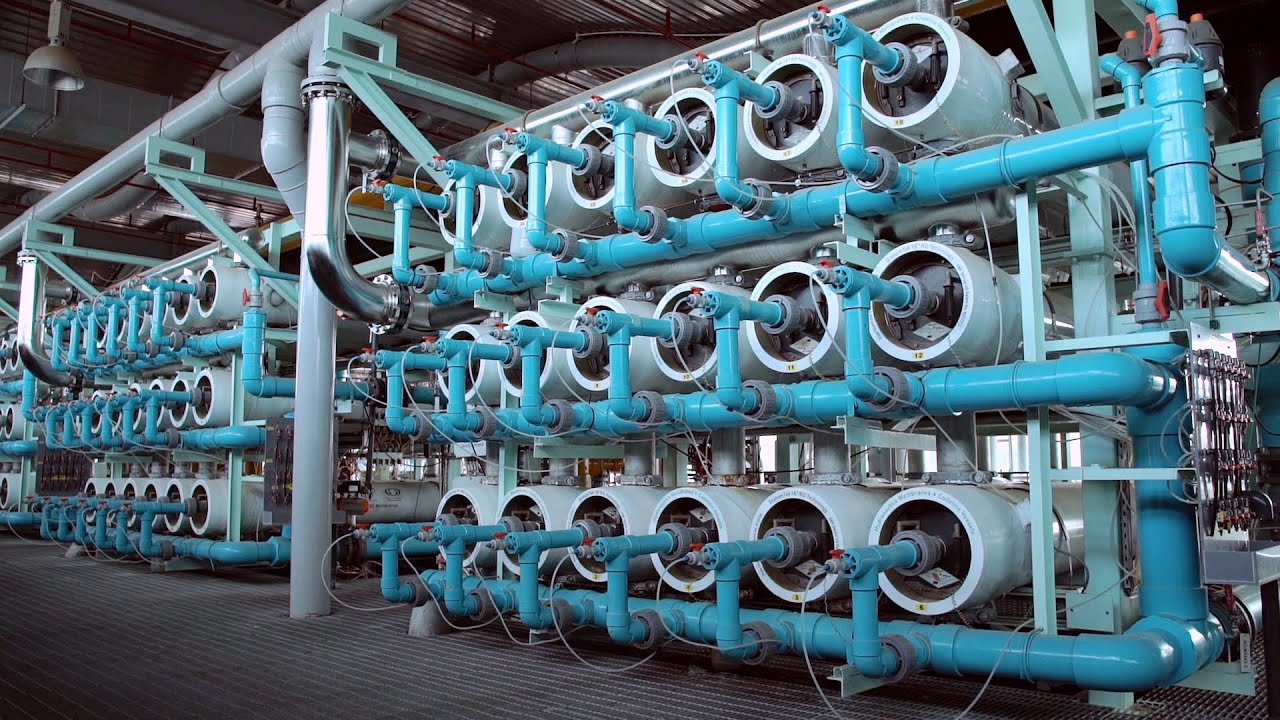
Singapore Transforms Sewage Into High-Quality Drinking Water, Already Covers Up to 40% of National Consumption and Creates One of the Most Advanced Water Systems in the World.
When it comes to water security, few countries face a challenge as severe as Singapore. Without rushing rivers, with minimal land area and a dense population, the country has always lived under a permanent risk of water scarcity. For decades, it depended on imports and limited reservoirs, making water a strategic issue for national survival.
It was in this context that engineers, researchers, and public planners decided to tackle the problem at its root: treat sewage not as waste, but as a raw material. The idea seemed unthinkable to many countries, but it became state policy. The result is one of the most sophisticated water reuse systems ever implemented on the planet.
What Is NEWater and Why Did It Change the Global Water Logic
The heart of this revolution is the program known as NEWater, developed by the national water agency.
-
Digital scams with artificial intelligence are becoming more sophisticated and harder to detect; see how criminals use AIs to deceive victims and discover effective strategies to avoid significant financial losses.

-
Photo taken by an astronaut on the ISS shows the Great Bahama Bank with turquoise waters only 2 meters deep visible from space, a region described as one of the most beautiful in orbit that was solid land about 20,000 years ago and drops 2,000 meters into the Tongue of the Ocean.
-
Super Typhoon Sinlaku reaches winds of 306 km/h in the Pacific Ocean and puts the Mariana Islands on high alert.
-
FBI issues urgent warning: end-to-end encryption does not prevent breaches and can expose messages even in the largest apps.

In practice, it involves a process of indirect and direct water reuse, where domestic and industrial sewage undergoes a rigorous sequence of treatments until it reaches a potability standard superior to that required by international regulations.

The process involves three critical stages: first, microfiltration to remove solid particles and bacteria; then, reverse osmosis, capable of retaining salts, viruses, and microscopic chemical compounds; finally, advanced disinfection by ultraviolet radiation, which eliminates any remaining biological traces.
The result is water so pure that, in many parameters, it exceeds conventionally treated water from rivers and reservoirs.
Today, this recycled water accounts for about 40% of Singapore’s total water demand, supplying both industry and the public water system.
Why Recycling Sewage Is Cheaper Than Relying on Nature
In large countries, water typically comes from rivers, aquifers, and dams. In Singapore, these options simply do not exist on a sufficient scale.
Building more reservoirs would not solve the problem, and relying on external imports has always represented a geopolitical risk.
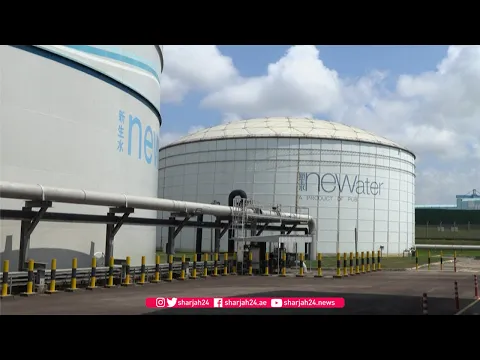
Engineers reached a pragmatic conclusion: the only truly renewable source of water in the country is the water that has already been used. Every drop of sewage generated by the population inevitably becomes a new supply opportunity.
Although the system requires a high upfront investment and significant energy consumption, it drastically reduces losses from evaporation, contamination, and seasonal scarcity. In the long-term balance, the cost of the technology has proven lower than the risk of rationing or water supply collapses.
Technical Data That Explains the Scale of the System
Currently, Singapore operates multiple advanced reuse plants capable of producing hundreds of millions of liters of potable water per day. In normal periods, reuse covers about two-fifths of national consumption. In emergency scenarios, this percentage can be increased, functioning as a strategic liquid reserve.
The official goal is to raise this participation to over 50% in the coming decades, combining reuse, urban rainwater harvesting, and desalination. The ultimate aim is to minimize any external dependency as much as possible.
The Impact on Industry, Economy, and National Security
A large part of NEWater is directed to high-precision industrial sectors, such as semiconductor manufacturing, pharmaceuticals, and electronics, which require ultra-pure water. This transforms the water system into a competitive economic advantage, something rare in the world.
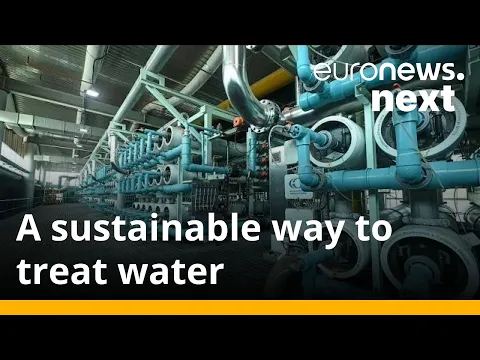
Moreover, the country has started to treat water with the same logic as energy and defense: strategic stockpile, redundancy, and total control. In a scenario of climate change, prolonged droughts, and disputes over natural resources, this approach places Singapore in a unique position.
The Biggest Obstacle Was Not Technical, But Psychological
Interestingly, the biggest challenge of the project was not engineering, but public acceptance. Drinking recycled sewage water always generates cultural resistance. To overcome this, the government invested heavily in transparency, public testing, visitor centers, and scientific outreach.
Today, NEWater is a source of national pride and even a tourist attraction. What once caused rejection has become a symbol of innovation and intelligent survival in a hostile environment.
A Model Observed by Deserts, Megacities, and Agricultural Regions
Engineers and governments from arid regions of the United States, Middle East, Australia, and parts of Asia closely follow Singapore’s model. As droughts intensify and traditional reservoirs fail, advanced reuse shifts from being an alternative to a necessity.
The Singaporean case shows that the future of water lies not only in nature but in engineering, science, and the political willingness to confront taboos.
When Sewage Becomes a Strategic Asset
By transforming sewage into high-quality drinking water, Singapore has not only solved an internal problem but has redefined the global debate on water security.
In a world where rivers dry up, aquifers collapse, and the climate becomes unpredictable, the country proves that scarcity can be combated with technology, planning, and long-term vision.
More than recycling water, Singaporean engineers recycled the very concept of urban survival.





-

-

-

-

-

12 pessoas reagiram a isso.