






 Portuguese
  Spanish


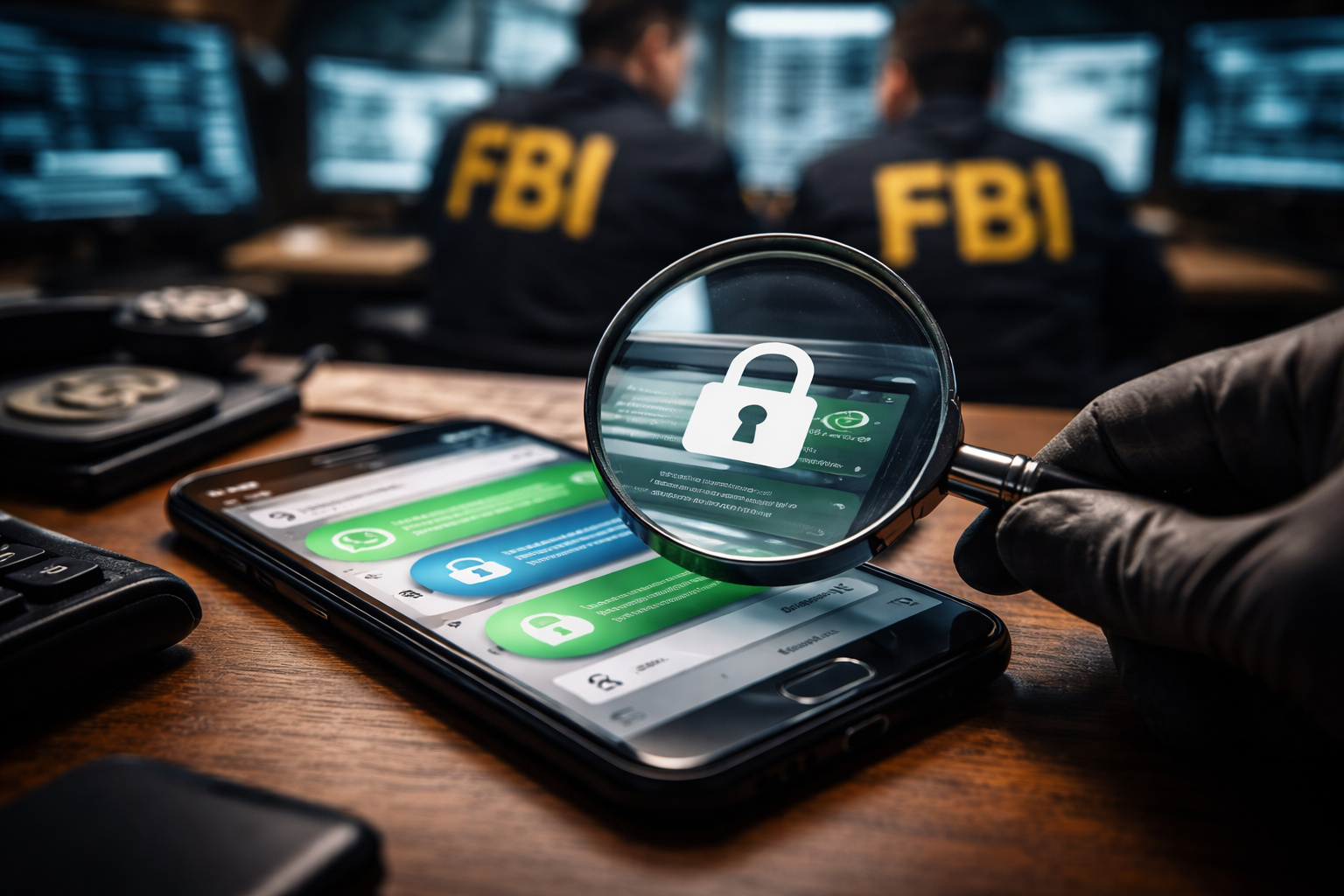

Protection during transmission does not prevent invasions on cell phones and accounts, which increases data exposure even in applications considered secure
A recent alert released by the Federal Bureau of Investigation reignited the debate about the real security of messaging applications.
The agency highlighted that end-to-end encryption continues to function correctly, but does not prevent unauthorized access when devices or accounts are compromised.
Applications like WhatsApp and Signal remain protected during the transmission of messages, but still depend on external factors to ensure complete security.
This scenario shows that protection is not absolute and requires attention beyond the technology used.
Encryption protects transmission, but not the device
The main distinction presented by the FBI involves the functioning of end-to-end encryption.
This technology protects the content only while it is in transit between devices.
As soon as the message reaches its destination, it is decrypted and depends on the security of the device.
This detail means that if the smartphone is compromised, access to conversations can occur without the need to break the encryption.
The risk shifts from transmission to directly existing on the user’s device.
-
China Develops Custom 140-Ton Electric Mining Truck with 770 kWh Swappable Battery, Deploys 290 Units in Xinjiang’s Largest Zinc Mine

-
Meta to Launch Arena, a New Prediction App Targeting 3.56 Billion Users, Competing with Polymarket and Kalshi

-
Scientist Challenges Famous Human Evolution Theory, Argues Homo Sapiens Evolved Gradually Over Thousands of Years
-
15-Year-Old American Builds Ocean Generator with PVC Pipe and 3D-Printed Propeller for $12, Wins National Prize, Presents at White House, and Makes Forbes 30 Under 30 List




Outdated devices increase exposure
The alert also highlights that a significant portion of devices in use no longer receives security updates.
According to the FBI, more than 1 billion smartphones worldwide operate with outdated systems.
This scenario facilitates the exploitation of known vulnerabilities by attackers.
As a consequence, even applications considered secure become vulnerable when used on these devices.
The security of messages, therefore, depends on the state of the operating system.
Notifications can keep data accessible
Another relevant point involves the functioning of notifications on devices.
Recent cases of recovering deleted messages on Signal have been associated with how the iPhone system stores this information.
When the user allows the display of the sender and snippets of the message, this data can remain accessible on the device.
Thus, deleted content remains visible under certain conditions.
The recommendation is to review settings to reduce this type of exposure.

Account hijacking increases risks
The compromise of accounts appears as another important attack vector.
Campaigns recorded between 2024 and 2025 resulted in unauthorized access to thousands of messaging app accounts.
Scams that induce the sharing of verification codes or the connection of unknown devices allow for complete invasions.
As a result, attackers can view conversations, access contacts, and send messages on behalf of the victims.
Although one of the cases involved Signal, similar methods can be applied to other platforms.
Security depends on a set of factors
The FBI reinforces that end-to-end encryption has not been broken and continues to operate as expected.
However, it is not sufficient to guarantee total data protection.
Security depends on the state of the device, the adopted settings, and the user’s behavior.
Interactions with links, codes, and accesses linked to accounts can increase or reduce the level of risk.
This scenario highlights that digital protection involves more than just the technology used.
The future of security in messaging applications
Experts and users observe that trust in encryption needs to be accompanied by safe practices in the use of devices.
The dependence on external factors increases the complexity of data protection.
The need to review settings, keep systems updated, and avoid scams reinforces the importance of conscious use.
Technology remains essential, but it does not solve all risks on its own.
In light of this scenario, is trusting only in encryption sufficient to ensure the security of your messages?






