





 Portuguese
  English
  Spanish
  4 min of reading
  0 comments


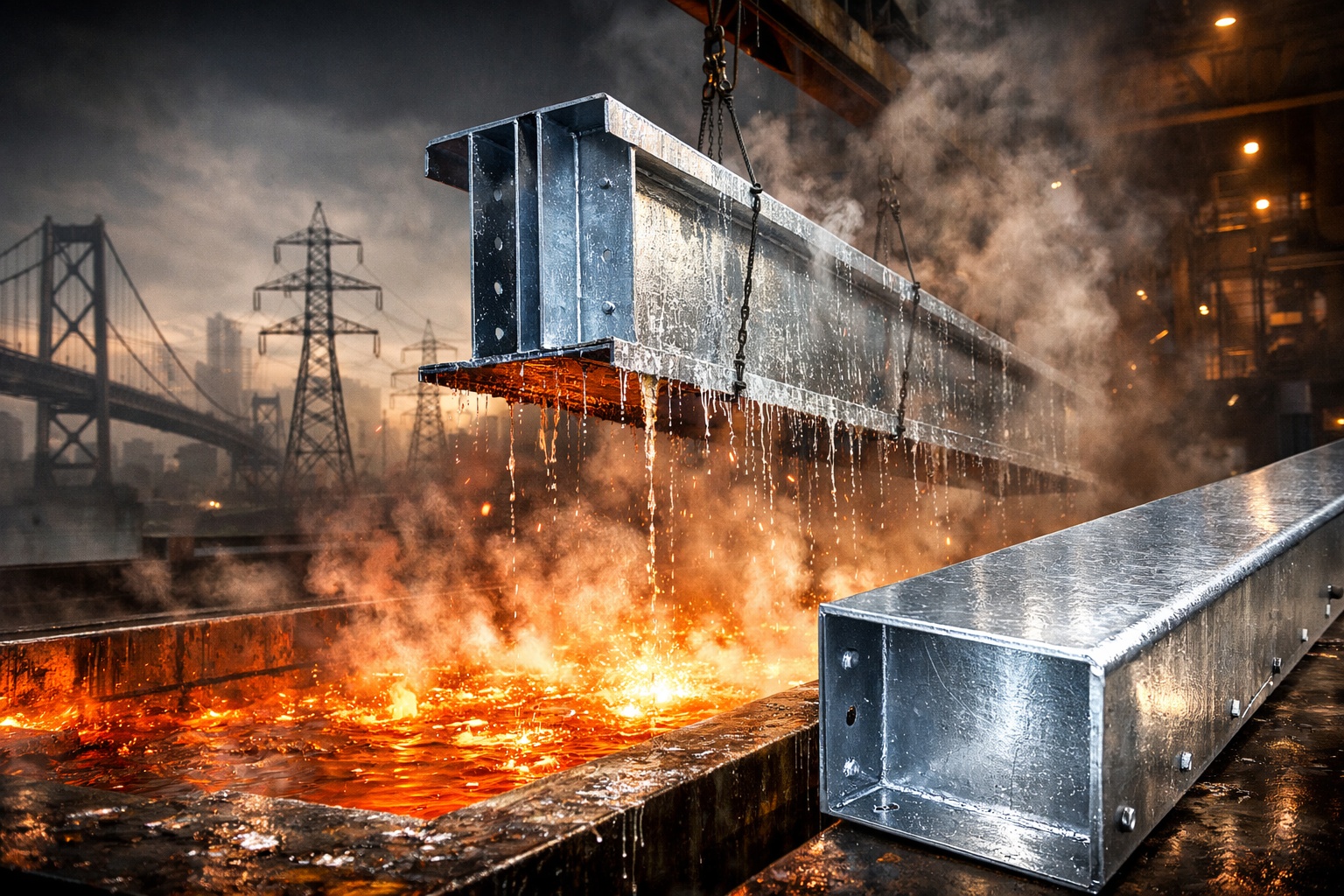
Steel galvanization appeared when engineers discovered that a layer of zinc could prevent rust for decades, a technique now used in bridges, towers, and metal structures.
Today, it is hard to imagine modern engineering without the use of galvanized steel. This material is present in bridges, transmission towers, metal roofs, industrial structures, and countless equipment used in civil construction and urban infrastructure. What few people know is that the technique responsible for protecting steel against rust emerged from scientific experiments conducted centuries ago, when engineers and chemists were searching for ways to prevent iron from deteriorating quickly. Corrosion has always been one of the biggest enemies of metal structures. When iron comes into contact with oxygen and moisture, a chemical reaction occurs that forms rust. This process weakens the metal and can completely compromise its structural strength over time.
For centuries, this problem limited the use of metal structures in outdoor environments. Engineers constantly had to replace corroded parts or apply protective paint layers that often did not last long. It was in this context that a discovery emerged that would change the history of engineering: the process of steel galvanization.
How the Idea of Coating Iron with Zinc Emerged
The first scientific record related to galvanization dates back to 1742, when the French chemist Paul Jacques Malouin presented an experiment to the Royal Academy of Sciences in France in which he submerged iron in molten zinc.
-
Goodbye, concrete: a new trend in civil construction reduces the weight of the structure by up to 30%, accelerates projects by up to 40%, cuts costs on steel and labor, and improves thermal insulation with EPS.
-
Russian engineers create an innovative propeller blade for aircraft that could completely change the way airplanes and helicopters operate.

-
Couple finishes building PVC chalet on the beach on the last day, with air conditioning and curtains, but discovers the bathroom drain is inverted: water escapes from the drain, risking breaking the floor, and the rush continues before the trip.
-
Niterói surprises with a mega project of R$ 34 million and advances in the new Caramujo Bus Terminal, promising to revolutionize urban mobility by 2027.

Malouin observed that the coated metal showed greater resistance to corrosion. At the time, the discovery was considered interesting from a scientific perspective, but there was still not enough technology to apply the process on a large industrial scale.

Almost a century later, the method was refined.
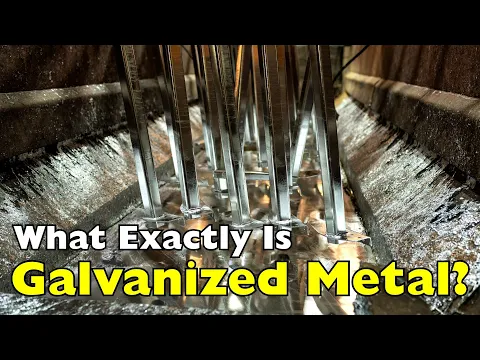
In 1837, the French engineer Stanislas Sorel registered a patent for a process of protecting iron by immersion in molten zinc. This method became known as hot-dip galvanization, a technique that remains widely used today. This process marked the birth of modern galvanized steel.
What Is the Galvanization Process
Galvanization consists of coating steel or iron parts with a layer of zinc. This coating can be applied by different methods, but the most common in the industry is hot-dipping. In this process, the steel goes through several stages:
- chemical cleaning to remove oxides and impurities
- surface preparation
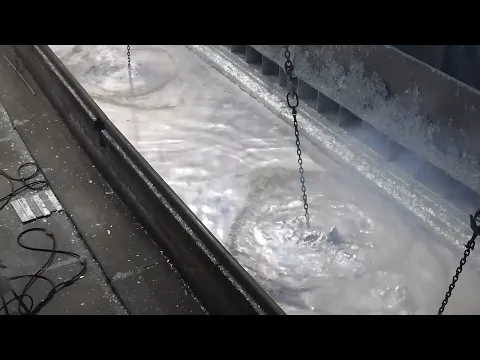
- immersion in a bath of molten zinc at about 450 °C
When the metal is removed from the bath, the zinc reacts with the iron and forms an adherent metallic layer. This layer creates an extremely efficient protection against corrosion. The result is a material that can last for decades even in harsh environments.
Why Zinc Protects Steel Against Rust
The protection offered by zinc occurs through two main mechanisms. The first is the physical barrier. The layer of zinc prevents oxygen and moisture from coming into direct contact with the steel. The second mechanism is known as cathodic protection.
Zinc has an electrochemical potential different from iron. When both are exposed to a corrosive environment, zinc oxidizes first.
This means that zinc “sacrifices itself” to protect the steel. Even if the layer is scratched or damaged, zinc continues to protect the base metal. This phenomenon is what allows galvanized structures to resist corrosion for long periods.
Where Galvanized Steel Is Used
With the advancement of engineering and civil construction, galvanized steel has become one of the most widely used materials in infrastructure projects. Among the most common applications are:
- power transmission towers
- metal structures of bridges
- industrial roofs
- posts and urban structures
- metal grates and fences
- agricultural equipment
Corrosion resistance is especially important in outdoor environments, where metal is constantly exposed to rain, wind, and temperature variations. In many cases, galvanized structures can remain protected for several decades without the need for intensive maintenance.
The Impact of Galvanization on Modern Engineering
Before the development of galvanization, rust limited the lifespan of many metal structures. Bridges, roofs, and industrial equipment required constant maintenance or frequent replacement of corroded parts.
With the advancement of this technology, it became possible to use steel on a large scale in outdoor environments. This directly contributed to the growth of modern infrastructure, allowing for the construction of:
- long-distance electric power networks
- large industrial structures
- metal transportation systems
- buildings with steel structures
Galvanization helped transform steel into one of the most important materials in modern engineering.
Durability That Can Exceed Decades
One of the most valued characteristics of galvanized steel is its durability. The lifespan of the coating depends on factors such as climate, pollution, and exposure to chemicals. Even so, in moderate environments, galvanized structures can last for 30 to 50 years before showing significant signs of corrosion.
This durability reduces maintenance costs and increases the safety of structures. For this reason, galvanization remains one of the most widely used techniques to protect metals against rust.
A Discovery That Changed the Way to Protect Steel
The development of galvanized steel shows how a relatively simple solution can have a huge impact on engineering and industry.
By discovering that a zinc coating could protect iron against corrosion, engineers created a technology that remains essential more than a century later.
Today, this technique allows metal structures to withstand time and the most severe environmental conditions.
The process that began as a chemical experiment has become one of the most important technologies for the durability of metal structures in the modern world.









-

-

-

7 pessoas reagiram a isso.