





 Portuguese
  English
  Spanish
  5 min of reading
  0 comments


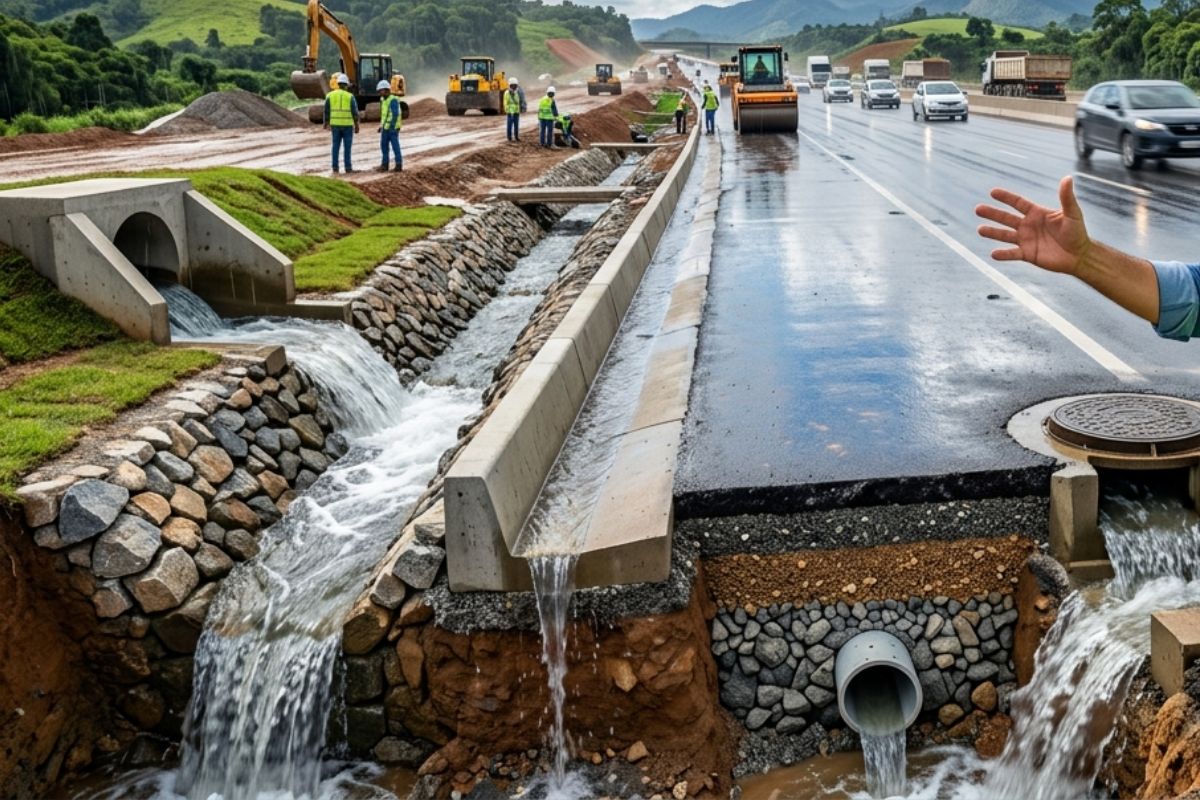
Efficient drainage combines ditches, gutters, and water outlets on the track with drains and drainage mattress in the base to conduct water safely
Drainage becomes an absolute priority during the rainy season because it determines whether water will be directed to an appropriate destination or if it will accumulate, causing erosion, generating flooding, and increasing the risk of aquaplaning. To get drainage right, the first step is to understand a difference that changes everything: surface water and deep water do not behave the same way.
When the construction treats the two as if they were one thing, drainage fails in a chain reaction. The water that remains on the surface overloads gutters and cuts slopes. The water that infiltrates and approaches the groundwater weakens the pavement structure below. The result usually appears quickly in the rain: erosion, water layer, and flooding points.
What is drainage and why does it determine what happens on the road
Drainage is the set of devices that captures and directs excess water away from the road and construction, without harming the surroundings. In practice, it exists to remove water from where it should not be and take it to where it can be safely discharged.
-
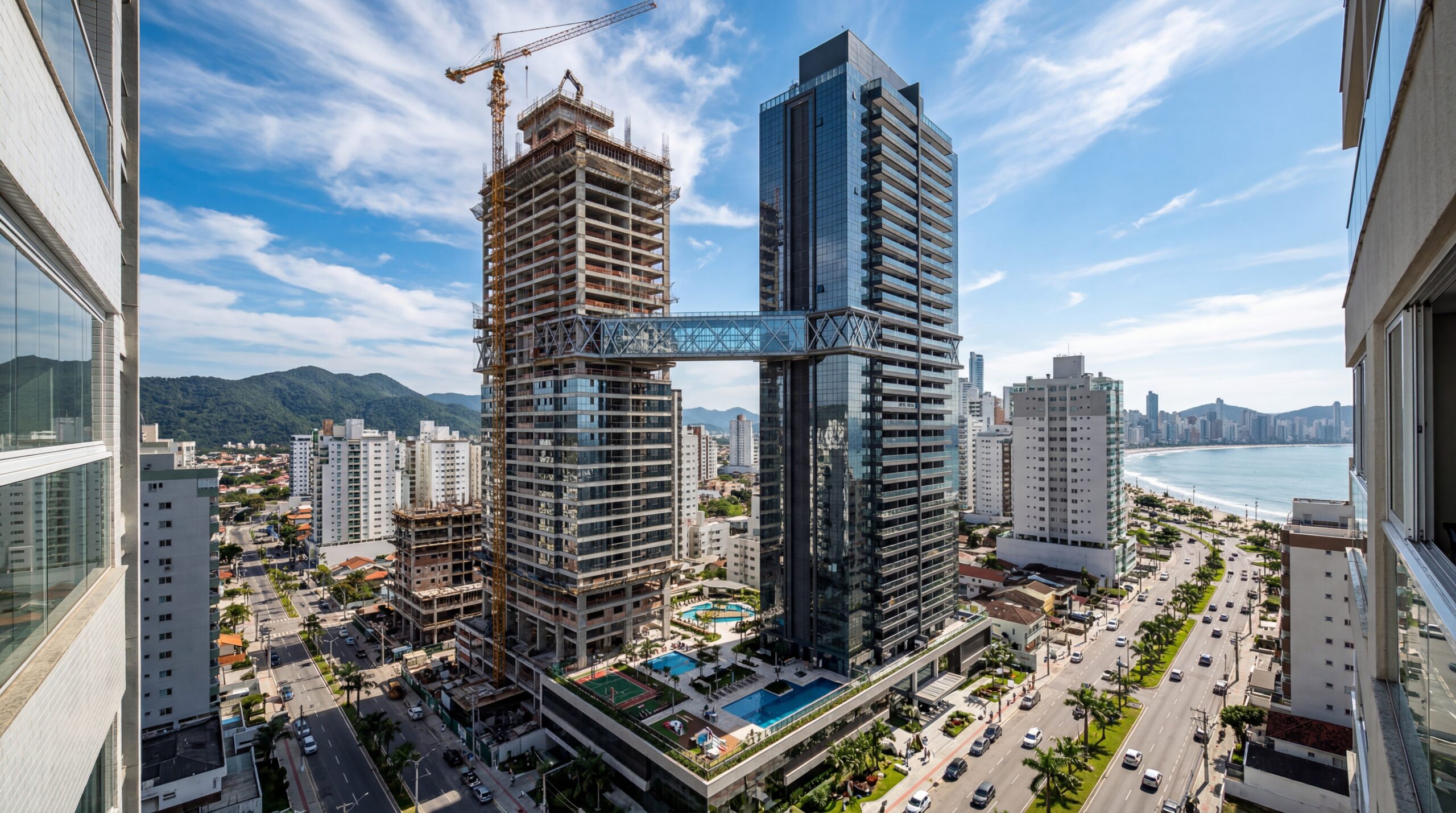
With 55 floors, 177 meters in height, a 15-meter walkway between the twin towers, ventilated facade, and 6,300 m² of leisure space, Ápice Towers already has one tower completed and another nearly at the top.
-
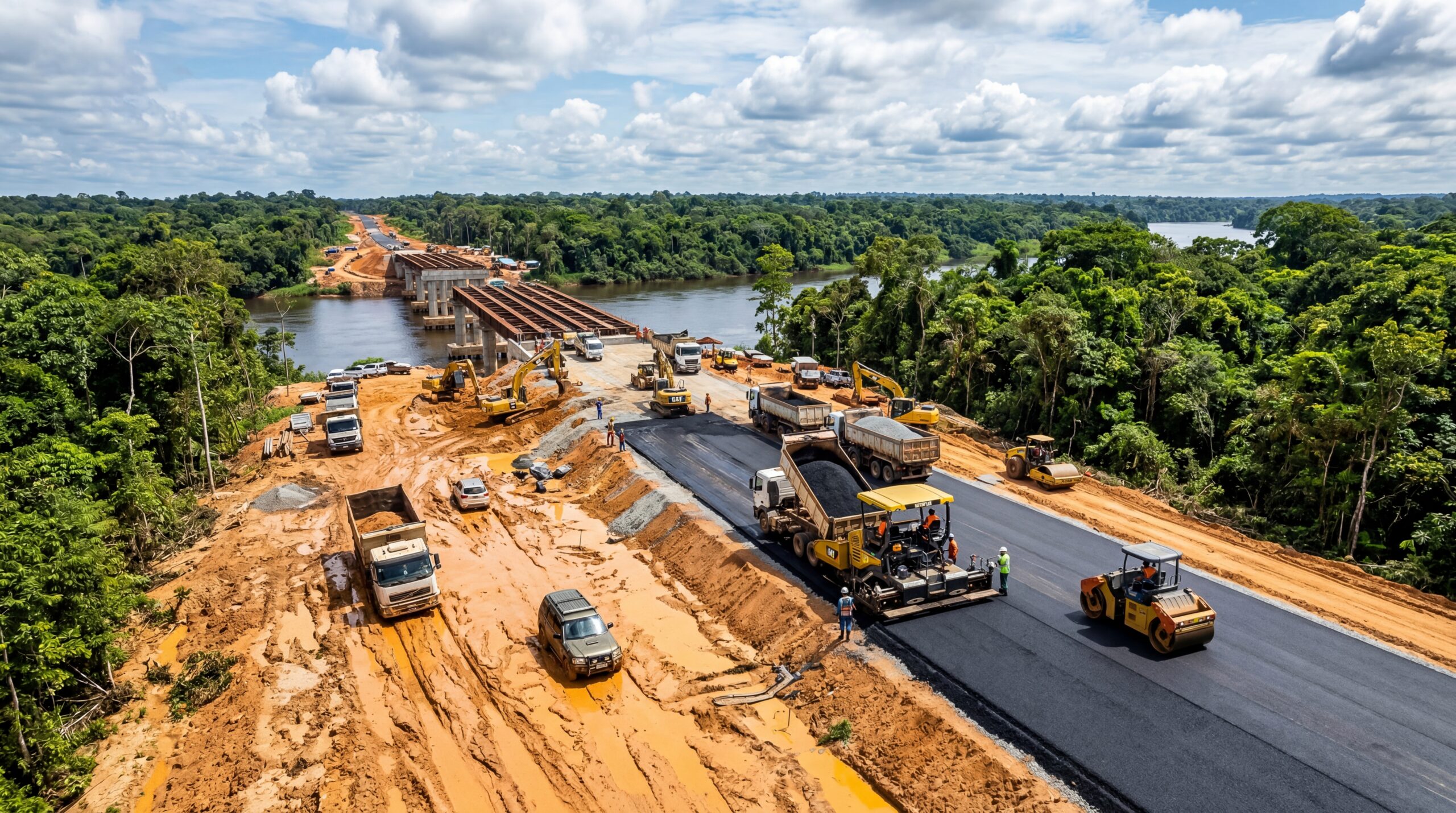
After nearly 50 years of neglect, BR-319 receives R$ 678 million to pave 340 km, gain a 320-meter bridge, and try to lift Amazonas out of the mud, the quagmire, and road isolation.
-
In Sweden, a 51-meter tower was built almost entirely of wood, without a concrete structural core and with solar panels integrated into the facade, using CLT and laminated beams to challenge the dominance of steel and concrete in modern buildings.

-
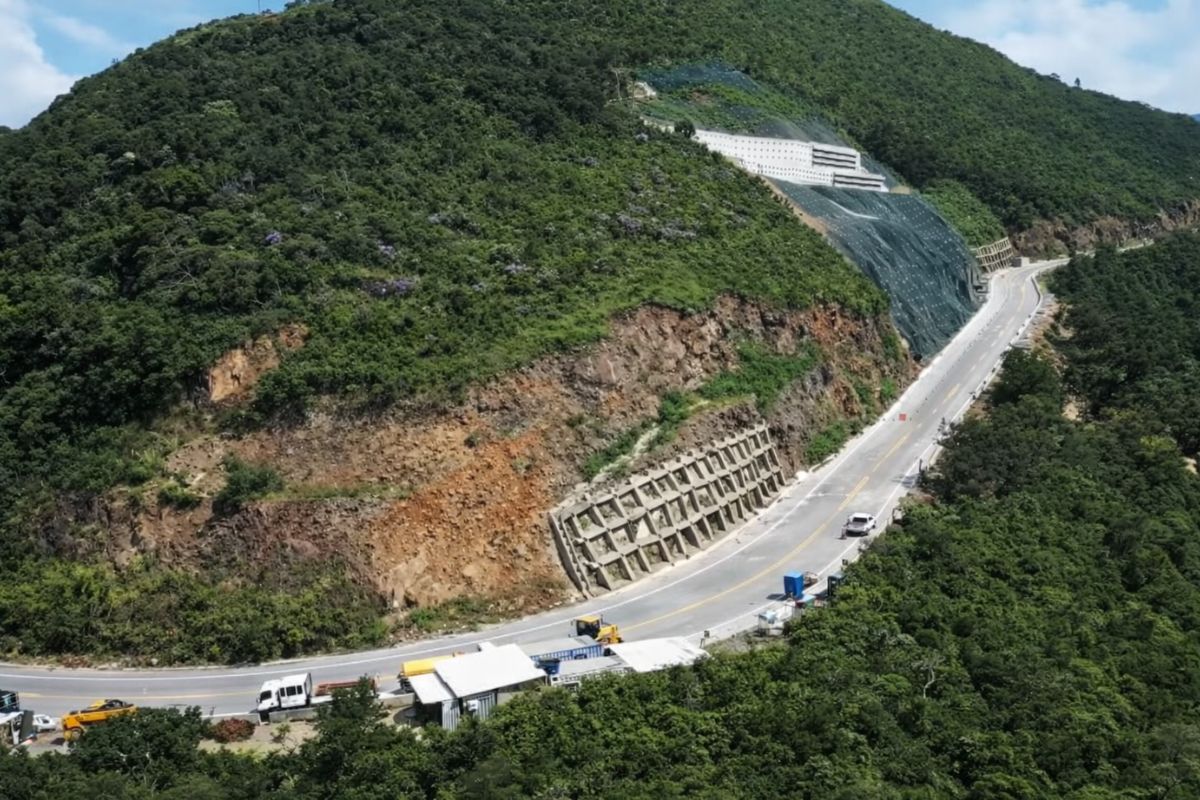
The section of Serra da Rocinha on BR-285 is now open in Timbé do Sul: 50 m tensioned curtains and top-down technique stabilize the slope, with a stairway duct controlling the water.

In the rain, drainage is divided into two blocks that need to communicate but cannot be confused:
Surface drainage for rainwater that stays on top
Deep drainage for infiltrating water and nearby groundwater
Surface drainage: remove water from the track before it becomes a risk

Surface drainage works with the water that falls and remains on the surface, flowing across the platform, edges, and slopes. The goal is simple: capture quickly, conduct continuously, and discharge at a safe point.
The most common devices in surface drainage are ditches, gutters, and water outlets. If any of them fail, the water stops, concentrates, gains strength, and begins to destroy the road itself.
Ditches: hold water from slopes before it attacks the highway
Protective ditches serve to prevent water flowing down slopes from reaching the track with volume and speed. There are ditches associated with cuts and ditches associated with fills, always with the same logic: intercept and conduct before the water causes overload.
Key points that make a difference:
Ditches can have different shapes, and the trapezoidal shape tends to have good hydraulic efficiency
In more cohesive soils, uncoated ditches tend to work better
In sandier soils, coated ditches help reduce erosion
Maintaining distance from the crest line of the cut or fill avoids instability and rework
A poorly designed ditch becomes an erosion channel. A well-executed ditch becomes silent protection.
Gutters: conduct water along the road without destroying the pavement
The gutter captures the water that falls on the platform and conducts it longitudinally to an outlet point, such as natural terrain, a catch basin, or a drain. It also prevents water from reaching sensitive areas of the road, especially the edge of the pavement.
This is where the direct relationship with safety comes in. Aquaplaning occurs when the tire cannot drain excess water, grip decreases, and a film forms between rubber and asphalt. A functioning gutter reduces the chance of persistent water layer on the track, especially at points where water tends to accumulate.
Water outlets: where drainage really completes
Water outlets are the point of “discharge” for surface drainage. They receive what the gutter has conducted and discharge it to an appropriate location. Without a water outlet, the gutter becomes a long reservoir, which at some point overflows or concentrates water where it should not.
The basics that cannot be missing:
Slope to ensure drainage by gravity
Regularized and compacted foundation at the discharge point
Protection against erosion at the discharge site when necessary
Deep drainage: protect the pavement base and cut water from below


Deep drainage intercepts water that comes from infiltration and water associated with shallow groundwater. The goal is to prevent this water from reaching the pavement base and causing loss of support, deformations, and pathologies.
When the construction ignores this step, the problem does not only appear as a puddle. It appears as the structure tiring from below.
Longitudinal deep drain: the most common technical path
The longitudinal deep drain is indicated when the groundwater is close to the surface. It intercepts the water and conducts it away from the critical zone.
Essential steps:
Excavate the drain trench
Ensure minimum slope along the stretch
Apply geotextile to contain the soil
Insert a filtering layer with draining material
Position the system and close it properly
An important operational care: avoid positioning the drain in areas of heavy vehicle wheel tracks, because the filling of the trench may not behave the same as the pavement under repeated load.
Fishbone drains: collect in a network and lead to a main drain
In situations where water concentrates at different points, fishbone drains function as a collection network, connected to a main drain that receives and conducts everything to the destination.
It is a typical solution when the problem is not an isolated point, but rather a terrain that accumulates water in several points at the same time.
Drainage mattress: when the soil is saturated and the volume is high
When the volume of water is greater than the drains can support, the drainage mattress acts as a protective layer. It helps prevent water from the groundwater, close to the surface, from rising and compromising the pavement over time.
This solution frequently appears in fills over saturated or soft soils, as it creates a drainage route to carry water to the deep drains.
Quick drainage checklist to evaluate the construction in the rain
If you need to check the drainage today, go through these points:
Existing and well-positioned ditches
Continuous gutters without accumulation points
Water outlets with stable discharge and adequate slope
Deep drainage planned where there is recurring infiltration or shallow groundwater
Geotextile and filtering layer executed correctly
In saturated soil, drainage mattress or equivalent solution
In the end, the question that resolves almost everything is this: does the water have a complete path, from the point where it falls to the point where it is safely discharged?
And you, in your construction or road, what appears most in the rain: erosion at the edges, aquaplaning on the track, or flooding at recurring points?





Seja o primeiro a reagir!