





 Portuguese
  English
  Spanish
  4 min of reading
  6 comments


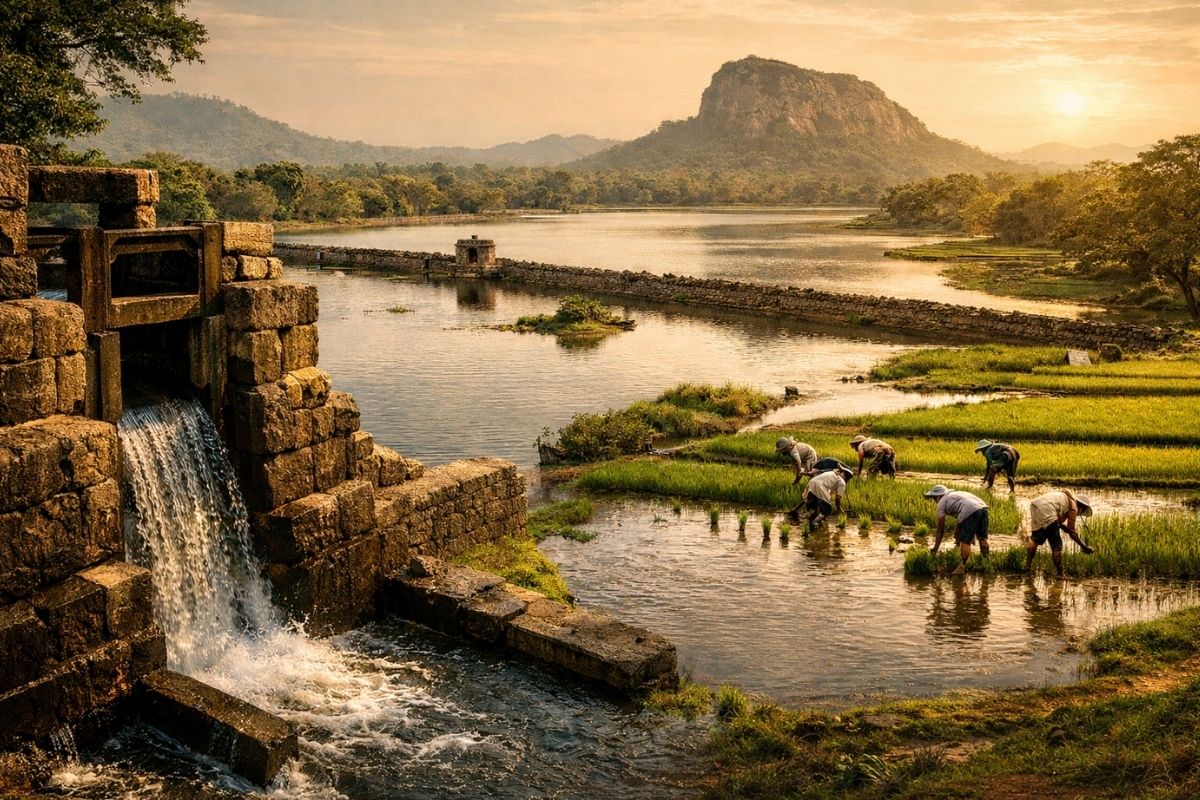


While Current Projects Fail in a Few Decades, Sri Lanka’s Reservoirs Maintain a Land Network Created 2,300 Years Ago That Irrigates 246 Thousand Hectares by Gravity. Without Pump, Concrete or Energy, Water Flows Down in Cascades Between Tanks, Intriguing Engineers and Gained Status as Global Heritage at the UN.
Sri Lanka’s reservoirs continue to operate where much modern infrastructure fails: a network built 2,300 years ago continues to irrigate 246 thousand hectares solely by gravity, without relying on pump, concrete, or energy.
What sustains this efficiency is a design that combines extreme climate, smart storage, and local cooperation: water arrives in a few months of monsoon and needs to last through the long dry season, traversing connected tanks, channels, and spillways in sequence.
A Country With Concentrated Rain and a Long Dry Season

In the north and east of Sri Lanka, rain falls heavily for only a few months. In many years, the total is below 1,750 mm, but after the monsoon comes the dry season, with about 8 months of intense sun.
-
A woman went out for a regular walk and ended up finding a treasure buried for over 900 years, with more than 2,000 medieval silver coins compared by archaeologists to a lottery prize and considered one of the most significant finds in recent years in the country.

-
Scientists revealed 11 signs that very intelligent people exhibit in their daily lives, and most people have no idea that some of these common behaviors are directly linked to an above-average brain.

-
From space, Buenos Aires appears as a colossal spot of light surrounded by kilometers of darkness, revealing at a single glance the exact boundary between the metropolis and the countryside, seen from 400 km altitude.

-
NASA spent over 118 million reais to build a single bathroom that works in zero gravity, and it has just gone to space on the first crewed mission to the Moon in more than 50 years.
Annual evaporation often reaches or exceeds 1,800 mm, which means that the water balance tends to be negative. Without storage, the soil hardens, cracks, and agriculture becomes a high-risk bet.
What Are Sri Lanka’s Reservoirs and Why Are They Connected
Sri Lanka’s reservoirs do not function as isolated ponds. They are part of a cascade of tanks, where each structure is positioned to receive the overflow from the tank above and feed the tank below.
The water doesn’t stay still: when the highest reservoir fills up, the overflow flows to the next one in a planned sequence that reuses the resource multiple times along the way.
Gravity Irrigation Without Pumps, Without Energy, and Without Concrete
The foundation of the system is simple and powerful: gravity irrigation. Water moves because the slope of the land and the order of the tanks guide the flow, without motors, wiring, or parts to break.
This design reduces waste and allows, even in years of low rainfall, to extend reserves more efficiently, keeping irrigation active when the skies are empty for months.
Impressive Scale: From Local Chains to a Continental Network
In certain valleys, dozens of tanks appear lined up like a chain. In larger areas, the mesh expands into hundreds of reservoirs interconnected by channels and spillways.
At one historical phase, the system reached a total of about 30 thousand tanks, all planned to serve communities and fields in areas with low water security.
How the System Protects Water with the Landscape Itself
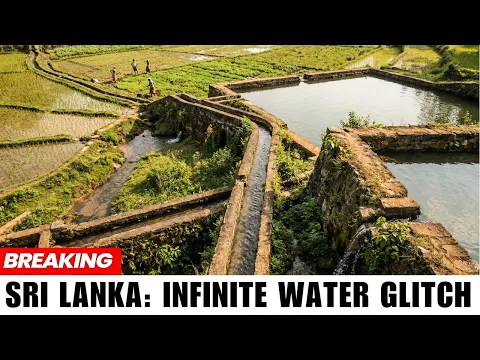

Part of the durability comes from integrating nature and hydraulics. The cascade often starts with forestry tanks, which hold the first runoff and retain sediments.
Vegetation strips act as purification zones, filtering water as it advances.
In many reservoirs, dense tree belts stabilize banks and help reduce evaporation, which can drop by up to 40% with shade and soil protection.
Precise Levelling, Clay Core, and Spillway Control
The embankments are made of earth and stone in layers, with a compact clay core to reduce infiltration and hold water for months.
Within these structures, there are controlled release systems and solutions to prevent slope erosion. One of the mentioned pieces is the stone chamber known as Boo Kotua, described as a pressure regulator that allows water to flow without destroying the embankment.
Spillways direct excess water during the heaviest rains, maintaining safety and flow continuity.
246 Thousand Hectares Irrigated and the Role of Rice in Survival
The practical result is an annual transformation: what would be parched land becomes a green mosaic.
The system irrigates an estimated area of 246 thousand hectares, supporting farming families and ensuring an additional planting and harvesting window.
Rice is central because it requires constant flooding, and the water stored in the tanks keeps the fields viable even during prolonged droughts.
In addition to rice, the irrigation reaches gardens, vegetables, and fruit trees, and infiltration also helps recharge wells.
Local Cooperation and Community Decisions to Maintain Flow
Maintenance does not rely solely on engineering but on social organization. The network has been expanded and restored at different times, highlighting initiatives attributed to King Parakramabahu I in the 12th century, including works like the Parakma Samudra, described as an artificial inland sea that marks the landscape near Pollonua.
At the same time, daily operations are based on local decisions: water release, embankment care, and channel cleaning have been shared responsibilities among villagers, farmers, and, in some cases, monks.
Global Heritage and The Question That Intrigues Engineers
In 2018, the FAO, linked to the UN, recognized the landscape of the cascading tank village as global heritage, treating the system as a living heritage, not a relic.
The contradiction is direct: many modern systems collapse within decades, while Sri Lanka’s reservoirs continue irrigating by gravity, without pumps, without energy and with occasional repairs, spanning centuries of use.
Do you think modern engineering fails more due to lack of technology or by not planning infrastructure to last centuries, like Sri Lanka’s reservoirs?







Os princípios estão no texto, tem que começar pequeno e expandir, no Brasil temos bilhões para o agronegócio, os doutores querem alimentar o mundo num país em que o presidente disse que tirou milhões da fome, então esquece a universidade e o governo, pesquise, estude e desenvolva primeiro em sua propriedade.
Bom dia.
Sou proprietário de uma área 40ha e faço preservação, inclusive fontes de água encantam está idéia de irrigação, poderia abrir 8 açudes, porém a burocracia ambiental e as despesas não nos incentivam a ambicionar este projeto. A flora, a fauna os animais seriam beneficiados com tal iniciativa, Já passa um arroio no meio da propriedade e uma estrada asfaltada que serve a comunidade vizinha e outro ao lado da propriedade com destino a município de Poço das Antas/RS.
Ademais, está rede poderia servir para produzir peixes, viveiro de alimentos, hortas comunitárias e várias outras oportunidades.
Exemplos como este e as coberturas verdes em cidades alemãs, entre outras iniciativas japonesas, chinesas, holandesas, marroquinas e árabes como a dessalinização, quando divulgadas nos meios sociais são meios e incentivos a mudanças seguras na preservação do ecossistema.
estudar as técnicas que deram certo no passado é acertar para o futuro