





 Portuguese
  English
  Spanish
  5 min of reading
  2 comments


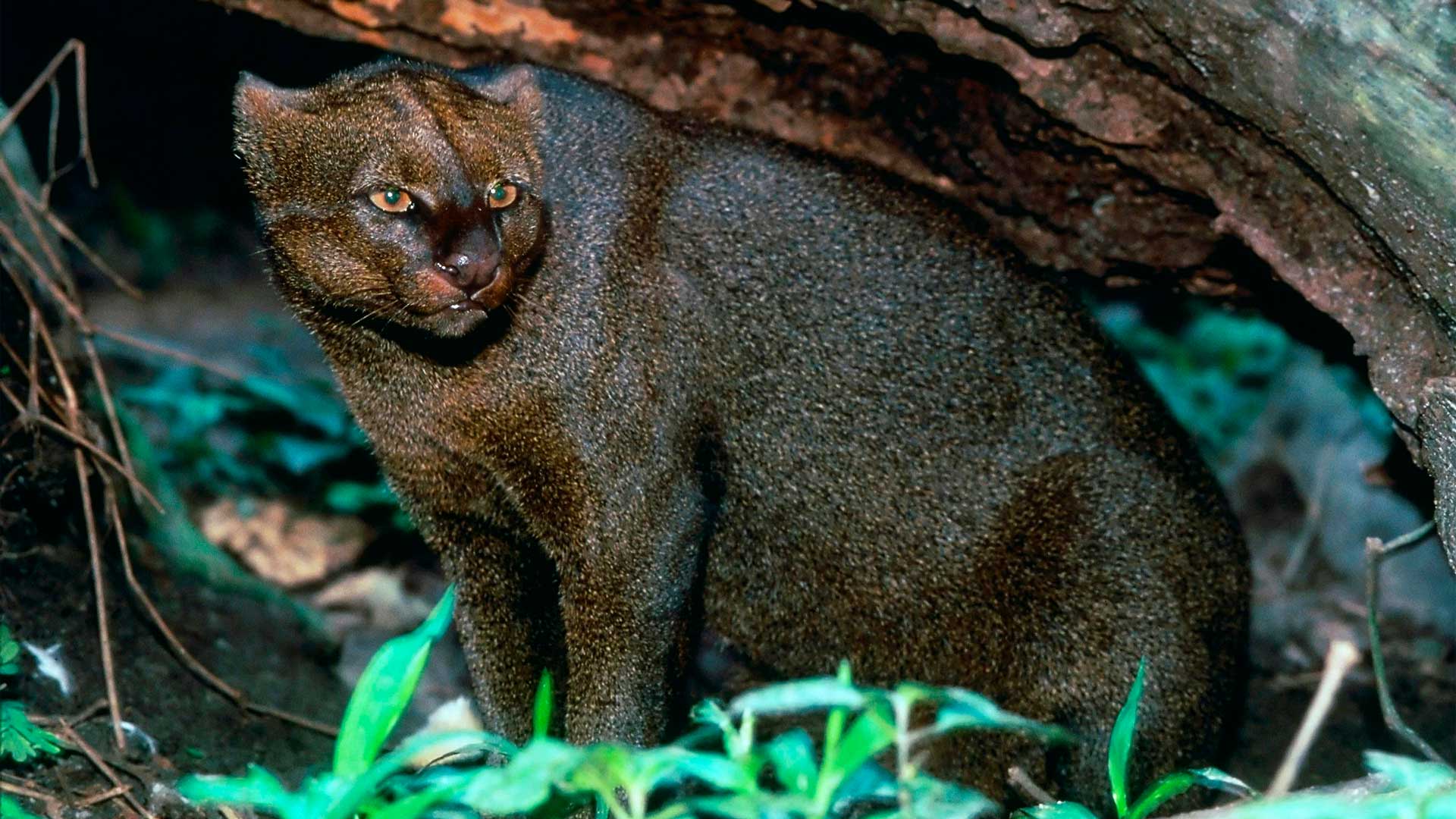


Discrete and Solitary, The Jaguarundi Lives In Several Biomes And Even Close To Rural Areas, But Is Rarely Seen And Rarely Remembered In Conservation Campaigns. In Brazil, Evaluations From Research And Conservation Institutions Indicate Alert For Habitat Loss And Local Declines.
The jaguarundi, also known as otter cat and, in some regions, as red cat, is a feline that stays far from celebrity status. It doesn’t feature on T-shirts, is not usually the “face” of campaigns, and is almost never the subject when the topic is Brazilian wildlife.
Still, it is present in a vast range across the Americas and appears in varied biomes, including landscapes close to human activities. The contrast between this wide distribution and the rarity of sightings fuels curiosity and, at the same time, hides risks.
The central point is that the absence of headlines does not mean the absence of problems. Research and conservation assessments indicate that habitat loss and fragmentation, as well as vehicle collisions, may weigh more than many people imagine for a discrete species.
-
With just joint compound, white glue, and pigment, you can make a homemade paint that yields double the conventional amount, saves up to 70%, and leaves the wall with a finish that no one would believe wasn’t store-bought paint.

-
Home environment can influence the brain, mood, and well-being: studies indicate an increase of up to 15% in productivity, a reduction of 12% in stress with plants, and a direct impact of the circadian rhythm on the 24 hours of the day.

-
A Brazilian millionaire couple restores a farm over 150 years old in the interior of São Paulo and transforms the historic property with Portuguese tiles, antique furniture, and new spaces into a refuge that blends tradition, comfort, and sophistication.

-
Submerged city in a lake in Minas reveals intact streets, preserved vehicles, and houses after more than 60 years, impressing divers.


And there is a dangerous side effect when an animal is little known. It tends to be off the radar of public policies, investment in monitoring, and even simple mitigation actions on roads and agricultural areas.
What Is The Jaguarundi And Why Does It Look Like An Outlier Feline

Those who encounter a jaguarundi for the first time often find its appearance strange. The body is elongated, the head is narrower, and the fur is smooth, usually without spots, which diverges from the “classic look” that the public associates with Neotropical felines.
In size, it is not a giant, but neither is it a domestic cat. Generally, it is described as a medium-sized feline, with variations in weight and length depending on the region, in addition to two more known colorations, one darker and the other more reddish.
Another detail that confuses is its kinship. International conservation organizations have already highlighted that the jaguarundi is closer to the puma than to species like the jaguar, despite the common name suggesting otherwise.
Where It Lives From The Cerrado To The Edges Of Cities And What This Reveals

In Brazil, the jaguarundi is associated with diverse environments, such as the Cerrado, transition areas, forest edges, and formations with lower or medium vegetation. Reports and records also indicate presence in landscapes with human use, as long as there are vegetation strips for shelter and movement.
This capacity to circulate in altered areas sometimes creates the impression that the species “gets by anywhere.” However, adaptation is not synonymous with safety, as the same scenario brings more roads, more isolated fragments, and more contact with risks that did not exist in continuous landscapes.
How It Behaves And Why Almost No One Sees An Animal That Hunts By Day
The jaguarundi is often described as solitary and discreet, with more common activity during the day. This trait is striking because many felines in South America are more nocturnal, which would theoretically make the jaguarundi easier to observe.
In practice, the opposite happens. It moves low, fast, and silently, using the vegetation for cover, and usually avoids open areas when there is no refuge nearby.
A large part of the records comes from camera traps, reports from rural residents, and quick sightings along riverbanks, trails, and areas close to roads. The chance of a prolonged encounter is small, which reduces public awareness about the presence of the animal.
The diet also helps explain its routine. The jaguarundi hunts small and medium-sized prey, such as rodents, birds, lizards, and amphibians, and can adjust its menu according to local availability, which favors its survival in habitat mosaics.
However, the same proximity to rural areas increases the risk of mortality from vehicle collisions and indirect conflicts. In regions where the landscape has turned into a puzzle of fragments, crossing roads and clearings becomes part of daily life, and any mistake can be fatal.
The Ecological Importance Of The Otter Cat In Prey Control And Environmental Health
Even without the symbolic impact of large predators, the jaguarundi has an essential function. As a small to medium-sized predator, it helps control populations of rodents and other animals that, when they multiply excessively, can unbalance food chains.
In agricultural areas, this presence may have an indirect effect in reducing losses, as rodents are associated with losses in crops and storage. It is not a “magic solution,” but it is a real ecological service that is often ignored by those who only value charismatic species.
Moreover, the occurrence of the jaguarundi may indicate that there is still a minimum of connectivity and prey availability in a certain landscape. When it disappears, it can be a sign that the environment has become too simplified, even if other more generalist species remain there.
Conservation Of The Jaguarundi In Brazil: The Regional Alert And The Actions That Can Prevent The Silent Disappearance
Globally, conservation assessments often treat the jaguarundi as a species less threatened than large felines. The problem is that this global average may hide regional declines and local losses that occur without noise.
In Brazil, technical analyses and reference publications in biodiversity have already indicated that the species may occur in low densities and that habitat loss due to agricultural expansion and urbanization is a persistent factor. In some regions, the risk is less visible because the animal was already difficult to record, so the absence of data may seem “normal.”
Another point is fragmentation. When vegetation becomes islands, the flow between populations decreases, genetic diversity tends to drop, and the chance of local disappearance increases, even without direct hunting.
In practice, the most effective measures are known and relatively objective. Maintaining and restoring ecological corridors, protecting riparian forests, planning land use, and reducing collisions with signage and wildlife crossings where records exist are actions that can change the game.
The challenge is to do this for an animal that almost no one sees. If conservation only reacts when the species makes headlines, the jaguarundi may continue to vanish silently until the void becomes impossible to ignore.
If the jaguarundi is so important yet receives so little attention, is this negligence or a political choice disguised as lack of interest? Do you think that campaigns and investments should prioritize only the jaguar, or does the otter cat also deserve a spotlight before it disappears for good? Leave a comment and let us know where you stand in this discussion.








A conservação da espécie é sempre a melhor escolha. O criador fez tudo e todos com propósito em existir. Simples assim. Não é esta a frase de efeito mais usada nos tempos atuais, ” Vidas são importantes” ?
Esse **** apareceu aqui no meu sítio várias e várias vezes, sequestrou todas as minhas galinhas 35, uma a uma, todos os dias, leva a sua presa para fora e comer a distância, consegui tirar foto e fiquei cara a cara, mas fugiu. Ela se encontra nas matas de Piedade SP, onde moro, num sítio. Quando avistei, achei um **** estranho, com cabeça e cara de **** inclusive as orelhas iguais na cor marrom, e o corpo felino na cor cinza. Infelizmente fiquei sem minhas galinhas. E ele, está bem feliz, andando livremente pela mata.