





 Portuguese
  English
  Spanish
 5 min of reading


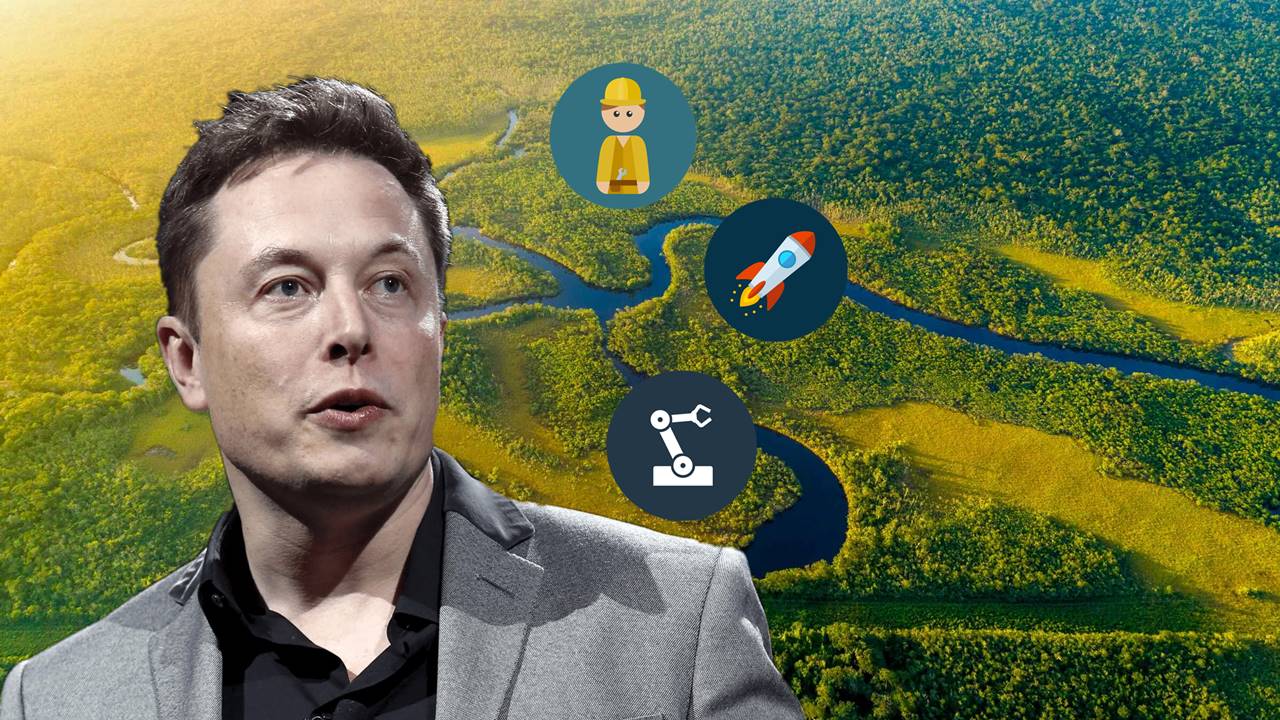
The Amazon Rainforest Is One of Brazil’s Greatest Riches and Has Plenty of Raw Materials for Various Commercial Segments, Which Sparks Great Interest
Gold, Niobium, Silver, and Freshwater are just some of the resources that the Amazon rainforest can offer, making many businesspeople’s eyes light up. The commercial exploration of the Amazon has sparked many debates over the past few years due to the resources that could be extracted and the impacts this could bring to Brazil and the World. Elon Musk’s visit to Brazil, this Friday (20), to announce the implementation of Starlink in the North region raised many questions.
A poll on the topic was launched today (22), lasting 7 days on CPG’s Twitter, and you can check and vote as described below:
Elon Musk’s visit to Brazil to launch his satellite internet services via Starlink has raised discussions about investments in the Amazon. Are you in favor of or against the economic exploration of the Amazon?
➡Article on the topic https://t.co/VBKPmTNRAcARTICLE CONTINUES BELOWSee also
Lula responds directly to Trump and says that Pix is from Brazil and will not change under pressure from anyone, after a report from the United States pointed out the Brazilian payment system as an American trade barrier.

Amazon has just announced a new fee on all deliveries, and your online purchases will become more expensive starting April 17, including for those buying from the United States here in Brazil.

He sold his share for R$ 4 thousand, saw the company become a giant worth R$ 19 trillion, and missed the opportunity of a lifetime.

Elon Musk’s Starship megafrocket puts $8 billion at risk, raises alarms in the market, and could affect technology, mining, and space internet startups in the coming years.

— Click Petróleo e Gás (@clickpetroleoeg) May 22, 2022
Some studies have shown that the Amazon region has many mineral reserves of iron, manganese, aluminum, copper, zinc, nickel, chromium, titanium, phosphate, gold, silver, platinum, palladium, rhodium, tin, tungsten, niobium, tantalum, zirconium, uranium, and diamonds. Additionally, the region is known to have one of the largest freshwater reservoirs in the world and a biodiversity with species that only exist there.

Data from the Brazilian Institute of Geography and Statistics – IBGE – indicate a biome with over 4 million square kilometers, inhabited by over 30 thousand plant species and more than 2,500 tree species. The Amazon basin itself covers about 6 million square kilometers, accumulating 1,100 tributaries and having 175 million liters of water per second flowing into the Atlantic Ocean from the Amazon River.
The Ministry of the Environment’s Website (2022) Also States That:
Estimates place the region as the largest reserve of tropical timber in the world. Its natural resources – which, in addition to timber, include vast stocks of rubber, nuts, fish, and minerals, for example – represent a rich source of natural wealth. The region also holds significant cultural wealth, including traditional knowledge about the uses and ways of exploring these natural resources without depleting them or destroying their natural habitat.
BY MMA
All this wealth sparks interest from major companies in exploring this environment, which is the cause of much discussion. The extraction of minerals, for instance, could bring some irreversible environmental impacts, according to experts and researchers.
Understand a Bit More About the Economic Interests Related to the Amazon and the Environmental Impacts of Exploration with the Debate Among Experts in the Video Below


Major International and National Companies Injected Money for Resource Extraction or to Promote Protection Actions
The Amazon has moved billions of dollars regarding negotiations involving exploration or greater protection against deforestation. Major powers like China and the United States of America are already the most interested in what the region can offer. Some European countries are also moving to invest in the Amazon.
According to data from a report published in February 2022 by the Articulation of Indigenous Peoples of Brazil (Apib) in partnership with the NGO Amazon Watch and Project Amazon Minada, various American and Brazilian industries together injected over US$ 54.1 billion into the mineral exploration of the region. Among this group of institutions, names like Vale, Capital Group, Vanguard, Belo Sun, Rio Tinto, BlackRock, and Vanguard stand out.
China started investing in the Amazon in 2001, when its company Baosteel demanded US$ 650 million for Vale to operate in mining. Currently, China is the country that concentrates the most hydropower assets in the region, according to data from The Dialogue team, in Washington. Brazilian trade data also indicates that in 2021, 37% of the total beef and 27% of the total soy exported to China originated from the Legal Amazon.
On the other hand, other companies such as startups began, a few years ago, very interesting work in the region like BrCarbon, Floresta S/A, Inocas, Mahta, Soul Brasil, and Vivalá. They aim to develop reforestation actions, encourage sustainable tourism, and focus on carbon credits, providing a counterpoint to economic exploration.
Experts State That There Are Pros and Cons to Amazonian Commercial Exploration and That Sustainable Management Should Prevail
The commercial exploration of the Amazon has various points to be weighed. On one side, we have a strong environmentalist front that advocates for the preservation of natural resources and national wealth. On the other, we have a powerful ruralist bench that advocates for regional exploration for development.
However, researchers are cautious about the pros and cons. In a debate promoted by FAPESP Agency (in the video above), Paulo Moutinho, co-founder of the Amazon Environmental Research Institute (Ipam), stated that a review of the economic development model for the Amazon is necessary to bring benefits to the local population and reduce deforestation.
At the same event, Ricardo Abramovay, a professor at the University of São Paulo’s Institute of Energy and Environment, mentioned that a good alternative would be the creation of the “Silicon Valley of Biodiversity,” which would allow sustainable economic exploration of forest resources.
Above all, researcher Danielle Gomes Ferreira highlights in her course on Reforestation that sustainable management has various advantages, such as controlling erosion, maintaining rainfall patterns, protecting watersheds, and regulating temperature. Thus, every 30 or 60 years, conventional wood extraction could occur without significantly harming the environment.
Therefore, the commercial exploration of the Amazon has its positive side, as it can generate jobs in the region, improve economic development, and provide Brazil with greater prominence. On the other hand, the lack of sustainable perspective could contribute to rampant exploitation that encourages mass deforestation and resource extraction scarcity. Thus, the best option is to explore with sustainable management.
And After All, What Did Elon Musk Come to Do in Brazil?
According to Elon Musk’s own statements on his social media, the goal of Starlink is to provide internet to 19,000 rural schools in the northern region of Brazil, as well as to conduct ongoing environmental monitoring of the Amazon. Thus, what is sought with Elon Musk’s internet is the use of technology in favor of protecting the forest against fires and illegal deforestation.
This interest in protecting the Amazon is grounded, as the region has the so-called “flying rivers,” which are constant water condensates that maintain the local and global ecosystem. Besides being important for the planet’s climate, sustainable exploration is what can prevent resource scarcity in the future, which would be detrimental to commercial exploration.
Thus, the implementation of coverage by Elon Musk’s Starlink in the region contributes to its economic development and makes the data on exploration in the Amazon even more transparent. The investment aligns with the North Connected program, created by the Federal Government, which aims to expand internet access in the region.



Seja o primeiro a reagir!