





 Portuguese
  English
  Spanish
  3 min of reading
  0 comments


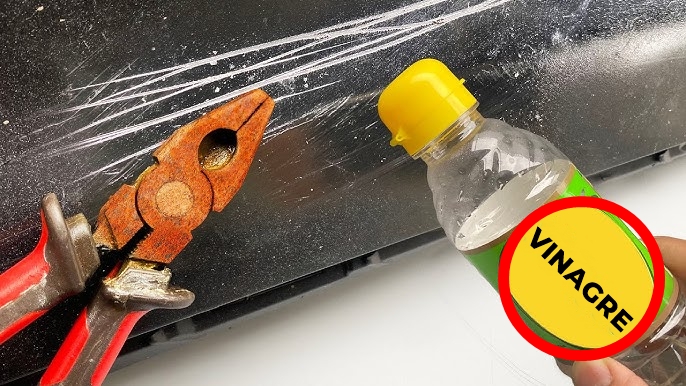
Vinegar Can Be a Simple and Cheap Solution for Removing Rust from Household Tools, but It Is Important to Understand How and When to Use It Correctly.
Rust is a common problem in tools and metal objects. Over time, exposure to moisture and air causes oxidation, damaging the functionality and appearance of the parts.
Fortunately, there are homemade, economical, and sustainable solutions to remove rust without resorting to aggressive chemicals. These techniques are effective, easy to apply, and allow you to restore your tools with little effort.
Using White Vinegar
White vinegar is a versatile cleaning product and can also be used to dissolve rust. This happens because of the acetic acid present in the vinegar, which reacts with iron oxide. The process is simple and can be done with few materials.
-
The Himalayas continue to grow to this day, with tectonic plates advancing 5 cm per year, mountains rising up to 10 mm annually, and the 2015 earthquake that killed 9,000 people may have increased the risk of an even larger seismic mega-event.

-
At an altitude of 400 km by astronauts from the International Space Station, Paris transforms at night into a golden mesh so precise that it reveals the outline of the Seine River, avenues, and entire neighborhoods like a luminous map drawn over the Earth.

-
iPhone 17 reaches historic low price with 256 GB, 120 Hz display, and drops to R$ 5,703 on Shopee, featuring A19 chip, dual 48 MP cameras, battery life of up to 30 hours, and advanced AI features.

-
Trip to Mars getting closer: Pulsar Fusion, from the UK, advances with plasma ignition in fusion engine and could drastically reduce space travel time, making crewed missions faster, safer, and economically viable.


- Place the rusty object in a glass or sturdy plastic container.
- Pour white vinegar until it covers the entire surface.
- Let the item soak for 24 to 48 hours to give the acid enough time to act.
- Scrub with a steel wool or metal bristle brush to remove the rust residue.
This method is effective and safe for small tools, such as screwdrivers and pliers. Additionally, it can be reapplied as many times as needed until the rust completely disappears.
Mixture of Apple Cider Vinegar and Salt
If the rust is more intense, adding salt to the vinegar enhances the effect. The salt acts as a catalyst in the chemical reaction, speeding up the removal of oxidation and making the process more efficient.
- Fill a container with apple cider vinegar or another edible vinegar.
- Add two tablespoons of salt for every 250 ml of vinegar and mix well until completely dissolved.
- Place the tool in the solution and let it act for at least 48 hours.
- Scrub with a steel wool or a stiff brush to remove rust residues.
This combination creates a mildly acidic solution that dissolves rust more quickly without damaging the metal. For cases of severe oxidation, the process can be repeated until the desired result is achieved.
Rinsing and Protection Against New Oxidation of Tools
Regardless of the method chosen, it is essential to perform an adequate rinsing after cleaning. Residues of vinegar or salt can cause corrosion if not completely removed.
- Wash the tools with warm water and detergent to eliminate any traces of the solution used.
- Dry immediately with a cloth or paper towel to prevent the formation of new rust.
- To prevent future rust, apply a layer of mineral oil or protective wax, creating a barrier against moisture.
Other Natural Methods of Rust Removal
In addition to vinegar and salt, other natural products also help in rust removal:
- Baking Soda: Mix baking soda with water to make a paste and apply it to the rust. Scrub after 30 minutes and rinse well.
- Lemon Juice and Salt: The citric acid present in lemon also dissolves rust. Mix with salt, apply to the rusty piece, and let it act for a few hours before scrubbing.
- Potato and Detergent: Cut a potato in half, add detergent to the cut surface, and scrub directly on the rust. The oxalic acid present in potato helps break down oxidation.
Tips for Best Results
- Correct Timing: Ideally, leave the objects in vinegar for 24 to 48 hours, but no more than 72 hours to avoid damaging the metal.
- Well-Ventilated Area: The reaction of vinegar with rust may release small gases, so prefer airy locations to perform the procedure.
- Regular Maintenance: To prevent new oxidations, keep the tools in a dry place away from moisture, preferably inside closed boxes or drawers.
- Lubrication: In addition to mineral oil, light greases and anti-corrosive products can be used to extend the lifespan of tools.
These methods are accessible, sustainable, and effective. In addition to restoring your tools, you contribute to reducing the use of aggressive chemicals harmful to the environment. With these simple tips, your tools will always be protected and ready for use. Try these solutions and keep your utensils in good condition.










-

Uma pessoa reagiu a isso.