





 Portuguese
  English
  Spanish
  4 min of reading
  0 comments


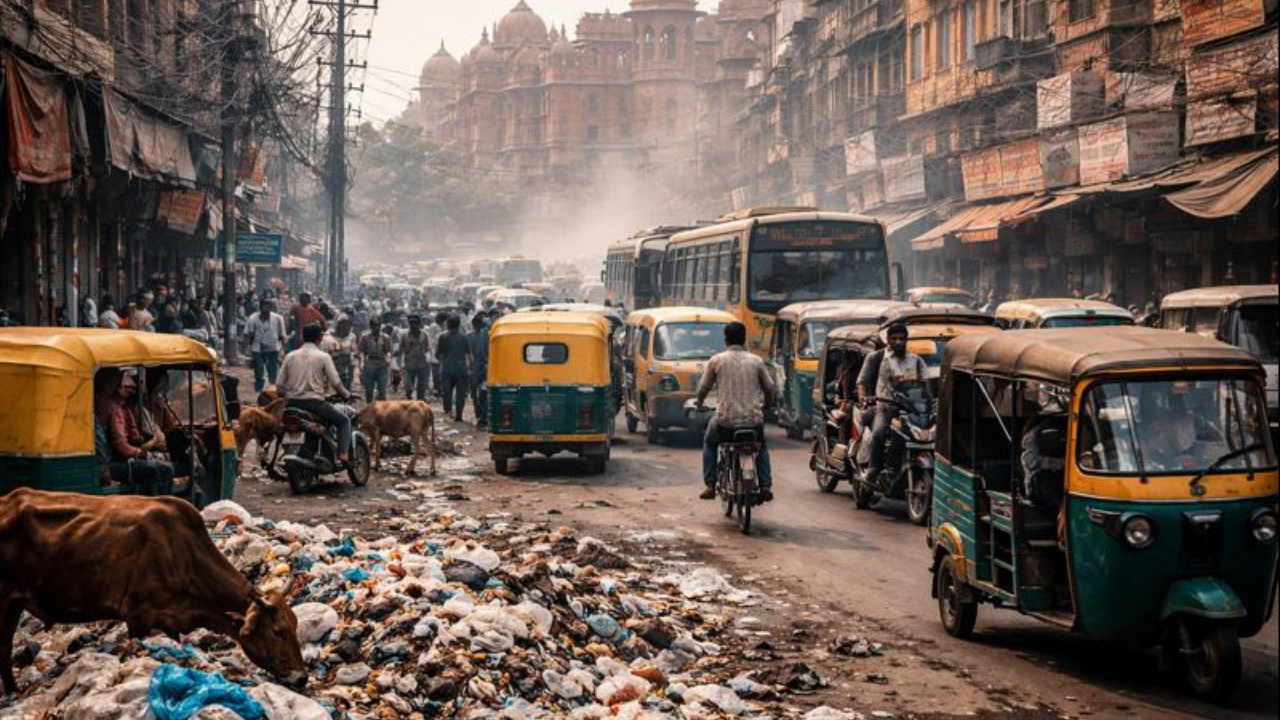
Even With Economic Growth, The Urban Crisis In India Reveals Uninhabitable Indian Cities And Failures In Urban Governance.
The urban crisis in India is intensifying as major urban centers are becoming increasingly degraded, even amid India’s rapid economic growth.
The problem affects millions of residents in cities such as Jaipur, Mumbai, Bangalore, and Delhi, where pollution, chaotic traffic, piled-up garbage, and sanitation failures expose severe limits of urban governance in India.
The current scenario raises questions about how billions in investments in infrastructure and urbanization have not translated into better quality of life.
-
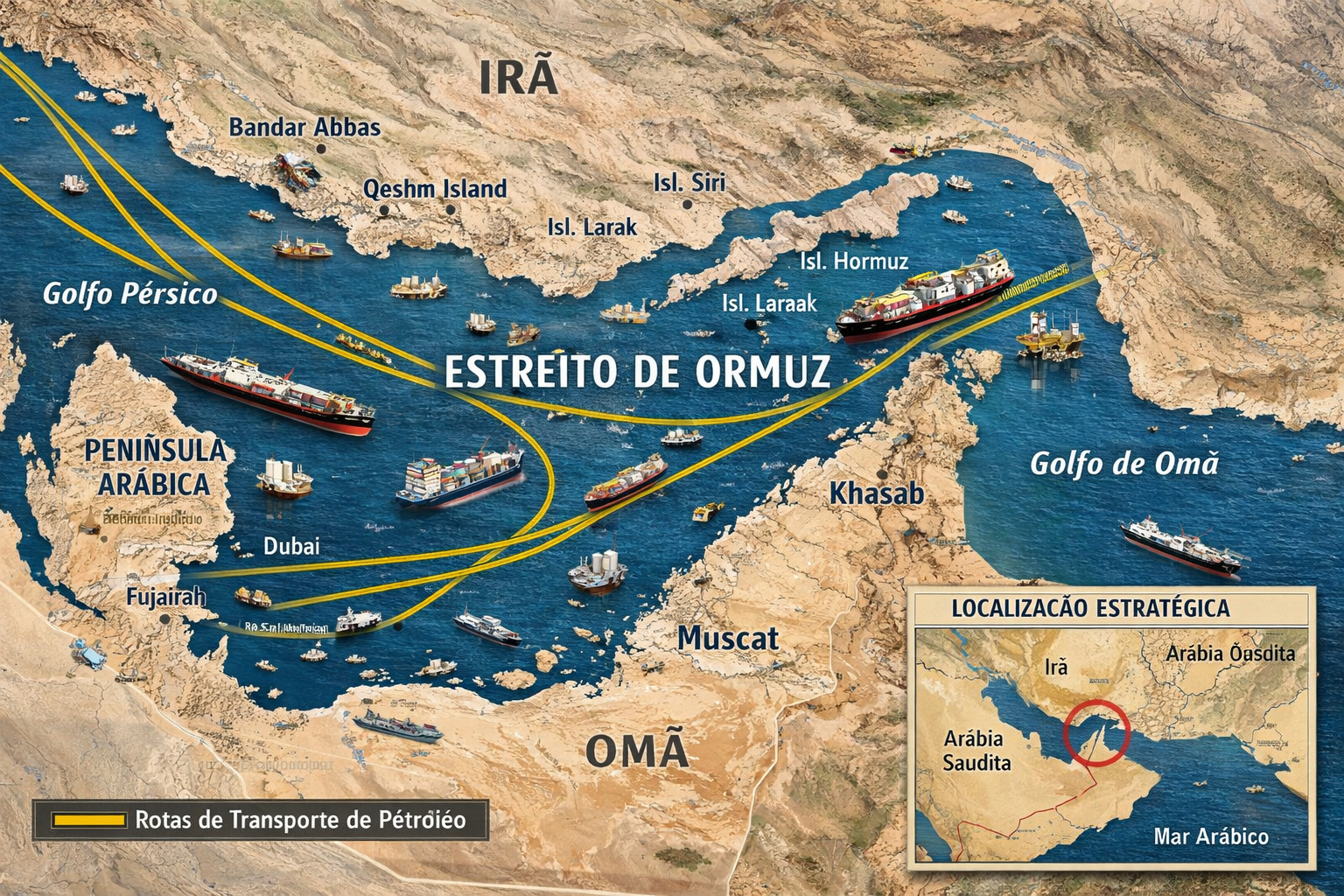
Global summit with over 40 countries pressures Iran for a blockade in the Strait of Hormuz and warns of direct impact on oil, food, and the global economy.
-
Russia has broken the U.S. maritime blockade to send oil to Cuba and is now loading a second ship while Trump says that “Cuba is next” in a possible military action against the island.

-
Spain challenges the USA and closes its airspace for operations against Iran, raising global tension and provoking the threat of a trade rupture.

-
While no other country manufactures tanks in Latin America, Argentina activates the TAM 2C-A2 and raises a curiosity about the technological lag in the region.


Uninhabitable Indian Cities Amid Tourism And History
In Jaipur, the capital of Rajasthan, the contradiction is glaring.
Historic palaces and majestic forts coexist with mechanic shops, accumulated waste, and red stains on the ground, a result of the local habit of chewing tobacco.
“Want to experience the royal charm of Jaipur? Don’t come here, just buy a postcard,” joked a taxi driver during a recent visit to the so-called “Pink City.”
Moreover, the comment reflects a widespread sentiment in various uninhabitable Indian cities, where historical heritage seems increasingly ignored amid urban deterioration.
Modern Infrastructure Does Not Prevent Deterioration Of Quality Of Life
In recent years, the government of Prime Minister Narendra Modi prioritized state investments in large works.
The country has built modern airports, multi-lane highways, and shiny metro systems.
Nevertheless, these advances in infrastructure and urbanization have not been enough to reverse the everyday decay of cities.
International quality of life indices continue to rank major Indian centers in the lowest positions.
Protests Reveal Limits Of India’s Economic Growth
Urban dissatisfaction has ceased to be silent.
Thus, in Bangalore, known as India’s “Silicon Valley,” protests brought together ordinary citizens and billionaire businessmen tired of the traffic jams and mountains of garbage.
In Mumbai, the financial capital, residents organized rare demonstrations against potholes in the streets and clogged sewage networks, which discharge waste during the monsoon season.
In Delhi, air pollution reached critical levels.
Moreover, in winter, toxic smog left children and the elderly gasping for air, leading doctors to recommend temporary evacuation from the city. Even Lionel Messi’s visit was marked by protests against the poor air quality.
Urban Governance In India Is The Main Bottleneck
For experts, the root of the crisis is not only economic but institutional.
“The root cause is historical—our cities lack a reliable governance model,” said Vinayak Chatterjee, a veteran infrastructure expert, to the BBC.
According to him, the Indian Constitution did not envision the explosive growth of cities nor create proper urban management structures.
Decentralization Failed And Weakened Local Governments
The 74th constitutional amendment, passed in 1992, aimed to decentralize power and strengthen local governments. In practice, however, many of its provisions were never implemented.
“Deep-rooted interests prevent bureaucracy and higher levels of government from decentralizing power and strengthening local governments,” Chatterjee states.
The result is a system where mayors and municipal councils wield little real power.
Comparison With China Evidences Structural Failures
Unlike India, China adopted a model where mayors exercise broad control over urban planning, infrastructure, and investment approval.
“There are strong national guidelines in terms of direction and physical goals that cities are tasked with achieving,” writes Ramanath Jha from the Observer Research Foundation.
Additionally, Chinese mayors have clear political incentives. “How many names of mayors of major Indian cities do we even know?” questions Chatterjee.
Weak Municipalities And Lack Of Autonomy Aggravate The Crisis
Ankur Bisen, author of the book Wasted, describes Indian local governments as the weakest organs of the state.
“They are completely drained and have limited powers to raise revenue, appoint people, and allocate resources,” he claims.
Thus, according to him, state government heads end up acting as “supermayors,” centralizing decisions.
Lack Of Data Compromises Urban Policies
Moreover, another obstacle is the absence of updated information. The last census was conducted over 15 years ago and indicated 30% of the population in urban areas.
Estimates suggest that today this number may approach 50%.
“But how can you begin to solve a problem if you don’t have data on the dimension and nature of urbanization?” questions Bisen.
Urban Crisis In India May Generate Political Pressure
Experts believe that the absence of a national debate on cities weakens grassroots democracy.
“It’s strange that there is no outcry about our cities, as there was against corruption a few years ago,” said Chatterjee.
Moreover, Bisen compares the current moment to the “Great Stink” of London in 1858, when the sanitation crisis forced profound reforms.
“It is generally at such moments, when the situation reaches a boiling point, that problems gain political relevance.”









Seja o primeiro a reagir!