





 Portuguese
  English
  Spanish
  3 min of reading


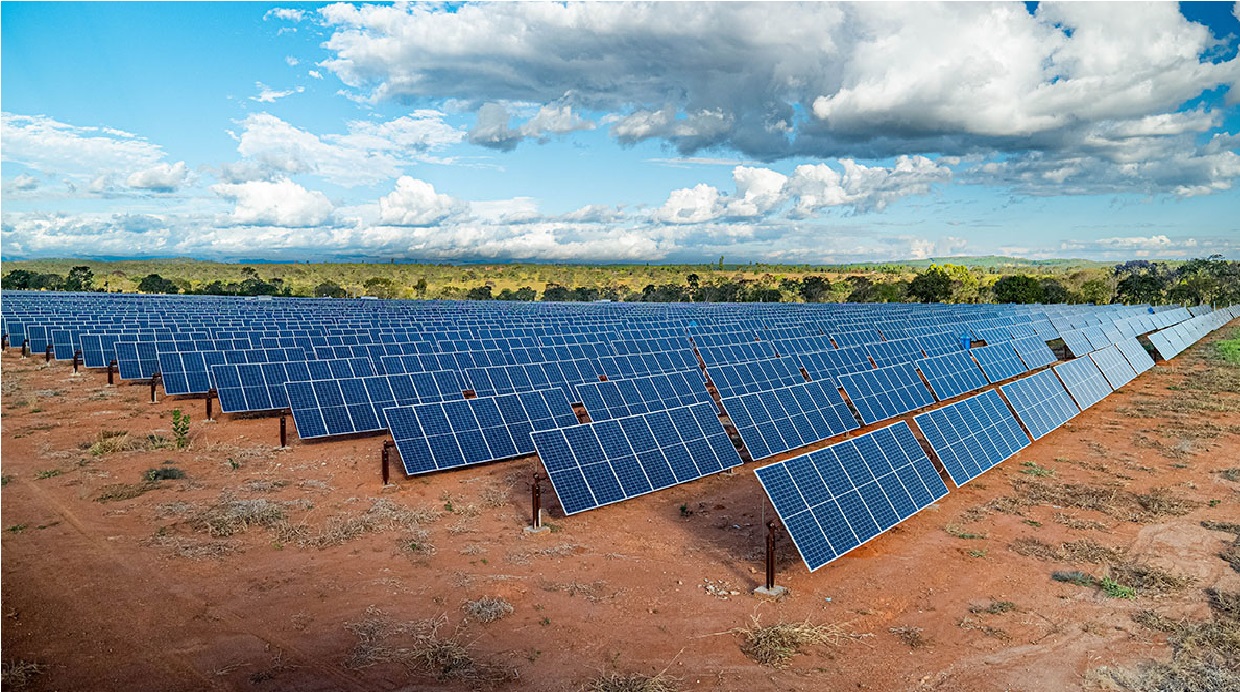
The “New” Way of Generation Aims to Obtain Energy Through Solar Panels Installed in Areas Near the Equator
The search for renewable energy sources has led to innovative research, and Australian scientists are exploring the possibility of producing energy on a large scale at sea through solar panels. These researchers have discovered that areas near the Equator, such as Indonesia and the western region of Africa, are ideal for the installation of offshore solar power parks, due to the calm waters and low occurrence of storms, according to the website CanalTech.
Andrew Blakers and David Fernando Silalahi, from the Australian National University, explain in an article for the platform The Conversation that most ideal locations for large-scale solar energy production are near the Equator. Specifically, they point to regions around Indonesia and West Africa, near Nigeria. These areas offer climatic conditions that favor the stability of floating solar panels at sea, contributing to a consistent production of clean energy.
Overcoming Maritime Challenges
In large parts of the world’s maritime regions, waves over 10 meters and strong winds above 20 meters per second are common, which poses a challenge for the installation and operation of solar panels at sea. To get around this issue, some companies are developing safety systems to protect the panels from storms.
-
Brazil surprises the world by cloning a pig with human genes in an attempt to save humans with transplants, a technique with only 1% to 5% success rate, editing 3 genes, inserting 7 human genes, and impacting 48,000 patients on the waiting list.
-
With a height of 8.7 meters, the giant termite mound found in Somalia has entered history as the largest ever recorded and reveals how insects just a few millimeters tall build three-story structures.

-
Measuring about 50 cm in wingspan, the merlin, the smallest bird of prey in the world, is at risk of extinction and could disappear by 2050, according to research published in Nature.
-
With 96 rooms, 37 bathrooms, and five kitchens, the mansion of the heir to Pernambucanas is worth R$ 50 million, has a pool, two terraces, and has become the target of a legal dispute after the owner fell into a coma in 2016.

However, the Australian researchers are focusing on identifying naturally calmer areas in the ocean, where the need for robust defense systems is minimized. They argue that in regions where calm prevails, wind energy becomes unviable, as the lack of winds compromises the operation of the turbines. Therefore, the most viable alternative is the implementation of solar panels.
Choosing Suitable Locations
To determine the best sites for the installation of solar panel platforms, the researchers analyzed data from the last 40 years on wave and wind intensity. Regions with waves over 6 meters and winds exceeding 15 meters per second were discarded. Based on these criteria, the most promising areas for large-scale solar energy production at sea were identified in Indonesia (Asia) and the Gulf of Guinea, near Nigeria (Africa). These equatorial regions are rarely affected by tropical storms.
In addition to favorable maritime conditions, these areas also show low potential for wind energy generation, high population density, expectations of significant growth, and marine ecosystems that would not be harmed by the installation of solar farms. Scientists believe that just the solar panels in Indonesia could generate about 35 thousand terawatts-hour (TWh) of solar energy per year, an amount comparable to the current global electricity production. In this scenario, offshore solar energy near the Equator is seen as a virtually “unlimited” source of clean and sustainable energy.







Seja o primeiro a reagir!