





 Portuguese
  English
  Spanish
  4 min of reading
  3 comments


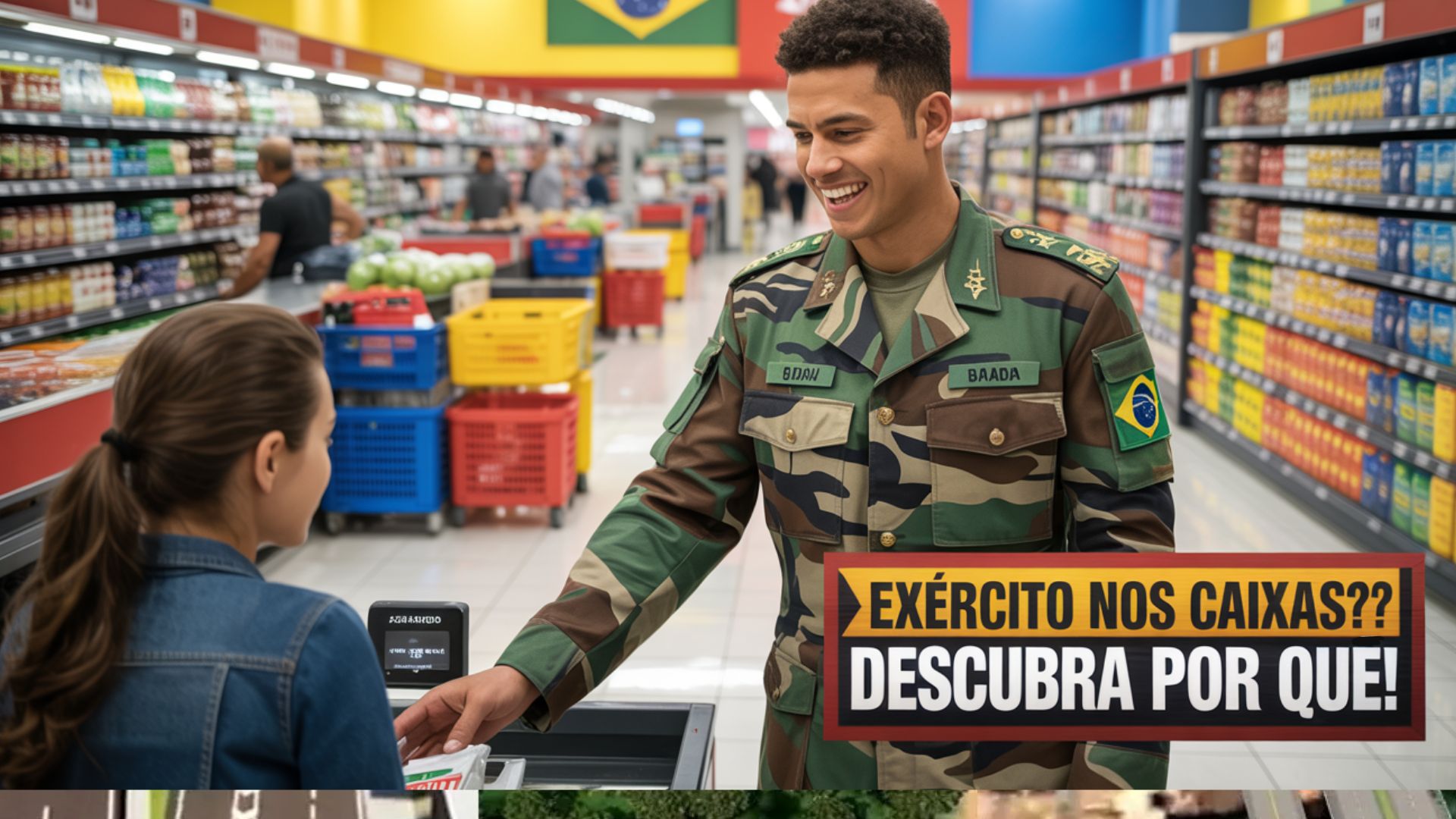


Supermarket Chains Across Brazil Face Unprecedented Difficulty Filling Positions and Turn to Hiring Reserve Army Personnel, Highlighting Changes in the Profile of Workers in the Sector.
The labor shortage is already impacting traditional sectors of the job market and, more recently, has begun to affect supermarkets in various regions of Brazil.
With growing difficulties in filling operational and administrative positions, major retail chains have turned to unprecedented solutions, such as hiring reserve personnel from the Brazilian Army to meet the demand for employees.
The movement gained strength in recent months, highlighting a new scenario in labor relations within the supermarket sector.
-
The institute that trained the greatest aerospace engineers in Brazil has just opened its first campus outside São Paulo after 75 years: ITA Ceará will have R$ 445 million, new courses in energy and systems, and classes are expected to start in 2027.
-
Luciano Hang, owner of Havan, goes to Juiz de Fora after the tragedy in February, brings R$ 1 million, hands out R$ 2,000 cards, and donates up to R$ 15,000 to victims in the region.

-
The Brazilian passport allows legal residence in dozens of countries without the need for a prior visa, and most Brazilians are unaware that they can apply for residency directly upon arriving in nations in South America, Africa, and even Europe.

-
Petrobras sends a message to Brazilian truck drivers after fuel collapse and reveals plan to have 100% domestic diesel.

Lack of Professionals Challenges Supermarket Chains
According to data released by the Brazilian Supermarket Association (Abras) in June 2025, approximately 30% of associated establishments reported obstacles in hiring professionals for essential positions, such as cashiers, stock clerks, and cleaning assistants.
After the Covid-19 pandemic, many workers migrated to informal activities or sought opportunities in areas such as delivery apps, technology, and e-commerce, reducing interest in the positions offered by supermarkets.
Faced with this challenge, supermarket chain managers adopted the strategy of partnering with the Army, which began offering reintegration possibilities back into the job market for reserve military personnel and retirees.
Reserve Military Occupy Positions in Supermarkets
According to information from the employers themselves, these professionals have proven capable of performing operational and administrative functions, standing out mainly for their discipline, punctuality, and commitment.
A manager from one of the largest retail chains in the country reports that “former military personnel bring an important background of responsibility, which directly contributes to the operation of stores and the quality of customer service”.
This alternative has gained prominence in states such as São Paulo, Minas Gerais, Paraná, and Rio Grande do Sul, regions where employee turnover rates have historically been high.
According to Abras, hiring reserve military personnel should not be considered a permanent solution but rather an emergency measure in light of the shortage of qualified and available labor.
The association’s president, João Galassi, stated that “it is essential to value the experience of these professionals, but the sector also needs to invest in training programs and improving working conditions to attract new employees and maintain business sustainability”.
Impact of Labor Shortage on the Sector
Human resources specialists consulted by the report indicate that the strategy reveals both a structural problem in the labor market and a potential trend for other areas, such as security, logistics, and even administrative sectors of hospitals and schools.
According to career consultant Thaís Targa, “the labor shortage in retail is directly related to low wages, long hours, and few opportunities for growth. The arrival of experienced professionals, such as retired military personnel, meets part of the need but does not solve the central problem”.
The phenomenon of labor shortages in supermarkets also highlights the need for public policies aimed at the qualification and valorization of workers.
According to a survey by the Brazilian Institute of Geography and Statistics (IBGE) conducted in May 2025, unemployment fell to 7.4%, the lowest level since 2014; however, the growth of informal employment and the low attractiveness of operational positions continue to be obstacles faced by retail companies.
Consequences for Consumers and Store Operations
In addition to the immediate impact on store operations, the lack of professionals directly affects customer service, resulting in longer lines, reduced operating hours, and overburdened permanent staff.
According to a survey by Abras, about 18% of medium and large supermarkets reported an increase in customer complaints regarding delays in service and lack of products on shelves, factors that could compromise customer loyalty and satisfaction.
Adaptation and Experience of Hired Military Personnel
Another issue debated by sector representatives is the adaptation of military personnel to the new work environment.
Many of them, after years of service in the Armed Forces, find in supermarkets an opportunity to return to the formal job market and secure additional income for their retirement.
The experience gained throughout their military careers, marked by strict hierarchy and disciplined routines, has been considered a differential in performance, according to reports from managers and supervisors in supermarket chains.
Paths to Value and Retain Professionals
On the other hand, entities related to workers and unions point out the need to create permanent professional training and wage improvement policies, arguing that the definitive solution to the labor shortage in supermarkets must involve investments in training, decent working conditions, and more attractive career plans.
Even though the initiative to hire reserve military personnel by the supermarket sector emerged as a quick and creative response to the lack of professionals, specialists warn that merely increasing the labor supply is not enough to address the structural demands of the sector.
The challenge, therefore, remains: to reconcile productivity, quality of service, and the valorization of workers amidst constant changes in the market.
As supermarket chains seek alternatives to maintain the full operation of their stores, the debate on the labor shortage intensifies, stimulating reflection on how Brazil can indeed build a more attractive, qualified, and fair work environment.
The question that remains is: will the solution found by supermarkets inspire other sectors to rethink their hiring strategies and the valorization of professionals?








Prezado jornalista Alisson Ficher,
Parabéns pela matéria, ela reflete fielmente a realidade humana/trabalhista do nosso varejo.
Laborei no RH de uma importante rede varejista; neste cargo por 14 anos. E tenho um parente MILITAR reformado também.
Este meu parente leu a tua materia, gostou, mas pediu, se possível, pra vc corrigir o título: não use a palavra “CONVOCADO”.
Apenas isto!
Mais uma vez, parabéns!
Quem devia está trabalhando era os jovens bolsas família, essa hora só na casa vizinha a minha há 6 jovens todos juntos com jovens e menores sem trabalho, todos em casa o dia todo, não são ****, mas todo final de semana é vhurrasco sábado e domingo. Se juntam porque mãe solteira tem direito a 2 benefícios, aprenderam com os militares do exército as filhas não casam para ficarem com as pensões de até 70 mil dos oficiais
Infelisment e o tipo de processo de seleção que tem impedido as pessoas de trabalharem nesse ramo, trabalhei no recrutamento e seleção do Pao de Açucar central central em São Paulo, 13 de maio e tinhamos em media 500 candidatos por dia, hoje as empresa fazem tudo on line, e da epoca, porem a forma de avaliação e por um robo, vejo por mim, sou cota para deficiente, excelente em gestão de lojas e não consigo sequer fazer uma entrevista.
tenho experiencia em quebras, perdas, prevenção, escalas de jornada com avaliação de picos e baixas, analise de pedidos e rotação de estoques