





 Portuguese
  English
  Spanish
  5 min of reading
  0 comments



Discover How Scotland’s Largest Offshore Wind Farm Promises to Power Millions of Homes and Accelerate the Energy Transition in the UK by 2030
Scotland has taken a decisive step towards a cleaner and more sustainable future. With the approval for the construction of the world’s largest offshore wind farm, the country solidifies its position as a global reference in energy transition.
The Berwick Bank project, located in the North Sea, symbolizes not only a technological innovation but also a direct response to the climate crisis.
Since the late 20th century, Scotland has sought alternatives to fossil fuels. Therefore, wind energy has emerged as one of the leading sustainable solutions.
-
Giant of the winds in Rio Grande do Norte: Serra do Tigre Wind Complex receives new investments and accelerates the expansion of clean energy generation to supply millions of Brazilian homes.
-
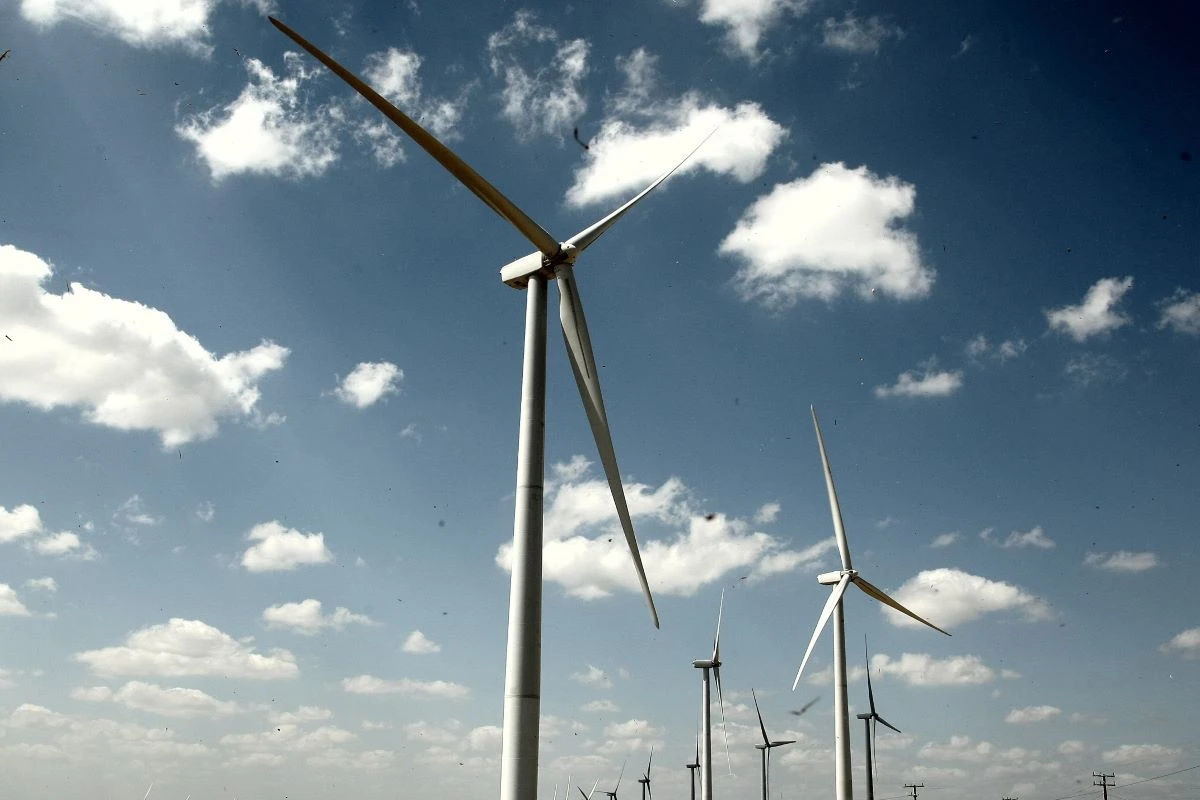
Urgent energy transition: Greenpeace advocates for massive investments and points to Brazil as a global leader in wind energy production in the coming years.
-
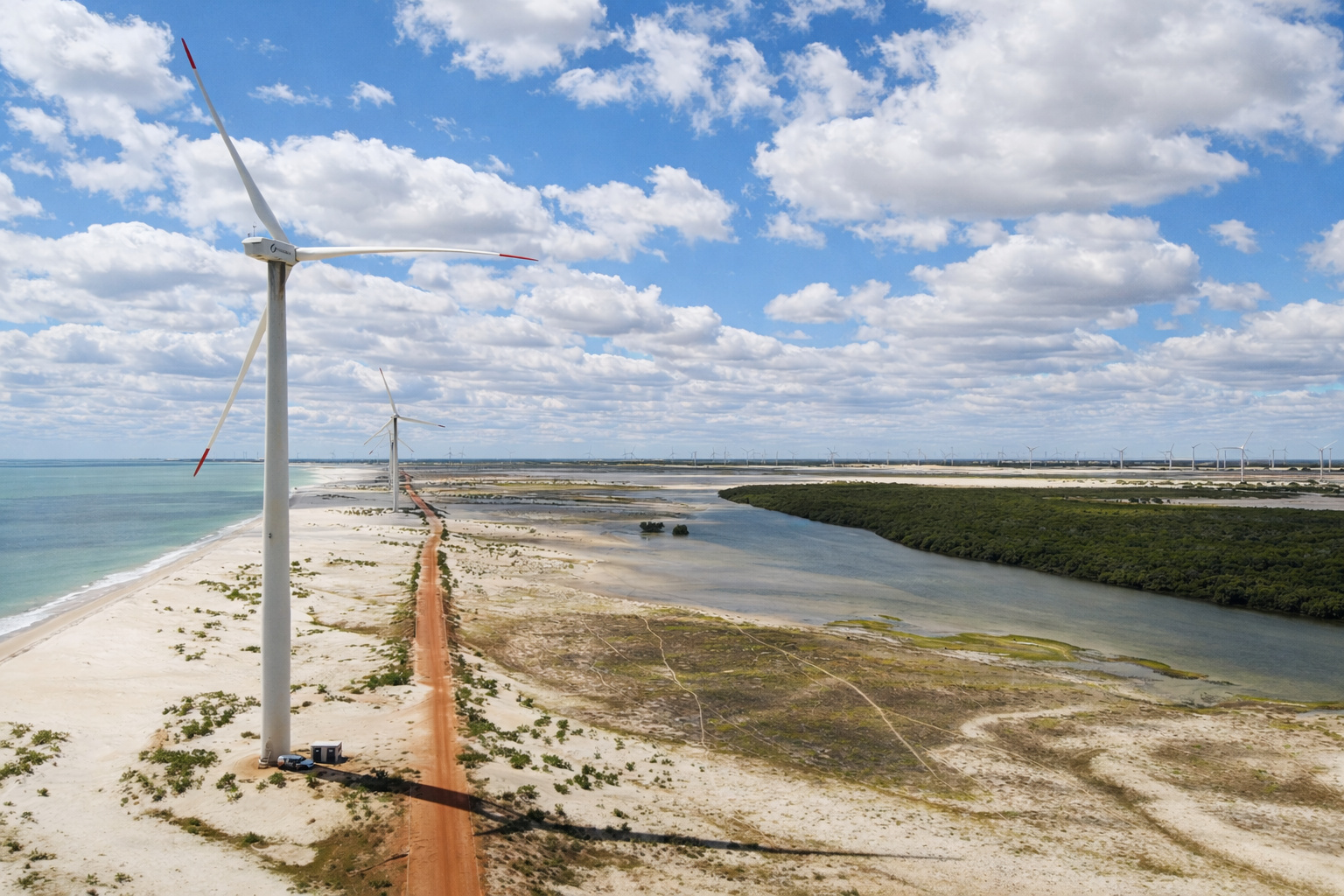
Conflict in the Sertão: Rural communities in Rio Grande do Norte report issues with wind farms and the new challenges of clean energy in the semi-arid region.
-
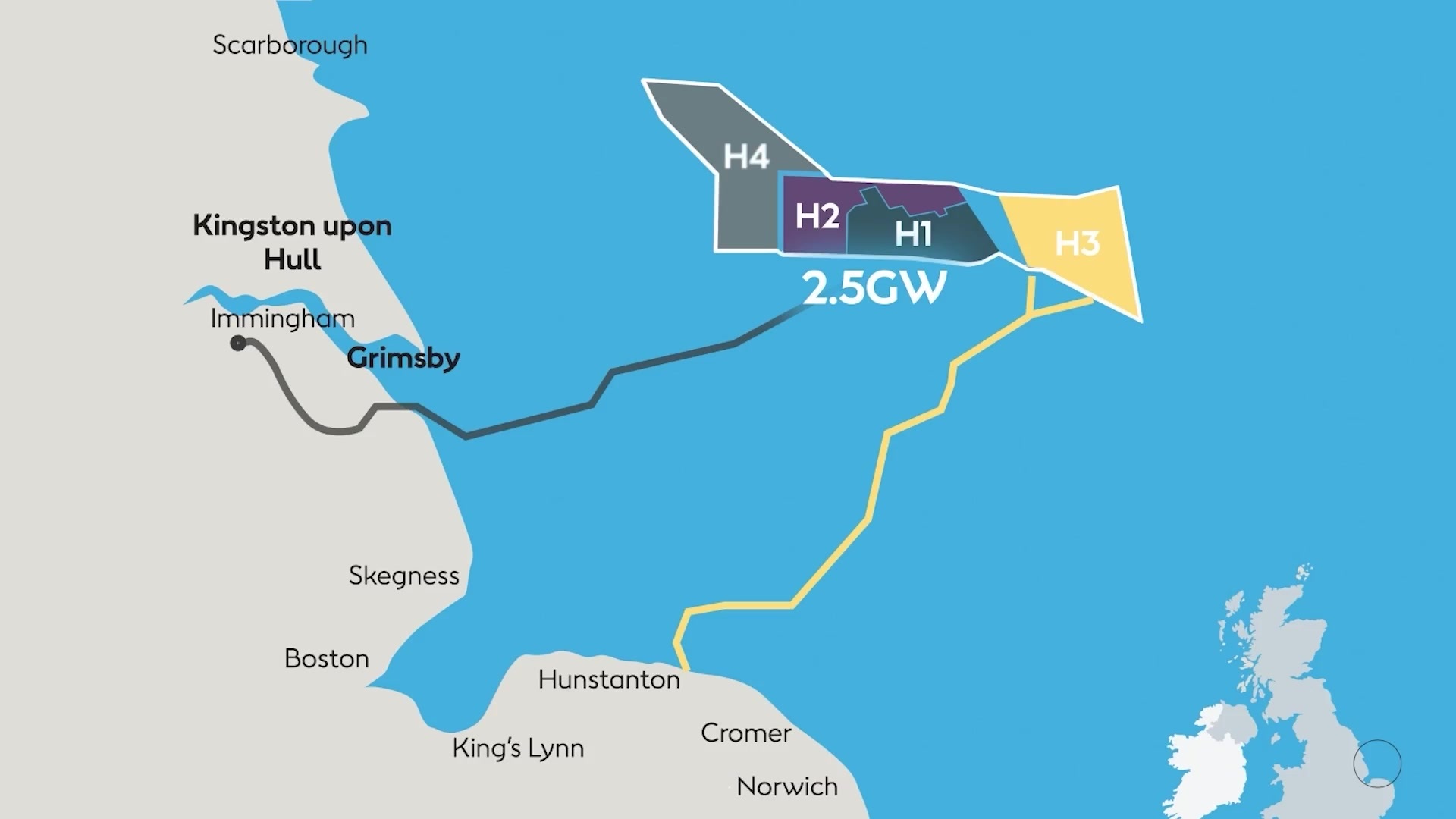
231 turbines of 260 meters at 160 km from the coast, monopiles weighing as much as nine blue whales embedded in the North Sea, and a crane ship taller than the Eiffel Tower: Hornsea 3 will be the largest offshore wind farm on the planet by 2027, and its first components have already arrived in England.
Over the years, advances in turbines and support from public policies have significantly contributed to the growth of this energy source. Consequently, the country has achieved international prominence.
Although the first projects were modest, the scenario changed over time. Indeed, technology has allowed for larger turbines capable of operating in deeper waters.
Thus, offshore wind farms are now seen as viable and strategic. Furthermore, the need to reduce emissions has made the adoption of clean sources urgent.
Even though the technical challenges were significant, political commitment has strengthened investments. After the Paris Agreement in 2015, the UK set the goal of net zero emissions by 2050.
Since then, the pursuit of renewable energy has intensified.
Moreover, the transition to renewable energy is crucial for the country’s economic security. Countries leading this transformation gain competitive advantages in the global arena. Thus, Scotland, by investing in projects like Berwick Bank, not only protects the environment but also fosters innovation and sustainable growth.
Another important point is the role of civil society and local communities in implementing these projects. The active participation of these individuals helps ensure that energy development respects social and environmental needs, strengthening public support and the legitimacy of the endeavor.
Largest Offshore Wind Farm: The Grandeur of the Berwick Bank Project
In this context, Berwick Bank emerges as a key player. As a 4.1 gigawatts (GW) facility, its estimated annual production of 11.2 terawatt-hours (TWh) will be sufficient to power 6 million homes.
This represents a supply that exceeds all domestic demand in Scotland and covers about 17% of households in the UK.
Additionally, the wind farm will feature up to 307 turbines, installed approximately 36 kilometers off the east coast of Scotland. Since this region receives strong and consistent winds, the site was chosen strategically.
Therefore, the generation performance is expected to be high.
To ensure the stability of electricity distribution, the responsible company will connect the park to two distinct points in the grid. This way, the energy supply will be more reliable.
Furthermore, this measure enhances energy security and reduces dependence on imported fossil fuels.
It is worth noting that the Berwick Bank project represents a significant investment not only in energy generation but also in the modernization of electrical infrastructure. Upgrading the grid to receive this renewable energy is essential to avoid losses and ensure future demand is met, especially with the growing electrification of the economy.
Moreover, the wind farm will contribute to long-term reductions in energy costs. Although the initial investment is substantial, energy generated from wind has low operational costs and is clean, which benefits both consumers and the environment.
According to Deputy First Minister Kate Forbes, the project demonstrates how Scotland is committed to sustainability and innovation. Therefore, it will serve as a model for future projects in the sector.
Environmental Impacts and Required Compensations
Despite the benefits, the project has also raised environmental concerns. In particular, environmentalists have expressed worry about the impact of the turbines on the seabirds in the area.
However, the government has required a environmental compensation plan to be developed by SSE PLC. This plan needs ministerial approval for the construction to proceed.
Although environmental risks exist, experts argue that the impacts can be mitigated. After all, current technologies allow for constant monitoring of ecosystems.
As a result, it is possible to adjust turbine operations responsibly.
Additionally, SSE PLC has committed to a rigorous approach throughout all phases of the project. From planning to operation, the company will implement modern environmental practices.
In this way, the aim is to balance energy development and biodiversity preservation.
It is also important to consider that environmental compensation is not limited to protecting birds. It involves broader actions, such as monitoring marine fauna, scientific research programs, and measures to preserve natural habitats. These efforts contribute to the project’s sustainable and responsible development.
Thus, the project’s success will depend on the integration of engineering, environmental science, and public regulation. And it is precisely this balance that makes Berwick Bank an international example.
International Scenario and the Contrast with Other Countries
While Scotland advances, other countries choose opposite paths. For example, during the Trump administration, the United States removed 1.41 million hectares of ocean areas previously designated for offshore wind energy.
Furthermore, the U.S. government suspended incentives for renewable sources and prioritized fossil fuels.
In light of this, the contrast with Scotland becomes evident. As one country regresses, the other boldly advances.
As a result, the UK strengthens its energy sovereignty, reduces its carbon footprint, and even stimulates its local economy.
With Berwick Bank, a positive impact on the Scottish economy is expected. This is because the project will generate billions in investments, creating jobs in engineering, construction, and maintenance.
Moreover, the wind energy supply chain will expand, bringing development to various regions of the country.
It is worth noting that the growing global demand for clean energy creates opportunities for exporting technology and services. Scotland can, therefore, establish itself as an exporter of knowledge and equipment to other countries looking to develop offshore wind energy.
Thus, by investing in clean energy, Scotland not only combats climate change but also generates sustainable economic opportunities.
Innovation, Learning, and the Future of Offshore Wind Energy
In addition to energy generation, Berwick Bank will also drive technological innovation. Throughout the project, engineers, scientists, and managers will accumulate valuable experience.
Subsequently, this knowledge can be applied to new plants, making processes faster and cheaper.
In this sense, the learning gained will facilitate the expansion of wind energy in other regions. After all, the more projects that are built, the greater the efficiency of the involved technologies.
Scotland already excels in other renewable sources, such as hydropower and tidal energy. Now, by investing in the largest offshore wind farm, the country reinforces its leadership and expands its clean production capacity.
Additionally, the continuous development of new technologies—such as more efficient turbines, energy storage, and smart grids—will make offshore wind energy even more competitive in the future.
Finally, the future of global energy depends on choices like this. With strong winds, open sea, and strategic vision, Scotland proves that it is possible to face the climate crisis intelligently and responsibly.










-

Uma pessoa reagiu a isso.