





 Portuguese
  English
  Spanish
  5 min of reading
  10 comments


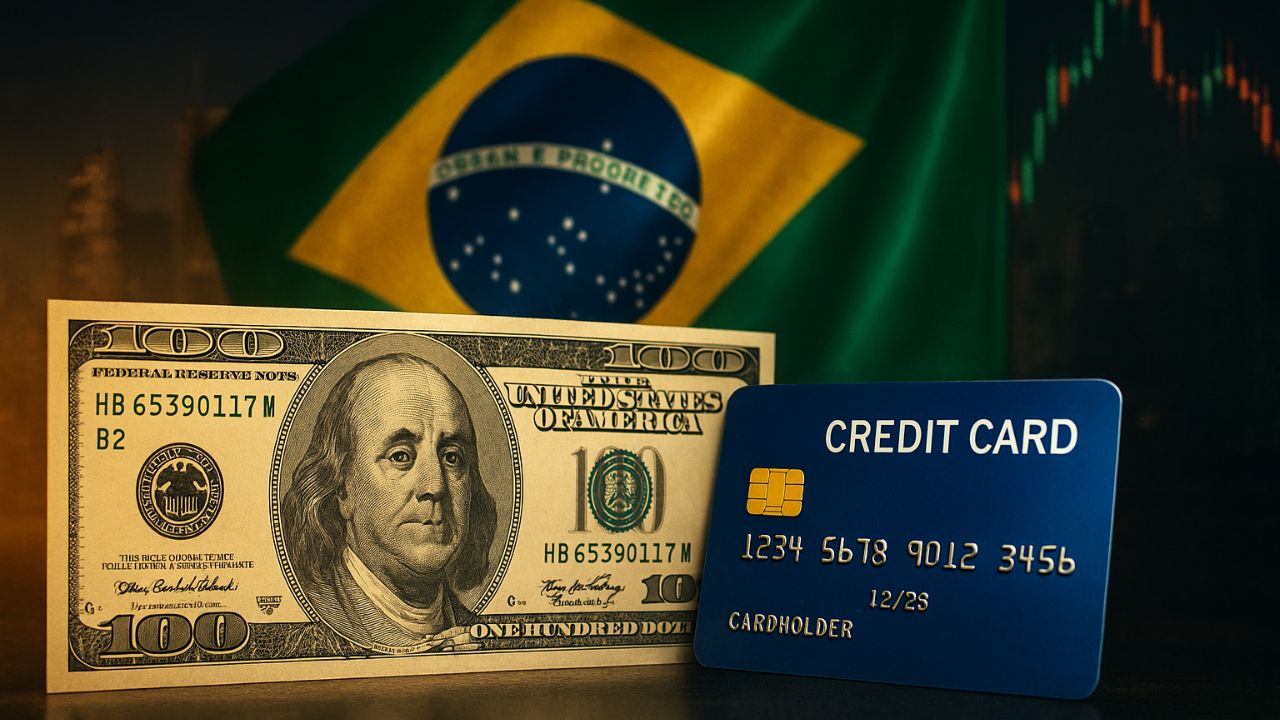


Experts Point Out That Control Over the Global Financial System and Payment Methods, Such as Credit Cards, Allows the Norm to Be Applied Extraterritorially, Even Without Support from International Law.
The Magnitsky Act, a tool of the United States government to sanction foreign individuals accused of human rights violations and corruption, operates effectively on a global level not by legal consensus, but by American Hegemony Over Global Financial Infrastructure. According to an analysis by experts published by the Consultor Jurídico, the ability to impose penalties outside its territory stems from the control that the U.S. exerts over payment systems and international transactions, making it nearly impossible for targets to circumvent the restrictions.
This discussion gained traction in Brazil after sanctions were imposed against individuals linked to Minister Alexandre de Moraes of the Supreme Court (STF). The measure, although controversial and criticized even by its creators, exposes how the structure of global economic power can override the principles of national sovereignty and International Law, generating a complex debate about jurisdiction and geopolitics.
The Original Purpose and Controversial Application
Initially created to punish those responsible for the death of Russian lawyer Sergei Magnitsky, the Magnitsky Act expanded its scope to become a global instrument of U.S. foreign policy. Its stated objective is to target individuals who commit serious human rights abuses and significant acts of corruption, freezing their assets in U.S. jurisdiction and banning them from entering the country.
-
With the arrival of Law 11.788, internships are now recognized as professional experience.

-
The Brazilian Civil Code states that a property owner has the right to cut the roots of a neighbor’s tree that invade their land, as long as it does not harm the tree itself. The owner must notify the neighbor before taking such action.

-
Engineer is sentenced to repay R$ 148 thousand after holding public positions in three municipalities in Rondônia with incompatible schedules, and the decision is upheld by the Court of Justice.

-
Chamber approves project that creates mandatory Life Insurance for police officers, firefighters, guards, and traffic agents.

However, the use of the norm does not always follow its original purpose. As reported by the Consultor Jurídico, the sanction imposed on lawyer Viviane Barci de Moraes, wife of Minister Alexandre de Moraes, was classified as a misuse of purpose by the law’s co-author, Democratic Congressman Jim McGovern. He stated that “the use of GloMag sanctions in this case contradicts the intent and purpose of the Global Magnitsky Law,” calling the punishment “shameful” and warning that the measure undermines the law’s credibility as a tool for accountability.
National Sovereignty vs. Extraterritorial Jurisdiction
The application of one country’s laws on the territory of another is one of the most sensitive issues in International Law. The general rule, known as the principle of territoriality, dictates that a nation’s laws are valid only within its borders. STF Minister Flávio Dino, in a ruling that did not explicitly mention the Magnitsky Act but addressed the issue indirectly, reinforced that “foreign judicial decisions can only be enforced in Brazil upon due recognition.” According to the minister, the attempt to impose foreign laws on acts that occurred on Brazilian soil “constitutes an offense to national sovereignty, public order, and good customs.”
Despite this, there are exceptions. UERJ International Private Law professor Carmen Tiburcio explains, according to the Consultor Jurídico, that laws can have extraterritorial effects in specific cases, such as crimes committed by Brazilians abroad. However, what is observed with the Magnitsky Act is different: it is a unilateral imposition. Peter Sester, a professor at FGV Justiça, differentiates sanctions executed on the territory of those imposing them from those executed outside, which characterize extraterritoriality stricto sensu. The latter, in principle, is prohibited by International Law, unless there is a customary norm or convention that allows it.
The Mechanism of Force: Control of the Financial System
If the Magnitsky Act lacks clear backing in International Law for global application, why does it work in practice? The answer, according to Gustavo Ferraz de Campos Monaco, a professor at USP consulted by the Consultor Jurídico, lies in the “mechanisms of effectiveness of decisions.” The issue is not legal, but pragmatic: almost all global financial transactions, including credit card payments and international bank transfers (via the SWIFT system), pass, in some way, through the American financial system.
It is this control that provides the U.S. with coercive instruments over financial institutions worldwide. By sanctioning an individual, the U.S. government effectively excludes them from the global financial system. Banks and companies in other countries, to avoid losing access to the vital American market, comply with the requirements, regardless of what local legislation states. In practice, economic and financial hegemony becomes the very source of the legality of the sanction, forcing cooperation from global actors.
A Geopolitical Weapon? The Parallel with the FCPA
The use of legislation with extraterritorial reach as a tool of foreign policy is not exclusive to the Magnitsky Act. Another notable example is the Foreign Corrupt Practices Act (FCPA), a 1977 law aimed at punishing companies for corruption abroad. Over time, the FCPA has also become an instrument to expand the jurisdiction of the United States, in what experts call “economic war and subterranean geopolitical warfare.”
As reported by the Consultor Jurídico, lawyers such as Cristiano Zanin Martins (now a minister of the STF) and Valeska T. Zanin Martins pointed out that Brazil accounted for about 30% of the amounts collected by the U.S. Treasury based on the FCPA. Brazilian companies like Petrobras and Odebrecht faced billion-dollar fines in investigations that involved the collaboration of Brazilian agents, such as the prosecutors of “Operation Car Wash.” For jurist Lenio Streck, cases like these show that the problem is not legal, but geopolitical. Countries with the power to respond do not have their sovereignty threatened, which would not be the case for Brazil.
Economic Power As a Source of Law
The effectiveness of the Magnitsky Act illustrates a reality of the contemporary global landscape: economic power and control over critical infrastructures, such as the financial system, can create a form of jurisdiction that transcends borders and international agreements. Although jurists point to the violation of principles of sovereignty, the practical capacity to impose sanctions gives the United States an immense geopolitical pressure tool, whose limits appear to be defined more by its own will than by global consensus.
The discussion, therefore, goes beyond legality and enters the realm of power relations. The application of such laws raises fundamental questions about equity and sovereignty in the 21st century.
What is your opinion on the topic? Do you believe that laws such as the Magnitsky Act are legitimate tools to combat corruption and human rights violations, or do they pose a risk to the sovereignty of countries like Brazil? Share your perspective in the comments; we want to understand how you see this issue.








Se essa for (e parece que é) a única forma de parar e punir um ditador, um tirano; sou totalmente a favor que se aplique a Magnitsky.
O culpado disso tudo é o ministro Edson fachin se não tivesse soltado um **** condenado em três instâncias o Brasil não estaria vivendo isso para cima deles
Como temos uma justiça politica nesse STF, principalmente em perseguição aos partidos de Direita, prendendo pessoas por golpe de estado, sem armas e sem destituição do presidente, não é golpe de estado! Isso é Violação de Direitos Humanos, para proteger um **** que lhes rendeu uma boa fortuna! Estou a favor de serem sancionados pela lei Magnitsky, os mais Ditadores e Corruptos!