





 Portuguese
  English
  Spanish
  10 min of reading
  2 comments


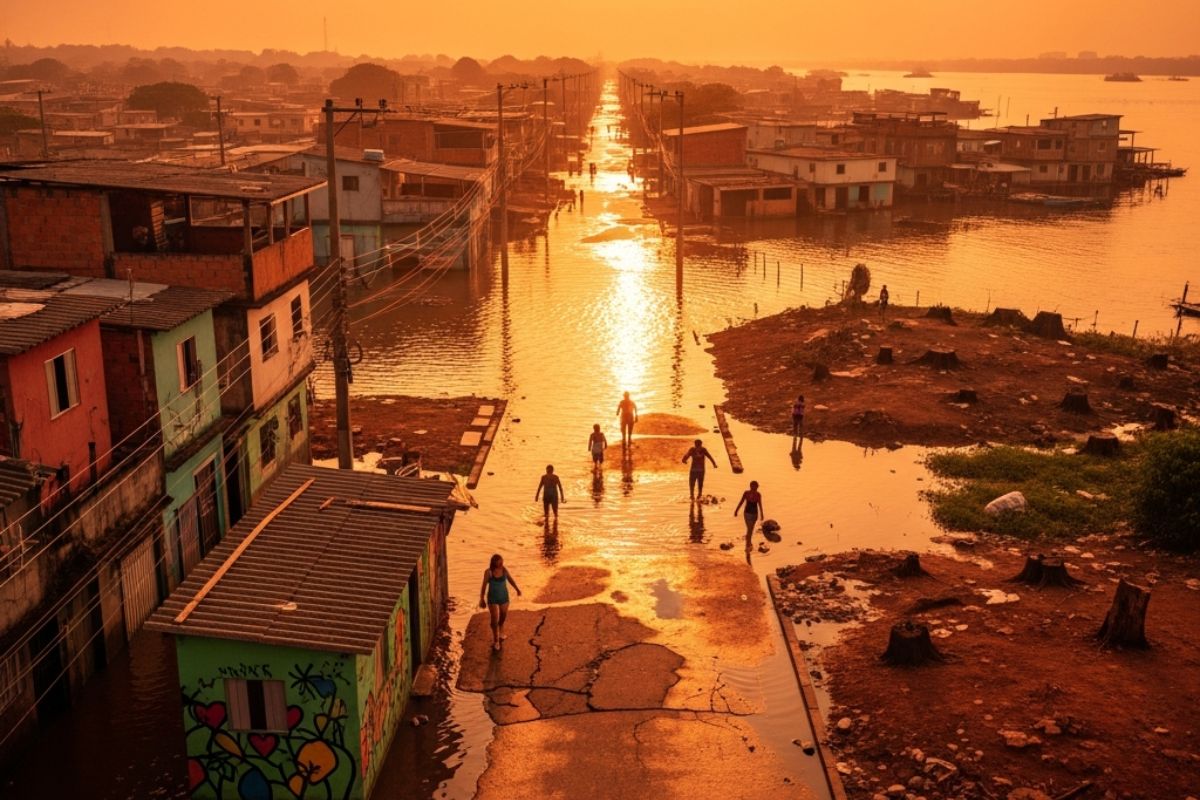


Climate Study Projects Belém As The Second Hottest Urban Center In The World By 2050, With 222 Days Of Extreme Heat, Concentrated Rainfall, Flooding, Little Tree Cover, And Peripheries Transformed Into Swimming Pools, While COP30 Exposes Inequality And Pressures The Public Authority For Environmental Justice And Real Adaptation In Belém And Across The Entire Amazon.
In December, while videos recorded on the night of December 25 showed families from the Terra Firme neighborhood pulling water out of their homes for Christmas, Belém already carried an alarming mark. A study by the NGO CarbonPlan, in partnership with The Washington Post, projects that the capital of Pará will be the second hottest urban center in the world by 2050, with up to 222 days of extreme heat per year, following record temperatures already set in 2023 and 2024 and severe flooding recorded in 2023.
In a city that has more than 1.3 million inhabitants and exceeds 2.2 million when considering surrounding municipalities, the heat that many define as “a heat we have never felt before” changes routines, extends the dry season, concentrates storms, turns streets into swimming pools, and lays bare an environmental injustice that weighs more on the peripheries and riverside islands, just as Belém prepares to host COP30 and tries to prove that it can face its own climate future.
Daily Heat, Delayed Rain, And A City With Few Trees
For decades, the “afternoon rain” organized the lives of the population. Appointments were scheduled before or after the famous “downpour” between two-thirty and four in the afternoon. Residents report that two or three years ago, this natural clock broke, with rain arriving later, on fewer days, and concentrated in very intense episodes.
-
Brazil has quietly developed an electric tactical drone that takes off and lands vertically without needing a runway, flies at 140 km/h in a fully autonomous manner, and can operate in forests, conflict zones, and remote areas.

-
Novo drone Guardian debuts in the United States with an 8-mile range, robotic battery swapping, and Starlink connectivity for continuous response.

-
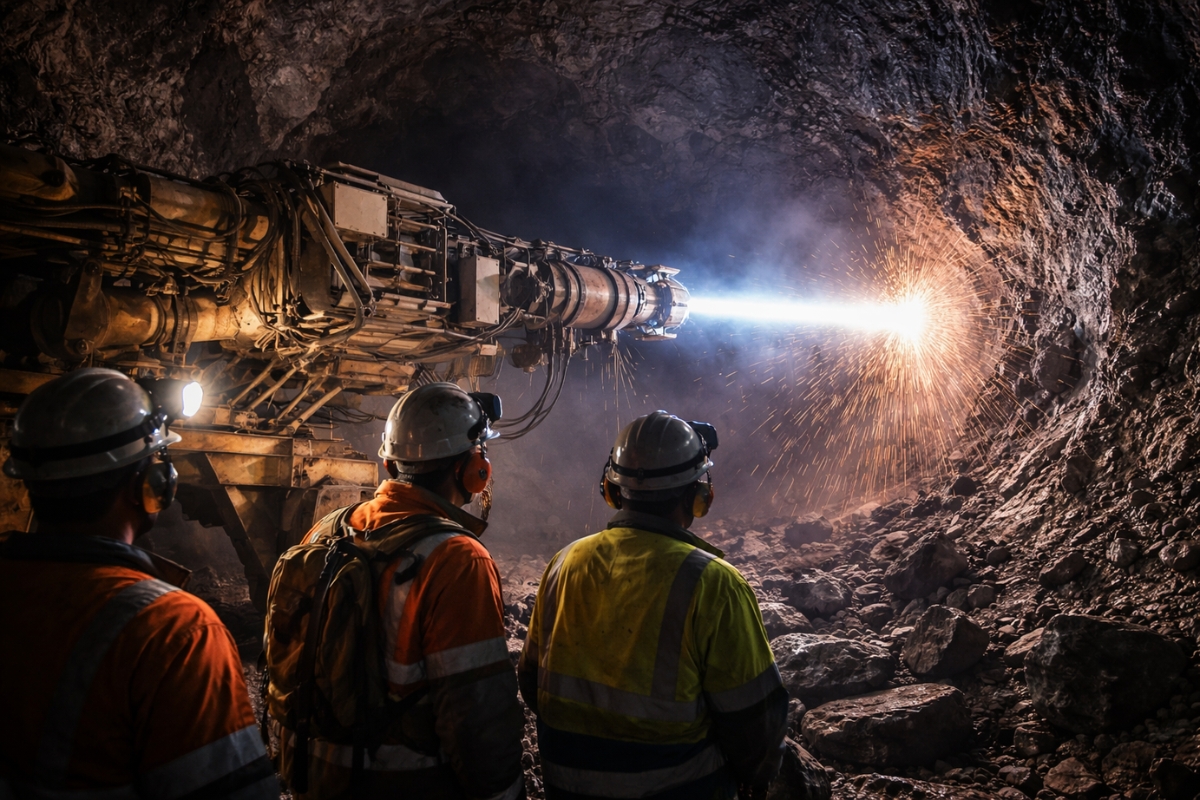
100 kW megalasers are already pointing to a new industrial phase, with enough power to cut thick steel, drill through rocks, accelerate mining, and increase productivity in operations previously considered too difficult.
-
Thousands of people in poor countries are paid cents to film household tasks, label images, and operate systems remotely all day long, and this invisible work fuels a $17 billion market that trains the artificial intelligences of Google, Tesla, and Meta.


Instead of the predictable rainfall, the rule has become heat. Residents report that in 2024 the rainy season was slow to start, with months dominated by strong sun and a felt temperature near 40 degrees. The umbrella, which used to serve for the rain, has become a shield against the sun.
In the less green areas, the discomfort is even greater. Despite being in the heart of the Amazon, Belém has an average of only 2.5 square meters of vegetation cover per inhabitant, far below the 9 to 12 recommended by the World Health Organization.
Trees on the streets are rare in many communities, and in several neighborhoods, they only appear in backyards or small parks.
In the more tree-filled center, social scientist Vic Argôlo has adapted her domestic routine by connecting two fans at the same time to create a breeze inside the house. Even so, she reports that, after nine in the morning, the heat rises quickly until noon.
Chef Sheila Azevedo faces the heat from the pots and stove and has installed fans and air conditioning in various rooms at home to make it through the afternoons. The feeling is that the city itself has turned into a greenhouse.
When Even Combu Island Feels The Extreme Heat
As one leaves the urban area and heads by boat to the riverside zone, the promise of thermal relief is no longer the same. Belém also consists of dozens of islands, where at least 40,000 people live.
Combu Island, a favorite destination for residents and tourists on weekends, feels the change.
Riverside residents report that, especially this past year, the temperature has risen so much that fruits have lost their flowers and fallen off, harming production.
Residents describe “an unmanageable heat” even surrounded by forest and water, something they have never experienced before.
At the same time, mass tourism, which brings bathers to the rivers and pools of restaurants, is already starting to press the local ecosystem.
Community leaders distinguish the tourism that generates income and respects the island from the one that leaves waste, disrespects residents, and increases environmental pressure on a territory already affected by warming.
Forced Adaptation Forest: Andiroba, Cocoa, And Income At Risk
On Combu Island, the Extractive Women’s Association brings together workers who traditionally collect and process andiroba seeds, used to produce medicinal oil.
They report that production “was much more intense” and dropped precisely in the year when the heat increased and the rains became disorganized, a direct impact of climate changes that had been discussed for years and are now felt in everyday life.
Faced with low harvests, extractivists have adapted. They have begun to dehydrate cocoa leaves to produce eco-friendly packaging, adding new income sources from the forest itself.
Women’s creativity tries to compensate for the loss, but the message is clear: the local economy, based on natural resources, is already undergoing forced adaptation.
Artisans like Charles Teles, who survive on immersion tourism and crafts, also notice the change.
He reports that the temperature has risen so much that shrimp disappeared from the river about two years ago, no longer being a fishing option for personal consumption. Among trees and igarapés, there is a perception of heat that generates near despair.
Peripheries That Turn Into Swimming Pools And The Harshest Face Of Environmental Injustice
If even the tree-filled center and the islands feel the change, the situation is even more extreme where concrete, asphalt, and little vegetation prevail.
In peripheral neighborhoods, Professor Rodrigo Rafael from the State University of Pará speaks of “environmental injustice.”
These are areas marked by poverty, crime, low vegetation cover, and high exposure to heat waves, flooding, and extreme weather events.
Terra Firme is an example of this explosive combination. The neighborhood grew over flooded areas and recently received sanitation works with street paving and sewage networks.
Residents explain that the street was raised, but the houses remained at a lower level, below the asphalt height. With more intense rains, the residences turn into real swimming pools.
Videos recorded by Andrew Leal on the night of December 25 show a family spending Christmas pulling water out of their home. Small makeshift barriers at the door were not enough to contain the flooding.
The works promised to reduce floods but created a new structural problem in the periphery.
Besides the water that comes in from the front and through the bathroom, extreme heat continues inside the houses. In a home where a father, mother, brother, and aunt live, only two fans manage, with effort, to cool the rooms.
On dry days, the strategy is to lie directly on the tile, the coldest floor available. But even bathing does not provide total relief, as the sun shines directly on the bathroom and heats the water all day long.
Belém Heading Towards The Second Hottest Urban Center In The World
The signs accumulated in Belém constitute the scenario described by the study that places the city on track to become the second hottest urban center in the world by 2050.
The projection indicates up to 222 days of extreme heat per year, with a real risk to human health, compared to about 50 days of this type in the early 2000s.
Climatologist José Marengo from the National Center for Monitoring and Alerts of Natural Disasters summarizes the picture by stating that “the extremes are becoming more extreme”.
The rainy season starts later, the dry season becomes longer and hotter, and events of heavy rain are concentrated in few days, capable of producing floods like those recorded in different regions of Belém in 2023.
Climate models for 2050 point to rising temperatures, a greater number of days with heat waves, and reduced precipitation in the eastern Amazon region.
This does not mean the absence of storms, but fewer days of rain distributed throughout the year and more episodes of intense rain that cause flooding. In this scenario, a waterproofed Belém, with occupied canals and little tree cover, becomes even more vulnerable.
Canals, Basins, And A Rapidly Waterproofed City
Belém is often compared to an “Amazonian Venice,” crossed by eight large basins and several canals. In practice, however, many of these waterways have been mistreated over the years.
Sections that should be green areas and infiltration zones have been paved. Concrete has spread over banks that, in theory, should be vegetated.
Many recent works focus precisely on canals and drainage, in preparation for the UN Climate Conference, COP30, which Belém will host in November.
The goal is to make the city more resilient, reducing flooding and the impacts of concentrated rains. The Public Works Secretariat states that it will still complete interventions and better direct stormwater drainage in Terra Firme and other neighborhoods.
However, researchers warn that it is not enough to open galleries and raise streets without considering the houses, green areas, and the water bodies that still resist.
A city that excessively waterproofs its soil and reduces vegetation loses its capacity to absorb heavy rains and to mitigate heat, reinforcing the trajectory towards becoming the second hottest urban center in the world.
Cars, Bicycles, And Inequality In Mobility
Another element of Belém’s climate problem lies in traffic. Experts consulted by local organizations point to cars as the main emitters of greenhouse gases in the city and the metropolitan region.
With poor public transportation, many residents opt for private vehicles.
Belém has about 160 kilometers of bike lanes, according to local authorities, but cars still dominate the streets.
The bicycle, which could be a powerful ally against the climate crisis, faces a lack of infrastructure, road insecurity, and extreme heat on paved roads, factors that deter part of the population.
Activist Ruth Costa, creator of the Pedala Mana project, works to empower women through cycling in several neighborhoods in the metropolitan area.
She points out that the periphery, in Pará and throughout Brazil, is precisely the area that uses bicycles the most in everyday life.
In her view, discussing the climate crisis without considering active mobility, structured sidewalks, safe bike lanes, and other forms of non-motorized transport is a contradiction.
Civil Society Reacts And Disputes The City’s Climate Future
In the face of extreme heat, flooding, and inequality, civil society movements are organizing to contest the direction of climate planning in Belém.
In meetings that bring together collectives, associations, and leaders, problems are discussed and proposals for public policies are presented to avoid the hellish fate projected by 2050.
Activist Waleska Queiroz, who is part of the COP das Baixadas and Observatório das Baixadas movements, has been working for 15 years in defense of the right to the city and climate justice for vulnerable populations.
She recalls that the peripheries are “sacrifice zones,” marked by a lack of sanitation, access to water, and basic rights, and that inequalities are exacerbated when combined with heat waves, droughts, and floods.
According to Waleska, the fight for peripheral territories is for recognition, compensation, improvement in public services, and real participation in defining climate policies.
The daily displacement of residents, often affected by flooding, lack of dignified transport, and long distances, is another sensitive point in a context of accelerated warming.
Climate Plan Until 2050 And COP30 As A Decisive Test
At the end of 2024, Belém approved a climate plan that goes beyond a single municipal administration. The then coordinator of the city’s Climate Forum and special advisor to COP30, Sérgio Brazão, emphasized that it is a document developed for all mayors who will govern Belém until 2050.
Among the priorities is the fight against climate injustice in flood-prone areas, focusing on afforestation and adapted infrastructure.
The Municipal Forum of Belém emerged from direct pressure from civil society and now brings together residents from peripheries, quilombolas, and indigenous peoples to discuss climate agendas and build policies aimed at the city.
It is a space where historically excluded communities bring their own proposals to the decision-making table, instead of merely reacting to ready-made projects.
Researchers point out that resilience is not just a decree. It requires risk reduction, improvements in the distribution of water and sewage, housing qualification, and a true social and economic revolution that places vulnerable populations at the center of adaptation.
Both experts and activists insist on one point: if human actions have contributed to the problem, it is human actions that will need to build the solution.
Belém, Amazon, And A Problem That Does Not Respect Borders


Even with all the local initiatives, the message from experts is that there is no solution for Belém without an international solution for the climate crisis.
Just as there is no isolated way out for the Amazon, England, or Germany. The atmosphere does not respect political borders, and what is emitted in one country affects the climate of another.
Belém, however, is an uncomfortable symbol of this global crisis. A large Amazonian city, surrounded by rivers and forest, which may become the second hottest urban center in the world in a few decades while still living with poor sanitation, streets that turn into rivers, houses that become swimming pools, and families facing suffocating nights with only two fans.
On the eve of COP30, the future of the capital of Pará will be closely watched by those who live there and by those monitoring the climate emergency worldwide.
And you, in your opinion, what should be the absolute priority today to prevent Belém from becoming the second hottest urban center in the world?






Governantes **** e incompetentes. Na maioria das cidades paraenses só colocam plantas ornamentais pequenas nas praças e canteiros centrais, quando colocam. Para piorar promovem o desmatamento em geral. Cortes de árvores nas cidades fora de controle.
Justiça ambiental? Kkkkkkkk