





 English
  Francês
  Alemão
  Italiano
  Japonês
  Norueguês
  Portuguese
  Spanish
  3 min of reading


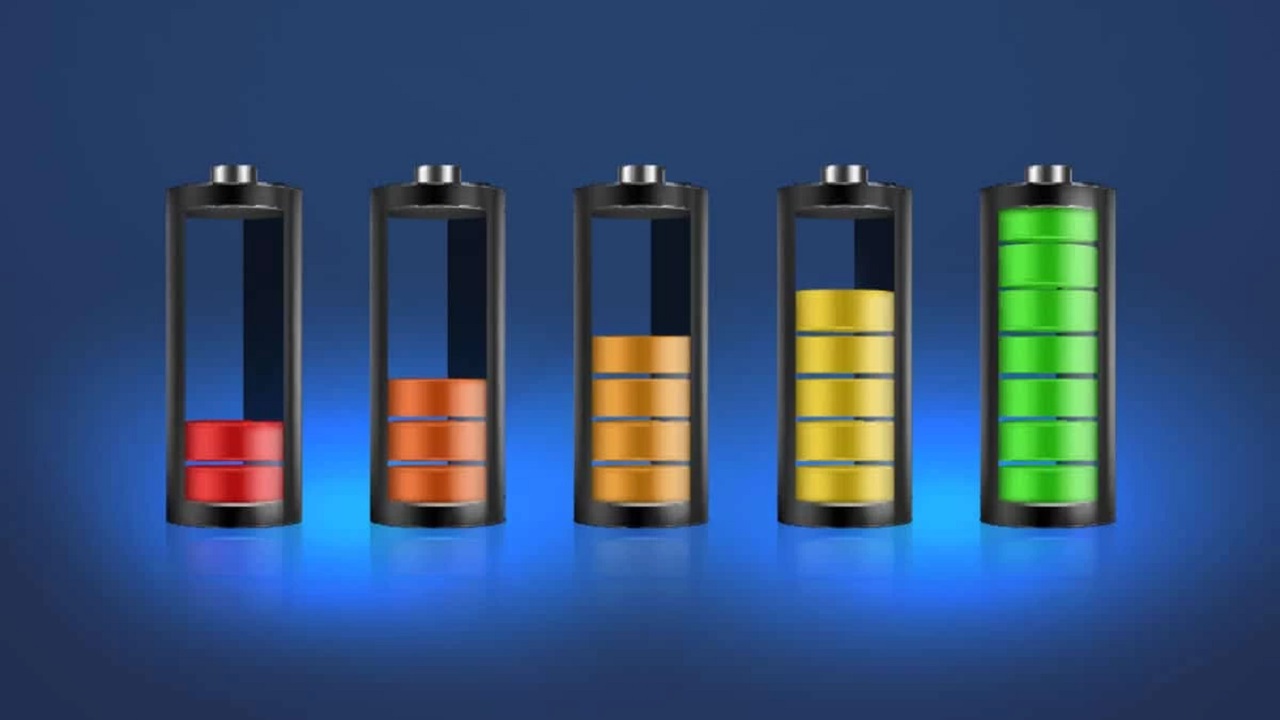
Florida Scientists Develop Cell Phone Battery That Can Be Charged in Just a Few Seconds.
A group of experts in nanotechnology from the University of Central Florida has developed supercapacitors that can store energy much faster than the lithium batteries currently used by the industry. According to one of the study’s leaders, Nitin Choudhary, the battery can function for over a week without needing a recharge.
Benefits of the Cell Phone Battery Using Nanotechnology
The intention behind the new technology is not recent, and other nanotechnology researchers had previously tried to use two-dimensional batteries to boost the power of electronic devices in terms of energy, but without success.
The university team is using supercapacitors composed of millions of microscopic wires, coated with two-dimensional materials. In addition to the benefits already mentioned above, the new nanotechnology material for the cell phone battery does not face another known problem of lithium batteries, as its lifespan is much longer compared to the devices we use, which usually experience issues after 18 months of use.
-
The climate in 2026 may surprise with extremes even more intense than in 2025, with heatwaves, out-of-season cold, and irregular rainfall in Brazil.

-
Astronomers identify 45 rocky planets that could harbor life, and one of them is just 4.2 light-years from Earth, making it the closest neighbor with the potential to have liquid water on its surface.

-
Archaeologists discover 43,000 ostraca in Egypt with tax lists, drawings, religious texts, and everyday notes that reveal what life was like in ancient Athribis before Cleopatra.

-
China showcases laser defense systems that target drones flying very low and attempts to address a flaw that has been concerning armies worldwide.


The technology is being developed as a good option for smartphones, but also with a focus on electric cars, which could revolutionize the way the world moves. However, there is still an obstacle, as nanotechnology researchers have developed something much larger and heavier than lithium batteries, which means it will still be necessary to refine the product before considering commercial production in the market.
New Cell Phone Battery Lasts Over 1500 Cycles
The nanotechnology experts have developed devices that can quickly store more energy than traditional lithium batteries without losing their energy stability during more than 30,000 recharges.
Currently, a common battery starts to lose power increasingly after the 18th month of use. In summary, this adds up to over 1500 cycles of intact stability.
The research published in the specialized journal “ACS Nano” states that the new technology can also be applied to electric cars. The American group is led by YeoWoon “Eric” Jung, who took on this technology challenge by leveraging a new approach to chemical synthesis, along with supercapacitors that utilize millions of microscopic wires coated with two-dimensional materials.
This way, the heart of the electronics becomes a high conductor of energy, with more density, power, and electricity. These materials are not yet available for sale, but they represent a significant demonstration of a crucial breakthrough. Studies show that they will have strong impacts on many technologies.
Xiaomi Develops Smartphone with Ultra-Fast Charging
While the cell phone battery with nanotechnology has not yet reached the market, the Chinese company Xiaomi surprised its fans at the beginning of the year with the Xiaomi 11i HyperCharge, which boasts the title of the fastest charging in India.
The smartphone supports 120W charging and is equipped with a 4,500 mAh battery that charges from 0 to 100% in just 15 minutes. Another highlight of the device is its Dimensity 920 chipset, which promises high performance in games and other tasks. There is also 6 GB or 8 GB of RAM and 128 GB of internal storage.
In addition, the device comes out of the box with Android 11 under Xiaomi’s MIUI 12.5 interface. The model features a Super Amoled Full HD+ display of 6.67 inches (16.94 cm) with a refresh rate of 120 Hz. The company also installed a front camera in a small notch for the 16 MP selfie camera. On the back, there’s a 108 MP main camera, an 8 MP ultrawide, and a 2 MP macro.










Seja o primeiro a reagir!