





 Portuguese
  English
  Spanish
 3 min of reading
  1 comment


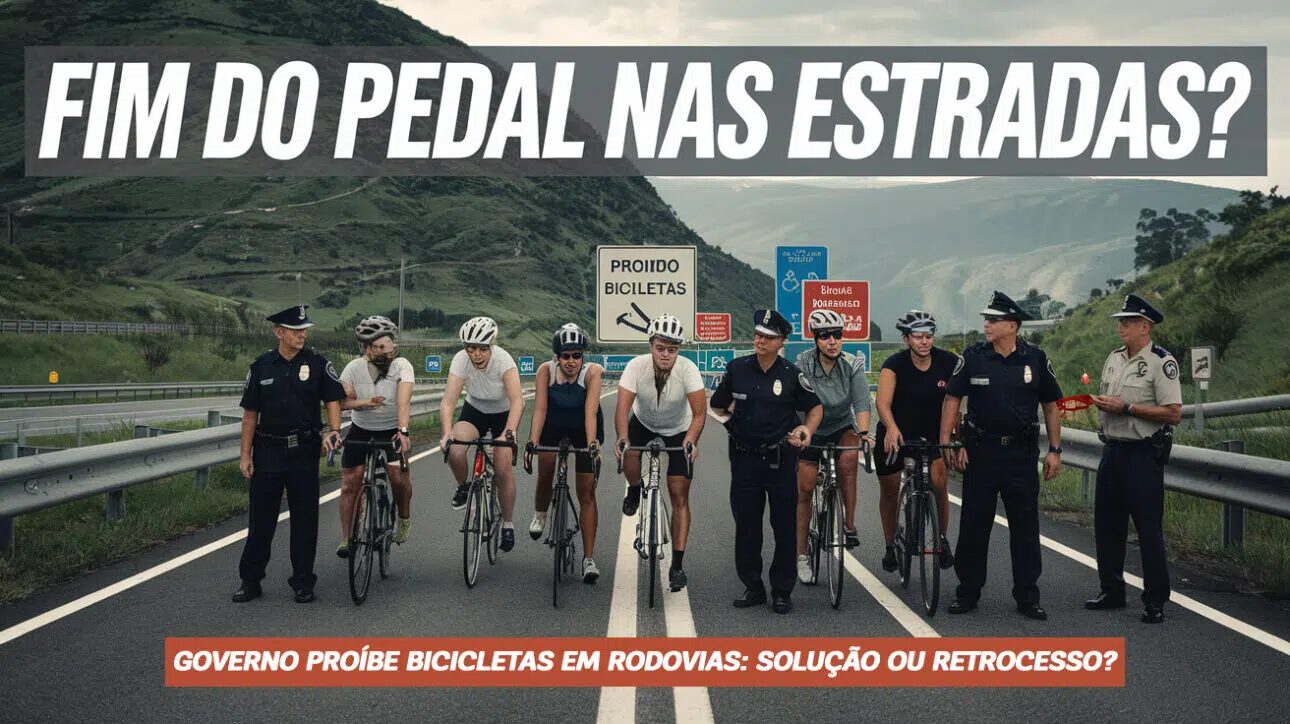

Even With Promised Bike Lanes on Coastal Highways, Cyclists Are Being Stopped on the Mogi-Bertioga by the Highway Police, Without the Government Officially Creating the Ban or Presenting Safe Alternative Routes for Bicycle Users.
Cyclists Face Ban on the Mogi-Bertioga While Government Plans Bike Lanes on State Highways
Amid discussions about safety and mobility, the government of São Paulo is studying restricting bicycle traffic on certain highways, such as the Mogi-Bertioga (SP-098), while planning the construction of more than 73 km of bike lanes on other state roads.
The measure has sparked debates among authorities and cyclists, who question the lack of safe alternatives for commuting.
-
Meta’s new smart glasses are not just for seeing; they use artificial intelligence, analyze your food, summarize messages, and can even change the way you work in professions like engineering.

-
According to an analysis by NASA, only one human-made structure is visible from space, and it is not the Great Wall of China or the Pyramids of Egypt.

-
After 377 years of history, the Brazilian Army will have its first female general: Colonel Claudia Cacho has been promoted to brigadier general by Lula and will receive the sword and command baton this Wednesday in Brasília.

-
A Mercado Livre customer opened their package and found 32 resumes of people looking for jobs crumpled as protective paper inside the box, exposing names, addresses, documents, and phone numbers of dozens of candidates.


Ban in Effect Without Clear Alternatives
Since the end of 2024, cyclists have reported approaches by the Highway Military Police preventing the traffic of bicycles on the Mogi-Bertioga highway.
Videos shared on social media show agents ordering groups of cyclists to turn back, claiming a ban on bicycle traffic on the road.
The justification presented is based on Article 195 of the Brazilian Traffic Code (CTB), which deals with disobedience to traffic authority orders.
However, experts argue that the application of this rule is controversial.
Article 58 of the CTB allows bicycles to circulate on the edges of the roadway on highways without a shoulder or bike lane.
Furthermore, Article 247, cited by the authorities, requires only that bicycles travel in a single file under these conditions, which cyclists claim to comply with.
Cyclists Question Criteria and Legality
Representatives of cyclists, such as attorney Anderson Gianetti, a member of the São Paulo Cycling Committee (CCP), question the legality of the ban.
They argue that, according to the state cycling plan, any restriction on bicycle traffic must be formalized by a decree from the governor, based on reports and statistics, which has not occurred so far.
Gianetti also highlights the inconsistency in applying the rules, noting that other state highways, such as the tourist routes “Caminho da Fé” and “Rota das Frutas,” allow bicycle traffic even without adequate infrastructure.
He questions: “What criteria does the Highway Police use to prohibit cyclists on the Mogi-Bertioga and Tamoios highways?”
Investments in Bike Lanes on Coastal Highways
Alongside the discussion about the ban, the government of São Paulo announced in April 2024 the construction of 73 km of bike lanes on highways connecting the Alto Tietê to the southern coast of the state, through a Public-Private Partnership (PPP).
The project, called Coastal Lot, includes the duplication and implementation of bike lanes on sections of highways SP-055 (Rodovia Padre Manoel da Nóbrega), SP-088 (Mogi-Dutra), and SP-098 (Mogi-Bertioga).
The section between Bertioga and Santos, about 36 km long, will be fully duplicated and will include a bike lane along its entire extent.
In addition, bike lanes are planned in the Itanhaém and Peruíbe regions, totaling 33 km, plus another 4 km between Peruíbe and Miracatu.
The Novo Litoral consortium, led by the Brazilian Infrastructure Company (CBI), will be responsible for executing the works, with estimated investments of R$ 4.3 billion over 30 years.
Lack of Immediate Alternatives for Cyclists
Despite future investments, cyclists currently using the Mogi-Bertioga face a lack of safe alternatives.
The Secretary of Public Security suggests that cyclists seek safer alternative routes but does not specify what those options would be.
In practice, there are no viable alternative roads for those wishing to access the northern coast of São Paulo by bicycle.
Debate Continues Without Definitive Resolution
The discussion about the ban on bicycle traffic on the Mogi-Bertioga remains open.
The topic was addressed at the meeting of the São Paulo Cycling Committee in January 2025 and is scheduled to be revisited in future meetings.
Meanwhile, cyclists continue to push for solutions that ensure safety and respect for their right to circulate.
Do you believe the construction of bike lanes on the coastal highways of São Paulo will be enough to ensure cyclist safety? Share your opinion in the comments!








Eita país difícil, proibir e mais fácil que resolver o problema! E o direito de ir e vir serve pra que mesmo? Ah pra soca no …. dos governantes