





 Portuguese
  English
  Spanish
  4 min of reading
  0 comments



Archaeological Discovery in Turkey Identifies Case of Infantile Cortical Hyperostosis in Remains Over 900 Years Old
Archaeology has just revealed a fascinating case that connects the medieval past to the present. Researchers identified a rare disease in a child’s skeleton dating from the 10th to 12th centuries, found at the archaeological site of Aphrodisias in Turkey. The child, who was between 2 and 3 years old, suffered from infantile cortical hyperostosis (ICH), also known as Caffey’s disease — a condition that still affects approximately 3 in every 1,000 babies up to six months of age.
The study, published in the scientific journal Childhood in the Past, presents evidence of bone changes characteristic of the disease, offering a unique window into understanding how this condition manifested in antiquity. The discovery represents one of the few known archaeological cases of ICH, contributing to expanding medical and historical knowledge about childhood diseases in the Byzantine period.
Unusual Discovery in Medieval Tomb
The team of archaeologists found the remains of the child in what is known as “Tomb 73A,” which contained the remains of two adults and two children. However, one of the child skeletons immediately caught the researchers’ attention due to the unusual bone deformities it exhibited.
-
Archaeologists found in the desert an oasis 5,000 years old surrounded by giant walls, in a discovery that reveals a civilization much more complex, powerful, and organized than previously thought.

-
Giving your CPF at the supermarket has become routine, but in 2026 the rule will change: see how your data is used and when it is worth informing.

-
China has launched mysterious invasion barges into the sea with giant ramps that connect like Lego pieces and can form floating bridges of nearly 1 km to transport armored vehicles directly to the beach, in a kind of secret weapon for Taiwan.

-
Neither green in the fridge nor overripe forgotten in the fruit bowl: this is the correct way to store bananas.

The fossil revealed significant thickening and swelling in various bones, including the jaw, scapula, and left arm. The most notable alteration was found in the ulna, the bone of the forearm, which was twice the normal size. These striking features indicated that the child had suffered from some severe medical condition during their short life.
Determining the exact age of the child was a challenge for specialists. While the long bones suggested an age between 1.5 and 2 years, the teeth indicated a development compatible with 2.5 to 3.5 years. This discrepancy became an important clue for understanding the effects of the disease on childhood development.
What Is Infantile Cortical Hyperostosis?
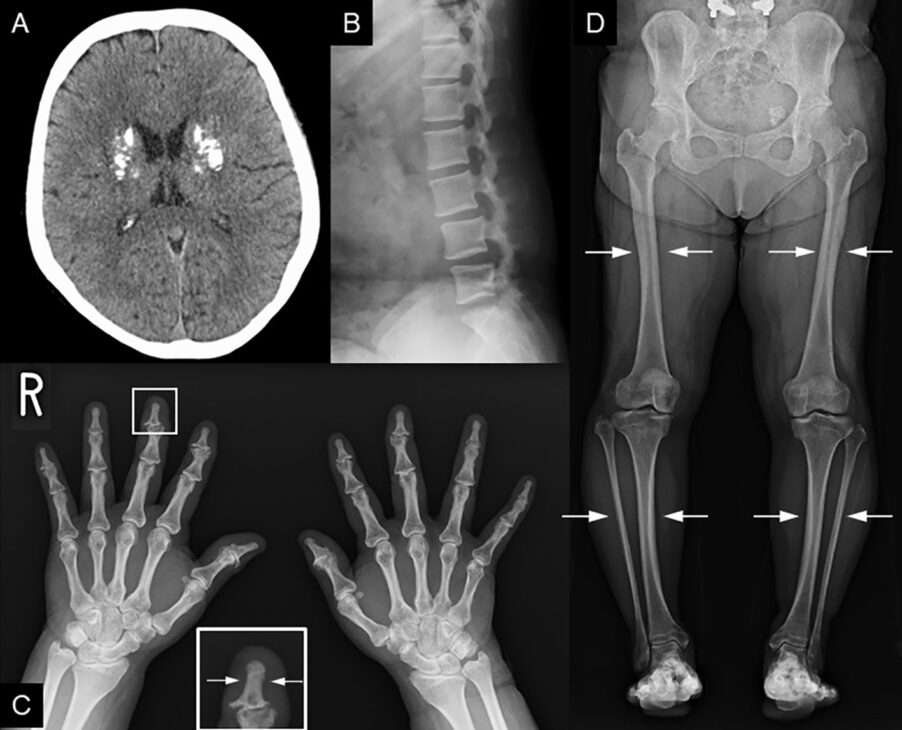
Infantile cortical hyperostosis, or Caffey’s disease, is a rare medical condition that causes inflammation of the periosteum, the membrane that lines the bones. This inflammation results in asymmetric bone thickening, primarily affecting the jaw, forearm, tibia, collarbone, scapula, and ribs.
According to specialized medical information, ICH typically develops around 5 months of life, but can emerge from birth or even during gestation. The main symptoms include fever, irritability, soft tissue swelling, and the characteristic bone thickening that can be visualized in imaging tests.
The condition has an interesting particularity: it tends to resolve spontaneously after 6 to 9 months of its onset, usually when the child reaches between 2 and 3 years of age. However, in rare cases, the disease may reappear. According to medical sources, there are hypotheses that hereditary factors may be related to the development of ICH.
Diagnosis Through Comparative Analysis
To confirm that it was indeed infantile cortical hyperostosis, the research team conducted a thorough comparative analysis. The fossils were compared with skeletal remains of children showing known patterns of other diseases, including hemolytic anemias, scurvy, rickets, tuberculosis, and even cases of child abuse.
After all comparisons, the bone characteristics of the Byzantine child were found to be more compatible with Caffey’s disease. The analyses revealed that the skeleton showed signs of recovery before the child passed away, indicating that the disease was in a process of spontaneous remission, as is typical of ICH.
Impact of the Disease on Childhood Development
One of the most revealing aspects of the research was understanding how ICH affected the quality of life of the medieval child. The disease particularly compromises the jaw, which significantly hinders feeding for infant patients. This feeding difficulty contributes to the development of malnutrition, which in turn affects normal growth and bone development.
It was precisely this nutritional and developmental impact that generated the discrepancy in determining the child’s age. The bones exhibited characteristics of delayed development compared to the teeth, highlighting how the disease interfered with normal skeletal growth.
According to the study’s author, Duru Yağmur Başaran, “unfortunately, the cause of death cannot be determined in most cases where we only have skeletal remains.” The researcher explained that it is possible that the child died due to ICH itself, from complications arising from the disease, or even from a completely different cause.
Relevance of the Discovery to Modern Medicine
Even today, diagnosing infantile cortical hyperostosis presents some challenges for healthcare professionals. The symptoms can be confused with other inflammatory or infectious conditions affecting babies. Early identification is crucial, as while the disease is self-limiting in most cases, it can cause significant discomfort and complications when not monitored appropriately.
The discovery of archaeological cases like this contributes to tracing the evolutionary history of rare diseases and understanding how they manifested in ancient populations. This helps researchers comprehend whether there have been changes in frequency, severity, or characteristics of the disease over the centuries.
Moreover, the find reinforces that ICH is not an exclusively modern condition, but has accompanied humanity for at least a millennium. The fact that the disease retains similar characteristics between the Byzantine period and present day suggests that the biological mechanisms behind the condition have remained relatively stable over time.








-

-

2 pessoas reagiram a isso.