





 Portuguese
  English
  Spanish
  7 min of reading
  0 comments



The Power Plant Impresses with an Installed Capacity of 22,500 MW, Easily Surpassing the Largest Nuclear and Coal Plants on the Planet.
The search for high-power energy sources has always been a global challenge. While nuclear plants dominate popular imagination as symbols of energy capacity, there is one installation that surpasses them all without relying on uranium.
The project of the Three Gorges Dam is recognized as one of the greatest achievements of modern engineering.
-
Sleeping at different times each day can be a bomb for your heart and even double your risk of having a heart attack.

-
Without help and without heavy machinery, a woman builds a house from scratch with stone, wood, and cement, erects a chimney, creates a complete leisure area, and transforms an empty lot into her dream home.

-
Couple transforms abandoned house after years of being closed; residence was overgrown with weeds, had a green pool, and a deteriorated structure in the interior of Rio de Janeiro.

-
Hidden marks on the walls of the site associated with the Last Supper of Jesus for centuries have been deciphered in Jerusalem, revealing medieval inscriptions left by pilgrims, European nobles, and travelers from the Middle East.

Located in the Xilingxia Gorge, which is one of the three gorges of the Yangtze River, in Hubei province, China, this work plays an essential role in energy production for the country and in regulating the waters of the river.
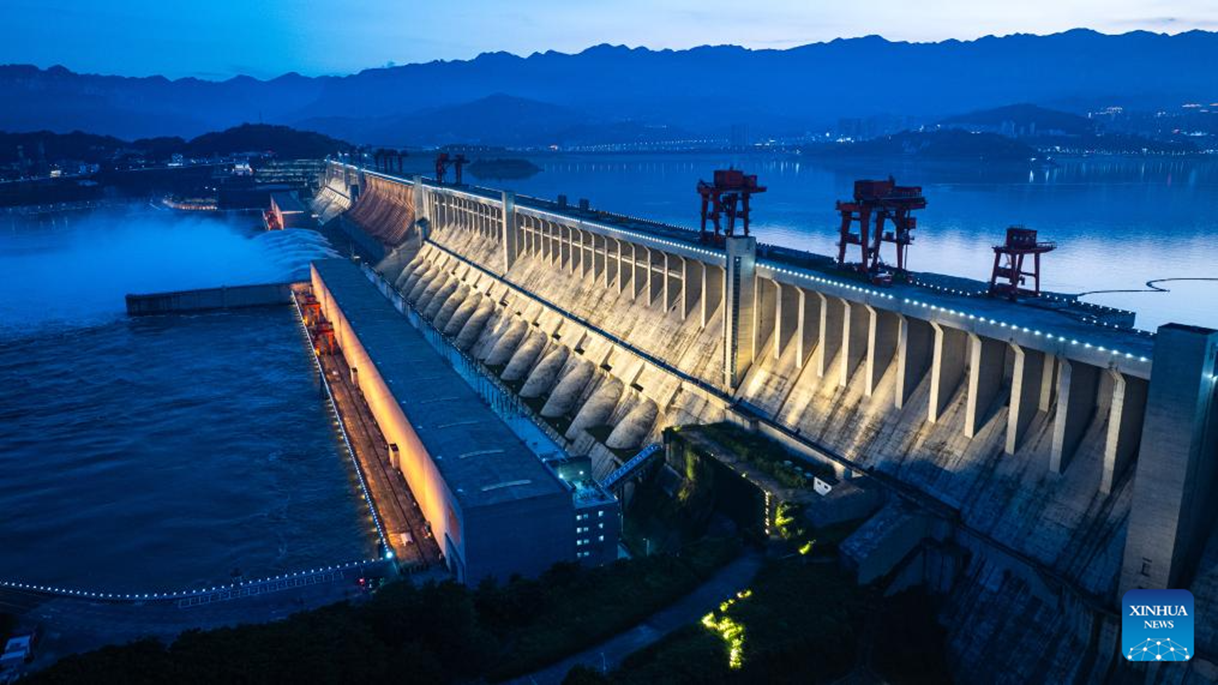
Location of the Dam and Geographical Data
The Xilingxia Gorge is located in a drainage area that covers about one million square kilometers.
The average annual runoff is impressive, with approximately 451 billion cubic meters of water.
The entity responsible for the execution and management of the project is the China Three Gorges Corporation (CTGPC), which holds legal responsibility for the construction, operation, and financing of the project.
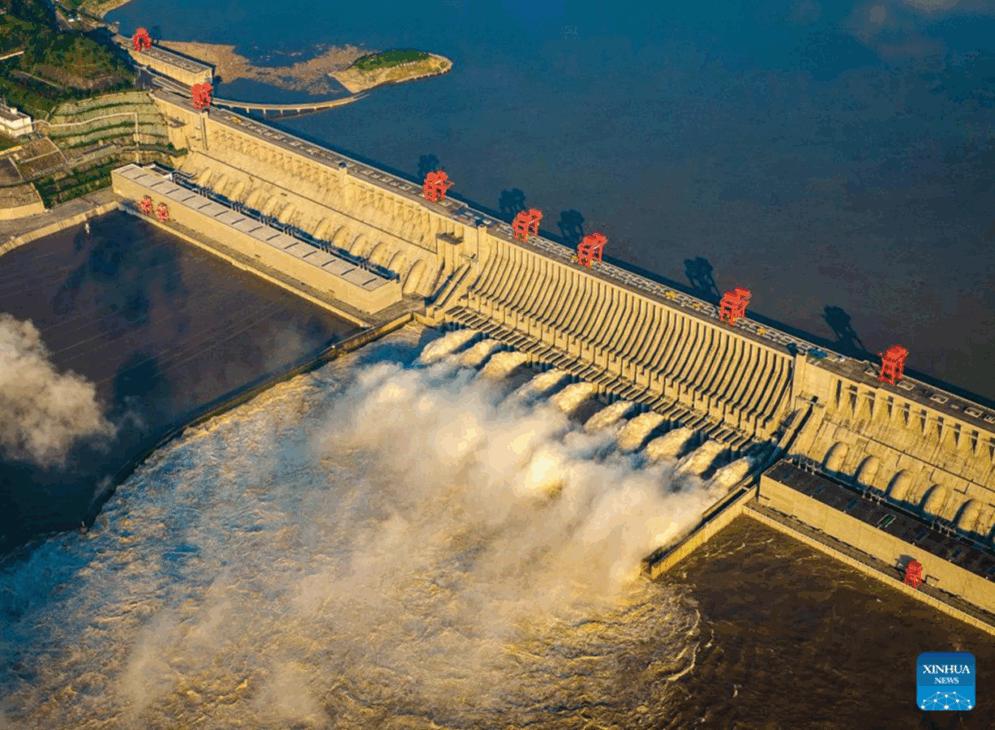
Dimensions and Initial Characteristics
The construction of the dam was completed in 2008. With a height of 185 meters and a width of 2,309 meters, the structure stands out as one of the largest hydroelectric plants on the planet, surpassing even the capacity of Itaipu in Brazil, which has 14,000 MW.
The dam operates with 32 main generators, divided between 12 units on the right bank and 14 on the left bank, in addition to six underground generators.
Start of Generator Operation
The first underground generators began operating between May and July 2011. In 2012, the commissioning of all 32 units was completed, ensuring a generation capacity of 22,500 MW.
The plant annually produces about 85 TWh/ha, which corresponds to approximately one-tenth of China’s total energy demand.
Multiple Objectives of the Venture
The dam was not designed solely to generate energy. One of its main objectives is flood control, which historically has caused hundreds of thousands of deaths along the Yangtze.
Another goal is to facilitate navigation for large vessels from Shanghai to Chongqing, a distance of 2,000 km from the sea.
Reservoir and Integration with the Power Grid
Located 44 km from Yichang, the dam forms a reservoir extending 630 km and an average width of 1.3 km, totaling a capacity of 39.3 billion cubic meters.
It is interconnected with three major electrical networks in China: Central China Power Network (55%), East China Power Network (39%), and Sichuan Provincial Grid (6%).
Concrete Structure and Phases of Construction
The dam is made of gravity concrete, with a central spillway and powerhouses at its ends. The construction began in 1994 and lasted 17 years.
By the end of 1996, investments had reached US$ 2.3 billion. In the first phase, 14 Francis units of 700 MW were activated on the left bank between 2003 and 2006. In the second phase, the capacity increased to 18,200 MW.
Lock Infrastructure and Additional Turbines
During the second phase, a permanent lock of 135 meters high with 14 turbines was built on the south bank.
Subsequently, the dam reached a height of 185 meters, with the installation of 12 additional turbines on the north bank.
A single-lane ship lift system and a step, with a maximum height of 113 meters and capacity to lift vessels up to 11,800 tons, were also implemented.
The spiral casing of the six underground units was completed in May 2010. The first 14 generators generated 9,800 MW in 2006.
Between 2007 and 2008, another 12 generators came online, raising capacity to 18,300 MW. The maximum capacity was momentarily reached in August 2009.


Environmental Consequences
Studies indicate that ecological impacts can be severe.
The disruption of sediment flow tends to cause accumulation in the reservoir and compromise the supply of nutrients to agricultural lands and fisheries downstream.
This situation affects not only the ecosystem but also the turbines of the plant and the livelihoods of millions of farmers and fishermen.
About 1.27 million people were displaced in September 2009.
Despite promises of improvements, many reported problems in receiving resettlement funds and job retraining opportunities.
The submerged lands were more fertile, and approximately 1,600 factories were flooded.
Demands for Additional Solutions
Western organizations have requested that the Chinese government address issues related to deforestation and the loss of lakes in the Yangtze basin, factors that exacerbate flooding.
Corruption scandals also marked the project, with resource diversion, bribery, and accidents damaging infrastructure in 1999.
The official cost of the dam was initially estimated at CNY 203 billion (US$ 29 billion), covered by taxes on electricity consumption and revenues from the first phase. Later, the cost dropped to CNY 180 billion due to controlled inflation.
Division of Supply Contracts
The supply orders for equipment were divided among six foreign groups in two main alliances.
Alstom led the construction of the turbines with a contract of US$ 212 million, while ABB supplied eight generators for US$ 250 million.
Kvaerner from Norway participated with US$ 40 million. The contract totaled US$ 500 million.
The second consortium involved Voith, Siemens, and GE Hydro, with a contract of US$ 350 million. Subsequently, Alstom acquired ABB’s power division, and GE Hydro purchased Kvaerner.
The Chinese companies Harbin Power Equipment and Dongfang Electrical Machinery participated in the final stages, absorbing technologies transferred by the foreign groups. The last units of the first phase were almost entirely produced in China.
Transmission and Distribution System
The transmission infrastructure, completed in 2007 at a cost of CNY 34.3 billion, connects the energy generated to Shanghai and nine other provinces. The system includes 500 kV DC and AC lines, with capacities ranging from 1,200 MW to 12,000 MW.
Energy Distribution
Three main HVDC lines were installed: Three Gorges-Changzhou with a capacity of 3,000 MW, Three Gorges-Shanghai also with 3,000 MW, and Gezhouba-Shanghai with 1,200 MW. This system ensures broad distribution of the energy generated by the dam.
The construction was the responsibility of Chinese groups, with contracts worth US$ 800 million signed with companies such as Gezhouba Share Holding, Yichang Qingyun Hydropower Joint Management, and Yichang Three Gorges Project Construction 378 Joint Management. The works included the construction of dikes, powerhouses, and massive excavations.
During construction, 102.83 million cubic meters of rock and earth were excavated.
31.98 million cubic meters were replaced, 27.94 million cubic meters of concrete were used, and 256,500 tons of metal structures were installed.
Comparison with Other Giant Hydroelectric Plants
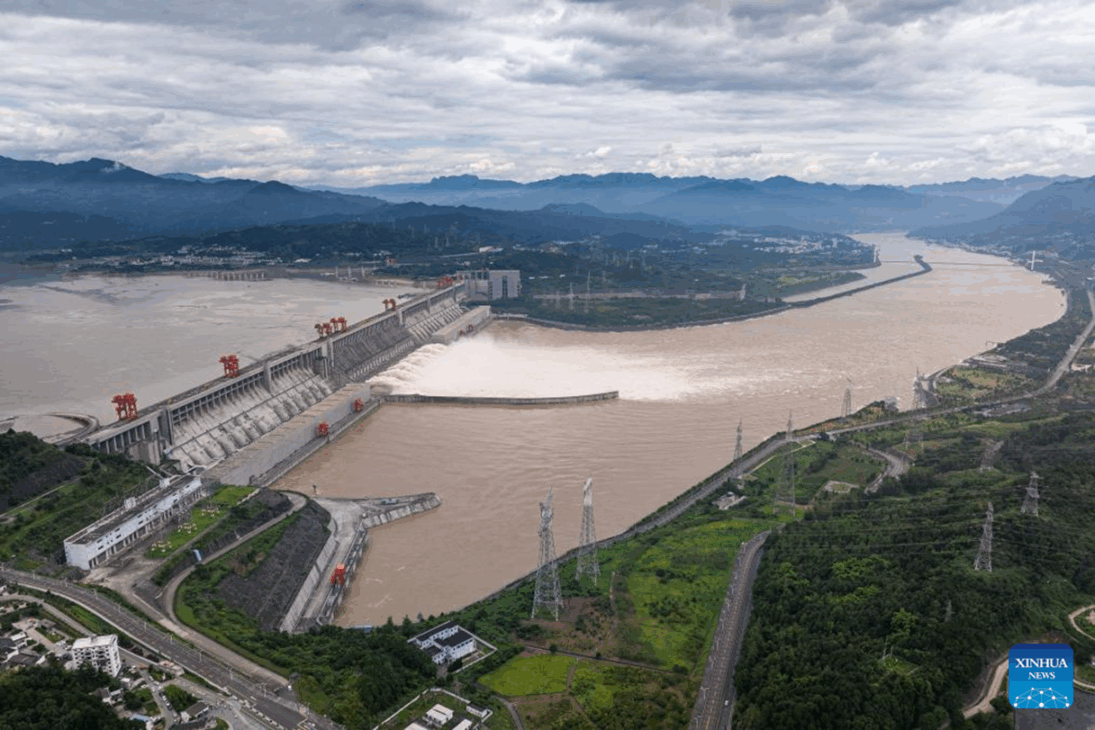
The Three Gorges Dam tops the list of the largest hydroelectric plants in the world.
To better understand its size, it can be compared with other large projects. The Baihetan Dam, also located in China, has a capacity of 16,000 MW.
Next is the Itaipu Dam, divided between Brazil and Paraguay, with an installed capacity of 14,000 MW.
Just below is the Xiluodu Dam in China, with 13,860 MW. Finally, the Brazilian Belo Monte has a capacity of 11,233 MW.
Given these numbers, it is clear that the Three Gorges Dam leads the way, consolidating the essential role of hydroelectric energy as a large-scale production source.
This high capacity allows the plant to meet a significant portion of China’s energy demand while reducing dependence on other energy sources.
Superiority Over Nuclear and Coal Plants
The comparison is not limited to other hydroelectric plants. When analyzed in relation to other types of energy generation, the superiority of the Three Gorges Dam also stands out.
For example, the Kashiwazaki-Kariwa nuclear plant in Japan used to be the largest in the world in its category, with a capacity of 8,212 MW. Still, this figure does not even reach half the installed power of the Three Gorges.
The same is true for the largest coal plant in Europe, located in Poland. The Bełchatów plant has a capacity of 5,420 MW, much lower than that generated by the Chinese hydroelectric complex.
This difference shows how large dams can provide much higher volumes of energy without the risks associated with radioactive waste from nuclear plants or atmospheric pollution caused by burning fossil fuels.
Environmental Monitoring System
The ecological monitoring system was implemented in 2007. Additionally, the Fish Breeding Center Base was established for the conservation of species such as the Asian carp. Between 2011 and 2018, 12 ecological programming experiments were conducted.
The Three Gorges Dam represents a milestone in global engineering. Its energy generation capacity is immense, but its social and environmental impacts continue to generate discussions and require constant monitoring to mitigate negative effects over time.
A Historic Power Plant
The Three Gorges Dam remains one of the greatest symbols of contemporary engineering. With a generation capacity of 22,500 MW and a colossal structure, the project has managed to transform the course of the Yangtze River and meet a significant portion of China’s energy demand.
In addition to providing clean energy on a large scale, it also controls historical floods that affected millions of people in the region.
On the other hand, the social and environmental impacts still generate intense debates.
The displacement of over one million people, the loss of fertile agricultural lands, and ecological damage to the Yangtze ecosystem remain significant challenges.
Even with monitoring and mitigation programs, long-term effects require constant oversight, highlighting the delicate balance between energy development and environmental conservation.
The text uses data from Power Technology and other available sources. If any data is outdated or inaccurate, feel free to signal. The information will be reviewed and corrected as necessary.










-

-

5 pessoas reagiram a isso.