





 Portuguese
  English
  Spanish
  5 min of reading
  0 comments


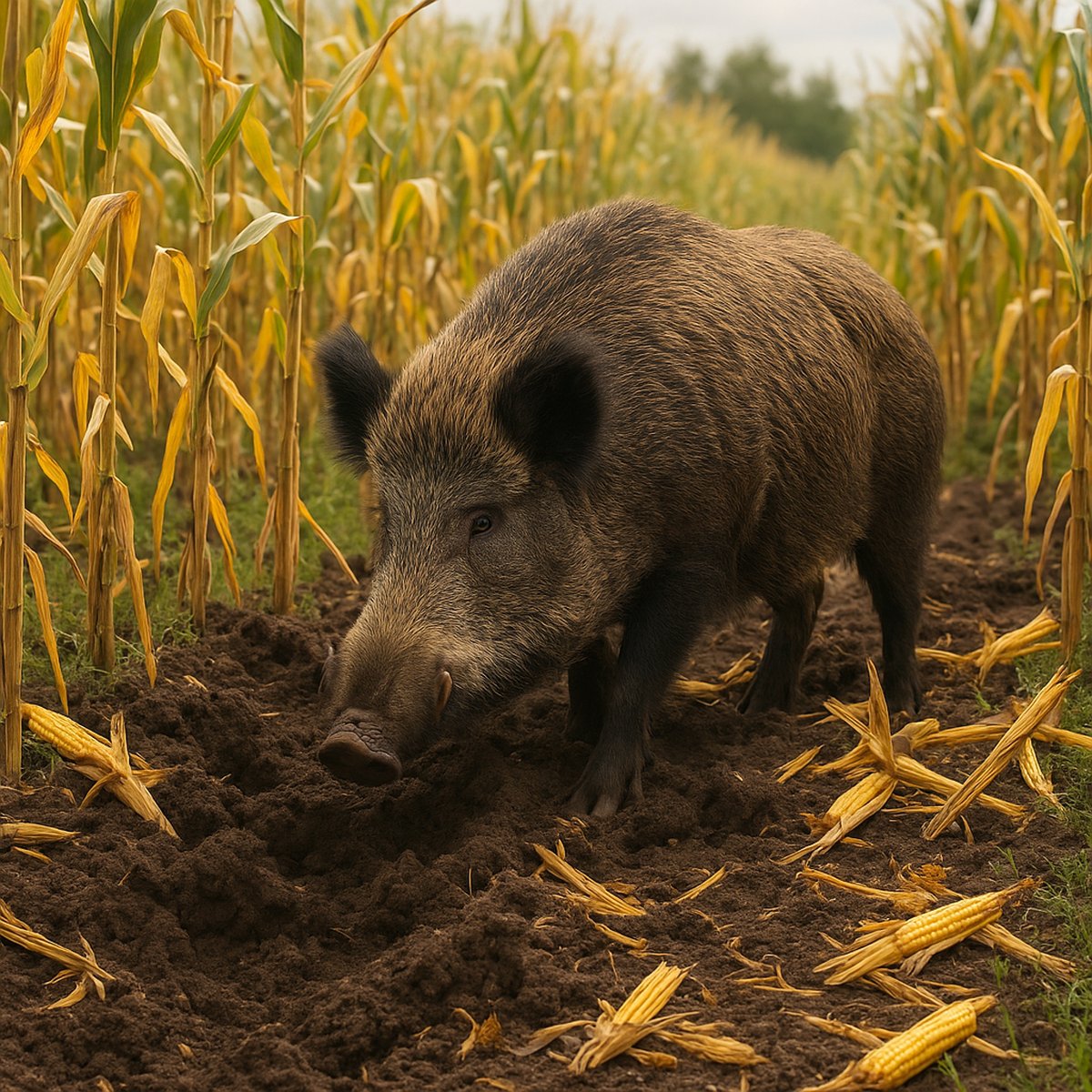
Far From Being a Typical Animal of Brazil It Has Become a Threat to Environmental Balance. Understand Why Hunting Is Allowed and the Impacts of This Invasion.
The wild boar is far from being a typical animal of Brazil – but unfortunately, it has become one of the biggest problems for our biodiversity and agriculture.
Ranked among the one hundred worst invasive exotic species in the world, this wild pig brought from other continents proliferates uncontrollably here, as it finds no natural predators to curb its expansion. The result? A true plague that has already caused enormous damage in various regions of the country.
Origin and Arrival in Brazil
Wild boars are native to Europe, Asia, and North Africa. In Brazil, their presence began when European colonizers brought wild pigs to serve as food on maritime journeys and, later, when farmers imported the species for meat production and sport hunting.
-
A promise made to their father led three men to unearth a forgotten house that had been swallowed by time for over 70 years, in a story of memory, abandonment, and reconstruction that seems straight out of a movie.

-
A strong earthquake in Indonesia affects houses and schools, causes panic, triggers a tsunami alert, and records a rise in sea level of up to 30 centimeters in some areas.

-
The Argentine government celebrates the lowest poverty rate in 7 years, but experts warn that the methodology has changed, real wages have fallen, unemployment has risen, and the number of people on the streets of Buenos Aires has increased by 57% since Milei took office.

-
7.8 magnitude earthquake in Indonesia frightens the population, triggers tsunami alert, and hits an island with over 200,000 inhabitants this Thursday.


The initial idea was to profit from exotic meat, but the plan got out of control: many animals escaped, adapted well to the Brazilian environment, and began to reproduce in the wild. Thus began an invasion that only grew in the following decades.
Accelerated Reproduction and Lack of Predators
A female wild boar can produce several litters per year, at an impressive reproductive speed. Gestation lasts about 4 months, and each female produces on average 8 to 10 piglets per litter, with the possibility of reaching 15 or even more – there are records of extreme cases with up to 25 piglets at once.
Moreover, it is common for them to reproduce two or three times a year, and in some cases even four annual gestations. With such fecundity, the wild boar population grows exponentially.
At the same time, there are no natural predators to contain this population explosion. In their original habitat, there are wolves, bears, and large felines that hunt wild boars; in Brazil, top predators like the jaguar and puma have become rare in many invaded areas.
Even where they do occur, these jaguars usually only take down young or female piglets – they avoid confrontation with adult wild boars, especially males that can weigh 300 to 350 kilograms.
Without a natural enemy capable of curbing them, groups of wild boars grow freely, taking over fields and forests.
Environmental and Agricultural Damage
Wild boars not only inhabit the space of other animals, but they also cause destruction wherever they go. As generalist omnivores, they eat practically everything – roots, fruits, grains, small animals, eggs – and they dig up the soil in search of food. The consequences of this invasion include:
- Destruction of crops and pastures: Hungry groups of wild boars can devour and trample entire farms. Cornfields, soybean plantations, sugarcane, and other crops end up devastated, resulting in considerable losses for farmers. Pastures where cattle feed are also damaged when these pigs turn over the ground in search of roots and insects.
- Damage to springs and soils: By rooting the ground and wallowing in wet areas, wild boars degrade springs, swamps, and riverbanks.
- Threat to native fauna: The presence of wild boars represents competition and danger for Brazilian wildlife. Native species of peccaries, such as the collared peccary and the white-lipped peccary, lose territory and food to the invaders and can be expelled or even locally exterminated. Wild boars also prey on eggs, piglets, and smaller individuals of various species, destabilizing the entire ecosystem.
- Risk to human safety: Although they are not animals that frequently attack humans, incidents have already been recorded. An adult wild boar, when feeling cornered or protecting its young, may charge at people with great aggression, using its sharp tusks.
Sanitary Risks and Economic Losses
Another alarming facet of the wild boar invasion is the sanitary risks. These animals can be carriers and disseminators of various infectious diseases, threatening domestic livestock and wildlife.
Among the diseases associated with wild boars are foot-and-mouth disease, swine fever, tuberculosis, leptospirosis, and rabies – serious illnesses that can affect domestic pigs, cattle, other animals, and even humans (in the case of zoonoses such as leptospirosis and rabies).
The possibility of an infected wild boar introducing, for example, the foot-and-mouth disease virus into disease-free areas causes panic in the agricultural sector.
The potential losses are enormous. A study by the Confederation of Agriculture and Livestock of Brazil (CNA) estimated that if these diseases were to widely affect national herds, losses could reach R$ 50 billion per year due to the death of animals, trade restrictions, and other sanitary consequences.
In addition, the very destruction of crops and rural infrastructure by wild boars imposes increasing costs on producers for replanting, fencing, and repairs. In other words, the economic impact of this plague only grows as it spreads across the country.
Hunting Allowed for Pest Control
In light of all these problems, hunting the wild boar has been officially allowed in Brazil – unlike any other large animal. Since 1967, Brazilian environmental legislation has prohibited hunting native wildlife, but in 2013, Ibama opened an exception for the European wild boar, authorizing its controlled capture and slaughter as a measure to contain the invasive species that has no natural predators in the country.
Currently, the wild boar is the only animal with permitted hunting in the national territory (precisely because it is exotic and highly destructive).
The idea is that registered control groups can reduce wild boar populations in critical areas, protecting crops and ecosystems.
Indeed, thousands of wild boars are being eliminated annually. Data from Ibama shows that approximately 333,000 wild boars were culled between April 2019 and August 2021, and in 2022 the number jumped to around 465,000 culled in just one year.
Still, the problem is far from resolved – wild boars continue to advance into new regions. To give you an idea, in 2016 there were records of wild boars in 489 Brazilian municipalities; by 2022 they were present in over 2,010 municipalities spread across all biomes.
The invasion literally gained ground, which shows the difficulty in controlling this species even with hunting allowed.
The situation generates debate. Experts agree that without human intervention the wild boars will not recede, but some question whether hunting alone is sufficient or whether it may have side effects. Regardless, governments and environmental agencies around the world have controlled hunting as their main bet against the spread of the wild boar.
In Brazil, national management plans are being discussed and improved to make control more effective and minimize risks to other species.
And what do you think about all this? Leave your opinion in the comments!







Seja o primeiro a reagir!