





 Portuguese
  English
  Spanish
  3 min of reading
  2 comments


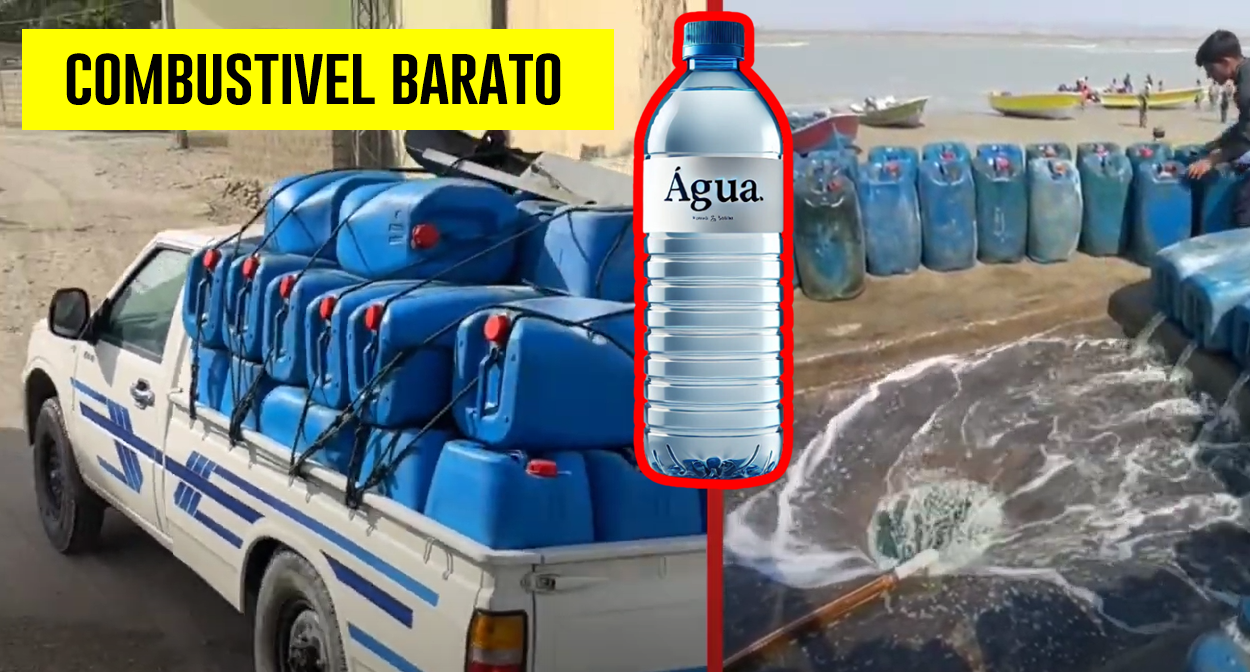


In a Country with Vast Fuel Reserves, Diesel Is Sold at Incredibly Low Prices, Cheaper than Water.
In Iran, the prices of basic products can be quite surprising. For example, in certain places, buying a liter of diesel costs less than a liter of water. In other words, in these areas, water is more expensive than fuel.
An Extremely Cheap Fuel
The Iran, recognized for its vast reserves of oil and natural gas, presents an economic peculiarity that attracts attention: the extremely low price of fuel, often lower than that of bottled water.
Holder of the third-largest oil reserve and the second-largest natural gas reserve in the world, Iran has abundant energy resources.
-
The Toyota Hilux is R$ 75.5 thousand cheaper and bets on the 2.8 turbodiesel engine with up to 204 hp and 50.9 kgfm to catch up with the VW Saveiro, which leads with 4,472 sales.
-
The new Renault Koleos has a screen exclusively for the passenger that is invisible to the driver, heated rear seats, and 29 assistance systems, but its Chinese competitors cost R$ 40,000 less and deliver more power.
-
The car stored for 38 years: when opening the barn door, what appears is breathtaking and looks like a scene from a movie!

-
Fiat works miracles in the Brazilian market, lowers the price of its 0 km hatch to R$ 69,990, reestablishes the model as the cheapest car in the country, and reignites the battle against Kwid and C3.

These reserves have allowed the country to maintain a very high oil production, averaging 1.56 million barrels daily between January and May 2024, according to the analysis company Vortexa.
A large part of this production is intended for domestic consumption, making it easier to maintain low prices for fuels.
Fuel Subsidy Policy
Since the Islamic Revolution of 1979, the Iranian government has adopted a policy of massive subsidies for fuels, aiming to make energy accessible to the entire population and boost economic development.
In 2022, the International Monetary Fund estimated that Iran spent US$ 163 billion on energy subsidies, representing more than 27% of its Gross Domestic Product (GDP), the highest global proportion.
Comparison with the Price of Water
One curiosity is that, in some situations, the price of diesel in Iran is lower than that of bottled water.
The website iraniantours.com shows that, in Iran, a 500 ml bottle of water costs 5,000 Iranian rials (approximately $0.12). According to the website pt.globalpetrolprices.com, a reference in the sector, the price per liter of diesel is 3,000 Iranian rials (approximately $0.07).
Economic Challenges
High subsidies pressure the national budget, especially in a context of international sanctions that affect the country’s revenues. Furthermore, low prices encourage excessive consumption and waste, contributing to environmental issues and energy scarcity.
In November 2024, Iran faced scheduled blackouts due to energy deficits, a paradoxical situation for a country rich in energy resources. The government claims that sanctions have hindered investments in natural gas extraction.
Internal Debates on Subsidies
The Iranian leadership is aware of the economic implications of fuel subsidies. In August 2024, President Masoud Pezeshkian criticized subsidized prices, labeling them as “irrational,” especially considering the financial difficulties the country faces in acquiring food and medicine.
However, adjustments to fuel prices are politically sensitive. Previous increases resulted in protests, such as those in 2019, when demonstrations against rising fuel prices were violently suppressed.
International Sanctions and Inflation Increase
The sanctions imposed by the United States and other countries have exacerbated Iran’s economic challenges. The annual inflation rate in Iran reached 34.5% in October 2024.
With oil and petroleum product exports severely restricted, a greater portion of Iranian energy production is directed to the domestic market, contributing to the abundance of fuels and, consequently, extremely low prices.
The restrictions have reduced oil exports and government revenues, leading to budget deficits and high inflation.
While fuel subsidies help ease the financial burden on citizens, they also increase pressure on public finances.
The government has avoided economic collapse mainly through oil exports to China, but this dependence is not sustainable in the long term.
Environmental and Infrastructure Challenges
The high consumption of subsidized fuels leads to environmental challenges. Air pollution in major Iranian cities has reached alarming levels, partly due to the intensive use of vehicles powered by cheap fossil fuels.
Additionally, the country’s energy infrastructure suffers from years of underinvestment and sanctions, resulting in frequent blackouts and inefficiencies in energy distribution.
The extremely low price of fuels in Iran is a complex phenomenon, rooted in subsidy policies aimed at making energy accessible.
However, this approach presents significant economic, environmental, and social challenges. The comparison with the price of bottled water highlights the magnitude of the subsidies and raises questions about their future viability.
As Iran navigates its economic difficulties, balancing the need to support citizens with fiscal and environmental sustainability will be crucial.
With information from globalpetrolprices and iraniantours.






No Brasil a gasolina também custa menos que a água… uma garrafa de água mineral 500ml custa 3,50 em qualquer boteco o que significa que 2 delas 1000ml custa 7,00 enquanto um litro de gasolina é um pouco acima de R$ 6,00 Se for num shopping, aeroporto, lojas de conveniência. estadios
de futebol, restaurantes etc esses valores aumentam exponencialmente chegando a custar RS 5,00 ou R$ 6,00 uma garrafa de 500ml e aí? …gasolina no Brasil é barata ou a água é que é cara? Agora imagine (analise mentalnente) todo o processo como, logística, ivestimentos e o custo necessario para ( ambos) chegarm ao consumidor final…? discrepante e difícil de entender e aceitar isso nao?
Eu havia feito um colocação bem loga. Porém, demorei retomar, apagou. Mas vou ser sucinto, objetivo. Como o nosso país tem laços comerciais desde o regime do ex xá do IRAN REZA PAHLAVI e as pessoa estão reclamando do preço da gasolina, -( se vocês não sabem, a Polônia tinha uma dívida bem grande como o Brasil na era Getulista, como não tinham dinheiro. Pois, o YSLOT só tinha valor interno, quitaram sua dívida construíndo NAVIOS para nossa Marinha Mercante)- nem que o governo federal poderia apresentar proposta de troca de alimentos e ledicamentos por gasolina. Felizmente ainda temos a Transpetro antiga FRONAPE com seus navios especializados em derivados limpos, leves. Mas já não temos mais os NAVIOS frigoríficos expressos, FRIGO SANTOS, TIETE E TEJO do extinto LLOYD BRASILEIRO no DESGOVERNO FHC, que agora nos fazem falta