





 Portuguese
  English
  Spanish
 5 min of reading
  0 comments


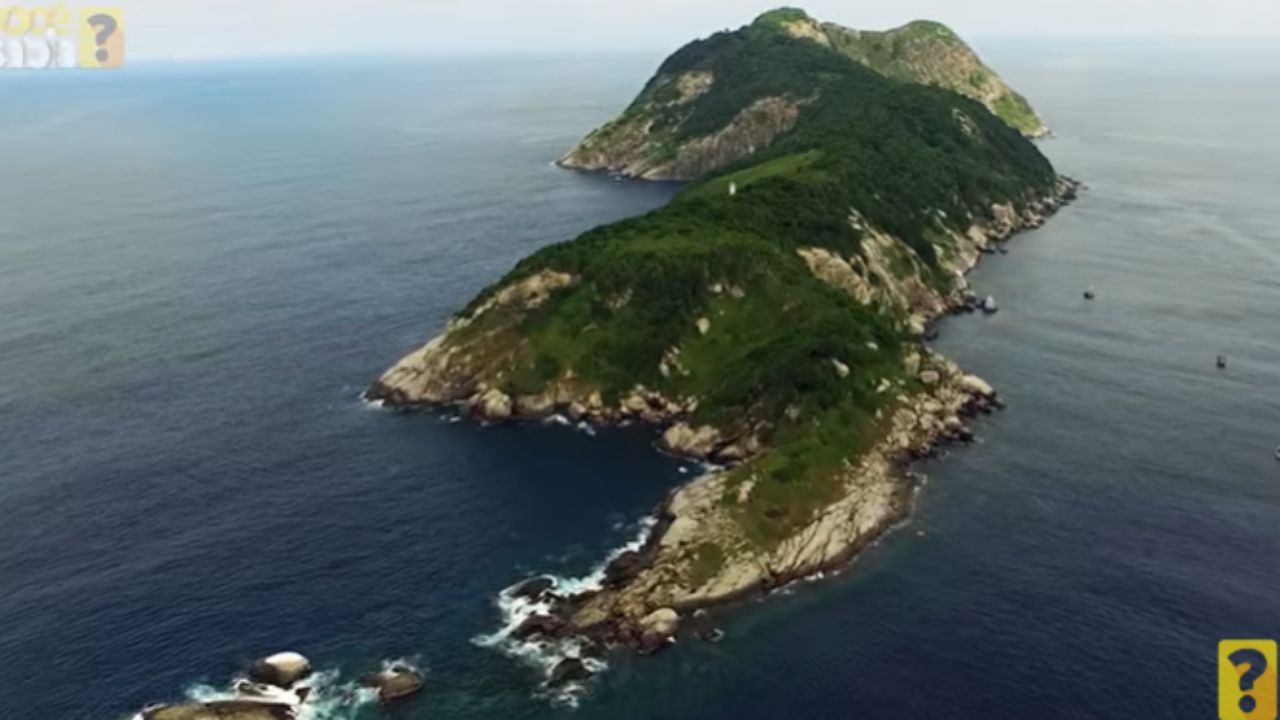
Isolated 35 km From the Coast, Queimada Grande Island Is Home to 4,000 Golden Lanceheads; Their Lethal Venom Inspires Research Against Cancer and Other Diseases, According to the Butantan Institute.
Located just 35 kilometers from the São Paulo coast, a small island in SP holds a global reputation that blends fear and fascination. Known worldwide as Queimada Grande Island, or simply “Snake Island,” access is prohibited by the Brazilian Navy. The reason is the population density of snakes, one of the highest on the planet, where the golden lancehead (Bothrops insularis), an endemic species with a devastatingly fast-acting venom, resides.
However, what makes this place a scientific paradox is that the same venom, capable of killing a human in a few hours, contains a biochemical treasure. According to the Butantan Institute, the leading authority on the island’s study, the molecules in this venom are a frontier of hope for modern medicine. Research that has already transformed the venom of a continental relative into one of the most important drugs of the 20th century is now investigating the potential of the golden lancehead for cancer treatments.
A Natural Laboratory: Why Is the Island So Dangerous?
To understand the unique biology of Queimada Grande Island, it’s necessary to go back 11,000 years in time. With the end of the last Ice Age, the melting ice raised sea levels, isolating what was once a coastal hill and transforming it into a 43-hectare island. As described in a report by Crusoé magazine in May 2025 about the local ecosystem, its geography of rocky cliffs, without beaches, hindered human access and created a natural fortress, trapping a population of golden lanceheads that would follow a completely different evolutionary path from that point on.
-
The village where two rivers run side by side without mixing in Santarém and Alter do Chão reveals some of the most beautiful freshwater beaches on the planet.
-
Brazil’s nuclear submarine with a speed 5 times greater than normal advances after nearly 50 years and R$ 40 billion spent.

-
A Brazilian island charges R$ 0.50 to receive visitors and prohibits any new residents.
-
Why was the Great Wall of China built? The truth that many are unaware of!


Isolated, without natural predators and with a restricted food source, migratory birds, the snakes thrived. Estimates from the Butantan Institute suggest a population between 2,000 and 4,000 individuals, resulting in one of the highest concentrations of snakes in the world. In some areas, the density can reach one snake per square meter. It is this omnipresence of danger that justifies the strict access control, limited to authorized researchers and military personnel, turning the island into a living laboratory, but extremely dangerous.
The Golden Lancehead: Evolution of a Unique Predator
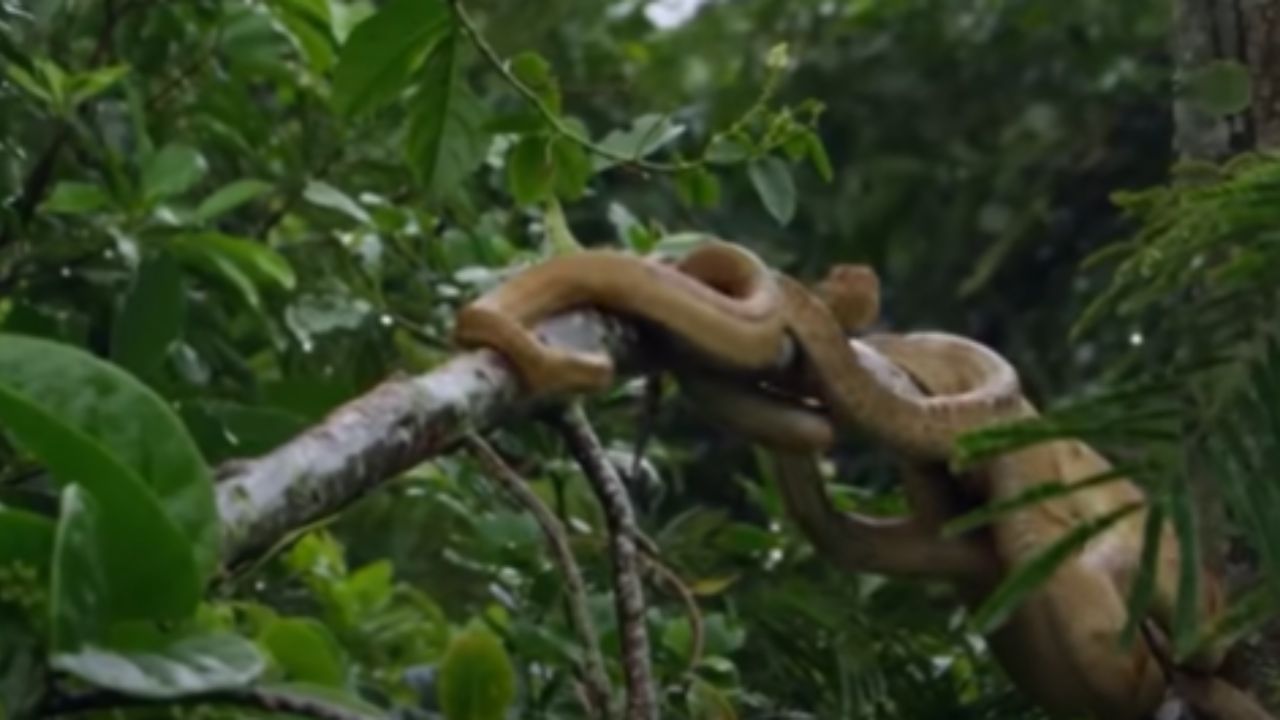
The snake at the center of this ecosystem is the Bothrops insularis, a species that does not exist anywhere else on the planet. It evolved from the common lancehead (Bothrops jararaca), but the island’s conditions forced it to adapt in radical ways. Without the rodents that form the basis of its continental relatives’ diets, the golden lancehead had to specialize in bird hunting, prey that is much more agile and that cannot escape after being bitten.
This selective pressure shaped its body and behavior. The golden lancehead became smaller, lighter, and developed a prehensile tail, used to hold onto tree branches. Its previously nocturnal and terrestrial behavior also became diurnal and semi-arboreal to coincide with bird activity. This specialization, detailed by Butantan researchers, is key to understanding the potency of its venom, a biological weapon developed to ensure that prey is taken down almost instantly.
From Danger to Hope: The Potential of the Venom
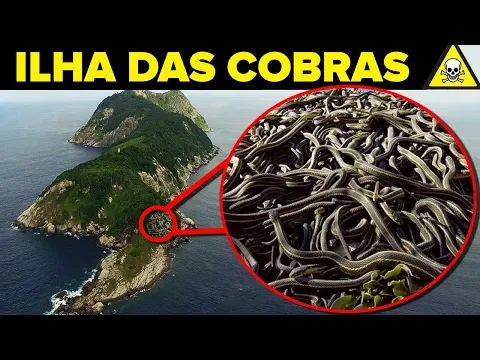

The venom of the golden lancehead is regarded as up to five times more potent than that of its continental relative. Its composition is a complex cocktail of toxins that cause hemorrhage, paralysis, and organ failure in record time. However, it is precisely the molecules responsible for this aggressive biological action that pique scientific interest. There is a powerful historical precedent that justifies this optimism, as recalled in a piece from the Brasil de Fato portal in June 2025 about the development of drugs from venoms.
In the 1960s, Brazilian researchers isolated peptides from the venom of the common lancehead that led to Captopril, the first of a class of medications that revolutionized hypertension treatment and saved millions of lives. Inspired by this success, the Butantan Institute is now investigating the venom of the golden lancehead and has already discovered that one of its molecules has remarkable antitumor potential, capable of inhibiting the progression of cancer cells in laboratory studies. This discovery positions the preservation of this small island in SP as imperative for the future of oncology.
Threats of Biopiracy and the Risk of Extinction
Despite its reputation as a fortress, the ecosystem of Queimada Grande Island is extremely fragile. The golden lancehead is classified as “Critically Endangered” (CR) on the global list of threatened species. The fact that its entire world population is confined to a single tiny location makes it vulnerable to a single catastrophic event, such as a fire or the introduction of a disease, which could lead to its complete extinction.
The danger, however, does not come only from nature. The snake’s fame and the scientific value of its venom have made it a valuable target for biopiracy. Animal traffickers secretly land on the island to capture specimens, which are sold for high prices in the illegal market to collectors or unauthorized laboratories. This criminal activity not only decimates the population but also represents the loss of a genetic heritage that may hold the key to yet undiscovered cures.
Why Protect the Danger?
Queimada Grande Island embodies a paradox: one of the most dangerous places in the world is also one of the greatest promises for human health. The story of Captopril has already proven that the venom of a Brazilian snake can change global medicine. Now, the Butantan Institute’s studies with the golden lancehead open a new frontier, especially in the fight against cancer. Protecting this small island in SP and its lethal resident transcends environmental conservation; it is a strategic investment in the future. Preserving this danger ensures that science has time to decipher the secrets it holds.
Does the discovery of drugs from lethal venoms justify the risks and costs of research? Do you think protecting dangerous ecosystems like this is a priority for the future of health? Leave your opinion in the comments; we want to understand how you see this dilemma.







-

-

-

-

-

-

27 pessoas reagiram a isso.