





 Portuguese
  English
  Spanish
  5 min of reading
  0 comments


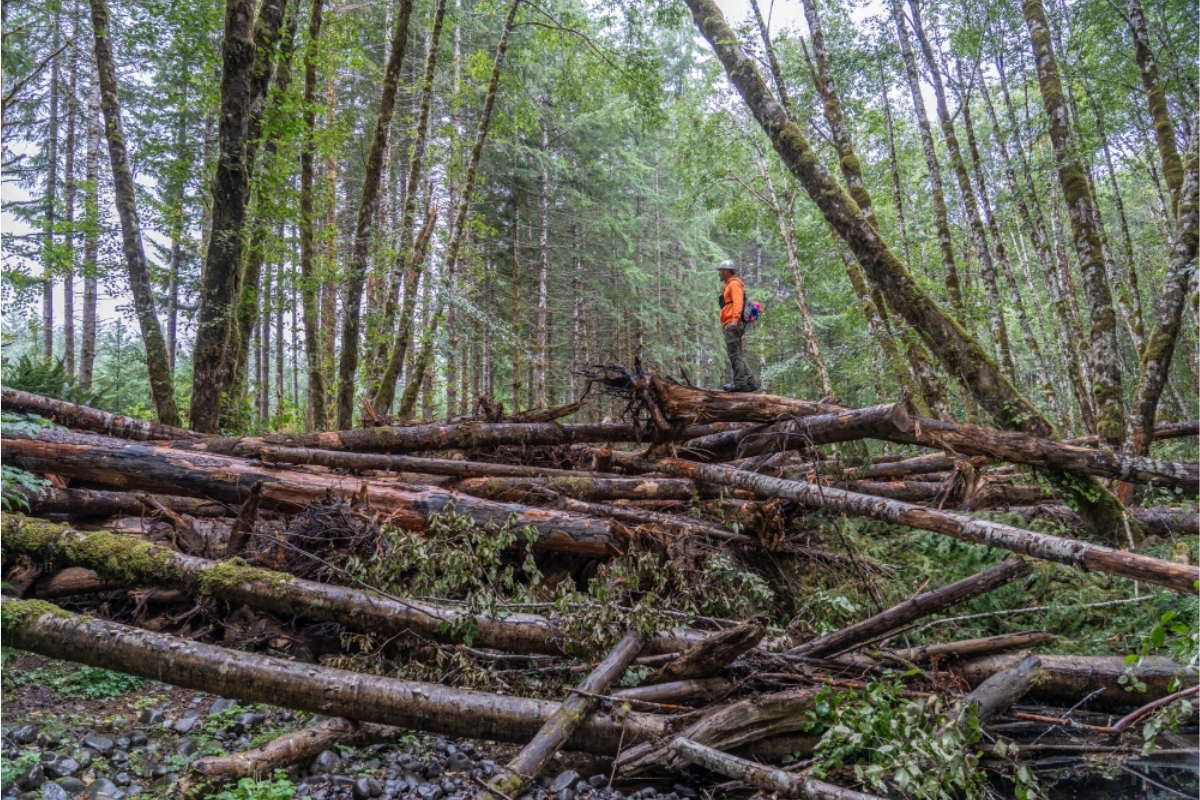
The Initiative Uses Whole Trees to Replicate Natural Processes and Improve Habitat, with Support from the Cowlitz Indian Tribe and Property Owner Participation
The expectation is clear: increase salmon runs and improve fish survival in the future. The goal includes creating spots with more gravel and retained sediments, forming better locations for salmon to grow and spawn.
The Cowlitz Indian Tribe, the Indigenous community mentioned in the material, appears as a central part of the effort to treat salmon as a species linked to food, culture, and population recovery in the region.
The Action Takes Place on the Grays River, in the East Fork, on a 40-Acre Site
The intervention occurs on the Grays River, in the East Fork of the Grays River, on a 40-acre unit. The plan involves adding structures to the river to hold gravel and sediments, providing fish with a more suitable place to spawn.
-
With a cost per shot close to zero, the DragonFire laser could change naval warfare in 2027 and provide British ships with nearly unlimited defense against drones.

-
A British startup creates tires that generate electricity in electric vehicles when passing over potholes, speed bumps, and cracks.

-
Scientists have created robots made with living cells that have their own nervous system, swim on their own, explore the environment, and self-organize without any genetic engineering, and now they want to do the same with human cells.

-
Students create a solar-powered ambulance that operates without a plug, without fuel, and still keeps medical equipment running in remote areas.


The logic of the project is to replicate what happens naturally when trees fall into the river and the material carried by water begins to accumulate behind those logs. This retention creates more stable spots on the bed with better conditions for reproduction.
The material describes that the area had wood sold to the Cowlitz Tribe, and the execution depends on the property owner’s agreement to allow the initiative on their land.
Structures with Logs Replicate Fallen Trees and Help Retain Gravel

The objective of the structures is simple and straightforward: retain sediments and gravel, creating areas that favor spawning and the development of juveniles. The proposal tries to mimic the processes that would occur with the natural presence of wood in the river course.
With logs positioned in a planned manner, the tendency is for the flow to lose strength in some stretches and sediment to begin to deposit in strategic points. This can form environments with more stability for salmon nests and shelter areas.
The project’s expectation includes seeing the structures “hold” part of the material, forming useful locations for fish to grow and reproduce.
Rayonier Appears as the Involved Owner and Provider of Area and Support
Rayonier, a company mentioned in the material, comes into play as the landowner and as a partner in practical realization. Rayonier, a forestry management company cited in the material, is linked to the local coordination and contact with industry professionals.
The described dynamics include the existence of a nearby timber sale to the area where the interventions would take place. The initiative also involves facilitating the planning elaborated by the Cowlitz Tribe, with support for execution to occur at the designated location.
The material highlights that the owner’s support is crucial because without this adherence, the project simply does not advance.
The Cowlitz Indian Tribe Connects Salmon to Culture and Food
The Cowlitz Indian Tribe, the Indigenous community mentioned in the material, is described as known as the “people of the salmon.” Salmon appears as one of the main traditional foods and as a species with strong symbolic value.
The location is treated as important for the cultural identity of the group, with salmon as a focal species for recovery, with the expectation of seeing the fish return in greater numbers.
This view helps explain why the project directly aims at habitat improvement, with conditions for reproduction and growth in restored river areas.
The Project Tries to Address the Source of the Problem by Retaining Sediments in the Headwaters
The indicated approach involves acting “at the source” of the problem, trying to retain sediments in the headwaters. The material mentions the intention to regrade channels, reconnect floodplains, and allow sediments to organize in a more natural way.
The proposal is to reduce the excess material flowing through the system and improve the formation of sections more suitable for the salmon cycle. The area is described as lacking infrastructure, which reinforces the focus on grassroots interventions with adjustments to the river’s own behavior.
Thus, the restoration seeks to give the environment a chance to function closer to natural processes.
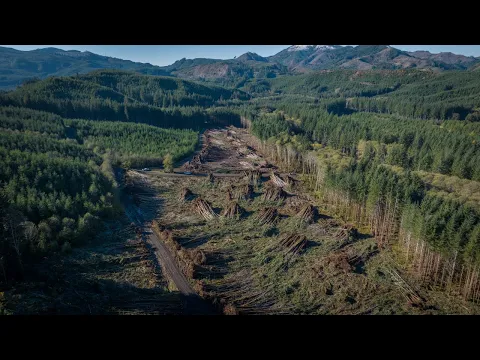
The First Phase Used Local Trees and a 43-Acre Site with Whole Tree Harvest
The material notes that the first stage involved acquiring local trees from private owners, as well as discussions with Rayonier and its professionals. The chosen location appears as a point for future harvest, and in this case, the cited site has 43 acres.
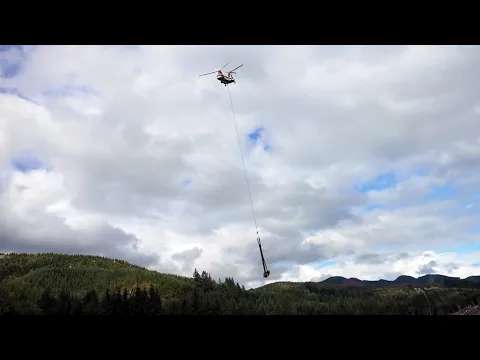
The removal occurred with whole trees, which facilitates the use of material as structure in the river. The text highlights the advantage of the harvest point being next to the restoration areas, as this reduces distance, simplifies transport, and speeds up installation.
This proximity is presented as an important logistical gain for the project.
How the Trees Were Removed to Reduce Erosion and Protect the Watercourses
The described process involves uprooting the trees and working the soil to limit erosion. The material explains that the root wad is seen as essential to disperse water and enhance the performance of structures in the river.
The removal included shaking the dirt from the roots, filling holes, and leveling the soil. There was also an effort to leave as much vegetative debris on the ground as possible, helping to reduce erosion and decrease the risk of material being washed away by rain into the streams.
The justification presented is to avoid runoff creating direct paths to the watercourses, precisely the environments that the project seeks to protect.
Owner Support Defines the Future of the Work and Influences New Projects
The material emphasizes that the existence of an engaged owner determines whether the initiative happens or not. The idea is also linked to the viability of grants and financing applications, which depend on a degraded site and support for execution.
Rayonier, the forestry management company mentioned in the material, is pointed out as an example of an owner who supported the initiative in a way considered beneficial for both parties, involving timber purchase and use of the material on the restored site itself.
The final expectation is to see this type of collaboration repeated in other companies in the sector, increasing the chance for new projects to restore streams and improve salmon spawning areas.
The initiative in the East Fork of the Grays River concentrates efforts on retaining sediments, reorganizing river sections, and creating better conditions for the salmon to complete its cycle.
The expected practical impact is a more functional habitat, with more areas for spawning and development, supported by cooperation between the Indigenous community and landowners.








-

Uma pessoa reagiu a isso.