





 Portuguese
  English
  Spanish
  4 min of reading
  0 comments


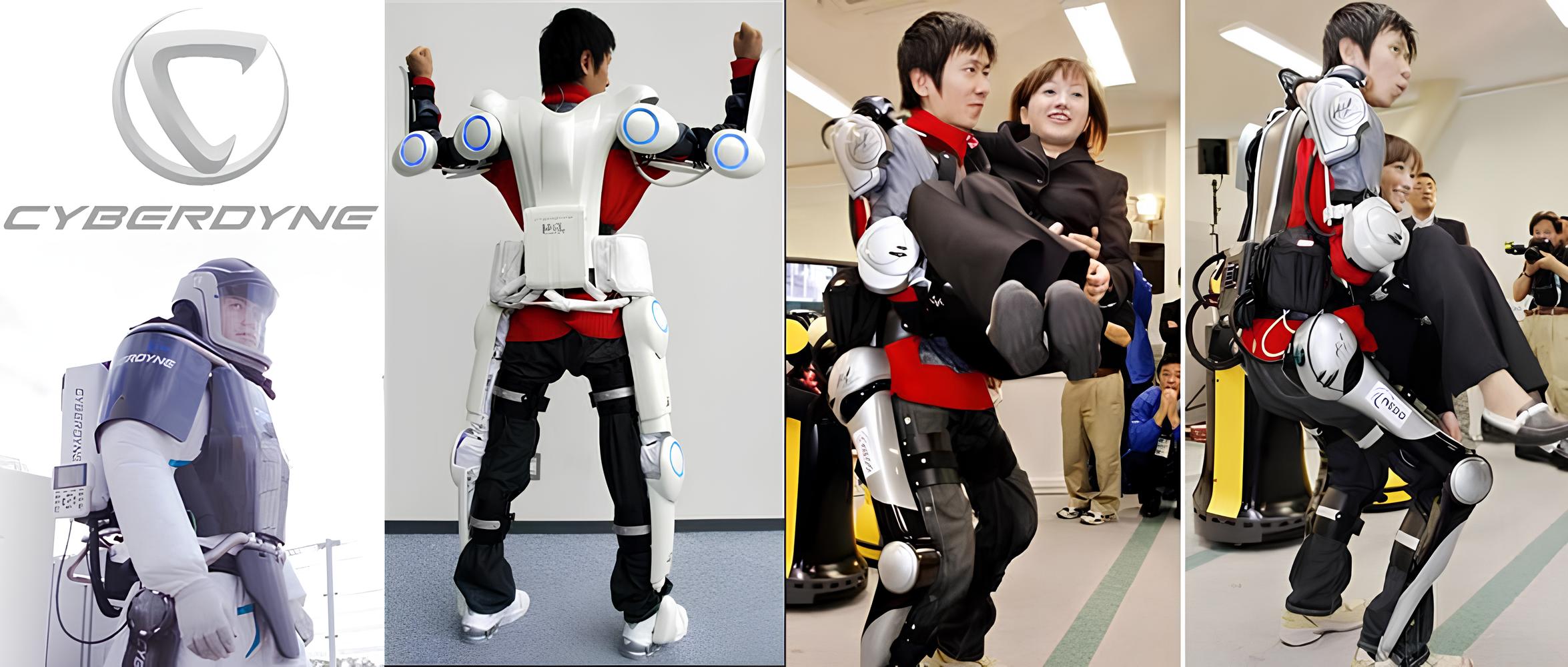
The HAL-5 Exoskeleton, from Japanese Cyberdyne, Increases Human Strength by Up to 20x with Neural Signal Reading. Lightweight, Foldable, and Used in Factories, It Is a Milestone of Assistive Robotics in the World.
While much of the world still associates exoskeletons with science fiction movies or futuristic military prototypes, Japan already uses them daily in factories, hospitals, and rehabilitation centers. The highlight is the HAL-5 from Cyberdyne, a lightweight, foldable, and intelligent exoskeleton that can amplify human strength by up to 20 times — and with 100% safe use, controlled by electrical signals from the body itself.
It is not an exaggeration to say we are talking about one of the most advanced assistive robotics technologies on the planet. The HAL (Hybrid Assistive Limb) not only recognizes the neural electrical impulses of the user, but interprets them in real time to move the limbs with surgical precision, without requiring muscle strength. In practice, this means an ordinary person can lift heavy objects, stand for hours, or climb stairs with minimal effort — as if they had titanium muscles embedded underneath their clothing.
What Is HAL and Why Is It So Revolutionary?
The HAL (Hybrid Assistive Limb) is a robotic exoskeleton created by the Japanese company Cyberdyne Inc., a spin-off from the University of Tsukuba. The main innovation lies in its hybrid control mode, which combines neural signal reading from the skin (via electromyography) with biomechanical sensors and high-precision electric motors.
-
They were brilliant! Scientists discover that our ancestors in China were already making super advanced tools 160,000 years ago, changing everything we knew.

-
Scientists unveil 3 million years of climate secrets hidden in the ice of Antarctica.

-
Ancient farmers created “aggressive plants” that changed nature forever.

-
Astronomers find a “backward” solar system that ignores all the rules of space and leaves scientists scratching their heads!


The result is an exoskeleton that does not just respond to manual commands or buttons, but anticipates the user’s movements, capturing the electrical impulses sent from the brain to the muscles. As soon as you think about moving your arm or leg, the HAL is already activating the robotic actuators to assist you.


This biometric intelligence ensures natural movements, responsive fluidity, and a physical strength enhancement that can reach 20 times the normal human effort — depending on the module and application.
Lightweight, Foldable, and Ready for Industrial Day-to-Day Use
Unlike other military or medical exoskeletons, which are large, rigid, and heavy, the HAL-5 was designed for practical use in real environments. It is made from ultra-light materials, such as aerospace aluminum and carbon fiber, weighing about 10 to 13 kg, depending on the configuration.
More than that: it can be folded, stored, and transported easily, making it ideal for:
- Factory and warehouse operators who need to lift weight repeatedly;
- Construction or logistics employees;
- Maintenance professionals who work in tight spaces;
- Rescue and salvage teams.
Japanese companies like Daiwa House, Honda, and Panasonic already use the HAL exoskeleton in industrial sectors to reduce repetitive strain injuries, increase productivity in manual tasks, and even extend the working capacity of older workers — a sensitive point in a nation with a high aging rate.
How Does It Work in Practice?
The HAL is fastened to the user’s body with straps and supports on the hips, legs, and optionally arms. Then:
- Sensors are placed on the skin, in areas where the electrical signals sent from the brain to the muscles pass;
- A built-in processing system analyzes these signals in real time and anticipates the desired movement;
- High-precision electric motors come into action, assisting or completely replacing the user’s muscular strength;
- The entire structure responds in milliseconds, ensuring balance, lightness, and naturalness in movements.
It is even possible to set the level of assistance: HAL can partially complement the user’s strength (as in rehabilitation), or execute movements almost autonomously, with the operator only controlling the intention — something essential for those with motor limitations.
HAL Exoskeleton: Beyond Industry
Although it gained fame in factories, HAL is already used in:
- Hospitals in Japan and Europe, for the rehabilitation of stroke patients or spinal injuries;
- Physical therapy centers, helping people with motor difficulties to relearn how to walk;
- Military and police training, for simulation of load and prolonged endurance;
- Seniors who want to maintain physical independence, especially in countries with low birth rates.
In Brazil, there are still few initiatives with exoskeletons of this level. But the potential is enormous — both in the health sector and in Industry 4.0, where safety and ergonomics are essential.
Safety, Certifications, and Autonomy
HAL is already certified in the European Union as a Class II medical device, and has regulatory approval in Japan. Its control system prioritizes the user’s safety: if there is an electrical failure, HAL switches to passive mode and can be quickly removed.
The rechargeable battery lasts between 2 and 4 hours of continuous use — more than enough for work or therapy sessions. Industrial versions have extended autonomy and support for quick battery replacement.
How Much Does It Cost and Why Is It Not Everywhere Yet?
Like all emerging technologies, HAL still has a high cost. It is estimated that renting a unit monthly ranges from US$ 1,500 to US$ 3,000, depending on the version. The direct purchase can exceed US$ 20,000 for a complete unit.
However, when compared to the costs of work accidents, medical leave, reduced productivity, and early retirements, the investment is justified. In countries like Japan and Germany, companies and governments already subsidize the use of the technology.
The trend, according to assistive robotics experts, is that prices will drop in the coming years with the popularization of collective-use models and advancements in large-scale production.








Seja o primeiro a reagir!