





 Portuguese
  English
  Spanish
  3 min of reading
  0 comments


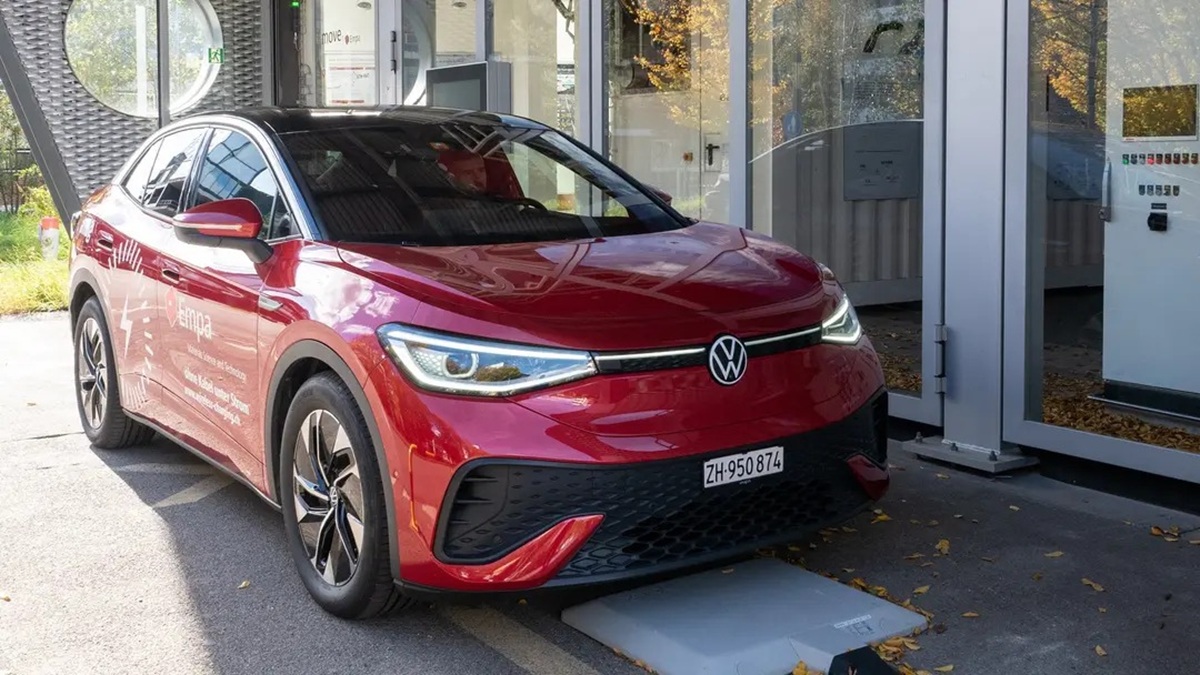
Researchers from Empa and Eniwa AG Tested in Switzerland an Inductive Charging System That Achieved 90% Efficiency, Assessing in Dübendorf How the Technology Works in Daily Use and Why It Matters for the Energy Transition
The INLADE project, developed by Empa with support from the Federal Office of Energy of Switzerland and the cantons of Zurich and Aargau, conducted practical tests of wireless inductive charging using vehicles adapted for daily operation, as described by the researchers involved.
The experiment assessed how the system reacts in everyday use, showing that technology already used in cell phones can be applied to cars, allowing charging while parking over a platform installed on the ground without cables or physical connections.
According to the researchers, energy is transferred from a transmitter coil to a receiving coil in the vehicle through a magnetic field, while an internal display helps the driver align the car precisely over the base.
-
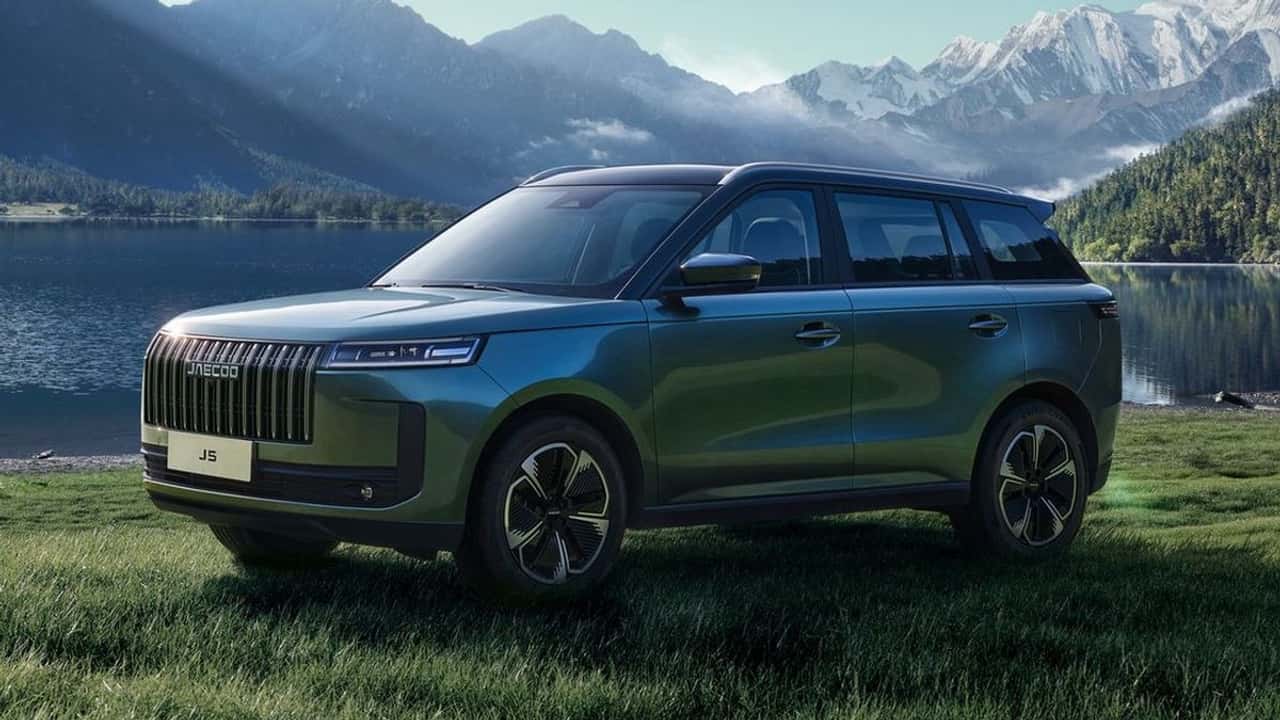
JAECOO takes the lead in global strategic markets and accelerates its trajectory to become a “global blockbuster maker” in the automotive industry.
-
OMODA redefines global aesthetics and elevates the OMODA 7 to a multicultural fashion icon, uniting design, technology, and international identity.

-
A 2024 Toyota Corolla hybrid with only 12,500 km ended up in the junkyard, and when the dismantling staff saw the car, they were shocked because they know that this model easily exceeds 300,000 km without serious mechanical issues.

-
If you want a car with an SUV look but don’t have the money to buy a new one, there are 5 used models starting at R$ 17,900 with raised suspension and body protection that can handle dirt roads without fear.


Before starting operation, the system performs automatic checks to identify objects or living beings between the coils, ensuring safety and avoiding interference, a detail that scientists consider central to the approval process.
This automation enables charging to begin as soon as the car is properly positioned, eliminating manual steps and reducing human errors, which, according to Mathias Huber, represents a direct gain for daily usage.
Adaptation of Vehicles and EMC Safety
AMAG and other partners integrated receiving coils into commercial electric vehicles, connecting components to high-voltage systems and checking electromagnetic compatibility under multiple operational conditions required by the project.
Huber emphasized that the goal of the integration was to ensure that the magnetic field did not interfere with internal devices or pose risks to people, a step considered critical before public circulation approval.
After the EMC tests and all safety checks, the vehicles received authorization to operate on Swiss roads, becoming some of the first in the country and the world to operate daily using integrated inductive charging.
Measured Results in Dübendorf
Assessments took place at the move mobility demonstrator in Dübendorf, where researchers tested the system under snow, rain, and low temperatures, as well as including small parking misalignments to measure technical tolerance.
The results showed efficiency close to 90%, equivalent to conventional plug-in systems, and indicated that operation is reliable even under adverse conditions, information confirmed by Huber in an official statement.
Moreover, the team highlighted that vehicles spend about 23 hours per day parked, which allows for automatic and continuous connection to the power grid, paving the way for use as mobile energy storage units.
The researchers stated that contactless charging contributes to bidirectional charging models, offering potential to stabilize the electrical system as the electrified fleet grows.
The study reinforces that connecting vehicles to the grid more frequently, without active intervention, favors the energy transition while simplifying users’ routines, although some details in the writing of the statement contain minor inconsistencies, such as the segment with the isolated letter v.
For the scientists, the practical validation of the system represents the initial step toward future large-scale applications, concluding the project with comprehensive data on performance, safety, and operational viability in real environments.






Seja o primeiro a reagir!