





 Portuguese
  English
  Spanish
 5 min of reading
  0 comments



With 17 Km In Length, The Route May Change The Path Between Arapongas And Londrina, Promising An Alternative To The Toll And New Impacts On Regional Mobility In Northern Paraná.
The Araucaria Road, located in Northern Paraná, is set to play a strategic role for regional traffic following the announcement of its paving, which is expected to benefit drivers traveling between Arapongas and Londrina.
With 17 kilometers in length, the route emerges as an alternative for those looking to avoid the future toll expected in lot 4 of the state’s new road concessions.
The National Land Transportation Agency (ANTT) officially announced on July 15 that the auctions for lots 4 and 5 of the concession of highways in Paraná will be held on October 23 and 30, 2025, respectively.
-
India announces a plan of $3.06 billion to bring aviation to forgotten regions: 100 new airports, $1.07 billion in subsidies, and regional routes guaranteed for 10 years, from 2026 to 2036, away from the centers.
-
Brazil blocked a proposal from the United States at the WTO that would make the exemption from tariffs on digital products like streaming and ebooks permanent, favoring American tech giants at the expense of developing countries.

-
IPTU exemption for seniors in 2026: see how to secure the benefit.

-
The institute that trained the greatest aerospace engineers in Brazil has just opened its first campus outside São Paulo after 75 years: ITA Ceará will have R$ 445 million, new courses in energy and systems, and classes are expected to start in 2027.

The project includes the reactivation of the Arapongas toll plaza, which may directly impact the movement of residents and workers in the region.
The importance of paving the Araucaria Road grows in light of the fare adjustment scenario and the search for more economical routes.
In addition to shortening distances between the main cities of the northern Paraná axis, the road could serve as an option for those traveling to the Ivaí Valley, Northern Pioneers, and even to the state of São Paulo.
Drivers from Apucarana, a city also part of the Ivaí Valley, and from neighboring municipalities are already considering the new route as a viable alternative.
Works And Regional Mobility
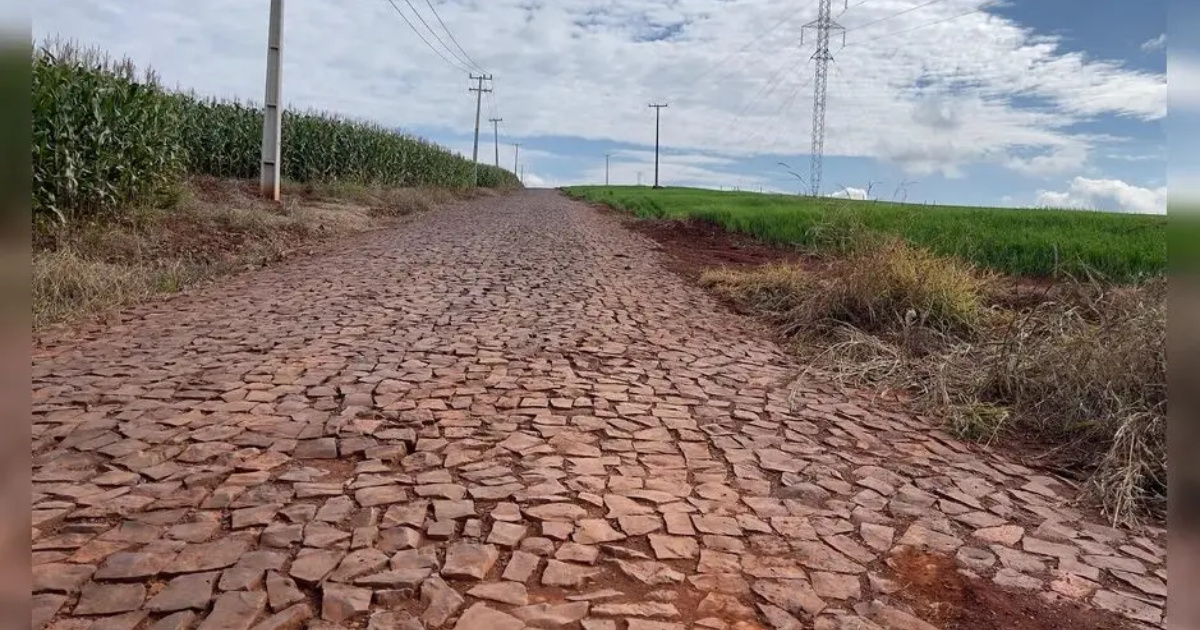
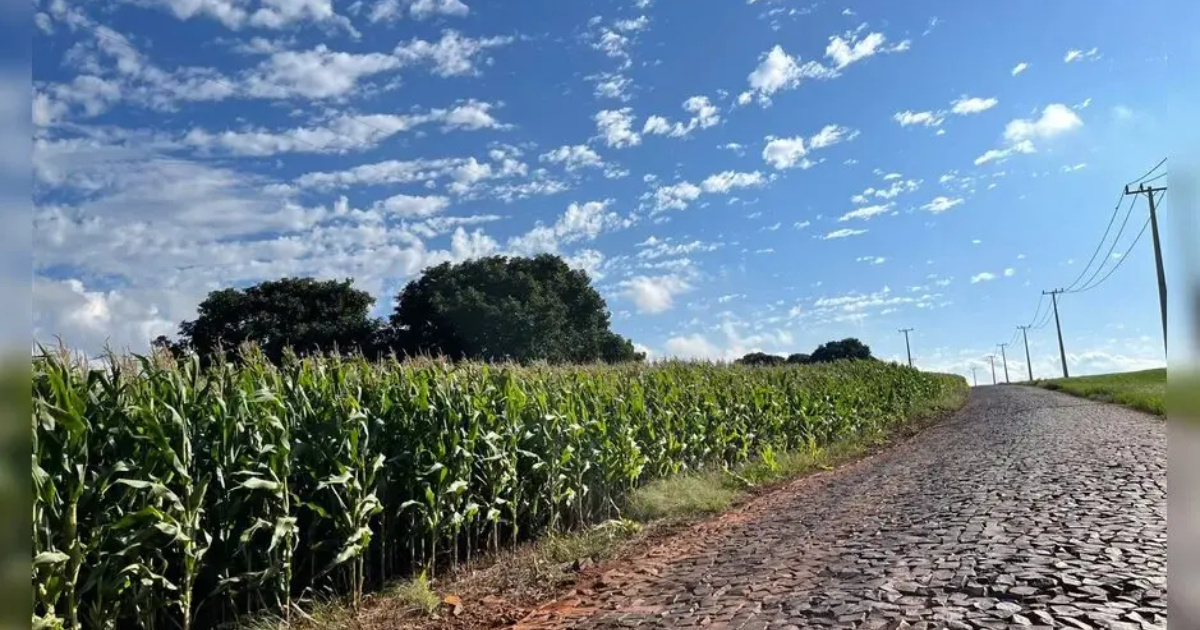
Of the 17 kilometers of the route, about 12 km are located in Arapongas, where there is already uneven stone paving, considered suitable for receiving the definitive paving layer.
The other 5 km belong to the municipality of Londrina, in a stretch known as Santa Maria Road or Ponto Mineiro, which is currently unpaved and will have paving works started from scratch.
The investment required for paving with Hot Mix Asphalt Concrete (CBUQ) is estimated at approximately R$ 7.5 million, according to information released in July 2025.
However, the work is still in the project development phase, a stage that requires engineering analysis and processing with state agencies.
Highway Concessions In Paraná
The lot 4 of the highway concessions in Paraná, as specified by ANTT, totals 627.52 kilometers, covering three federal highways — BR-272, BR-369, and BR-376 — in addition to eight state highways, such as PR-182, PR-272, PR-317, PR-323, PR-444, PR-862, PR-897, and PR-986.
The network connects regions in the West, Northwest, and North of the state, from the border with Paraguay in Guaíra to the border with São Paulo in Nova Londrina.
The planned investments for the road package amount to R$ 18.2 billion, with R$ 10.9 billion allocated exclusively for infrastructure works.
Among the proposed improvements are:
- 231 kilometers of duplications
- 87 kilometers of additional lanes
- 59 kilometers of bypasses
- 39.4 kilometers of marginal roads
- 34 kilometers of bike lanes
- 39 overpasses
- Eight wildlife crossings
- Bus stops and other safety devices
Paths Of Integration And Regional Development
According to the mayor of Londrina, Tiago Amaral (PSD), the paving of the Araucaria Road is part of the Paths of Integration program, aimed at strengthening the connection of Londrina with cities in northern Paraná, such as Apucarana, Marilândia do Sul, Rolândia, Cambé, as well as the Northern Pioneers and Tamarana.
“We will connect Londrina with Northern Pioneers through a bridge we will build, and also with Tamarana. This will be the great connection that will make Londrina a reference city and a bridge to the northern region of Paraná,” declared Amaral.
According to the mayor of Arapongas, Rafael Cita (PSD), there is still no defined timeframe for the start of the works, as there is a schedule that needs to be aligned with the State Department of Agriculture and Supply (Seab), responsible for managing the project.
He emphasizes the political articulation made with the state government:
“We have the commitment from Governor Ratinho Júnior that this investment will be made, so we are moving forward with the projects. Since the election, Tiago and I have been discussing this integration, not just between Londrina and Arapongas, but for the whole region, because it is necessary.”
Impacts Of The New Alternative Route
The general superintendent of Support to Municipalities in the Civil House, Sérgio Onofre, emphasizes the regional impact of the work.
He recalls that the integration between cities has always been a demand from residents:
“Even before Tiago took over the Mayor’s Office, he went to Amepar and made a speech about the integration of municipalities. This will be the first work of this project, and the entire region benefits from it. We have needed this for many years, to strengthen our region, and now I believe it will become a reality,” emphasized Onofre.
The paving of the Araucaria Road is seen as an essential measure to promote economic and social development in Northern Paraná, facilitating the transport of people and goods and expanding opportunities for various productive sectors.
With the reactivation of the toll in Arapongas, the road emerges as an alternative route, especially for those seeking economy, convenience, and safety.
Furthermore, regional mobility is expected to be positively impacted, as the new road could alleviate traffic flow on traditional road stretches and reduce travel time to neighboring cities and nearby states.
Future Of Regional Mobility In Paraná
With all these planned investments and changes for Paraná’s road network, the paving of the Araucaria Road could represent a significant transformation for those who depend on the roads in the Northern region.
However, in light of the new scenario, what other alternative routes could emerge in response to the implementation of tolls? What do residents and drivers expect for the future of regional mobility in Paraná?







-

Uma pessoa reagiu a isso.