





 Portuguese
  English
  Spanish
  7 min of reading
  1 comment


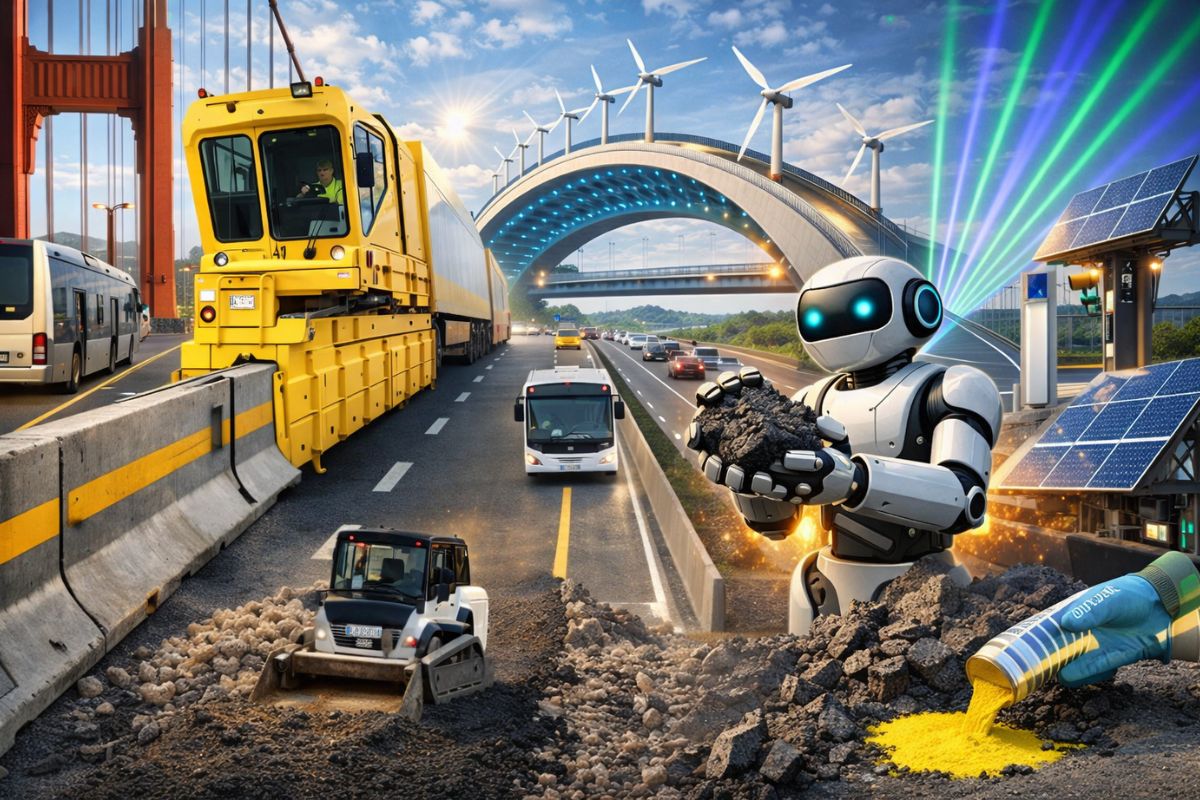


From Roads That Generate Solar Energy to Intelligent Moveable Barriers, Real Technologies Are Beginning to Redesign Highways, Reduce Accidents, and Push the Future of Transportation Worldwide to a New Level of Safety and Efficiency.
In several parts of the planet, a lot has already changed on highways without the average driver noticing. While most still think of asphalt, tolls, and potholes, engineers, robots, and sensors are turning roads into power plants, active safety systems, and even real-time data platforms. The innovations that today may seem like curiosities from an internet video are, in practice, the building blocks of the future of transportation worldwide.
From the Netherlands to South Korea, passing through urban roads, rural areas, and even suspended bike lanes, there are roads that glow in the dark, charge electric cars in motion, alert drivers when they veer off-track, and even self-repair.
This is not a distant science fiction scenario: there are dozens of real technologies already functioning in test sections, logistical corridors, and cities that see road infrastructure as a platform for innovation.
-
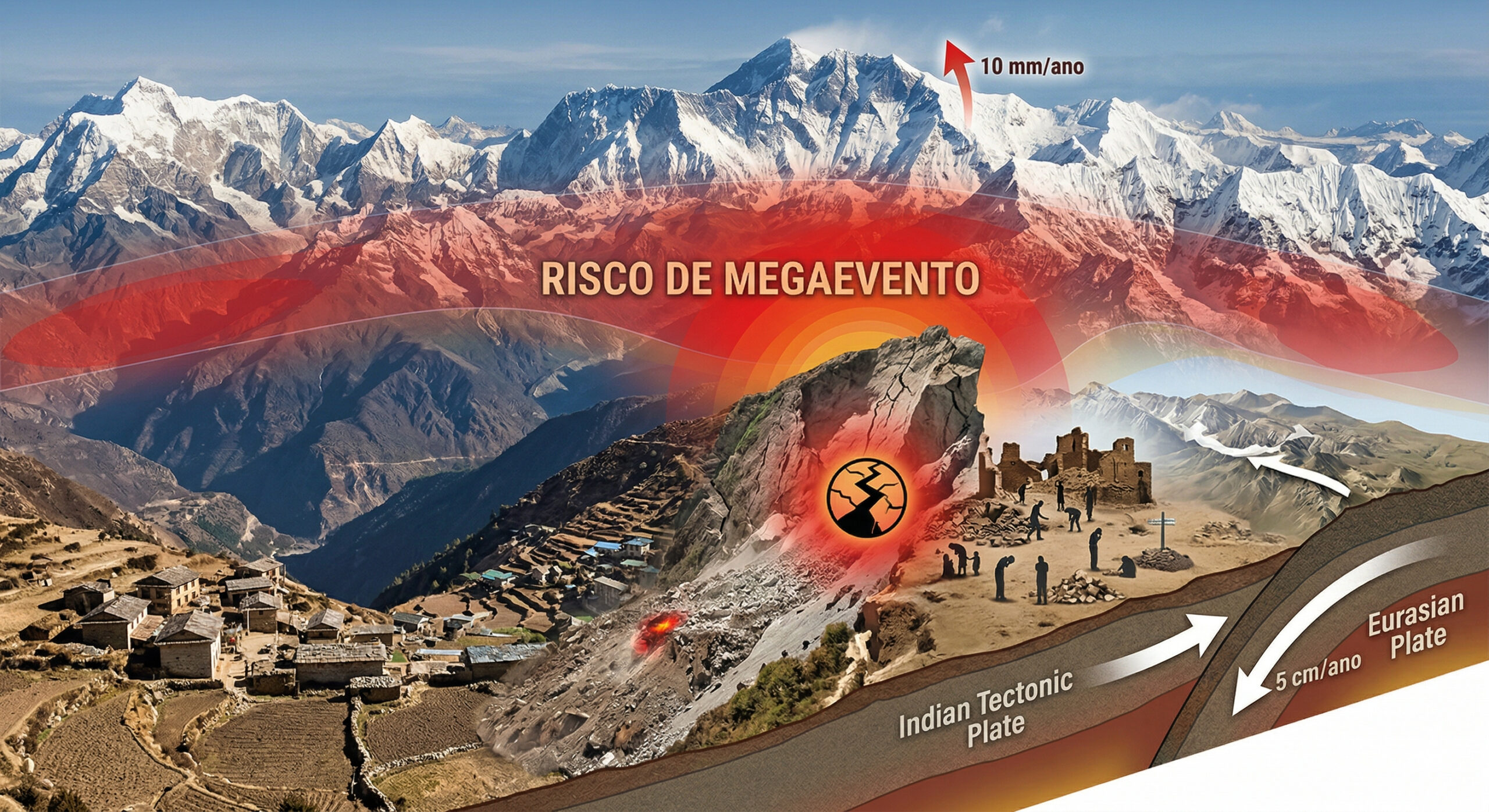
The Himalayas continue to grow to this day, with tectonic plates advancing 5 cm per year, mountains rising up to 10 mm annually, and the 2015 earthquake that killed 9,000 people may have increased the risk of an even larger seismic mega-event.
-
At an altitude of 400 km by astronauts from the International Space Station, Paris transforms at night into a golden mesh so precise that it reveals the outline of the Seine River, avenues, and entire neighborhoods like a luminous map drawn over the Earth.

-
iPhone 17 reaches historic low price with 256 GB, 120 Hz display, and drops to R$ 5,703 on Shopee, featuring A19 chip, dual 48 MP cameras, battery life of up to 30 hours, and advanced AI features.

-
Trip to Mars getting closer: Pulsar Fusion, from the UK, advances with plasma ignition in fusion engine and could drastically reduce space travel time, making crewed missions faster, safer, and economically viable.


Roads That Glow, Generate Energy, and Communicate with Drivers
One of the most symbolic images of this movement is that of highways glowing in the dark.
In the Netherlands, engineers created a test section where the road absorbs sunlight during the day and releases that glow at night, with phosphorescent markings that guide drivers even in poorly lit areas.

In future versions, the pavement itself could display temperature alerts, warning of ice risk directly on the asphalt.
In the same line of pavement reinvention, solar roads are emerging, with panels integrated into the surface.
These modules not only generate clean energy but also incorporate configurable LEDs, melt snow with integrated heating elements, and support extremely heavy loads, in the order of hundreds of thousands of kilograms.
The idea is to transform every kilometer of highway into energy infrastructure, connecting transport, electricity, and data within a single system.
There is also the solar bike lane in South Korea, which combines an exclusive route for cyclists with a canopy of photovoltaic panels.
While protecting cyclists from sun and rain, the structure generates enough energy to power lighting and charge electric vehicles. In this model, the shoulder ceases to be a “dead” area and becomes a strategic active space in the energy transition.
Wind Turbines, Recycled Plastic, and Intelligent Asphalt
On the sides of the roads, vertical axis wind turbines capture the air movement created by the passage of cars and trucks.

These structures, ranging from 1 to 3 meters tall, generate electricity from natural wind and traffic-induced flow, and are also equipped with sensors to measure temperature, humidity, CO₂, and even record vibrations that can aid in earthquake monitoring.
On the pavement, the challenge is different: to increase longevity and reduce environmental impact. The PlasticRoad technology is born precisely with this proposal, using prefabricated modules made from recycled plastic.
Each section uses the equivalent of hundreds of thousands of plastic cups, is installed faster than traditional asphalt, and provides internal space for cables, pipes, and drainage systems. Instead of throwing waste away, the system transforms trash into infrastructure.
Another avenue is mixing rubber from old tires into asphalt. The components are separated, ground into specific particle sizes, and incorporated into the mixture.
The result is a more elastic pavement, resistant to temperature variations, and less prone to deep cracks.
Besides extending the lifespan of asphalt by several years, this type of solution improves drainage, reduces the risk of aquaplaning, and can even decrease fatal accidents compared to conventional roads.
To deal with heavy rains, permeable pavements are emerging that allow rainwater to infiltrate directly into the surface and follow through underground granular layers.
Integrated with retention ponds and infiltration systems, they help reduce flooding in parking lots, avenues, and margins, showing how the future of transportation worldwide also involves intelligent water management.
Robots, Sensors, and Roads That Self-Repair
In the field of maintenance, the classic scene of stopped teams, cones, slowdowns, and giant queues begins to share space with robots and autonomous systems.
There are machines that sweep pavements with high-resolution cameras, identify cracks of just a few millimeters, and apply hot sealant in motion at speeds of up to 5 km/h, without needing to close lanes.
Others, mounted on trucks, detect potholes, fill them, and compact the material practically in a “pit stop” mode on the road.
For spot repairs, thermoplastic solutions can close holes of 15 to 20 centimeters in minutes, adhering directly to the road when heated to specific temperatures.
Instead of temporary patches that come loose in the first rain, the pavement now features long-lasting “band-aids.”

The direct consequence is a safer road network, with fewer surprises in the middle of the lane and lower long-term maintenance costs.
Robots also take on repetitive and risky tasks, such as marking lanes and symbols on asphalt.
Autonomous equipment can draw lines at constant speeds, with millimeter precision and application of thermoplastic paints enriched with reflective glass beads, improving visibility at night and in the rain.
In some models, the operator monitors everything from a distance, reducing exposure to heavy traffic.
In cities, autonomous sweepers monitor traffic lights, avoid pedestrians, and clean streets 24 hours a day, while automated systems position traffic cones in perfect sequence, without requiring a worker to step onto the asphalt.
The gain is not only in productivity but mainly in safety for teams that previously relied on direct contact with heavy traffic.
Smart Bridges, Living Barriers, and Lanes That Change Automatically
The concept of dynamic infrastructure appears strongly in bridges and barriers.
The Astra Bridge, for example, functions as a massive mobile structure that installs over sections under renovation, allowing cars to keep passing over while teams work safely below.
In just a few days, the system is assembled, moved, and repurposed at another location, reducing congestion typically associated with large projects.
Moveable barriers like the Road Zipper utilize a conveyor belt in an S-shape to raise, move, and reposition heavy concrete blocks while vehicles advance.

This way, it is possible to change a lane’s location, create a reversible corridor during peak hours, or make space for construction in a matter of minutes, without interrupting the flow.
In some areas, the lanes themselves become intelligent, with embedded LED panels in the pavement capable of opening, closing, and redirecting traffic according to congestion.
It’s as if the highway itself gains “software,” rearranging its lanes in real-time to better accommodate vehicle flow.
For lateral protection, barriers with rotating cylinders emerge that convert the energy from an impact into movement, reducing the force on the vehicle and its occupants. The use of bright colors also enhances visibility in curves and dangerous sections.
In urban stretches, wavy modules made from recycled materials create protected bike lanes that withstand low-speed vehicle impacts, separating bicycles and cars without radical reforms to the road.
Energy, Data, and Wireless Charging on the Highway
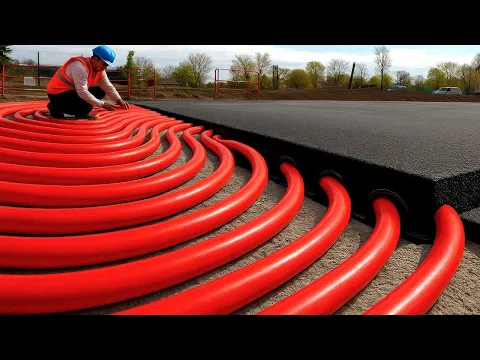

The future of transportation worldwide also involves a direct connection between the road and the vehicle.
In some corridors, coils beneath the asphalt transfer energy inductively to electric cars, buses, and trucks equipped with specific receivers.
While driving or parking over these sections, the batteries are charged wirelessly, reducing the need for long stops.
Another solution relies on electrified highways with overhead lines similar to those used for trams. Trucks with retractable pantographs connect to these cables in specific segments, running on electricity and switching to battery or diesel upon leaving the electrified segment.
The goal is to drastically reduce the size of heavy batteries and cut emissions on long-distance routes.
Mobile charging stations, mounted on platforms with solar panels and batteries, can already serve three to four electric vehicles simultaneously in remote locations or emergencies.
The combination of roads that produce energy and vehicles capable of capturing it in motion transforms the road network into a sort of “continuous outlet” along the way.
Enhanced Safety with Light, Sound, and Intelligence
At the most dangerous curves, radar systems monitor the approach of vehicles in opposite directions.
When there is a risk of collision at blind curves with minimal visibility, posts equipped with sensors activate high-intensity horns to alert drivers.
This is a direct and aggressive way to draw attention seconds before a possible crash.
In construction areas and urban crossings, intelligent pedestrian crossings detect the presence of people and activate high-brightness LEDs to notify drivers, while augmented reality systems on tablets and smartphones help engineers compare, in real-time, what was designed with what is being built.
On night-time highways designed for long distances, colored lasers projected onto vehicles create luminous trails extending kilometers ahead.
The aim is not only visibility but to keep the driver alert, combating monotony and fatigue on long journeys, which are among the main causes of serious accidents.
A World Where the Road is No Longer Just a Path
When looking at this mosaic of innovations, it becomes clear that highways are no longer just strips of asphalt.
They are becoming platforms for energy, data, active security, intelligent drainage, and real-time logistics.
Instead of passive infrastructure that merely wears out, the road of the future communicates with vehicles, generates electricity, adapts to the weather, self-repairs more quickly, and helps save lives.
In this scenario, the future of transportation worldwide is not limited to autonomous cars or electric vehicles.
It depends as much on the intelligence of what travels over the asphalt as on the intelligence of the asphalt itself and everything around it: sensors, panels, barriers, robots, and connected systems.
In light of all this, if you could choose just one of these technologies to see implemented on a large scale in your area, which innovation do you think would most change the future of transportation worldwide in the practical day-to-day?









A estrada que brilha durante a noite