





 Portuguese
  English
  Spanish
  5 min of reading
  0 comments


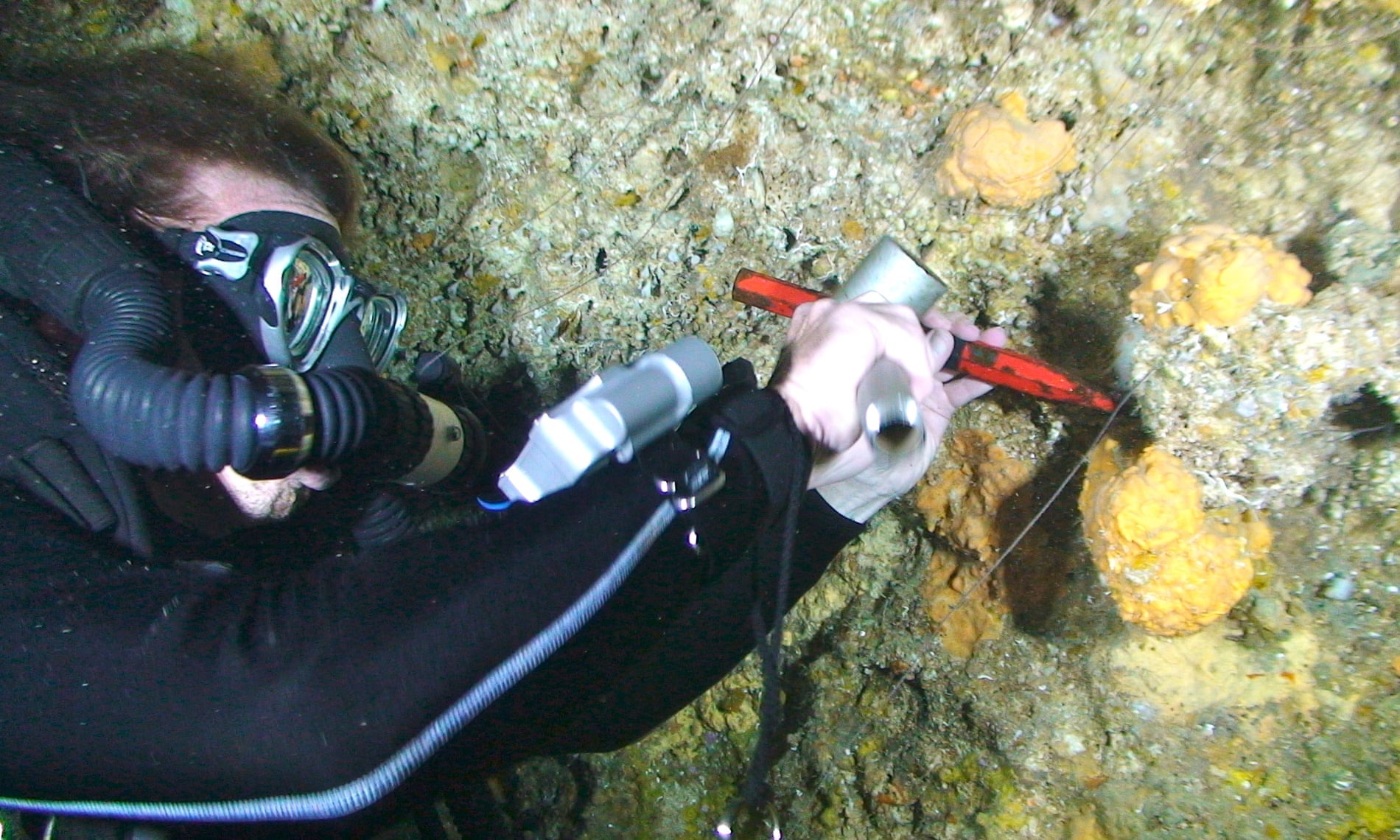
A Scientific Study Based on Century-Old Sea Sponges From the Caribbean Reveals That Organisms at the Ocean Floor Registered, in Their Skeletons, Temperature Variations and Environmental Impacts Since the Pre-Industrial Period, Providing New Evidence About When and How Human Activity Began to Alter the Climate and Marine Ecosystems on a Global Scale
For centuries, humanity has treated the oceans as inexhaustible frontiers. They have absorbed waste, heat, carbon, and chemicals without precise measurement of the cost of this ongoing pressure. Now, a scientific study reveals that part of this impact has been recorded in living organisms that inhabit the ocean floor – creating a biological archive of climate and pollution generated by human activity.
The research was published in the journal Nature Climate Change, one of the most respected in the world in the environmental field, and uses century-old sea sponges from the Caribbean as natural recorders of climate change since the pre-industrial period.
The Study That Led to the Discovery
The research was conducted by scientists from institutions in the United States and Europe, specializing in paleoclimatology, marine geochemistry, and physical oceanography. The focus was on sponges of the genus Ceratoporella, organisms that live in deep, stable, and cold waters of the Caribbean.
-
Marine fossils found at over 8,800 meters altitude on Everest and in large mountain ranges have proven that entire continents move, oceans disappear, and tectonic plates collide over millions of years, revolutionizing science in the 20th century.
-
What if the Sun disappeared suddenly? Simulation shows Earth in darkness within minutes, extreme cold, and rapid collapse of life on the planet.

-
A 2,400-year-old iron foundry has been discovered in Senegal with 100 tons of slag, 35 furnace bases, and signs of nearly eight centuries of continuous metallurgical activity.

-
Four humans are flying towards the Moon inside the Orion capsule launched by the SLS rocket, and on April 6, Artemis II will disappear behind the far side of the Moon without communication with Earth for nearly an hour.

These sponges grow extremely slowly – in some cases, less than a millimeter per year – and can live for over 300 years. Over this time, they form a calcareous skeleton in successive layers, similar to the growth rings of trees or polar ice layers.
Each layer preserves a chemical signature of the seawater at the moment it was formed.
How Sponges Became Climate Archives
The central element of the analysis is the ratio of strontium to calcium (Sr/Ca) present in the skeleton of the sponges. This ratio varies predictably with ocean water temperature at the time of growth.
By analyzing these ratios layer by layer, researchers were able to reconstruct a continuous series of ocean temperatures since the early 18th century – long before the existence of modern thermometers or ocean buoys.
This method had been used in shallow corals, but the distinguishing factor of deep sponges is their environmental stability: they do not experience large seasonal variations, storms, or direct surface influences, making the record cleaner and more continuous.
What the Data Reveals About Global Warming
The results surprised part of the scientific community. According to the study, the ocean was already measurably warming earlier than many traditional instrumental records indicate, suggesting that:
- The warming associated with industrialization began earlier
- The planet may have already exceeded 1.5 °C above pre-industrial levels, the limit defined by the Paris Agreement
- Part of the historical warming may have been underestimated
The authors estimate that the current global average temperature is closer to 1.7 °C above the pre-industrial period, although this conclusion is the subject of intense scientific debate.
The Direct Relationship With Ocean Pollution
Although the study primarily focuses on temperature, it is directly connected to the issue of pollution. Ocean warming does not occur in isolation – it amplifies the effects of chemical contaminants, microplastics, and excess nutrients.
According to the National Oceanic and Atmospheric Administration (NOAA), warming accelerates processes such as:
- Ocean acidification
- Reduction of dissolved oxygen
- Increased absorption of chemical pollutants
- Physiological stress in marine organisms
These combined factors increase mortality, alter food chains, and reduce ecosystem resilience.
Microplastics and the New Human Geological Record
In addition to heat, the oceans are accumulating a physical legacy of human pollution. Microplastics have been found at all ocean depths, including in abyssal zones.
An extreme symbol of this contamination is the Great Pacific Garbage Patch, a concentration of floating debris in the North Pacific that occupies an estimated area of over 1.6 million km², according to studies published in Scientific Reports.
Although the study of sponges does not analyze microplastics directly, it demonstrates that fixed and long-lived organisms record cumulative environmental changes, reinforcing the idea that human impact is becoming a permanent part of the planet’s natural history.
Controversies and Scientific Limits
Despite methodological robustness, the study does not have unanimous support. Experts linked to the Science Media Centre and the IPCC point out significant limitations:
- The record reflects regional ocean temperature, not global
- Converting deep ocean data into global averages involves uncertainties
- Small chemical variations may have multiple causes
These scientists advocate that sponge data be integrated with other records – such as ice cores, marine sediments, and climate models – before formal revisions of global indicators.
An Ethical Dilemma: Preserve or Extract?
The research itself raises a paradox. To obtain these historical records, it is necessary to collect parts of the sponges’ skeletons, organisms that took centuries to grow.
Although scientists use minimally invasive techniques, the debate is growing over how far science can exploit rare and slow organisms in the name of knowledge – especially in a context of accelerated ocean degradation.
An Uncomfortable Balance of the Human Era
What makes this discovery particularly powerful is not just the scientific data but the symbol it carries. An organism without a brain, language, or technology was able to accurately record the transformation of the planet caused by a species that considers itself rational.
The Caribbean sponges not only document the climatic past. They expose, layer by layer, the onset of an era in which human activity began to alter entire planetary systems – a central landmark of what many scientists already call the Anthropocene.
In the face of this silent archive at the ocean floor, the question that remains is not just how much we have polluted, but how much of this damage will be reversible – and whether science will be able to answer before the living records themselves disappear.









-

-

-

-

-

-

42 pessoas reagiram a isso.