





 Portuguese
  English
  Spanish
  4 min of reading
  0 comments


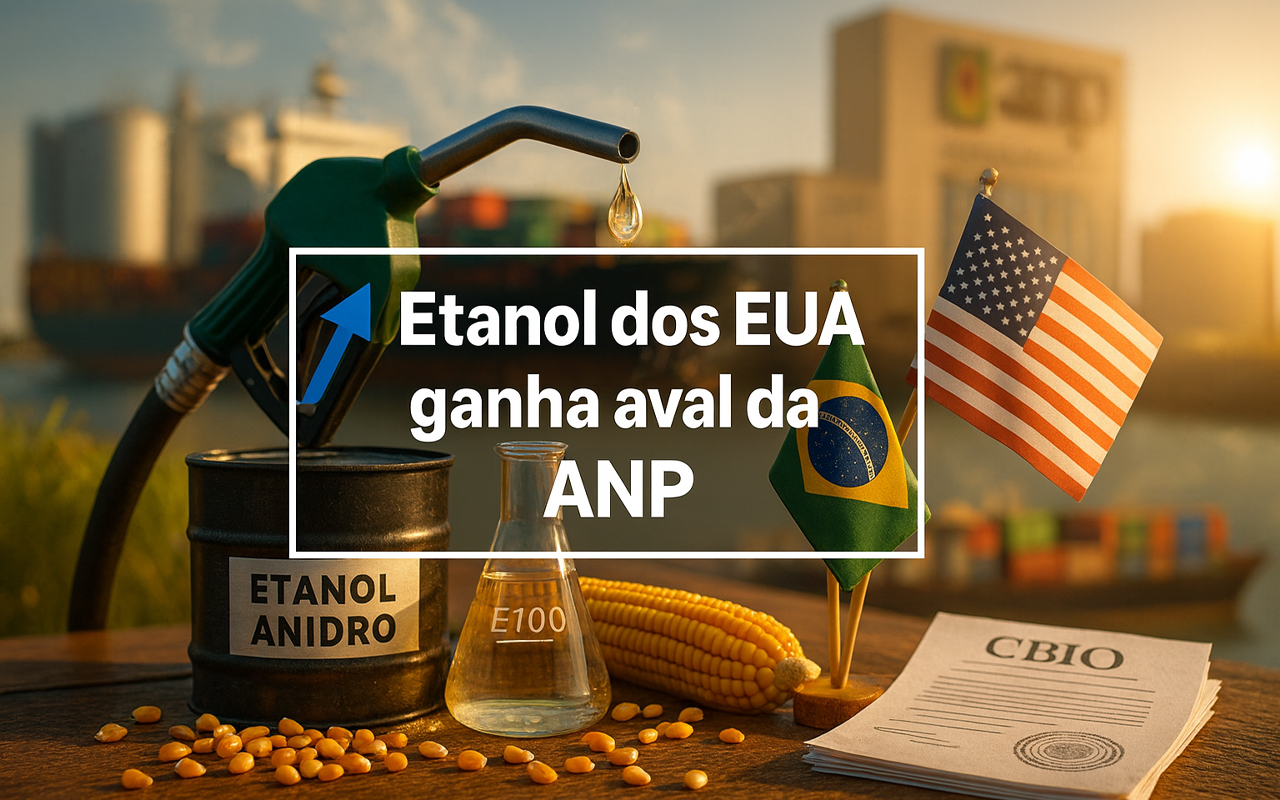
In A Historic Decision, ANP Authorized Anhydrous Ethanol From Corn In The USA To Generate CBIOs In RenovaBio. Imported By Copersucar And Produced By Plymouth Energy, The Fuel Comes With Certification Of Efficiency And Low Carbon Intensity.
The National Agency of Petroleum, Natural Gas and Biofuels (ANP) approved the first certificate of efficient production of biocombustibles for an importer. In practice, for the first time, an imported biocombustible, anhydrous ethanol from the United States, will be able to generate CBIOs in Brazil, within the RenovaBio. It is a regulatory milestone that expands the program’s scope and creates a precedent for future similar operations.
According to ANP, the certificate was granted to Copersucar, which will import the ethanol produced by Plymouth Energy LLC in Iowa (USA). The measure meets the energy-environmental efficiency criteria required by RenovaBio and connects a foreign producer to the Brazilian market for decarbonization credits.
This result was only possible after the regulatory update carried out in June 2025, which detailed rules for foreign producers and importers, accreditation of inspecting firms, and how to calculate the Efficiency Score based on the carbon intensity of the biocombustible. The new rule replaced previous guidelines, providing clarity on the certification path for imports.
-
He sold his share for R$ 4 thousand, saw the company become a giant worth R$ 19 trillion, and missed the opportunity of a lifetime.

-
Elon Musk’s Starship megafrocket puts $8 billion at risk, raises alarms in the market, and could affect technology, mining, and space internet startups in the coming years.

-
Airfare prices may rise with increasing fuel costs, and the government is considering urgent measures to avoid a direct impact on the wallets of Brazilians.
-
Chocolate prices soar nearly 15% and become a luxury item for Easter 2026, with increases surpassing inflation and changes in Brazilian consumption habits.


Copersucar, Plymouth Energy, and The Corn Ethanol Route
Copersucar has been authorized as an importer eligible to participate in RenovaBio, allowing it to back CBIOs with anhydrous corn ethanol sourced from Plymouth Energy. Although the import of ethanol is not new, the link to RenovaBio and, therefore, to the issuance of credits is the missing piece to integrate international flows into Brazil’s decarbonization policy.
According to sector coverage, the certification process involved hiring a certifier in January, public consultation between February and March, and a final report at the end of March, prior to ANP’s approval in August. The timeline shows the technical complexity of the lifecycle audit required to validate the efficiency of the imported product.
The public announcements do not detail volumes or shipping windows, which requires caution in estimating immediate supply impacts. Still, market agents believe that the entry of imported ethanol with CBIOs could increase credit liquidity and provide a safety valve in times of tight harvests or higher demand for targets.
RenovaBio, CBIOs, and Targets: How It Works And What Could Happen To Prices
CBIOs are decarbonization credits backed by emission reductions in the lifecycle of certified biocombustibles. Fuel distributors buy CBIOs to meet annual decarbonization targets. With more CBIOs available, the economic trend is to reduce price pressures on the credit, which facilitates target compliance and mitigates regulatory risks. It is an indirect effect, but relevant to the cost of the chain.
In 2025, ANP strengthened oversight with the publication of a prohibition list for delinquent distributors, banning sales with companies on the list and establishing fines that can reach R$ 500 million for those who violate the prohibition. The goal is to provide effectiveness to RenovaBio and signal that purchasing CBIOs in the required volume is not optional.
This environment of increased enforcement makes CBIO liquidity even more strategic. By allowing enabled importers to generate credits, ANP adds a buffer of supply in years of harvest or logistical challenges, without renouncing the central criterion: energy-environmental efficiency certified by audit.
The New ANP Rule (Resolution 984/2025) And The Path For Foreigners
The ANP Resolution No. 984/2025 consolidated the framework regulating the certification of efficient production or importation of biocombustibles and the accreditation of inspecting firms, replacing norms from 2018 and 2019. Among other points, the rule established the eligibility of importers in RenovaBio and standardized the validation of carbon intensity.
In the official announcement, ANP reminded that the Efficiency Score of each producer or importer is inversely proportional to its carbon intensity, reinforcing the incentive for cleaner routes. It is this calculation — verified by accredited inspecting firms — that defines how many CBIOs can be issued per m³ sold.
By standardizing and opening the process to foreign producers, the agency created conditions for new projects to apply. The approval of the Copersucar–Plymouth Energy case indicates that, if the criteria are met, other flows of ethanol or biodiesel imports may follow a similar path in the future.
Expected Impacts And Next Steps In The Biocombustibles Market
In the short term, the decision is likely to increase the potential supply of CBIOs and diversify its sources, which may soften price spikes of the credit and, consequently, reduce regulatory uncertainties for distributors in a year of more demanding targets. The reading is consistent with market analyses that highlight the effect of liquidity on price formation.
In the medium term, the competition may shift to carbon efficiency: plants — in Brazil and abroad — will seek routes and operational management that lower intensity to generate more CBIOs per unit. This competition tends to reward technologies and low-carbon chains, aligned with climate goals and demands for transparency.








-

-

2 pessoas reagiram a isso.