





 Portuguese
  English
  Spanish
  6 min of reading
  0 comments


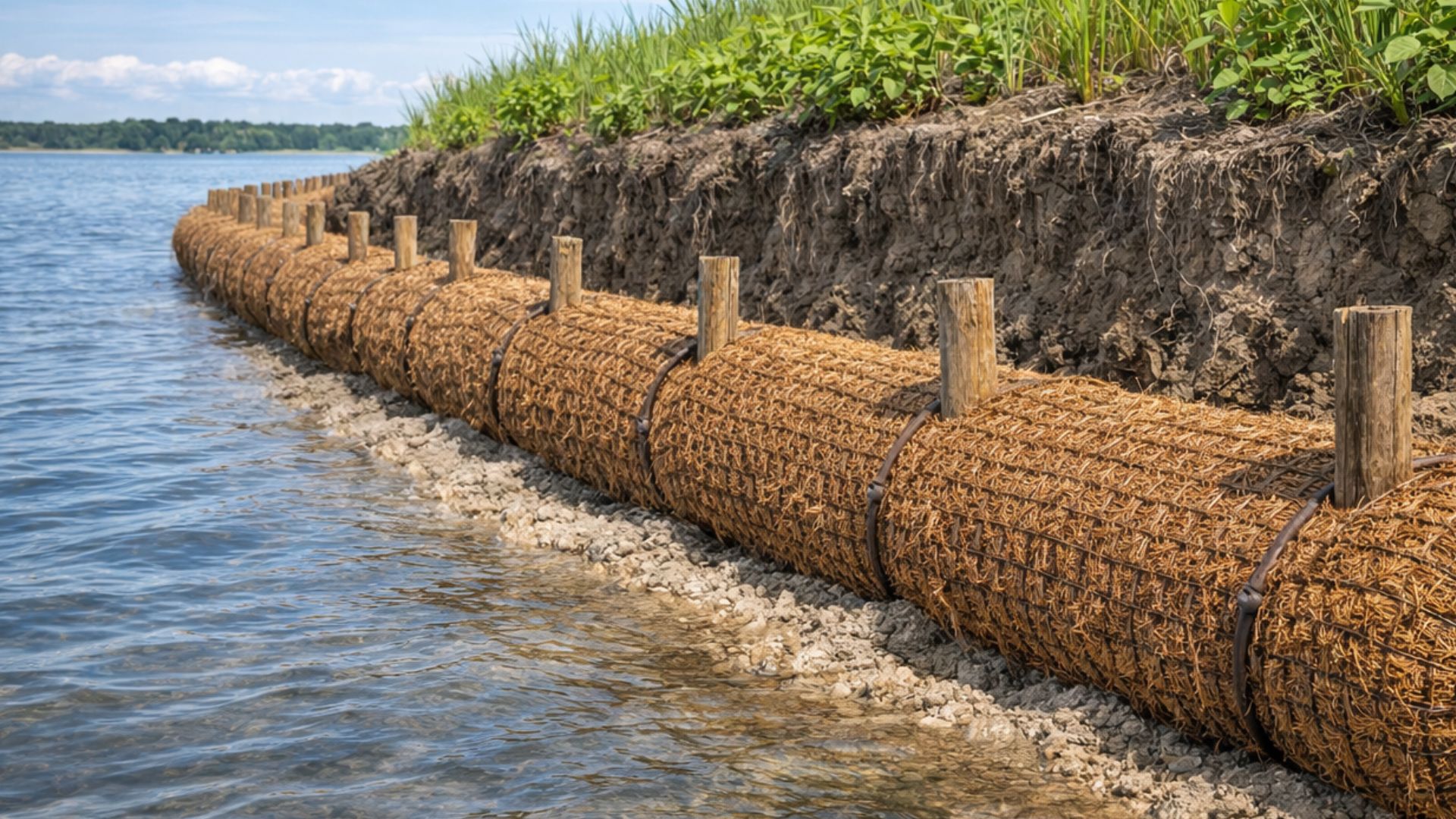
Discrete Solution Made with Coconut Fiber Has Been Appearing in Coastal Protection Projects, Helping to Secure Sediments and Stabilize Banks While Vegetation Establishes Itself and Assumes the Role of Natural Barrier Against Erosion, with Application in Different Countries.
Instead of stone and concrete walls, coastal protection projects have been adopting a solution that seems simple but is designed to work with the natural dynamics of water: cylindrical rolls of coconut fiber, known as “coir logs,” installed at the edges of rivers, ponds, estuaries, and low-energy coastal stretches to stabilize soil and hold sediments.
The technique integrates a set of actions called “living shoreline,” which combines biodegradable materials and native vegetation to reduce erosion without interrupting the functioning of the ecosystem.
Coir Logs and Living Shoreline in Coastal Protection
Coir logs are made from fibers of the coconut mesocarp, compressed and wrapped in a mesh that shapes the cylinder.
-
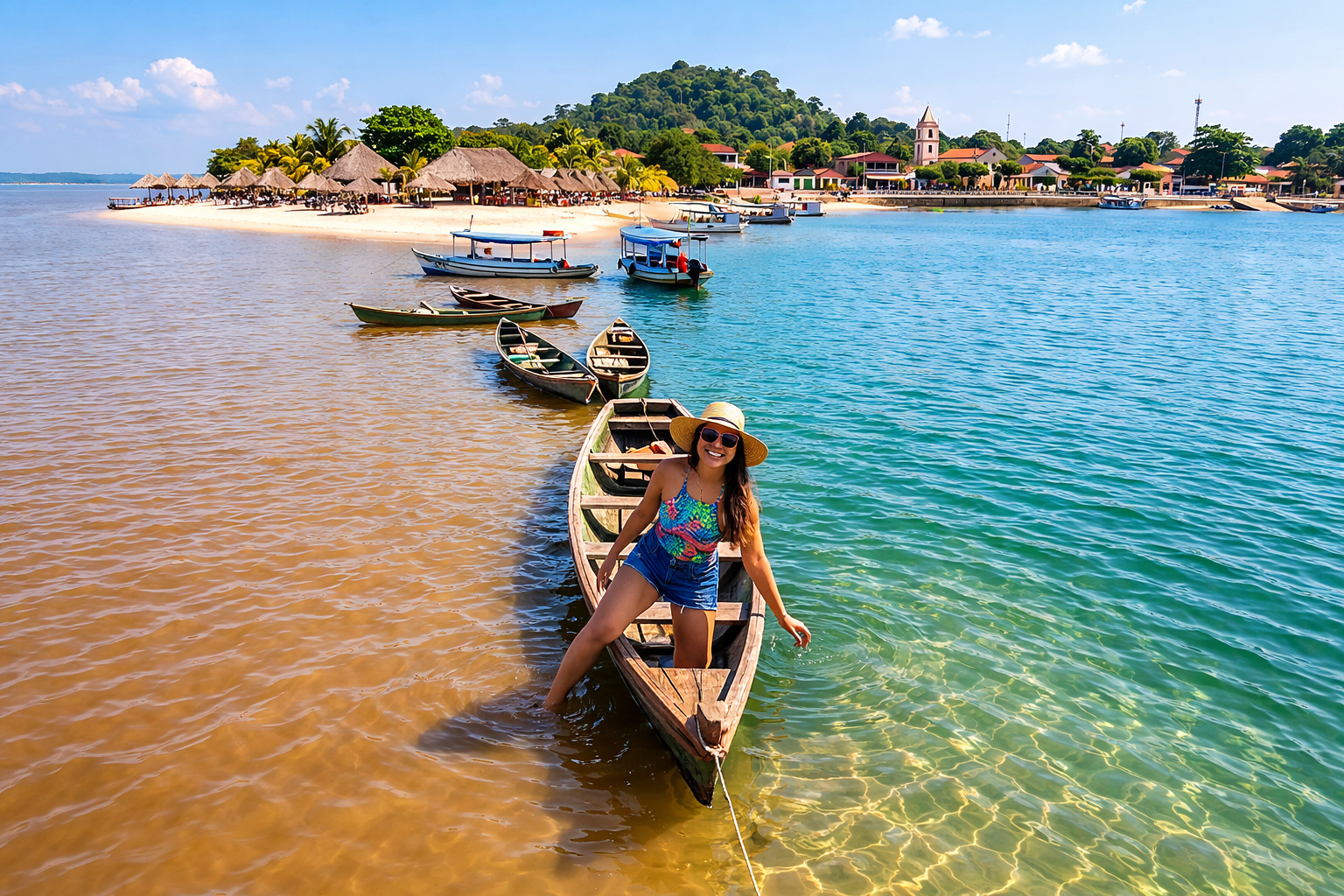
The village where two rivers run side by side without mixing in Santarém and Alter do Chão reveals some of the most beautiful freshwater beaches on the planet.
-
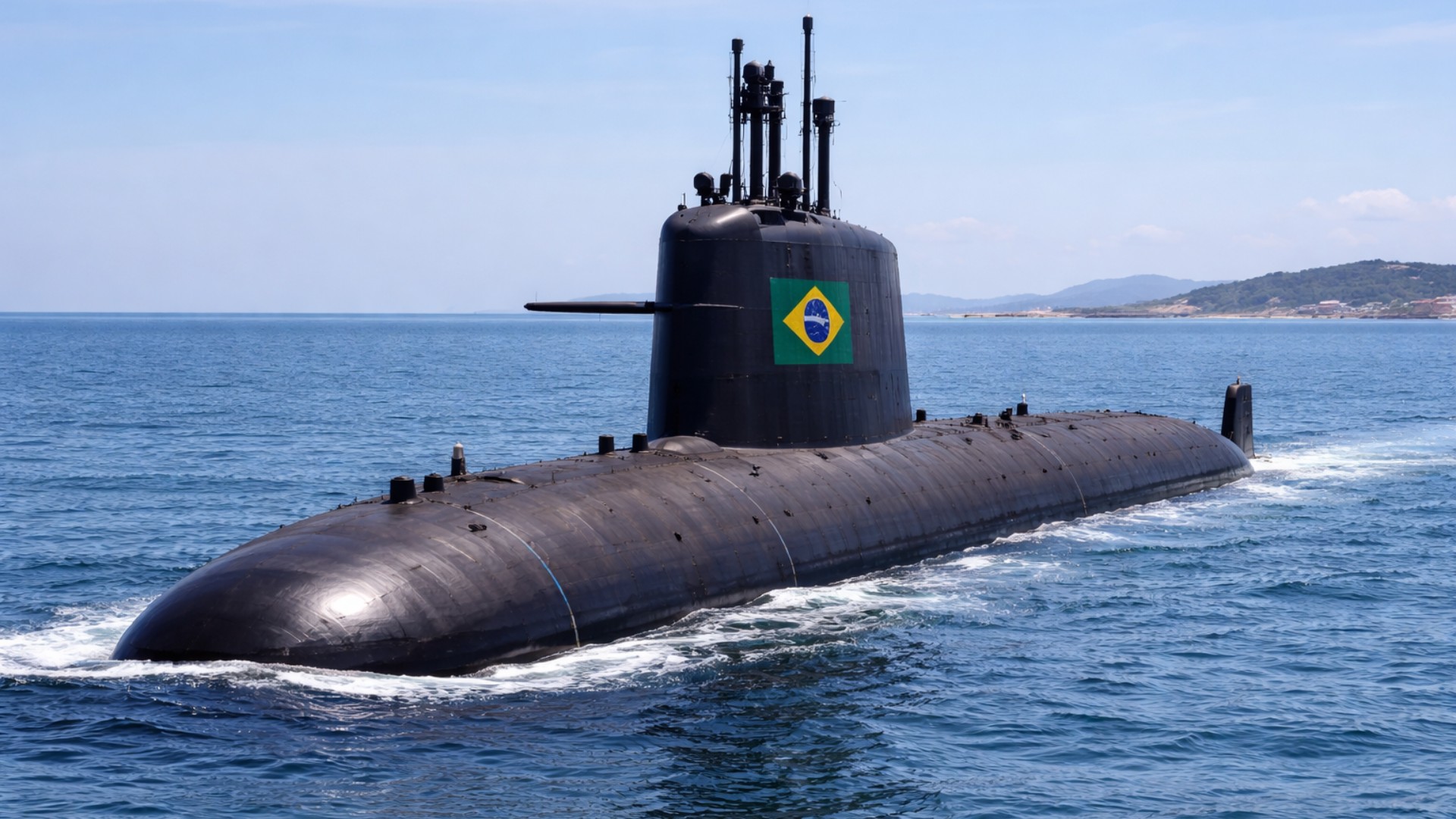
Brazil’s nuclear submarine with a speed 5 times greater than normal advances after nearly 50 years and R$ 40 billion spent.
-
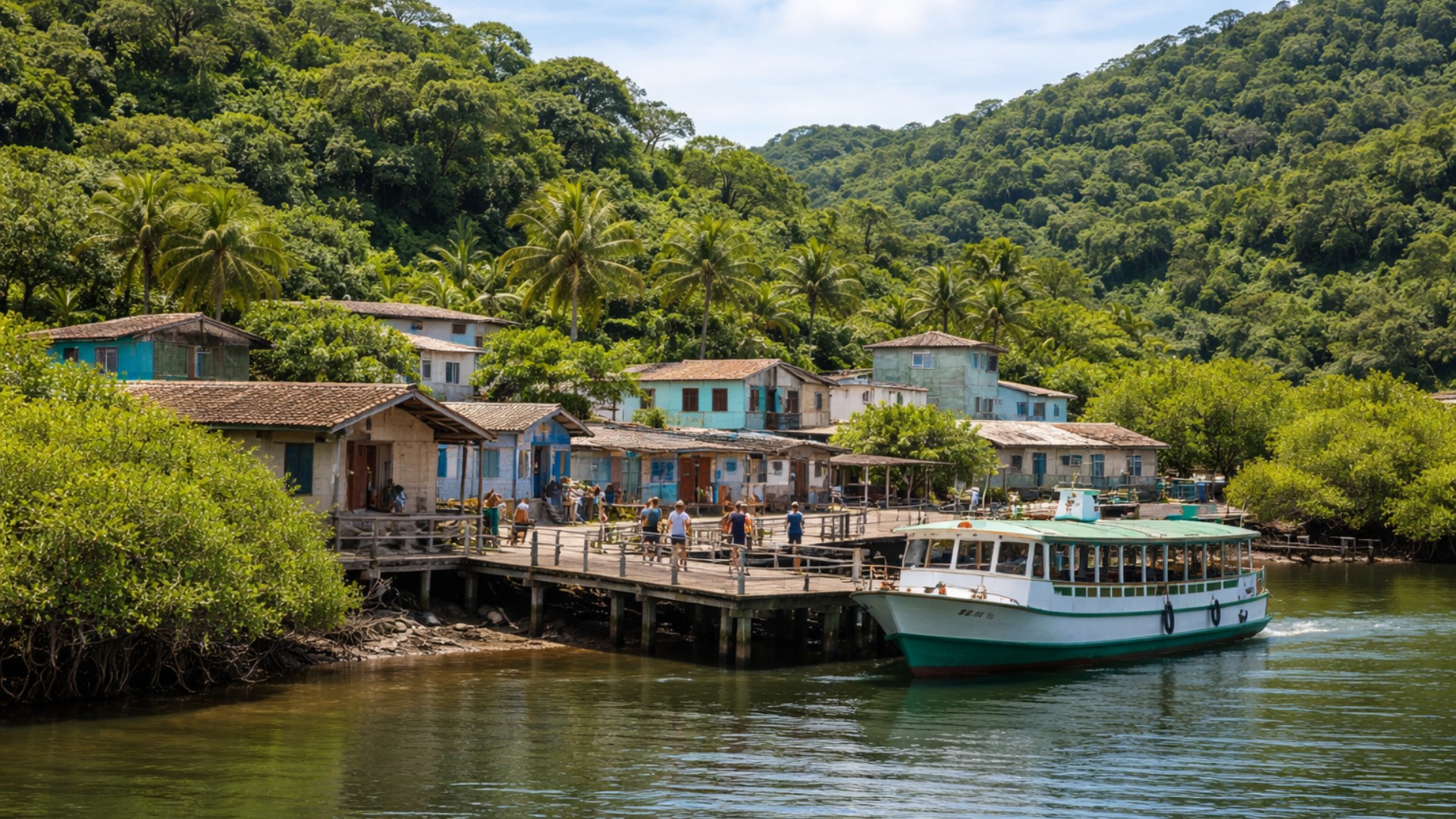
A Brazilian island charges R$ 0.50 to receive visitors and prohibits any new residents.
-
Why was the Great Wall of China built? The truth that many are unaware of!

Secured with stakes, they function as a “temporary margin” that holds the soil while vegetation establishes itself.
In practice, they create a stable edge that slows down the water’s velocity along the bank, reduces the capacity to wash away particles, and favors the deposition of fine sediments, preparing the ground for roots to take on the containment function.
Erosion in Estuaries, Bays, and Urban Margins
This type of intervention is applied mainly where waves and currents exist but are not as intense as in open sea.

In estuaries and bays, the problem can be persistent and costly: small soil losses accumulate over time, trees fall, sidewalks crack, access to properties is compromised, and siltation spreads to navigation and drainage areas.
When the bank is “cleaned” by erosion, the margin tends to become steeper, more unstable, and more vulnerable with each new tide, heavy rain, or increase in flow.
How Coconut Fiber Helps Secure Sediments
The logic of the coir log is to give time for a transition.
Instead of trying to “stop” the water with a rigid barrier, the living shoreline seeks to soften the impact close to the ground, create roughness, and provide a base for plant growth.
When installed at the foot of the slope, the coconut fiber roll creates a kind of step that limits direct erosion at the base, the point where the bank tends to begin to collapse.
With the soil less exposed, plant species adapted to the humid environment can establish roots and reinforce the structure of the margin.
Bioengineering with Native Vegetation and Biodegradable Materials
This method is also often combined with bioengineering, such as coconut fiber mats spread over the soil for surface protection, planting of grasses and native shrubs, and, in some regions, integration with oyster reefs and other biological structures that filter water and add complexity to the habitat.
When the project includes marsh vegetation in tidal zones, the expected result is a strip of plants capable of tolerating flooding and salinity, with roots that enhance sediment retention and reduce the resuspension of material.
Installation with Stakes and Adjustment to Tides
Operationally, coir logs are positioned along the margin and secured with wooden, bamboo, or equivalent material stakes, according to local specifications.
The installation must consider the typical tide height, flood water level, slope inclination, and type of sediment present.
As it is a biodegradable material, its durability is planned to last through the period when the vegetation is still establishing.

The idea is not for the roll to remain intact forever, but to fulfill its function until the margin is “stitched” by roots and, in some cases, by additional deposits of sediment.
Why Living Shorelines Replace Walls in Some Places
The adoption of the solution is associated with a change in approach to bank protection.
Rigid structures, such as revetments and walls, can protect a specific stretch but often alter the flow energy and can intensify erosion at neighboring points, in addition to reducing shallow areas used by fish and invertebrates.
Living shorelines seek to maintain a gradual transition between water and land, which helps to preserve habitats, expand breeding areas, and improve resilience against fluctuations in water level.
Applications in the United States and Europe
In the United States, the term “living shoreline” appears in technical guides and conservation programs that describe the use of natural materials and restoration practices for coastal stabilization.
Coconut fiber, being plant-based and widely used for slope containment and erosion control, has become a practical alternative for locations where it would be unfeasible to plant directly in soil exposed by the action of water.
In municipal and state initiatives, these rolls are used in both public areas and in projects by property owners needing to protect their land, with environmental licensing requirements varying according to the type of water body and level of intervention.
In Europe, similar solutions appear in river margin renaturalization interventions and wetland protection, including projects for channel restoration and recovery of riparian zones.
Coconut fiber, being biodegradable and favoring root growth, is used in combination with the planting of local species to reduce erosion and improve slope stability in fluvial and estuarine environments.

The logic of maintaining ecological connectivity and avoiding the “scar” of rigid structures is also cited in technical materials on restoration and naturalistic engineering.
Technical Criteria and Limits in High-Energy Areas
The performance of a living shoreline depends on clear design criteria.
The technique is considered most suitable for low to moderate energy environments, where erosion control can be achieved through roughness, vegetation, and gradual sediment retention.
In areas with strong waves and direct storm impact in open sea, projects often require more robust solutions, such as artificial reefs, submerged breakwaters, or hybrid combinations, along with detailed hydrodynamic analysis.
Conversely, in estuaries and sheltered stretches, the living shoreline tends to be prioritized for being compatible with habitats and for generally requiring simpler maintenance over time than rigid structures.
Sedimentation, Turbidity, and Environmental Benefits
The presence of suspended sediments and local dynamics also come into play.
In locations where water carries fine material, the reduction of velocity near the bank can favor deposition and gradually create a wider strip between water and land.
This strip can be colonized by plants and, depending on the environment, even by filter-feeding organisms.
Restoration ceases to be merely “holding the bank” and becomes a reorganization of the coastal space, with benefits associated with environmental quality and biodiversity.
In various projects, the justification goes beyond aesthetics or “green.”
More stable margins reduce soil loss and turbidity, which can improve conditions for aquatic vegetation and reduce siltation in drainage channels.
The vegetation installed may also help intercept part of the surface runoff, decreasing the direct arrival of sediments and nutrients to the water body.
In urban areas, this connects with maintenance costs of infrastructure, preservation of parks, and protection of properties.






-

-

-

-

-

-

43 pessoas reagiram a isso.