





 Portuguese
  English
  Spanish
  3 min of reading
  1 comment


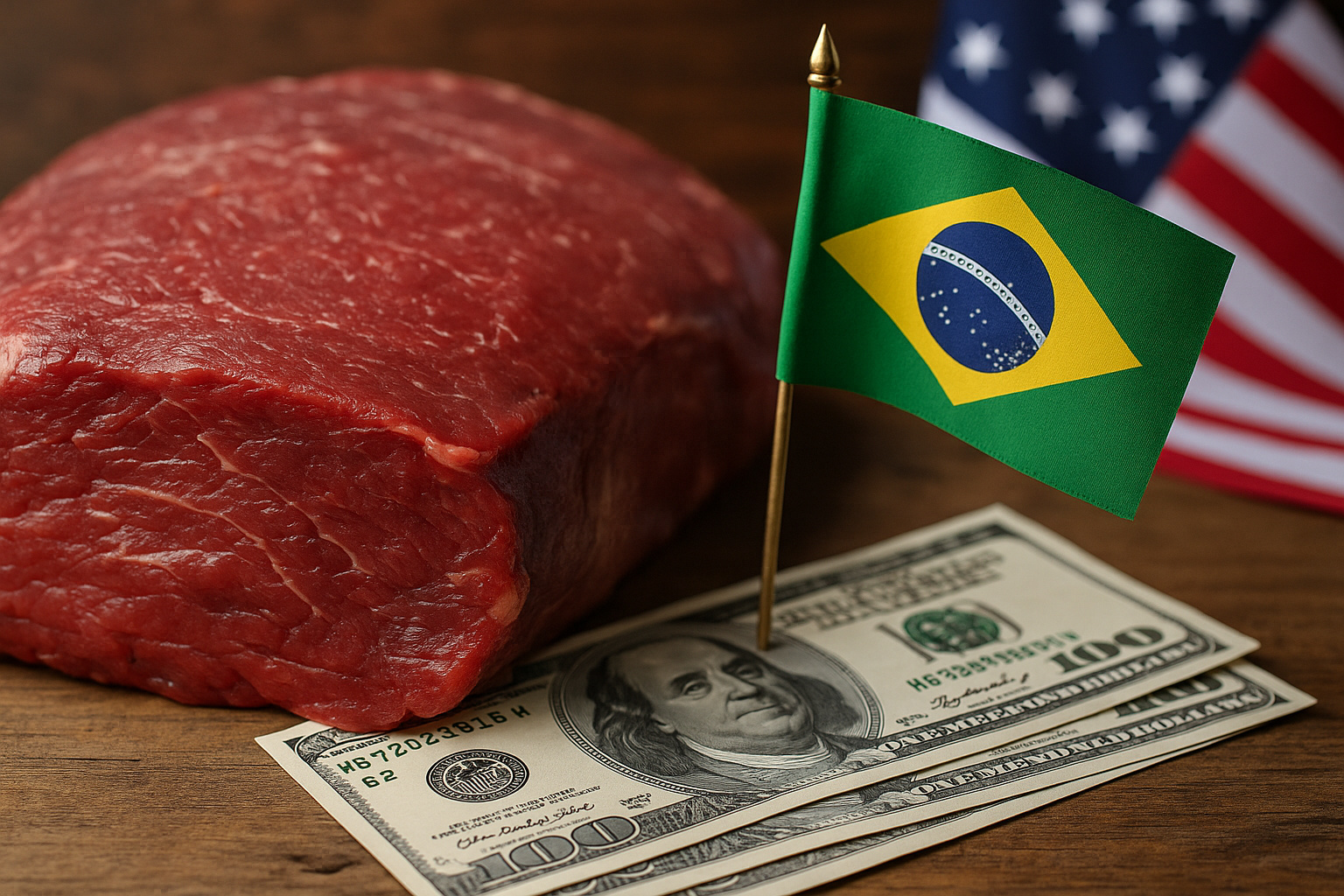


Understand How Tariff Revisions Can Reopen U.S. Imports of Brazilian Beef and Strengthen Bilateral Trade
The United States is expected to resume purchases of Brazilian beef following the anticipated revision of import tariffs, according to Roberto Perosa, president of Abiec (Brazilian Association of Meat Exporting Industries). The announcement was made during the 2nd Lide Agribusiness Seminar, held in São Paulo in October 2025, gathering representatives from the sector and public authorities.
Perosa explained that the United States remains dependent on Brazilian beef, even with the increase in tariffs. Therefore, when the rates are reviewed, trade should regain strength and stability. He also emphasized that demand from the U.S. remains high, especially due to the quality and consistency of Brazilian beef.
U.S. Dependence and the Quality of Brazilian Beef
According to Abiec, Brazilian beef is leaner and cleaner, making it essential for the U.S. industrial blend used in hamburger and processed meat production. This blend combines local, fattier meat with higher quality Brazilian cuts, ensuring the standards demanded by U.S. consumers.
-
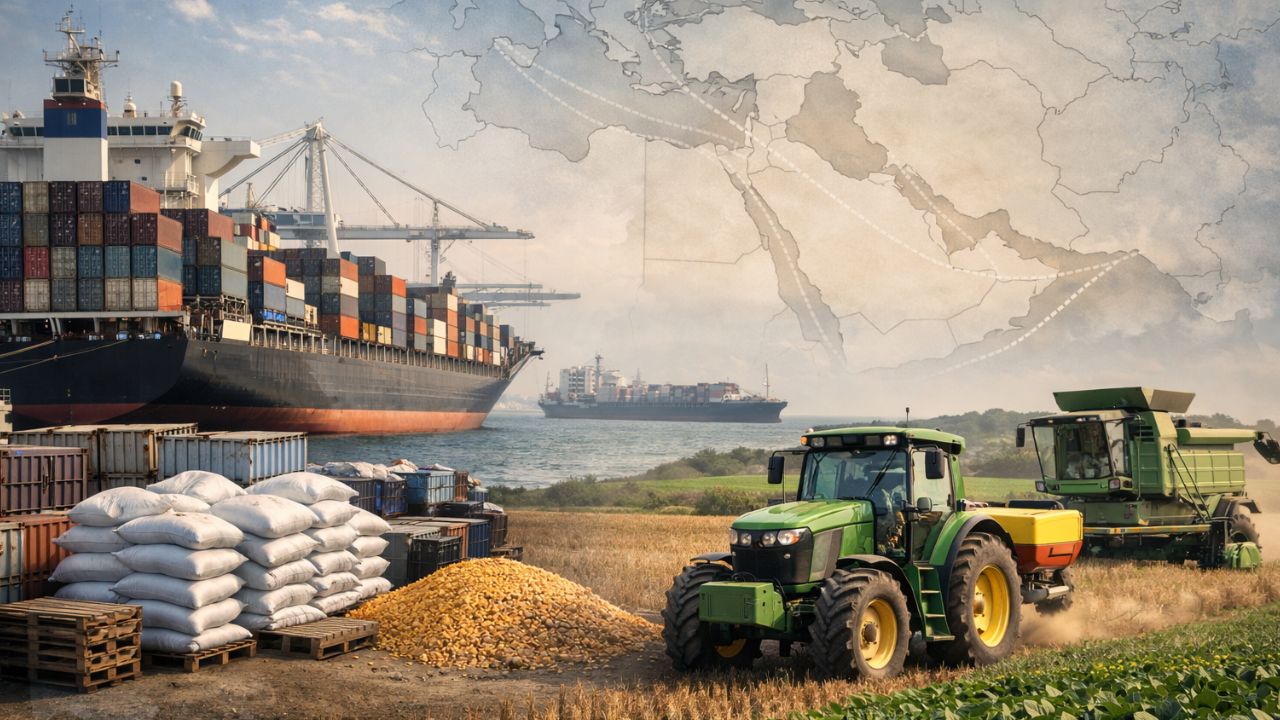
Middle East War Hits Fertilizers and Transportation and May Strain Brazilian Wallets
-
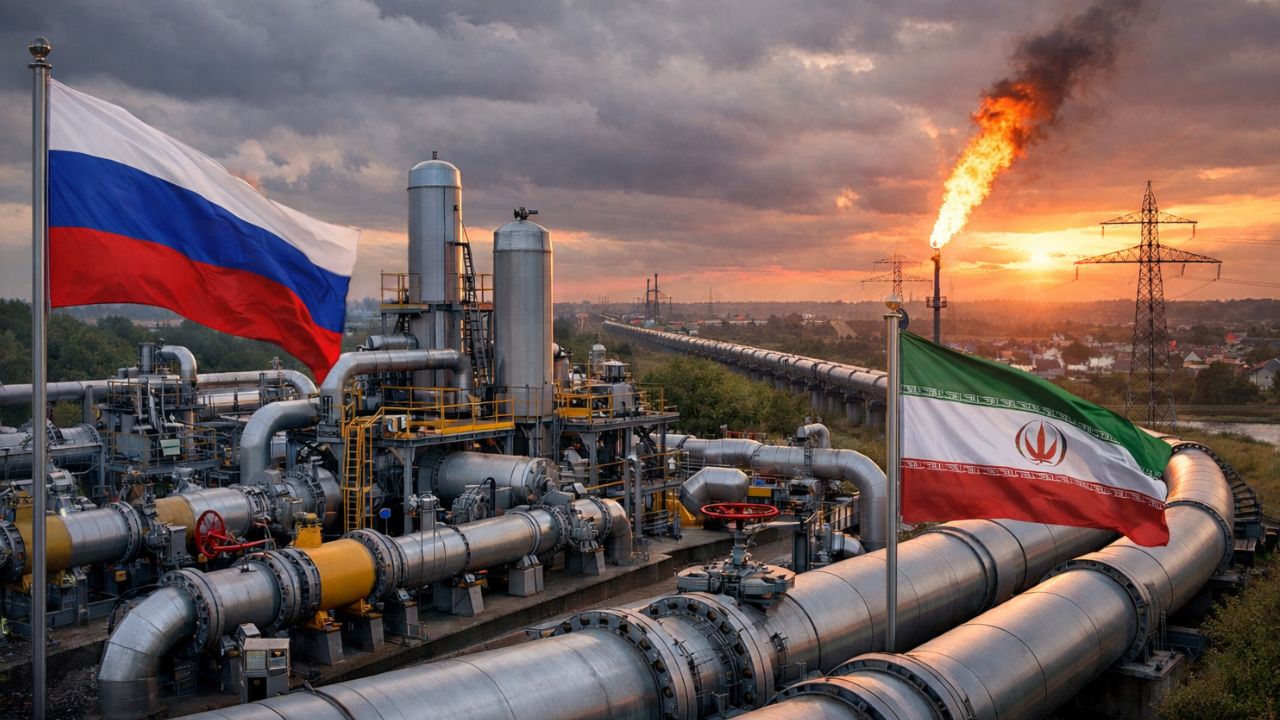
Russia Considers Suspending Gas to Europe After Surge in Energy Prices
-
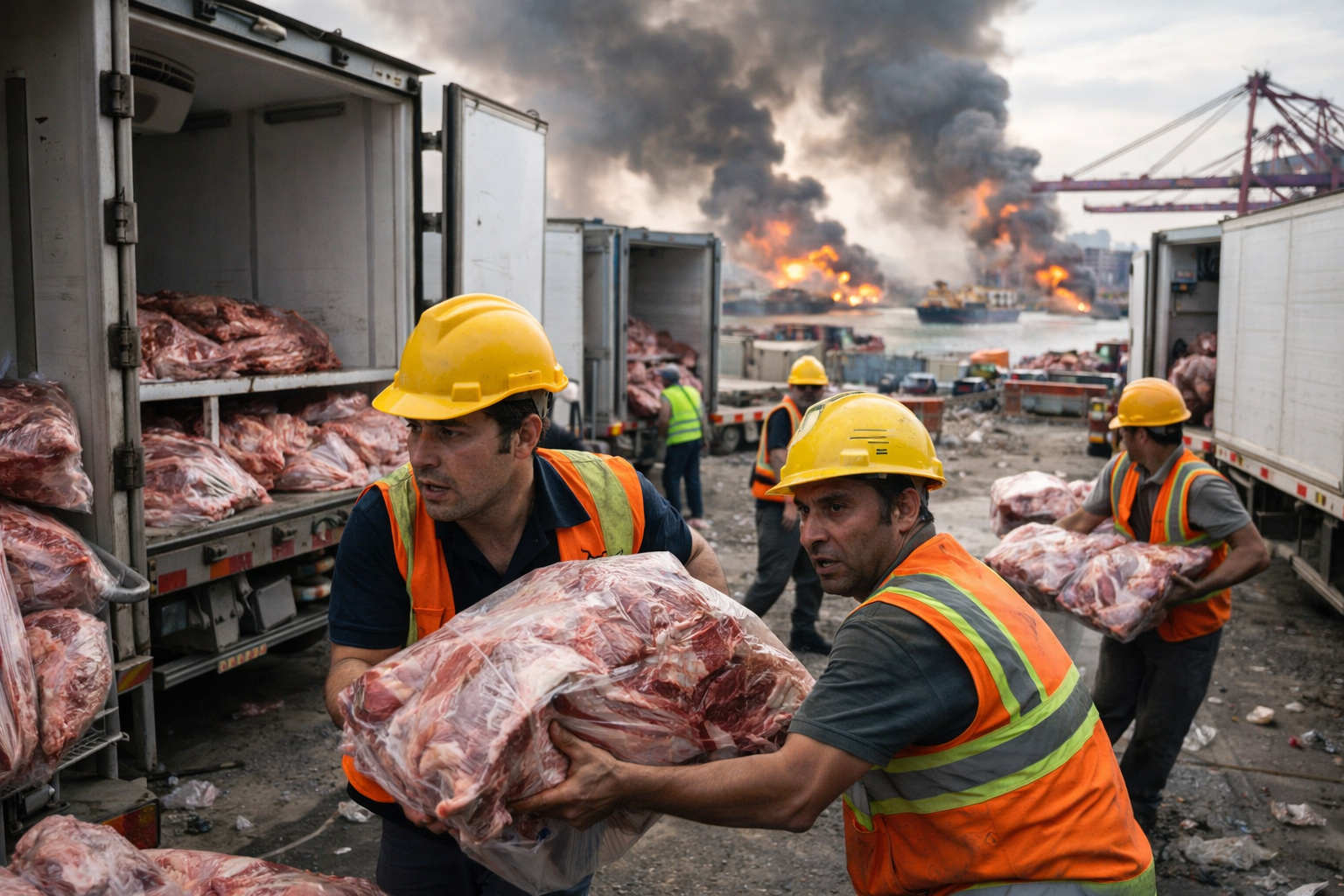
How A War Thousands of Miles From Brazil Started Disrupting Global Shipping Routes, Raising Container Costs, and Putting Up to 40% of Brazilian Beef Exports at Risk
-
Iran-U.S. War Drives Up Oil Prices and Pressures Global Financial Markets

Furthermore, the U.S. is facing the lowest cattle cycle in 75 years, with 80 million head of cattle, down from 100 million in normal periods. Therefore, the country needs to import beef to meet internal shortages. Brazil stands out as the primary supplier capable of meeting this demand with volume, quality, and consistency.
Impact of Tariffs and Continuity of Exports
Until July 2025, Brazil exported 200,000 tons of beef to the U.S., the same volume as the entire year of 2024. The sector expected to double this number by December, but the total tariff of 76% made some shipments economically unfeasible.
Even so, Abiec reported that Brazil maintained regular exports, with 10,000 tons shipped in just the last month. This continuity demonstrates the resilience of the sector and the strength of the national industry, even in the face of trade barriers.
According to Perosa, tariffs have reduced the competitiveness of Brazilian beef, but have not eliminated U.S. interest. This is because Brazilian beef remains indispensable to the U.S. food industry.
Redirection of Exports and Price Differences
With tariff barriers, Brazil redirected some exports to Asia and the Middle East, expanding markets with rising demand. Nonetheless, the United States continues to be the most profitable destination.
According to Abiec, the same cut sold to China for US$ 5,700 per ton is negotiated for US$ 7,500 in the U.S. This price difference reinforces the economic importance of the North American market for Brazil. Additionally, the country exports special cuts to Italy, used in the production of bresaola, and forequarter meats to China, aimed at industrial processing.
Prospects and Government Dialogue
Perosa stated that Abiec is maintaining active dialogue with U.S. authorities and lawmakers to seek a viable solution. According to him, there is room for diplomatic understanding and expectations of a gradual resumption of exports still in 2025.
The executive also highlighted that Brazil has established itself as a strategic global supplier of beef, combining quality, production capacity, and sustainability. With the tariff revisions, the country is expected to regain its position as the leading exporter to the American market.








Na realidade os produtos brasileiros como carne e café estão muito caros para o nois e acho que o governo deveria por uma tarifa de 10% sobre estes dois produtos para quem exportar para os EUA, e assim proteger o consumidor brasileiro,se eles quiserem comprar que paguem mais caro isso não é problema nosso kkkkk