





 Portuguese
  English
  Spanish
  5 min of reading
  0 comments


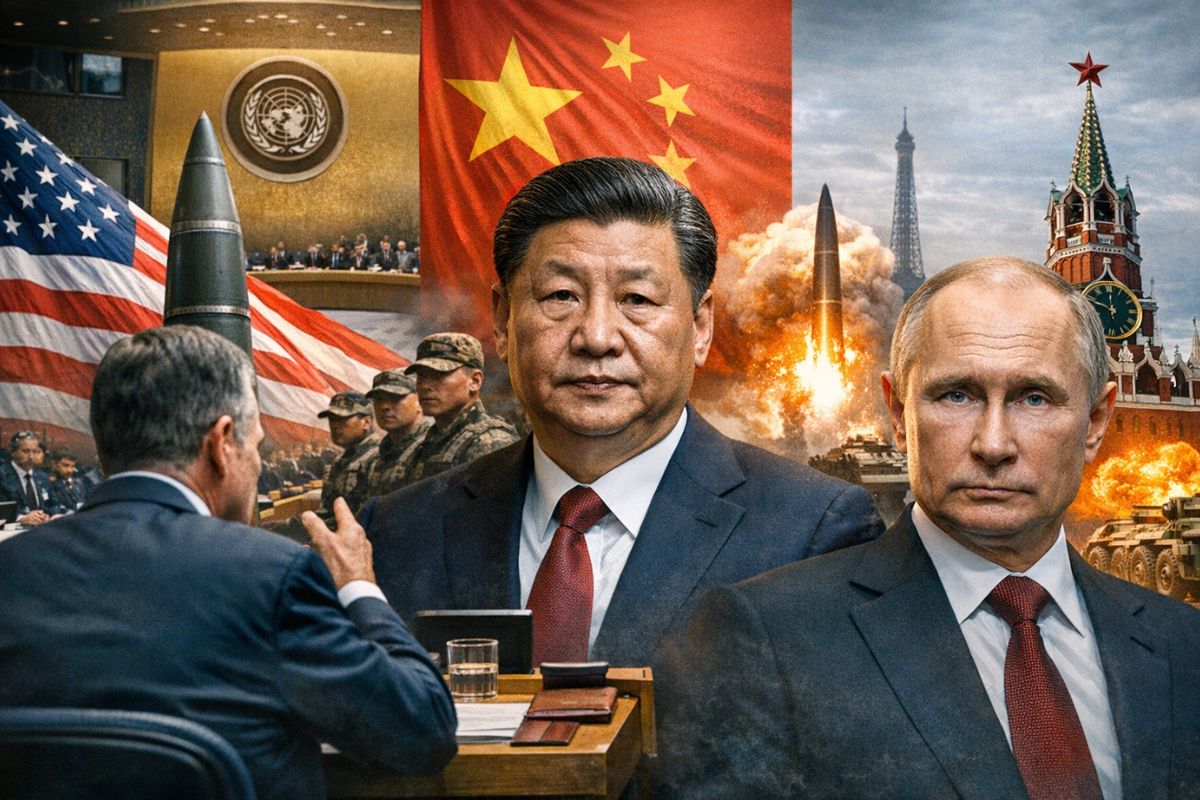
The Nuclear Dispute Has Gained a New Stage in Geneva: Washington Wants to Limit Moscow and Beijing in a Single Treaty, While the Chinese Reject Equivalence and the Russians Demand the British and French at the Table. With New START Expired and Signs of Parallel Bargaining, the Fear of an Arms Race in the Current International System Grows.
The nuclear dispute has entered a more delicate phase after the United States advocated on Friday (6), at a UN conference, for a tripartite negotiation with Russia and China. The proposal was presented as a response to the exhaustion of the bilateral model and to the argument that the growth of the Chinese arsenal has already altered the strategic balance that underpinned agreements of recent decades.
In the same movement, the American plan encountered two immediate barriers: Beijing rejected inclusion in the proposed format, while Moscow conditioned any progress to the presence of the U.S. nuclear allies in Europe, especially the United Kingdom and France. The result was a diplomatic impasse with direct consequences for the global security environment.
What Washington Took to the UN and Why It Chose Now
The U.S. presentation at the UN was less of a ceremonial gesture and more an attempt to redefine the architecture of arms control. Washington’s reading is that a pact restricted to two actors has lost efficiency in light of the multiplication of nuclear power centers. In this reasoning, the nuclear dispute has ceased to be solely U.S.-Russia and now demands an institutional design that comprehensively considers the rise of China.
-
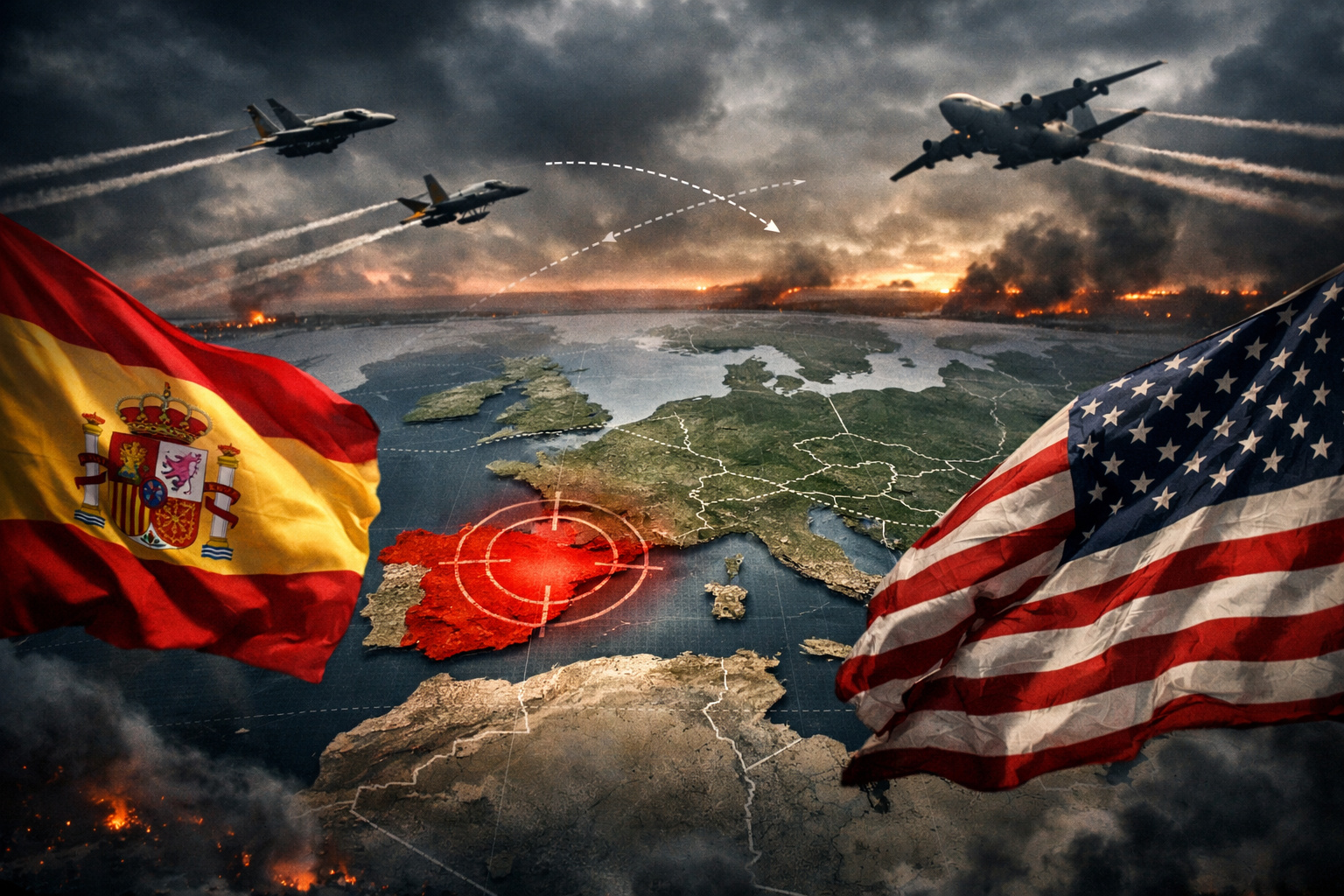
Spain challenges the USA and closes its airspace for operations against Iran, raising global tension and provoking the threat of a trade rupture.
-
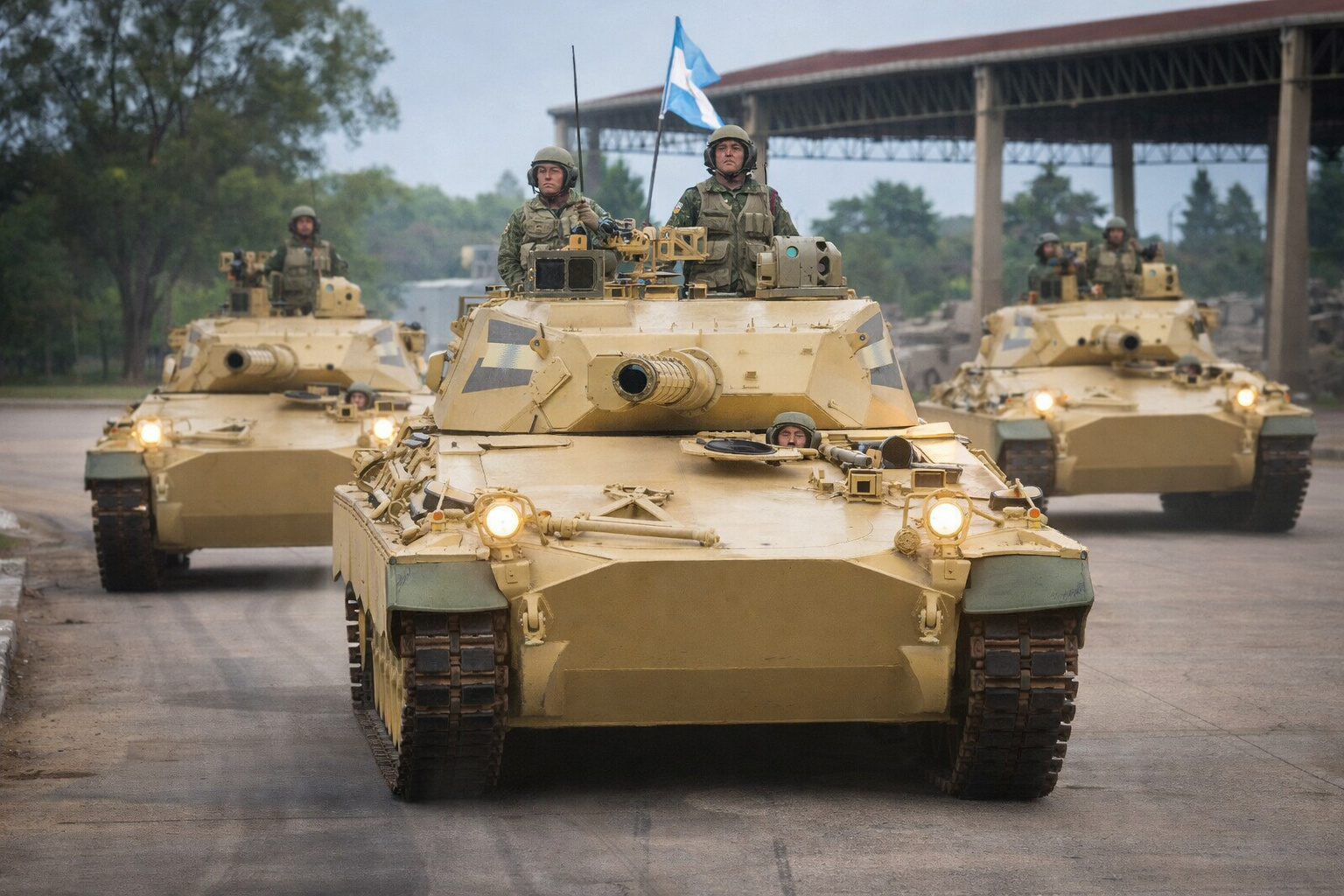
While no other country manufactures tanks in Latin America, Argentina activates the TAM 2C-A2 and raises a curiosity about the technological lag in the region.
-
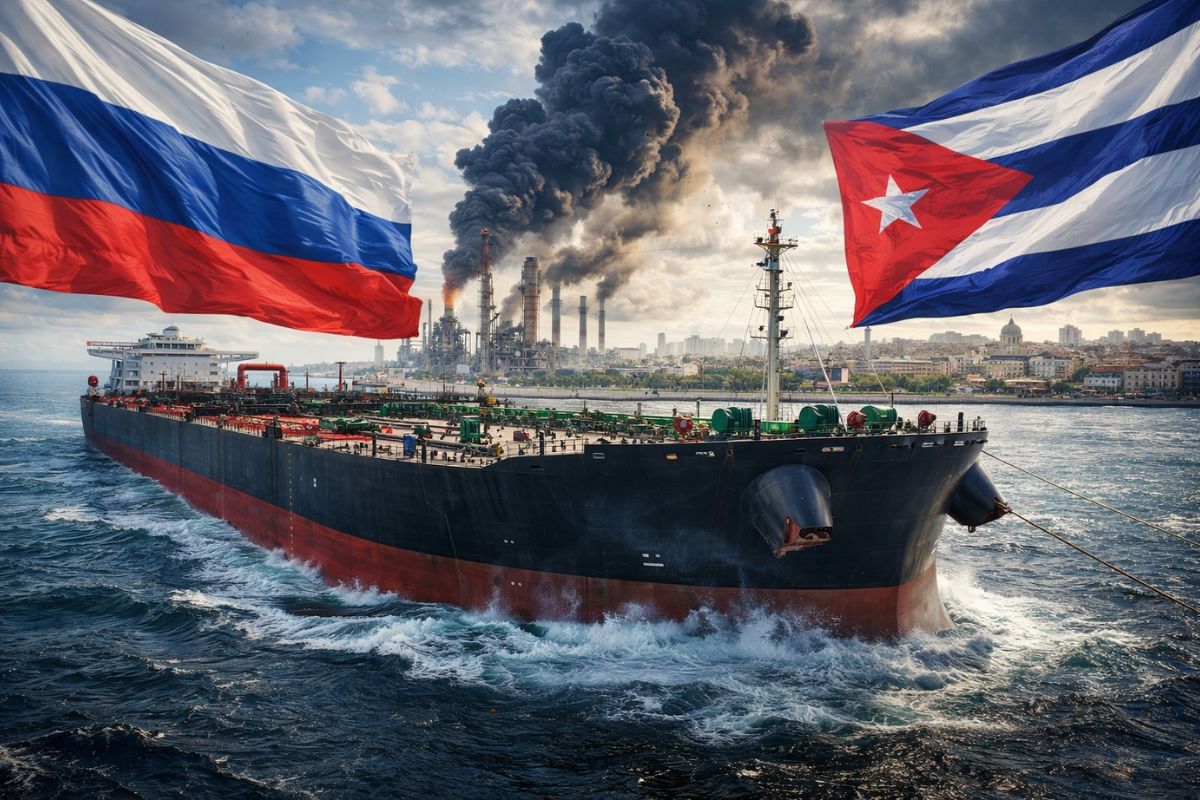
A Russian ship with 730,000 barrels of oil has just arrived in Cuba while Mexico negotiates fuel sales through private companies: the communist island is desperately seeking alternatives after losing its supply from Venezuela due to American military action.
-
Iranian drones and missiles destroyed a 270 million dollar American spy plane in Saudi Arabia, splitting the E-3 Sentry aircraft in half and injuring 12 military personnel in an attack that exposes the vulnerability of U.S. bases in the Persian Gulf.

The urgency also has a temporal context. With New START expired, the Americans are trying to avoid a prolonged normative vacuum precisely when trust among powers is at its lowest level in years. Without verifiable rules and without a stable mechanism for predictability, every technical modernization move can be interpreted as offensive preparation, raising the risk of miscalculation.
The Response from Beijing and the Condition Imposed by Moscow
China has maintained the line it has been defending: it does not accept entering into a limitation regime on the same terms as those with significantly larger stockpiles. In diplomatic language, Beijing argues asymmetric capabilities; in strategic language, it seeks to preserve space to grow without external ties. At this point, the nuclear dispute gains a classic layer of relative power: those who are behind avoid freezing the difference in a treaty.
Russia, in turn, shifted its focus to Europe. By demanding the inclusion of the British and French at the table, Moscow seeks, at the same time, to increase the political cost of negotiation and reduce the aggregated Western advantage. This is not merely a procedural detail; it is a dispute over who counts in the final balance of warheads and delivery systems. In practice, this makes any tripartite design much more complex and time-consuming.
What Is at Stake in Warheads, Delivery Systems, and Verification
The numbers help to measure the tension of the nuclear dispute. According to references cited in the debate, China had at least 600 warheads by early 2025, while the U.S. and Russia remain at over 5,000 each. Even without full parity, the trajectory of Chinese expansion alters medium-term projections and pressures military planning on both sides of the Pacific.
In the New START model, there were clear parameters for strategic forces: a limit of 1,550 deployed strategic warheads and 700 long-range missiles/bombers, in addition to onsite inspections. These mechanisms did not eliminate rivalry but reduced operational uncertainty. When oversight weakens, the reading of intent becomes increasingly reliant on intelligence and less on institutional transparency, which tends to worsen stability.
What Changes with the End of New START
The end of the treaty does not mean an immediate explosion of arsenals, but it changes the logic of containment. Without the same framework, each side gains more freedom to adjust its posture of strength, pace of modernization, and strategic signaling. In low-confidence scenarios, this usually produces cycles of action and reaction: one increases readiness, the other responds, and the nuclear dispute becomes guided by perceptions of vulnerability.
Another critical point is monitoring. The previous design allowed for up to 18 inspections annually per country, a fundamental tool for compliance checking and reducing ambiguities. With inspections halted and no stable resumption in sight, nuclear policy becomes more dependent on public announcements and less anchored in direct verification, a combination historically associated with more noise and less predictability.
Trump, Behind the Scenes, and the Design of an “Improved” Agreement
Donald Trump criticized New START again and advocated for an “improved” and “modernized” agreement. Politically, the message aligns with the idea of breaking away from old formulas; strategically, it signals openness to a new text that incorporates China and updates control metrics. The problem is that the format desired by Washington faces simultaneous resistance from Beijing and the conditions set by Moscow.
Behind the scenes, reports of conversations between the U.S. and Russia regarding extension or transition indicate that there is an active diplomatic channel, even without a final consensus. This creates a dual dynamic: in public discourse, the nuclear dispute escalates; in diplomatic engineering, the parties try to avoid a total collapse of the control regime. The space between these two plans of rhetoric and negotiation is where both solutions and risks often emerge.
Risk Scenarios and Practical Effects on the International System
In the short term, the most likely scenario is of a turbulent transition: many harsh statements, limited technical advances, and attempts to build a bridge between what has expired and what still does not exist.
If that bridge fails, the tendency is toward greater competition in modernization, with elevated fiscal costs and internal political pressure for “symmetrical” responses between rivals. This is not a geopolitical abstraction: it impacts budgets, alliances, and defense priorities.
In the medium term, three questions will determine the course of the nuclear dispute: Will China accept any model of verifiable transparency, even without numerical parity? Will Russia agree to negotiate without converting the table into an expanded forum that includes Europeans? And will the U.S. be able to transform the concept of an “improved” treaty into a technically negotiable proposal? Without minimal answers to these points, global strategic stability enters a prolonged phase of uncertainty.
The discussion now is not just about who has more warheads but about who accepts rules, deadlines, and verification in an environment of growing distrust.
If you were designing this new agreement, would you first include limits on arsenals, mandatory inspections, or gradual transparency commitments? And, in your view, should the United Kingdom and France come in the first round or at a later stage?









-

Uma pessoa reagiu a isso.