





 Portuguese
  English
  Spanish
  5 min of reading
  0 comments


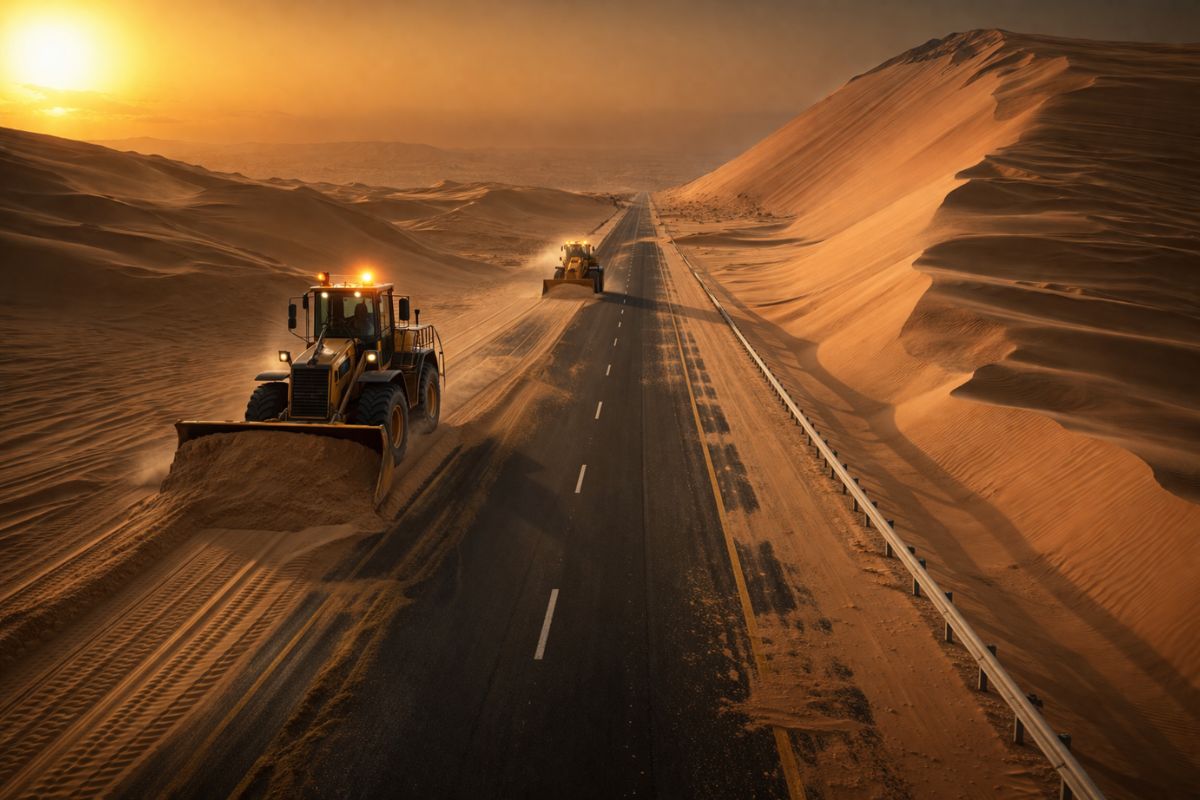
The Oasis Road of Liwa crosses the Rub al-Khali, the Empty Quarter, where temperatures exceed 50 degrees, the cell phone signal disappears for kilometers, and a mechanical failure can turn into a survival emergency in less than an hour
There is a place on the planet where the desert is not a backdrop. It is an adversary. The Oasis Road of Liwa, in the United Arab Emirates, is a perfectly paved highway that cuts through the Rub al-Khali, the largest continuous sand desert in the world. It spans over 650,000 square kilometers of sand. More than the whole of France. More than any other sand desert on Earth. The Bedouins called it the “Empty Quarter” because no caravan that entered from the wrong side returned to tell the tale.
The dune that is taller than a 100-story building
The most impressive point of the route is the Moreeb Dune. At about 300 meters high, it is one of the largest sand dunes in the world. To give an idea of the scale: the Eiffel Tower is 330 meters tall. The Moreeb is almost the size of the Eiffel Tower, but made entirely of sand, shaped by the wind over thousands of years.
Seen from the road, it occupies the entire horizon. It doesn’t seem real. It looks like a beige wall rising from the ground to the sky, with gentle curves that change shape with each storm.
-
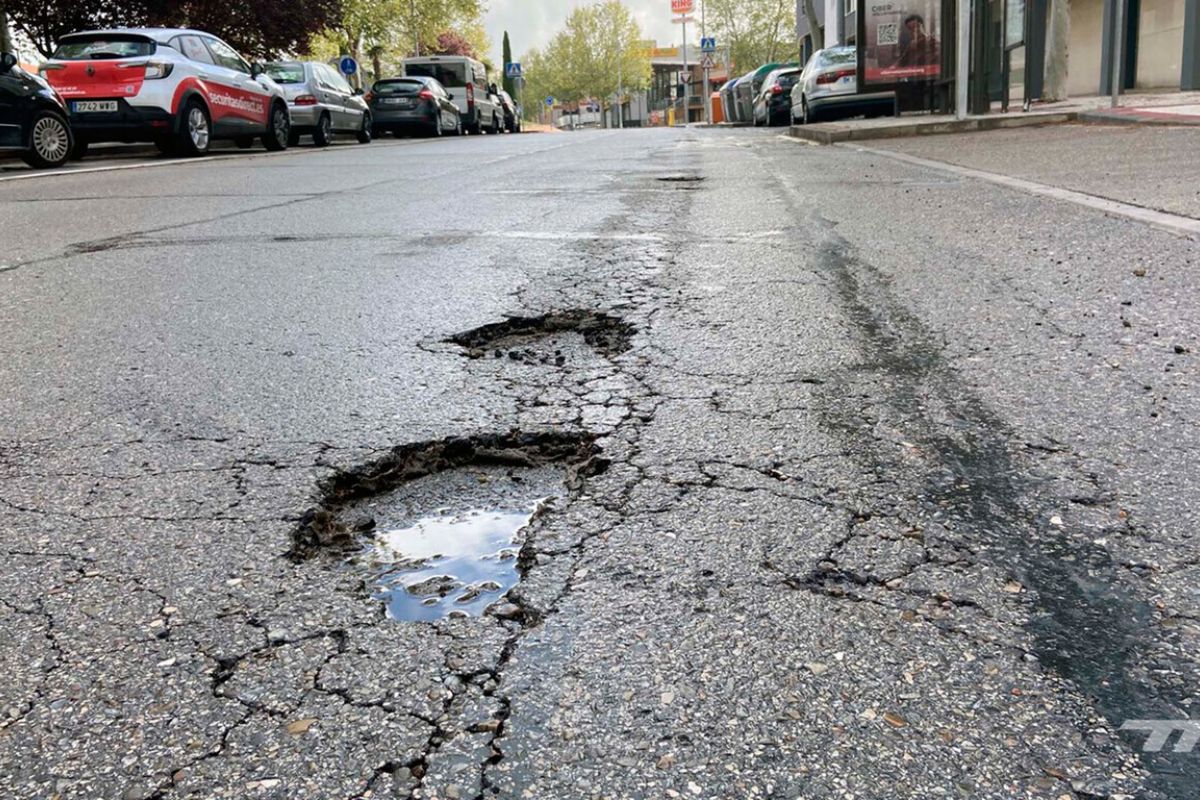
In León, potholes become craters and burst tires and suspensions, but the city hall blames the drivers, saying that the road was marked and that at 30 km/h it was possible to swerve, and they only cover at most half of the repair costs.
-
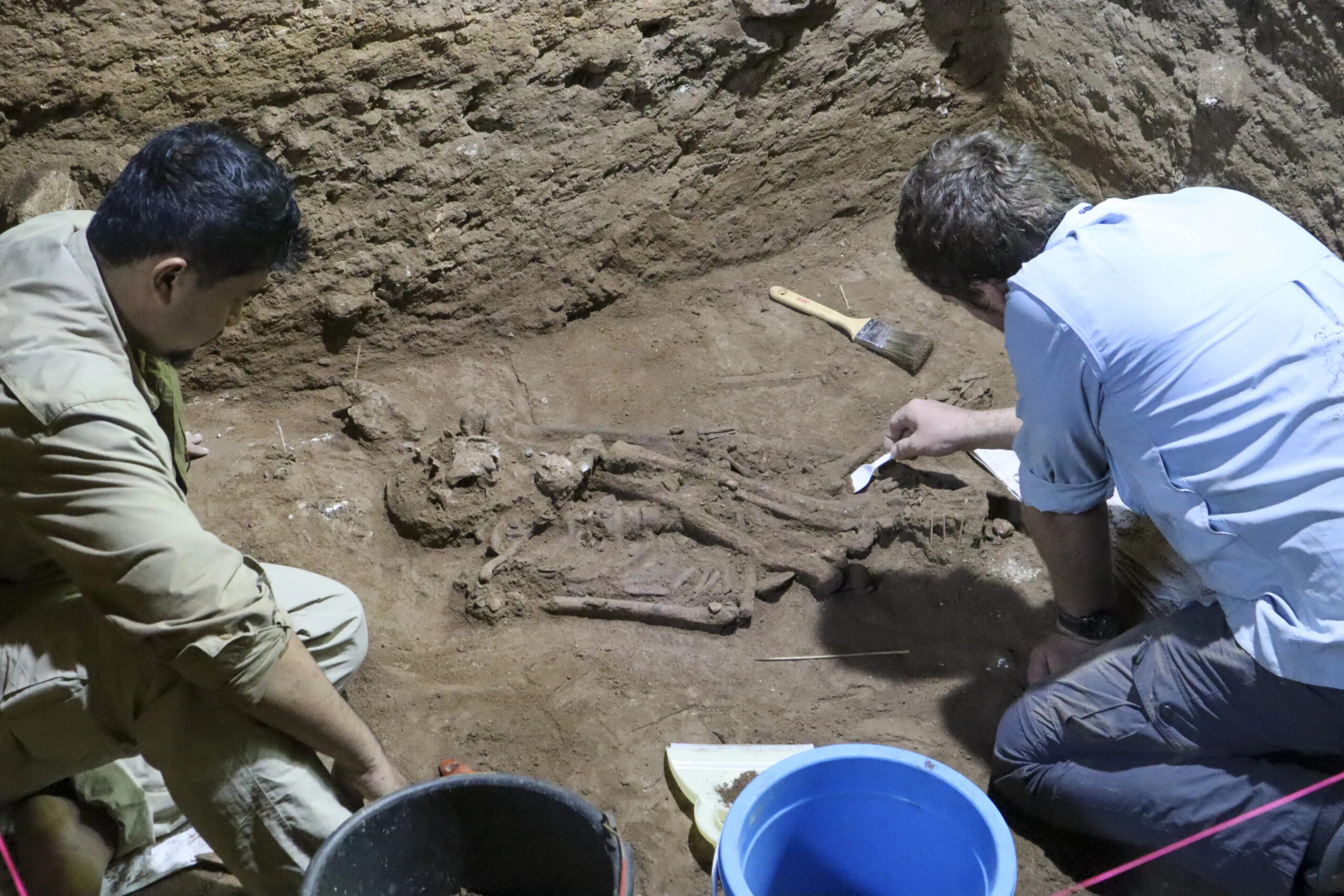
31,000 years ago, humans were already performing complex amputations with surgical precision without antibiotics, modern anesthesia, or a sterilized environment, and they made patients survive for years, as evidenced by the skeleton found in Borneo that rewrites the history of medicine on the planet.
-
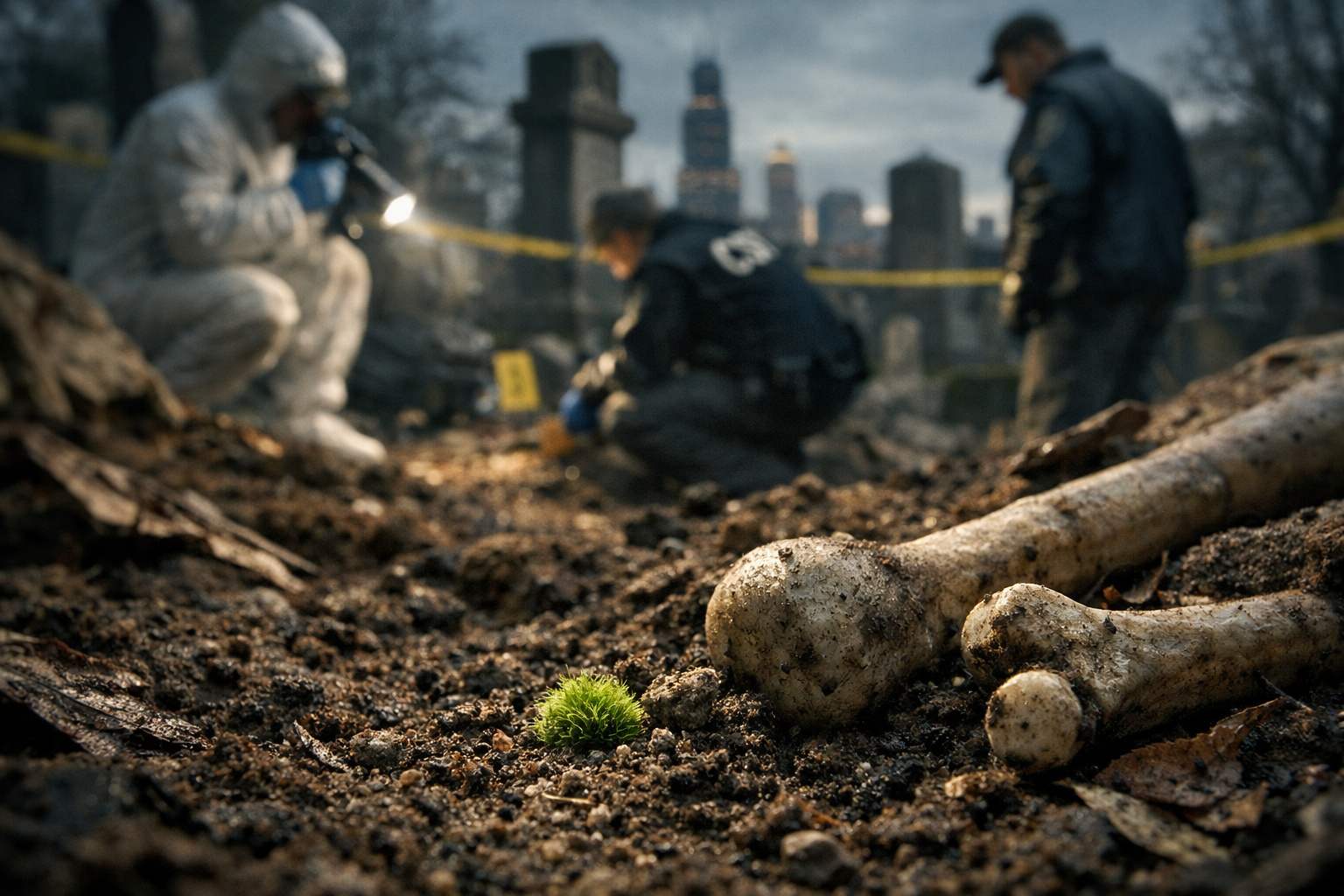
A fragment of moss the size of a grain of sand helped the FBI uncover a shocking tomb raiding scandal in the U.S. and exposed a scheme that lasted for years in Chicago.
-
Using drones, archaeologists identify a lost city founded by Alexander the Great that was buried for centuries in the Persian Gulf, and the discovery reveals a metropolis of 6 km² with a monumental palace.

And it moves.
The dunes of the Rub al-Khali are not static. The wind pushes tons of sand daily. The road that runs alongside these formations is invaded by layers of sand every night. If no one cleans it, the asphalt disappears in a few days.
The daily battle that no one sees

Every morning, before dawn, maintenance teams go out with tractors and heavy machinery to remove the sand that the wind deposited on the road overnight. It is a repetitive, thankless, and endless job. There is no definitive solution. The desert always returns.
The engineers who built the road used special polymers mixed with asphalt to increase resistance to extreme heat. Containment barriers were installed on the sides to try to slow the advance of the dunes. But no barrier can hold back 300 meters of wind-driven sand. The containment only buys time. The real work is done every day, by hand, with machinery.
The government of Abu Dhabi funds this operation because the road is vital. It connects the capital to the deeper oil reserves of the desert, to the Bedouin villages of the Liwa oasis, and to a circuit of luxury resorts that have turned sand into a tourist destination.
What happens when the thermometer exceeds 50 degrees

In summer, the surface of the asphalt on the Liwa Road easily exceeds 70 degrees Celsius. Shoes with thin soles melt. Poorly calibrated tires burst. The engine of a car stopped on the shoulder can overheat in minutes.
The temperature range is another alarming fact. In winter, at night, the temperature can drop to near zero degrees. The same stretch of asphalt that melts rubber in July cracks with the cold in January. The pavement engineering needs to withstand a variation of more than 50 degrees between seasons.
The cell phone signal fails over long stretches. Gas stations are scarce, concentrated in the few villages of the oasis. A mechanical failure in a stretch without coverage can mean severe dehydration in less than an hour in summer. The highway patrol conducts constant patrols, but the authorities are clear: the responsibility for survival lies with those who choose to enter the desert.
The invisible engineering that keeps the road alive
Building a highway on sand is different from any other paving project in the world. Desert sand does not compact like regular soil. It shifts. It absorbs heat unevenly. It corrodes.
The engineers of the Emirates developed three layers of defense:
The first is the stabilized base, a mixture of imported aggregates (because desert sand is too round to serve as a base) with chemical binders that create a rigid foundation under the asphalt.
The second is the modified polymers in the asphalt mass itself, which increase the softening point of the pavement and prevent extreme heat from deforming the road.
The third is the side wind barriers, structures that reduce wind speed close to the ground and decrease the amount of sand that reaches the roadway. Without these barriers, the road would be covered in hours, not days.
Even so, nothing replaces daily maintenance. Technology slows the desert. But it is human labor, repeated every morning before the sun punishes, that keeps the road open.
What awaits those who survive the crossing
After kilometers of absolute isolation, of empty horizon and silence that presses on the ears, the Liwa oasis appears like a mirage that is real.
Immense plantations of date palms irrigated by ancient underground aquifers cover the valley. They are the same water sources that sustained Bedouin tribes for centuries before any oil well was drilled. Authentic villages offer falconry, camel rides, and the hospitality of a people who have learned to live where most would die.
The contrast is what makes the experience surreal. On one side, perfect asphalt cutting through the void. On the other, dunes that swallow everything man tries to build. In the middle, a road that only exists because someone decided that they would not accept the desert winning.
And every morning, before the sun rises, the tractors go out again.
With information from Market Monitor and the Visit Abu Dhabi portal.






Seja o primeiro a reagir!