





 Portuguese
  English
  Spanish
  6 min of reading
  0 comments


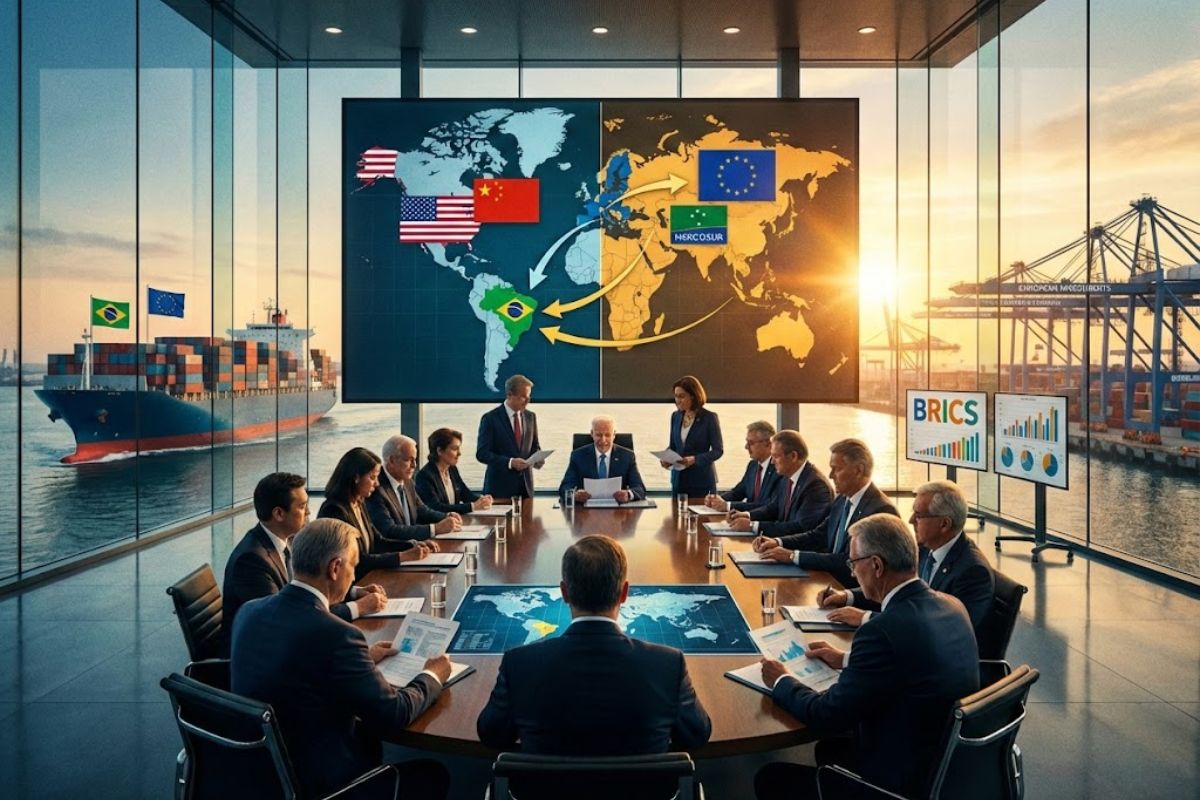
For The Former President Of The Brics, Signing The Agreement In December 2025 Could Reposition Brazil In The Dispute Between The United States, China, And The European Union, Reduce Dependency On Asia, And Transform The Treaty Into A Magnet For Productive Investments Over The Next Decades, With Impact On Brazilian Trade.
In An Analysis Published On December 14, 2025, Former Brics President And Diplomat Marcos Troyjo Argued That The Mercosur-European Union Agreement Is A Central Piece To Reposition Brazil Amid The Geopolitical Dispute Between The United States And China, Offering A Concrete Alternative To The Current Pattern Of Asian Dependency.
By Revisiting The Negotiations Concluded In June 2019 In Brussels And The Resurgence Of European Interest In Light Of The So-Called “Cold War 2.0,” The Former Brics President Claims That The Treaty Has Ceased To Be Merely A Commercial Debate And Has Become Part Of The Broader Strategy For The Country’s International Integration.
How The Mercosur-European Union Agreement Returned To The Center Of The Board
Troyjo Remembers That In June 2019, Negotiators From Mercosur And The European Union Politically Concluded The Agreement In Brussels, In A Context Where American Protectionism Was Already Pressuring The Multilateral Trade System.
-
Brazil produces too much clean energy and doesn’t know what to do with it: over 20% of solar and wind capacity was wasted in 2025 while investors flee and 509 renewable generation projects were abandoned in the last year.

-
Piauí will produce a new fuel that replaces diesel without needing to change anything in the truck’s engine and reduces pollutant gas emissions by half: truck drivers from all over the Northeast are already celebrating the news that will arrive later this decade.

-
A new Brazilian shopping center worth R$ 400 million will be built in an area equivalent to more than 4 football fields, featuring 90 stores, 5 cinemas, a supermarket, a college, and parking for 1,700 cars, potentially generating 3,000 jobs.

-
Larger than entire cities in Brazil: BYD is building a 4.6 km² complex in Bahia with a capacity for 600,000 vehicles per year, but the discovery of 163 workers in conditions analogous to slavery has shaken the entire project.


According To Him, Even At That Time, European Diplomats Were Warning About The Urgency Of Seeking New Partnerships.
The Former Brics President Highlights That The Advance Of United States Unilateralism Forced Europe And South America To React As A Block.
At The Time, The Reading Was That The World’s Largest Economy Was Less Willing To Enter Into Major Agreements And More Inclined To Use Tariffs As A Political Instrument.
Subsequently, The Process Stalled. Troyjo Remembers That Wildfires In Brazil And The Election Of A More Protectionist Government In Argentina, Led By Alberto Fernández, Reduced European Appetite To Move Forward With The Agreement.
The Political Proceedings Were Pushed To The Background, Even Though The Text Already Included Environmental Commitments Anchored In The Paris Agreement.
Now, With The Signing Once Again Expected In December 2025 In Rio De Janeiro, The Former Brics President Sees A Combination Of Factors That Have Replaced The Treaty On The Agenda: Concerns About A Potential Re-election Of Donald Trump And Europe’s Need To Diversify Markets Amid A Technological And Commercial Dispute With China.
Europe “Sandwiched” In The Cold War 2.0 And Seeking New Markets
In Troyjo’s Assessment, The European Union Is “Sandwiched” Between The United States And China In The So-Called “Cold War 2.0.”
On One Side, It Faces Chinese Technological And Industrial Competition; On The Other, It Needs To Deal With The American Focus On Protecting Its Own Productive Base.
The Former Brics President Argues That Europe Combines Low Productivity, Aging Population, And Slow Innovation Pace, Which Limits Its Ability To Compete Solely With The Domestic Market.
In This Scenario, Broad Agreements With Regions Of Great Agricultural And Mineral Potential, Such As Mercosur, Gain Strategic Weight.
From The European Perspective, Approaching Brazil And Other Countries In The Block Means Ensuring Supplies Of Food, Energy, And Raw Materials In An Environment Of Prolonged Geopolitical Tensions.
For Troyjo, This Movement Is Not Just Commercial: It Is An Attempt To Maintain Relevance In An International Order Increasingly Shaped By Washington And Beijing.
Dependence Of Brazil On Asia And The Role Of The Agreement
Troyjo Presents A Concerning Fact: In December 2025, For Every Two Dollars Exported By Brazil, One Goes To Asia.
The Concentration Is Driven Mainly By China, But Also Involves Other Asian Markets Linked To Commodities.
The Former Brics President Uses A Hypothetical Exercise To Illustrate The Degree Of Dependency.
If The Middle East, China, And Japan Were Removed From The Trade Map, What Would Remain Of Brazilian Exports To Asia Would Be Close To What The Country Sends Today To The United States.
The Conclusion Is Clear: The Country Is Excessively Exposed To A Single Geoeconomic Axis.
In This Context, The Mercosur-European Union Agreement Appears, For Troyjo, As A Risk Diversification Tool.
By Expanding Access For Brazilian Products To The European Market, Brazil Could Reduce Part Of The Vulnerability Associated With Demand Fluctuations, Trade Retaliations, Or Regulatory Changes In Asia.
The Former Brics President Emphasizes That It Is Not About Replacing Partners, But About Balancing The Scale Between Asia, Europe, And The United States, Leveraging Brazil’s Capacity To Offer Food, Energy, And Critical Minerals In Different Directions.
Government Procurement, Transparency, And Regulatory Integration
Another Sensitive Point Mentioned By Troyjo Is The Brazilian Government’s Decision To Remove The Chapter On Government Procurement From The Text.
In The Former Brics President’s View, Maintaining This Chapter Could Have Increased Transparency, Reduced Costs, And Brought The Country Closer To Standards Required By The OECD.
For Him, Gradually Opening The Public Procurement Market To Foreign Competitors, In A Negotiated Manner, Would Be A Mechanism To Lower The Costs Of Works And Services, As Well As To Signal A Commitment To More Stable And Predictable Rules.
By Altering This Part Of The Agreement, Brazil Maintains Greater Internal Maneuvering Room, But Sends A Less Ambitious Signal In Terms Of Regulatory Integration.
Nonetheless, The Former Brics President Believes That The Overall Structure Of The Treaty Remains Relevant.
Clarity Of Rules, Predictability Of Tariffs, And Mechanisms For Dispute Resolution Are, In His View, Fundamental Assets To Attract Long-Term Investments, Even If Some Chapters Have Been Softened.
Agreement As An Invitation For European Investments In Brazil
Troyjo Insists That Such Major Trade Agreements Function As “Great Invitations For Cross-Border Investment”.
With Defined Tariffs, Clear Rules Of Origin, And Market Opening Timelines, European Groups Tend To Plan Factories, Research Centers, And Logistics Platforms In Countries That Offer Scale And Stability.
The Former Brics President Projects That Once The Mercosur-European Union Agreement Is Consolidated, The Flow Of Foreign Direct Investment From Europe To Brazil Is Likely To Increase, Especially In Sectors Such As Energy, Transportation Infrastructure, Transformation Industry, And Green Economy.
In This Scenario, Brazil Could Combine Its Position As A Major Commodities Exporter With Greater Industrial And Technological Density, Hosting Plants That Simultaneously Serve Latin America And The European Market Itself.
For Troyjo, This Would Help Correct The Current Asymmetry, Where The Country Primarily Exports Basic Goods And Imports Higher Value-Added Manufactured Products.
Internal Political Challenges And External Geopolitical Dispute
Despite The Optimism, The Former Brics President Does Not Ignore The Obstacles.
On The European Side, There Are Resistance From Agricultural Sectors, Especially In France, Who Fear Competition From Mercosur Products.
On The South American Side, There Are Protectionist Pressures And Fears Of Losing Ground To Local Industries.
Troyjo Observes That The Redesign Of U.S. Foreign Policy, Combined With Chinese Expansion In Infrastructure, Technology, And Energy, Puts Brazil At The Center Of An Influence Dispute.
The Mercosur-European Union Agreement, In This Perspective, Would Be One Of The Instruments To Avoid Automatic Alignments With Any Of The Poles In The New Economic Cold War.
For The Former Brics President, The Key Is To Use The Treaty As Part Of A Broader Autonomy Strategy, Combining Agreements With Different Regions, Active Participation In Multilateral Forums, And Domestic Policies To Increase Productivity.
Without This, Even A Broad Agreement Could Be Limited To Adjusting Tariffs Without Altering The Country’s Relative Position In The Global Value Chain.
What Is At Stake For Brazil
Summarizing His Assessment, The Former Brics President Points Out Three Main Axes. First, Reducing Dependency On Asia Through Greater Presence In The European Market, Without Breaking Ties With China And Other Asian Partners.
Second, Transforming The Agreement Into A Lever For Long-Term European Investments In Strategic Sectors.
Third, Using The Treaty As A Diplomatic Response To The New Cold War Between The United States And China, Preserving Maneuvering Room For Brazil.
In Practice, This Means That The Signing Of The Mercosur-European Union Agreement In December 2025 Does Not End The Debate, But Instead Introduces It Into A New Phase: Implementation Negotiations, Regulatory Adjustments, Sectoral Disputes, And Public Scrutiny Over Transparency And Concrete Gains For The Brazilian Economy.
The Final Outcome Will Depend On How The Government, Businesses, And Society Will Utilize The Space Opened By The Treaty.
As A Reader, In Your Opinion, Should Brazil Prioritize The Consolidation Of The Agreement With The European Union To Reduce Dependency On Asia Or Further Deepen Economic Ties With China And Other Markets From The East?







-

-

2 pessoas reagiram a isso.