





With over 10,000 Starlink-connected objects in orbit, autonomous systems are now performing avoidance maneuvers, while experts warn about debris, new constellations, and potential expansion of orbital data centers in the coming years
Low Earth orbit now hosts more than 34,000 satellites and pieces of debris, according to The Wall Street Journal. With at least 41,000 new satellites expected between 2026 and 2034, the need to avoid collisions in a region where objects travel at approximately 28,000 km/h is growing.

Low Earth orbit operates like a busy highway in space
The region considered low orbit extends approximately between 160 and 1,930 kilometers in altitude. In this area, objects can reach speeds of 17,500 miles per hour and complete a circuit around the planet in 90 to 120 minutes.
This combination of speed and quantity of equipment makes any close approach significant. SpaceX already has more than 10,000 Starlink-related objects in orbit, most of which are active satellites used for internet service.
-
After 20 Years in Brazil, PowerChina Expands in Energy and Infrastructure, Focusing on Renewables and Transmission, Positioning the Country as a Key Market

-
Falcon Heavy Launches Telescope That Sees 100 Times More Sky Than Hubble, While Theme Park in Serra Gaúcha Streams Launch Live to Brazil

-
From 10 kilograms per hour to 45,000 tons per year: Pilot plant produces renewable methane from industrial waste and may lead to a larger unit generating 6,200 tons of gas annually
-
Trucks Transporting 9,000 Tons of Waste Daily in Rio Begin Using Fuel Produced from Decomposing Waste They Carry


These devices send information about their location. According to the company, the data is continuously shared with military and other operators while systems calculate possible approaches between objects.
When the likelihood of collision exceeds three in ten million, a Starlink satellite can modify its trajectory.
The system uses collision avoidance software combined with onboard propulsion.

41,000 new satellites may increase congestion by 2034
Occupation of this region is expected to advance in the coming years. At least 41,000 new satellites are projected to enter low orbit between 2026 and 2034.
About two-thirds of these devices are expected to belong to SpaceX, Amazon, and Chinese companies, expanding a region that already hosts constellations for various services.
Another possibility involves orbital data centers, a concept that envisions groups of satellites equipped with artificial intelligence chips operating in space.
Dallas Kasaboski, an analyst at Analysys Mason, estimates that this market could raise the number of satellites to approximately 1.5 million.
Jonathan McDowell, an astrophysicist interviewed by The Wall Street Journal, stated that operations are already nearing their limit. He suggests that there is currently a maximum density that can still be operated safely.
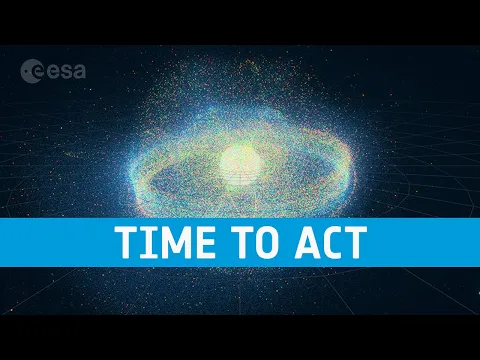

Collisions Can Create Thousands of New Fragments
Despite the congestion, collisions between cataloged objects remain uncommon. The European Space Agency reports four occurrences.
One such case occurred in 2009 when an Iridium Communications satellite collided with an inactive Russian communication satellite.
The collision produced approximately 1,800 fragments at least 10 centimeters in size. This type of event is concerning because each new piece becomes part of the debris swirling in the area.
The problem is not limited to trackable materials. Radars can track debris roughly the size of a softball or larger, while smaller particles may remain undetected.
Mark Matney, a planetary scientist in NASA’s orbital debris program, stated that even a fragment comparable to a paint fleck could damage a satellite due to its velocity.
SpaceX Acknowledges Increased Risk with Orbital Expansion
Jonny Dyer, CEO of Muon Space, stated that the risk is not solely dependent on the number of objects. He believes that negligent behaviors or deliberately inappropriate actions also pose significant concerns.
SpaceX itself recognized the issue in a document related to its public offering. The company stated that the growth in the number of satellites and other objects increases the likelihood of accidental collisions, fragmentation, and other incidents.
With new satellites, constellations, and potential space data centers, the management of low Earth orbit increasingly depends on tracking, information sharing, and systems capable of preventing dangerous approaches.
This piece was created based on information from The Wall Street Journal, the European Space Agency, NASA, SpaceX, Analysys Mason, and Muon Space, with data, figures, and statements preserved as per the material consulted.


