






 Portuguese


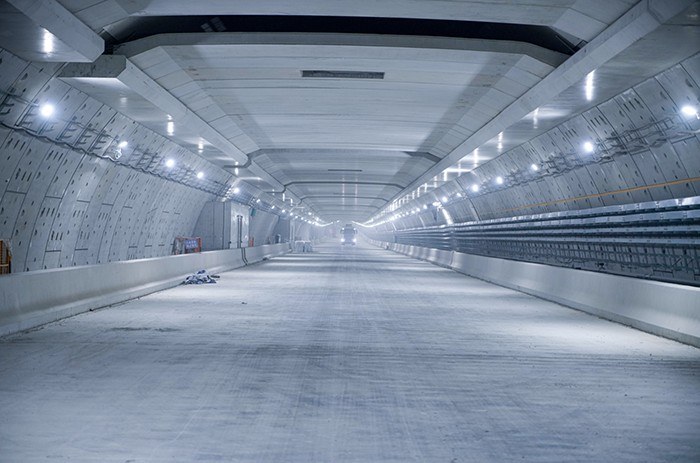
The Huanggang Road Tunnel, opened to traffic in Jinan on August 25, 2026, was excavated using a tunneling machine 17.5 meters in diameter. It is the largest tunnel under the Yellow River ever excavated by diameter in the world, featuring two levels, six lanes, and a crossing time reduced from 30 to 40 minutes to just five.
The construction is located in Jinan, the capital of Shandong province in eastern China, approximately 400 kilometers south of Beijing. According to the People’s Daily, the tunnel has a total length of 5,755 meters. Of this total, 3,290 meters were excavated by tunneling machine, specifically the section that passes beneath the riverbed.
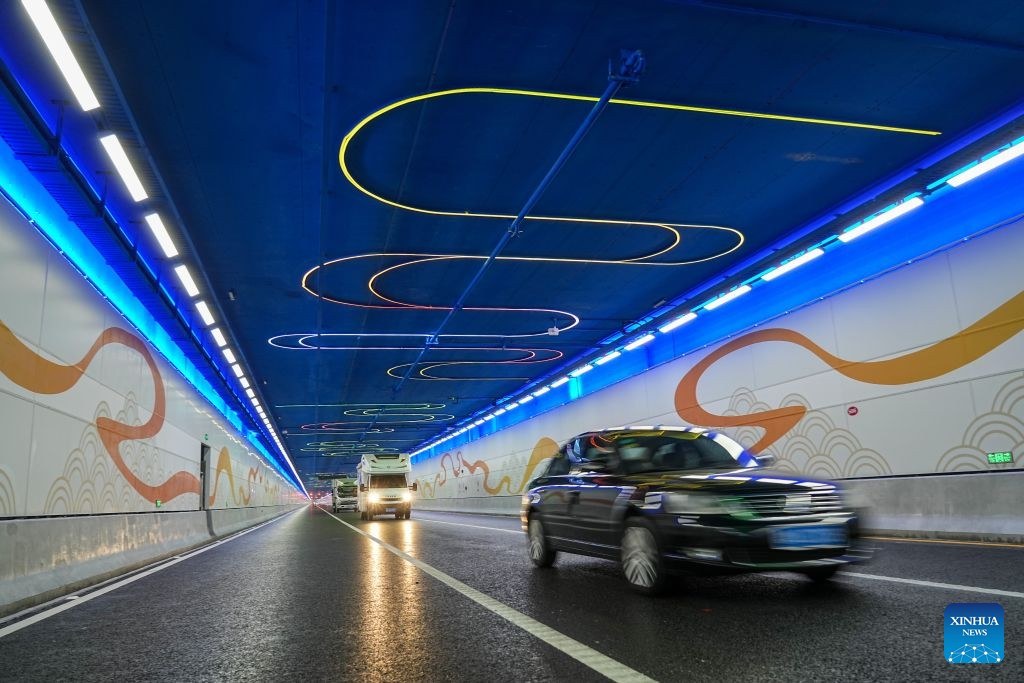
The municipal government of Jinan describes the structure as the first single-tube, two-level tunnel under the Yellow River in China. Each level has three lanes and a clearance height of 4.2 meters. The upper level accommodates northbound traffic, while the lower level supports southbound vehicles, with a design speed of 60 km/h.
Furthermore, the connection plays a clear urban role. According to the official city website, the tunnel links the main urban area of Jinan to the so-called Start-up Area, a nationally piloted zone on the north bank of the river. This project is designed to facilitate the movement of a city with nine million inhabitants across the water. Before its construction, as reported by Global Times, the same car route took 30 to 40 minutes, depending on the traffic on the bridges.
-
Bamboo Houses in Myanmar: Built for $1,000, Stand Strong in 7.7 Magnitude Earthquake, Offer Insight into Affordable Seismic-Resistant Construction

-
China Builds World’s Largest Crane: 14,000-Ton Capacity Aims to Revolutionize Nuclear Plant Assembly
-
Ground Level Drops by Up to 90 cm in Just Seven Years in Parts of Beijing: Groundwater Extraction Compresses Subsoil, Opening Cracks and Creating Sinkholes That Sink More Than 12 cm Per Year

-
Netherlands Constructs Colossal Mobile Barrier Against North Sea: Maeslantkering Uses Two 210-Meter Doors, 22-Meter-High Structures, and 680-Ton Hinges to Automatically Close One of Europe’s Most Vital Maritime Routes, Protecting Around 2 Million People


The Tunneling Machine Shanhe and the Challenge of Boring Under the Yellow River
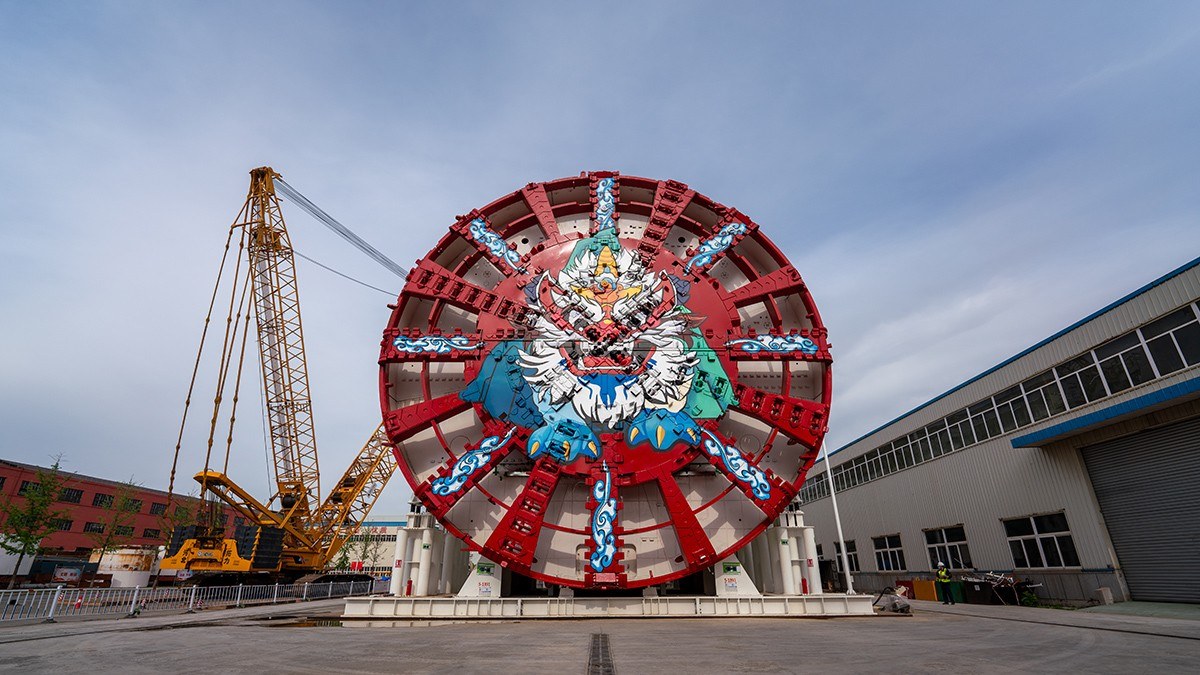
The machine that carried out the work is called Shanhe. It was manufactured by the German company Herrenknecht, through its Chinese subsidiary Herrenknecht Tunnelling Machinery. The constructor is the China Railway 14th Bureau Group, and the client is the Jinan Urban Construction Group. According to the manufacturer’s statement, the tunneling machine measures 163 meters long and weighs 5,200 tons.
The equipment is of the Mixshield type, a technology using a shield with a pressurized slurry circuit. In this system, the excavation face is filled with a bentonite suspension. It supports the ground and balances water pressure while the cutting head advances. Herrenknecht states that it designed a new slurry circuit for the Shanhe, with the pressure in the chamber controlled by an automatic air cushion.
This concern arises from the conditions beneath the river. The geology along the route combines clay, sand, silt, and limestone nodules, according to the manufacturer, with a water pressure of 7.5 bar under the riverbed. The cutting head has a power of 5,600 kW. Additionally, the Yellow River in Jinan flows with its bed about 5 meters above the ground level on the southern bank. It is a suspended river, requiring the tunnel to be excavated deeply.
Speed Record and 28 Technical Challenges Along the Way
Global Times reports that the team overcame 28 major technical challenges during the excavation process. The pace reached 18 meters per day, with a monthly advance of 426 meters. The newspaper refers to this performance as a world record for tunneling machines in the 17-meter class. Meanwhile, 104 cutting tools were replaced in 21 days, a delicate operation given the pressurized front.
The timeline helps to understand the accomplishment. According to New Atlas, excavation began on September 1, 2024, and the section beneath the river was completed in 110 days. The lining was assembled with about 500 rings of precast segments.
Next came the part that is less visible in photos. The government of Jinan reports that the upper deck was finished on March 17, 2026, with over 30,000 cubic meters of concrete poured in a confined space. All of this happened simultaneously as the tunneling machine and material transport continued to operate.
From excavation to opening to traffic, therefore, it took less than two years. I must admit that this timeframe is the most impressive figure when looking at the overall project, even more so than the diameter. Submerged tunnels usually take a decade from design to inauguration in any country.
The city hall adds operational details: intelligent inspection robots, fire detection using artificial intelligence, and interior finishes inspired by the curves of the Yellow River itself. The tunnel is designed for buses, fire trucks, maintenance, and emergency vehicles, not just passenger cars. This is why the clearance height is 4.2 meters on each floor, a dimension that is unusual in urban dual-level road tunnels.
What 17.5 Meters Mean for Those Following Construction Projects in Brazil
To put the number into perspective, it’s worth looking at the largest tunneling machine that has arrived in Brazil. According to a report by Correio da Manhã, the machine that will excavate about 7 kilometers of the Green Line 2 extension of the São Paulo Metro, between Penha and Dutra, has a diameter of 11.67 meters and weighs 2,600 tons. The manufacturer is the Chinese company CREG, and excavation is expected to begin in the second half of 2026.
In other words, the Shanhe is nearly six meters wider and weighs twice as much as the largest tunneling machine currently operating in the country. The difference is not just in scale. A diameter of 17.5 meters allows for two road levels with three lanes each to be stacked within a single tube. This way, it eliminates the need to excavate two parallel tunnels.
The Global Times also notes that China concluded the same summer with another milestone. On July 30, the tunneling machine Linghang completed the underwater section of the Chongming-Taicang railway tunnel beneath the Yangtze River, designed for trains traveling at 350 km/h. It’s hard not to see an industrial chain that already treats 17-meter tunneling machines as routine tools.
For Jinan, the practical result is simple. A journey that used to take up to 40 minutes by car now takes five, and the north bank of the river is no longer considered a periphery. For the infrastructure sector outside of China, there remains a question of how much technology, time, and scale will be needed to cross rivers and bays at this pace. Share your thoughts in the comments.
Do you believe that a project of this magnitude, with two levels beneath a river, would be feasible in Brazil in less than two years?


