





 Portuguese
  English
  Spanish
  5 min of reading
  0 comments


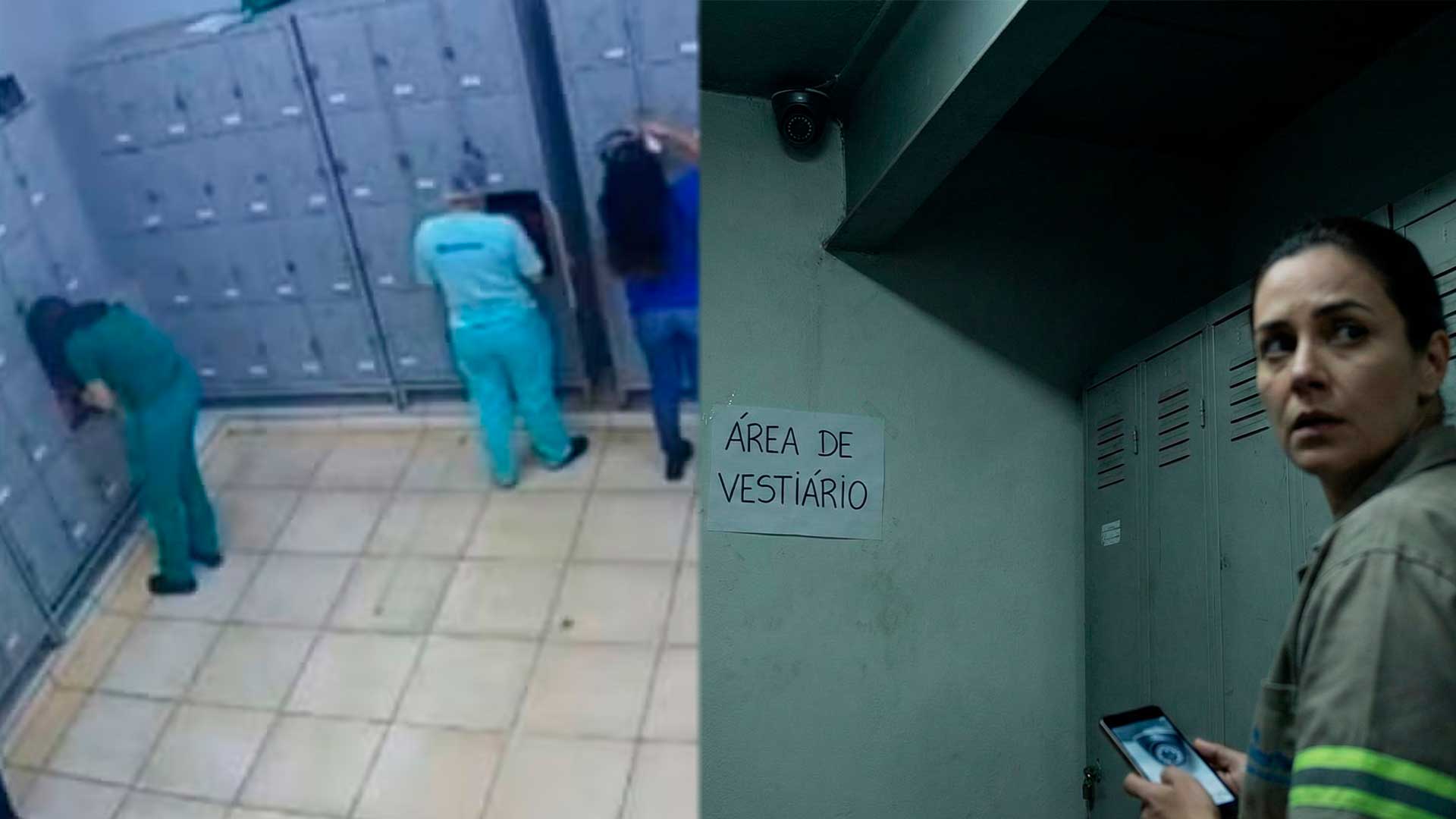
Labor Court Decision in Anápolis Acknowledges That Filming in Dressing Room Exposes Female Workers to Risk of Embarrassment, Sets Compensation at R$ 3,5 Thousand and Sparks Debate on Use of Cameras in Inappropriate Locations in the Workplace
A cosmetics factory located in Anápolis, about 55 kilometers from Goiânia, was ordered by the Labor Court to pay compensation for moral damage to a former production assistant following a complaint about cameras in the female locker room of the company.
The Third Panel of the Regional Labor Court of the 18th Region, TRT-18, upheld the ruling and set the amount at R$ 3,5 thousand, in a decision announced in early December 2025.
According to the ruling, video monitoring in the locker room exposed the worker to the risk of having her image captured in an inappropriate situation, even though there was no evidence of her being filmed in a compromising position. For the panel, the mere possibility of image capture in a clothing exchange environment is sufficient to characterize a violation of the dignity of the employee.
-
The Senate approves a bill that criminalizes misogyny, hatred, or aversion towards women, and includes the crime in the Racism Law with a penalty of up to 5 years.

-
Chamber Approves Bill That Allows Pepper Spray for Women Over 16 and Imposes Strict Rules for Purchase, Possession, and Use as Self-Defense
-
Chamber Approves Law to Combat Leucaena, Fast-Growing Plant That Dominates Land and Threatens Native Species in Various Regions of the Country

-
Asset Division: Know What Cannot Be Divided in Case of Divorce


The company’s defense argues that the cameras were fixed and directed only at the area of the lockers, and not towards the shower stalls or the spaces designated for changing uniforms.
In a statement sent to the press, the group claims that the aim was to protect employees’ belongings, that there was no filming in bathrooms, and that all measures taken sought to ensure a safe and ethical environment.
Even so, TRT-18 determined that the configuration of the environment, with lockers and stalls in the same space and without physical separation, placed workers in a vulnerable situation, as they could forget about the camera and walk to the lockers. The company has already informed that it has appealed to the Superior Labor Court (TST) to try to reverse the ruling or avoid the payment of compensation.
Camera in Female Locker Room Yields Compensation for Moral Damage in Anápolis
According to the ruling from the 4th Labor Court of Anápolis, the worker noticed the existence of the camera in the female locker room and even recorded a video to prove the position of the equipment. The footage showed that the device was not directly pointing at the shower stalls but recorded the area of the lockers, located in the same environment.
The first-instance judge concluded that this configuration created a concrete risk of undue exposure for employees, who could leave the stalls after showering, scantily covered, and open the locker within camera range.
In the judge’s assessment, the situation is incompatible with the employer’s duty to preserve the intimacy and dignity of workers in strictly personal use environments.
In the original ruling, the amount of compensation for moral damages was set at R$ 7 thousand, but both the industry and the production assistant appealed to TRT-18.
The company sought full exclusion of the ruling, while the former employee requested an increase, claiming that the initial amount was low given the seriousness of the violation and the financial capacity of the defendant.
TRT-18 Upholds Ruling, Reduces Amount and Acknowledges Leadership Role
When reviewing the appeals, the rapporteur, Judge Marcelo Pedra, recognized that the installation of the camera in the locker room constitutes abuse of the employer’s directive power. According to him, it is not necessary to have proof of filming to characterize the damage, since the mere feeling of being watched in such a location is enough to create insecurity and violate privacy.
The panel decided, however, to reduce the compensation from R$ 7 thousand to R$ 3,5 thousand, adjusting the amount to the parameters used in similar cases in the Labor Court.
At the same time, TRT-18 amended part of the judgment to acknowledge that the production assistant performed typical leadership functions for about 60 days without receiving the corresponding remuneration, ordering payment of salary differences for the period.
Privacy in the Workplace and Use of Cameras in Locker Rooms Divide Companies and Justice
In its reasoning, TRT-18 cited a precedent from the Superior Labor Court stating that the installation of surveillance cameras aimed at lockers inside locker rooms constitutes an abusive act and violates Article 5, Clause X, of the Federal Constitution, which protects the intimacy, private life, honor, and image of individuals. The regional court emphasized that control mechanisms cannot invade clothing change areas, even under the argument of security.
Labor law specialists consulted in analyses of similar cases recall that monitoring by cameras is permitted in areas such as corridors, entrances, storage rooms, and production sectors, provided employees are informed.
However, bathrooms, locker rooms, and areas designated for personal hygiene are considered areas of maximum privacy, where direct visual surveillance is generally prohibited by labor jurisprudence and by the TST itself.
Furthermore, doctrine emphasizes that the protection of the worker’s image and intimacy arises not only from the Constitution but also from the principle of dignity of human beings, which guides all labor law. In practice, this means that the employer must seek other means to safeguard property and belongings without exposing the intimate routines of employees.
For TRT-18, the fact that cameras are formally directed at lockers does not eliminate the risk of exposure, since it is the same environment where workers change clothes and prepare for their shifts.
The possibility of accidental recording in inappropriate situations was deemed sufficient to configure presumed moral damage, regardless of evidence of specific embarrassment.
This type of understanding reinforces the trend for Labor Courts to restrict the use of cameras in such locations, forcing companies to review security protocols and video monitoring projects. In cases of doubt, the recommendation from labor lawyers is to avoid any equipment in locker rooms and bathrooms, favoring external lockers and less invasive physical or electronic access controls.
Decision in Goiás Raises Alert for Internal Security Policies in Brazilian Companies
Although the case took place in Anápolis, experts believe that the conviction of the cosmetics industry is likely to serve as a reference for other actions across the country. Decisions citing the same line of understanding from the TST help consolidate the view that cameras in locker rooms, even if aimed at lockers, pose a high legal risk for the employer.
Medium and large companies are advised to review their internal security policies, compliance training, and contracts with security service providers. The guidance from legal scholars is that the protection of material assets cannot outweigh the fundamental rights of workers, under penalty of further convictions for moral damages and damage to institutional image, as seen in the Goiás case.
In your opinion, is R$ 3,5 thousand an adequate amount to repair the violation suffered by the former employee, or was the compensation insufficient given the gravity of installing cameras in a female locker room? Do you think companies have exaggerated in the use of surveillance systems, or is the Justice going too far in limiting cameras in sensitive areas in the name of privacy? Share your opinion in the comments.










-

-

-

-

-

22 pessoas reagiram a isso.