





 Portuguese
  English
  Spanish
 3 min of reading
  0 comments



Slavery returns to the center of the debate with 14 employees rescued from a farm in Goiás and 220 workers removed from a construction site in Camaçari; the immediate penalty foreseen is an administrative fine
Slavery has gained new chapters in Brazil after the inclusion of singer Amado Batista and the Chinese automaker BID in the so-called dirty list of the Ministry of Labor, according to a report from Jornal da Gazeta. In the report, both are accused of keeping people in conditions analogous to slavery.
The information came with a point that often raises questions: what is the immediate penalty in these cases. In practice, under Brazilian legislation, the indicated immediate penalty is administrative fine, and stricter measures depend on an investigation opened from a complaint.
What changes when a name enters the dirty list
The list, as explained in the video, is a registry of the Ministry of Labor that gathers individuals and companies associated with situations analogous to slavery. Entry into the registry of slave labor does not, by itself, mean an automatic criminal conviction, but indicates that there was an administrative investigation that supported the inclusion.
-
Cell phones in schools: learn how a year after the ban, students and teachers are already noticing positive effects and recording improvements in academic performance with increased attention and active participation.

-
Couple transforms industrial garage into dream home with 5 bedrooms, sauna, garden, and leisure area after million-pound renovation in England.

-
They laughed for 20 years at Roy Hassell’s “junkyard,” but when the agricultural crisis closed the John Deere dealership in Hardin, Iowa, the parts barn saved crops and entire farms in the region.

-
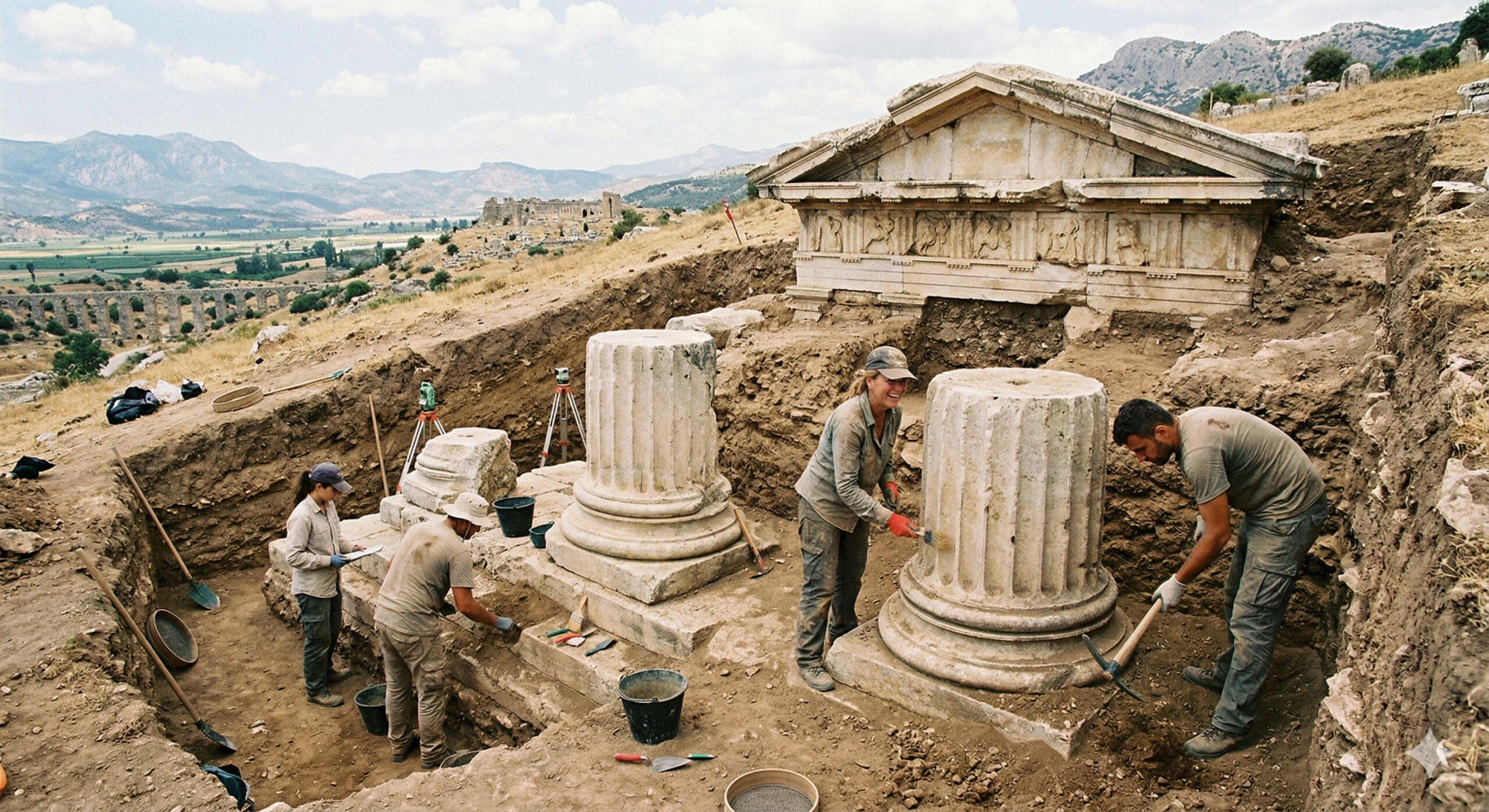
Archaeologists find possible lost temple of Zeus in the ancient city of Limyra after decades of searching; the millennia-old structure buried under historical layers could redefine the religious map of Anatolia and reveal how the Greeks worshipped their gods outside the classical axis.
The central point is that the immediate consequence mentioned is administrative fine. For harsher penalties, an investigation is required, which, according to Jornal da Gazeta, can be opened after complaints from victims or from the actions of the Public Prosecutor’s Office.
Case in Goiás: 14 employees rescued from a farm
According to the video, Amado Batista was included in the list due to a case involving 14 employees on a farm in the state of Goiás, owned by him. The workers were said to have been rescued for being in a degrading situation, in an operation conducted by members of the Ministry itself.
Also according to the video, the singer’s advisory denied the information presented. The version mentioned in the note is that there were four workers, with the situation already regularized and returned to work.
Case in Bahia: from 169 to 220 workers rescued from a construction site
In the case of the Chinese automaker BID, the video reports that the rescue occurred at a factory under construction in Camaçari, Bahia. Initially, 169 workers were reported rescued, in an operation by the Ministry, for a similar situation.
Later, according to the investigation described, that number would have risen to 220 employees rescued. The report also mentions conditions such as long hours of work, almost no rest, and sleeping hours as part of the situation observed in the operation.
According to the video, the automaker had not yet officially commented on the case.
Immediate penalty and the path to stricter measures
The explanation presented is straightforward: the only immediate penalty for slave labor mentioned is an administrative fine. For harsher penalties to occur, an investigation must exist, and this investigation may depend on a complaint from a victim or the Public Prosecutor’s Office.
In practice, what the video highlights is that the advancement to heavier consequences goes through formal stages of investigation, in addition to the administrative response.
Since 2003 and with a deadline to regularize
The video states that the list of slave labor has existed in Brazil since 2003 and currently gathers about 700 individuals and companies. The basis also states that the names would have up to two years to regularize their situation and then could be removed from the registry.
Do you think that administrative fine is a sufficient punishment in such cases, or should there be a harsher immediate consequence right from the first stage?






Seja o primeiro a reagir!